
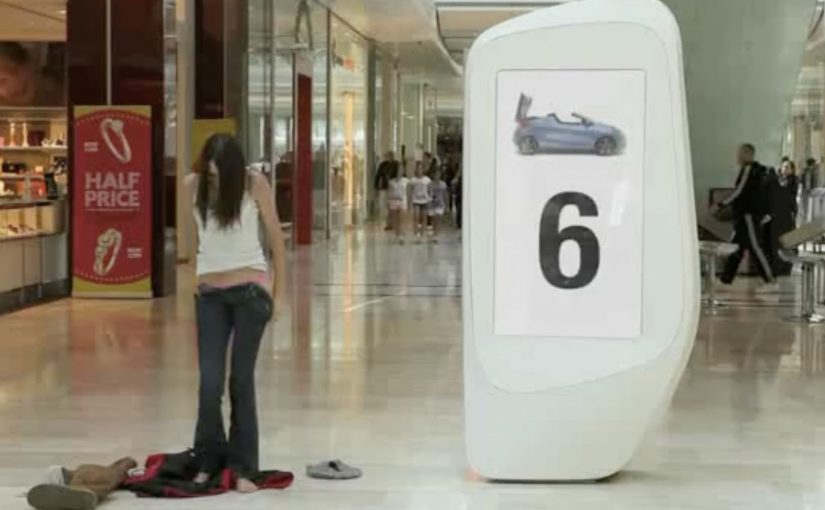
Renault Wind Roadster: 12 Second Strip

Renault UK and ad agency Publicis London set up “12 Second Strip”, a challenge that asks people to strip down to one layer of clothing in 12 seconds in the hope of winning the brand new Renault Wind Roadster.

The challenge involves people stripping down to one layer of clothing in just 12 seconds, which is the same amount of time it takes Renault’s new Wind Roadster to drop its top. To participate, people post their fun and tasteful strip videos on YouTube.

A product demo turned into a timed dare

The execution takes a single, memorable product fact. The roof moves in 12 seconds. Then it builds a challenge around that exact number, so the “proof” of the car becomes the rule of the game.

The mechanic: match the roof with your own 12 seconds

It is straightforward. Record a short clip where you race the clock to get down to one layer. Upload it. The format is repeatable, the constraint is clear, and the brand’s key claim stays embedded in every entry.

In UK automotive launches, time-based challenges work best when they translate a feature into something the audience can perform, share, and compare without needing a long explanation.

Why this lands as shareable UGC

The concept is light, competitive, and easy to understand at a glance. The “one layer” rule keeps it positioned as playful rather than explicit, while the 12-second constraint gives it a built-in hook that makes clips watchable and easy to forward.

Extractable takeaway: If you have one standout feature, convert it into a public constraint. Constraints create format. Format creates volume. Volume creates recall.

What Renault is really buying

The real question is whether a product claim can be turned into a repeatable public behavior without losing the brand point.

This is attention that carries product memory. Every participant repeats the roof story through action, and every viewer gets the same message without feeling like they are watching a conventional car ad.

What to steal for your next challenge-based campaign

  • Start with one sharp product truth. The best UGC formats begin with a single claim people can repeat.
  • Make the rule the message. If the rule changes, the brand meaning should not disappear.
  • Keep it simple to enter. Short clips, one constraint, one destination.
  • Write safety and tastefulness into the brief. Clear boundaries protect both the audience and the brand.

A few fast answers before you act

What is 12 Second Strip?

It is a Renault UK challenge that asks people to strip down to one layer of clothing in 12 seconds, mirroring the time it takes the Renault Wind Roadster’s roof to drop.

Why anchor the challenge to “12 seconds”?

Because it turns a feature into a format. The number becomes a rule that forces every entry to carry the same product story.

What makes this a strong user-generated format?

It is easy to understand, fast to produce, and inherently comparable. Viewers can instantly judge attempts and share the best ones.

How do you keep a provocative mechanic brand-safe?

Set a clear boundary inside the format. Here, the one-layer rule keeps the participation playful and recognizable without pushing it into something more explicit.

What is the main brand lesson here?

Make your most distinctive proof point performable. When the audience can reenact a claim, it travels further than a slogan.
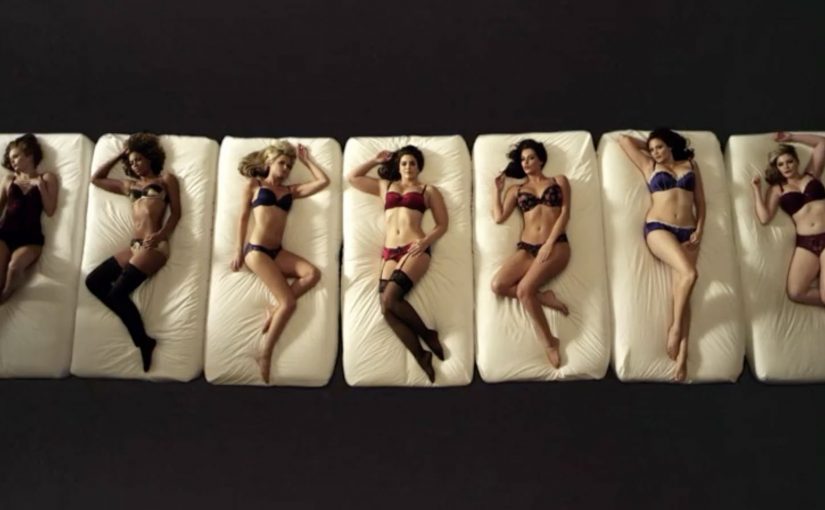
La Senza: The Cup Size Choir

In this holiday video from London ad agency Karmarama, Canada-based lingerie maker La Senza presents a novel Christmas choir. Women in their underwear lie on a puffy piano, each singing the musical note represented by their bra size, from A to G.

A Christmas choir built from cup sizes

The hook is immediate. A to G becomes a scale. The set becomes a keyboard. The cast becomes the instrument. It is a simple idea that explains itself in seconds, and it gives the viewer a reason to watch again just to catch how the “notes” are assigned.

How the mechanic sells the range

Instead of listing products, the film turns product variety into a performance system. Each cup size is framed as a distinct note, and the choreography is built around sequencing those notes into a familiar holiday tune.

In holiday retail marketing, the quickest way to earn attention is to turn the product range into entertainment people can instantly understand.

Why it lands as a share

The format is cheeky, high-contrast, and easy to summarize. That makes it naturally social, because people can describe it in one sentence and still do it justice. The “keyboard” visual also creates a clear pattern, so even casual viewers feel like they are in on the joke.

Extractable takeaway: When your product offer is breadth, not one hero feature, convert that breadth into a simple system the audience can see and repeat, and the message sticks without explanation.

The intent behind the wink

This is brand entertainment with a retail job to do. It keeps La Senza top-of-mind during a gifting season and spotlights that the brand serves a wide range of sizes, while the tone keeps it light enough to travel beyond existing customers.

The real question is whether the performance makes that size range memorable enough to travel beyond the existing customer base.

How to turn range into a shareable system

  • Make the organizing idea visible. A to G as notes is instantly legible.
  • Use a familiar frame. A holiday tune lowers comprehension cost.
  • Sell the range without “catalog copy”. Show variety as a system, not as a list.
  • Keep the runtime tight. Short spectacle beats long explanation for sharing.
  • Let the craft do the persuasion. Production, choreography, and rhythm carry the message.

A few fast answers before you act

What is the core idea of The Cup Size Choir?

Assign musical notes to bra cup sizes and build a performance that turns product range into a simple, watchable system.

Why does this work as holiday advertising?

It is easy to understand, easy to retell, and it uses a seasonal structure people already recognize, so the message lands quickly.

What is the main brand message?

That the brand offers a broad size range, communicated through entertainment rather than product claims.

What is the biggest risk with this kind of execution?

If the tone feels gratuitous or distracting, the audience remembers the stunt but forgets the brand or the point.

How can a different category copy the approach safely?

Translate “range” into a clear system. Use a familiar cultural frame. Keep the mechanic obvious, and let the craft carry the story.

3D projection mapping on a Toyota Auris

Instead of projecting onto a building, Glue Isobar projects a CG car directly onto a real Toyota Auris Hybrid. Here, projection mapping means aligning animated visuals to the contours of a physical object so the imagery appears built into the car itself. With seven projectors working together, the result is a true 3D, 360-degree projection mapping experience on all sides of the car. You can walk around it and experience the visuals from any angle.

What makes this projection mapping different

The twist is the surface. A real car brings complex curves, edges, and reflections. Mapping to that shape, and keeping the illusion consistent as people move around it, is the challenge that makes this feel genuinely new.

How the experience is delivered

The work uses a mix of keyframe, 2D, 3D, algorithmic, and dynamic animation to deliver the experience. The projection setup supports a 360-degree view, which is why the story holds up from multiple angles instead of depending on a single “best seat”.

In live auto launches and showroom-style reveals, this matters because the product demo and the spectacle happen in the same physical moment.

Why this lands as a launch moment

This format turns a product reveal into a live event. It gives people a reason to stop, watch, walk around, and talk. The real question is not whether the projection looks advanced, but whether the launch makes the car feel worth approaching, discussing, and remembering. The business job of a launch moment is not passive viewing but active attention that carries into conversation and recall. This is stronger than a static display because it turns the car itself into the source of attention.

Extractable takeaway: When the product becomes the performance surface, the launch works harder because the spectacle and the proof of product presence happen in the same place.

What to steal for live product reveals

  • Make the product the canvas. When the object carries the story, the experience feels specific and harder to copy.
  • Design for movement in the crowd. A 360-degree setup keeps the illusion intact even when people walk around and viewpoints change.
  • Use complexity where it creates visible payoff. Multiple projectors are justified when they unlock surfaces and angles a single beam cannot cover.
  • Treat it as a performance, not a display. The reveal works best when the product appears to “do something”, not just sit there.

A few fast answers before you act

What is 3D projection mapping in this example?

It is the technique of projecting animated visuals onto a physical object, aligned to its shape so the imagery appears to belong to the object rather than a flat screen.

Why use seven projectors?

To cover the full vehicle and maintain the illusion across multiple surfaces, including areas you can only see when walking around the car.

Why project onto the car instead of a separate screen?

Because the effect feels more product-specific. The visuals appear attached to the vehicle, which makes the reveal more memorable than showing the same animation beside it.

What makes “360-degree” important for live audiences?

People do not stand in one spot. If the experience works from many angles, it feels real in a public space and stays compelling as crowds move.

What is the main lesson for product launches?

Make the product the stage. When the object itself becomes the canvas, the experience feels specific, memorable, and inherently shareable.