Mercedes-Benz: Tweet-Fueled Road Trip Race

Mercedes-Benz: Tweet-Fueled Road Trip Race

In February this year four two-person teams left four cities, Chicago, Los Angeles, New York City, and Tampa Bay, to goto Dallas, Texas in a custom-designed Mercedes-Benz car that was fuelled by Twitter.

Of course the cars were not physically running on tweets, but virtually they were. The reason for Mercedes-Benz saying that the race was “Tweet-Fueled” was because each of the four teams had to get the support of their home cities to drum up enough support on Twitter to get them to the finish line in Dallas.

In the end the campaign had almost 30,000 active participants with over 72,000 Facebook Fans and 77,000 Twitter Followers who generated over 150,000+ tweets to power the cars. The campaign videos generated about 2 million views, while the twitter reach pushed over the 25 million mark.

Why “tweet-fueled” is more than a gimmick

The smart move is that social support is not commentary. It is the engine of progress. That turns spectators into participants, because every tweet has a clear meaning. It helps your team move. In large consumer brands, this kind of real-time mechanic works best when the audience action maps to a visible outcome.

Extractable takeaway: When the audience can see their social action move a scoreboard, participation scales beyond one-off commenting.

  • Clear cause and effect. Tweets translate into distance and momentum.
  • City pride as a driver. Chicago vs LA vs NYC vs Tampa gives the story a natural rivalry.
  • Built-in recruiting. Teams need their cities, so they recruit friends to contribute.

How the campaign design created scale

The structure is simple. Four teams. One destination. A visible race. But it is the social mechanics that create the volume.

The real question is whether your campaign turns audience action into trackable progress that people can influence in real time.

  1. Teams need advocates. Supporters feel like they are part of the outcome.
  2. Progress is trackable. People return when they can see movement and standings.
  3. Video extends the narrative. Moments from the road give the audience something to share beyond the scoreboard.

In real-time social entertainment, participation scales when the audience can visibly change the outcome, not just comment on it.

What to take from this if you build real-time social campaigns

  1. Make participation meaningful. If the social action changes the outcome, people care more.
  2. Create teams and identity. Groups recruit. Individuals browse.
  3. Design a visible progress loop. Standings and milestones keep engagement alive.
  4. Use content to refresh attention. Videos give people new reasons to re-share and re-engage.

A few fast answers before you act

What was the Mercedes-Benz Tweet-Fueled race?

It was a social-powered race where four teams drove from Chicago, Los Angeles, New York City, and Tampa Bay to Dallas, and their progress was powered virtually by Twitter support from their home cities.

Why were the cars called “tweet-fueled”?

Not because tweets powered engines physically, but because tweets served as the mechanism that enabled teams to accumulate the support needed to reach the finish line.

What were the reported results?

Almost 30,000 active participants, over 72,000 Facebook fans, 77,000 Twitter followers, more than 150,000 tweets, about 2 million video views, and Twitter reach exceeding 25 million.

Why does the city-based structure matter?

It creates rivalry and pride, which motivates supporters to participate and recruit others to help their team advance.

What is the transferable lesson?

If you can turn social activity into measurable progress toward a clear goal, you can convert audience attention into sustained participation.
Mercedes-Benz Sprinter applies for a job

Mercedes-Benz Sprinter applies for a job

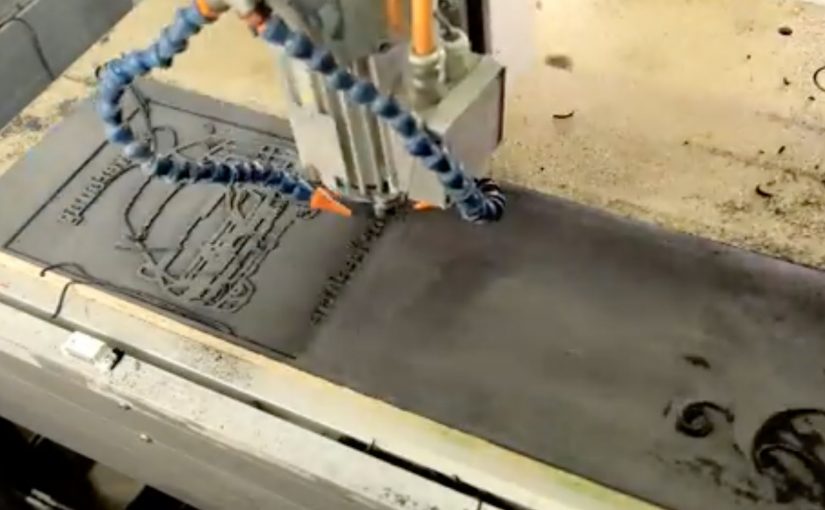
In order to get more companies to buy the Mercedes-Benz Sprinter, German ad agency Lukas Lindemann Rosinski actually got the Sprinter to apply for a job. To do this, they came up with the world’s first printing tyre. This enabled the Sprinter to write its own letters of application, all on its own.

Why this direct marketing idea lands

The power is in the role reversal. Instead of telling fleet managers that the Sprinter is a hard worker, the campaign makes the vehicle behave like one. It “applies”. It shows initiative. And it creates something physical that naturally gets noticed on a manager’s desk. The real question is how you make a product claim feel self-evident before a sales conversation even starts. The strongest B2B ideas do not decorate the claim, they stage the proof.

Extractable takeaway: When you can turn a product benefit into a behavior buyers can witness, the message becomes easier to remember and harder to dismiss.

What makes the execution feel credible

The printing tyre is not a metaphor. It is the proof. It turns the van into the production tool, which makes the claim harder to ignore. Because the mechanism produces the message, the proof feels native to the product, which is why the claim lands harder than copy alone.

What the business is really doing

The business intent is to position the Sprinter as the hard-working choice for fleet buyers by making the vehicle demonstrate initiative instead of just being described that way.

In B2B fleet marketing, this kind of idea works especially well when buyers are comparing similar offers and need one proof point that cuts through routine sales material.

What to borrow for B2B marketing

  • Make the product do the talking. Let capability show up as a concrete action.
  • Put the idea into the buyer’s workflow. A real letter in a real office beats another brochure.
  • Design for desk gravity. That means making the asset look like it belongs in the buyer’s everyday workflow, which makes it harder to dismiss.

A few fast answers before you act

What did Mercedes-Benz do here?

They had a Mercedes-Benz Sprinter “apply for a job” to companies as a way to drive interest and consideration.

Who created the campaign?

German ad agency Lukas Lindemann Rosinski created the campaign.

What was the core mechanic?

A custom printing tyre enabled the Sprinter to write its own letters of application.

Why is it effective as direct marketing?

It works because it places a physical proof point into a business context, and the product itself delivers the message.

What is the main lesson for B2B campaigns?

Turn product benefit into a behavior buyers can witness, not just a claim they are asked to believe.

Mercedes-Benz: Flying Car

Mercedes-Benz: Flying Car

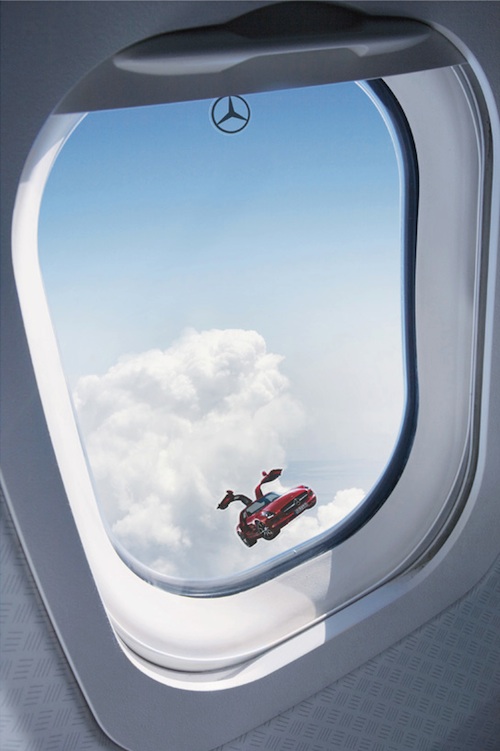
Mercedes-Benz, with the help of Ponto de Criacao from Brazil, executed a highly segmented vertical action to increase visibility for the brand among top executives and business people. Here, “vertical action” means a narrowly targeted activation placed in a single corridor that concentrates the exact audience you want.

Flying Car by Mercedes Benz

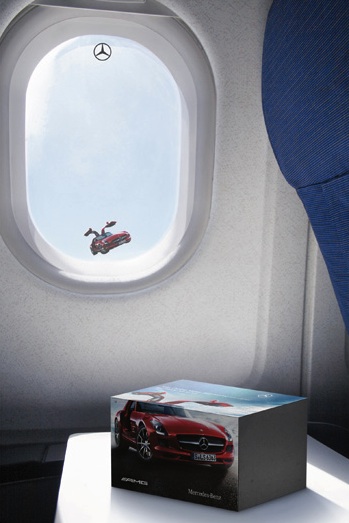
As a courtesy, passengers also received a miniature car.

Flying Car by Mercedes Benz

In one month, 100% of the target audience was reached, nearly 400 executives.

In premium automotive marketing aimed at senior business travelers, attention is scarce and context is often the only reliable way to earn it.

When the audience is this narrow and valuable, precision distribution can outperform broad reach because the placement becomes the idea.

Why this placement is so effective

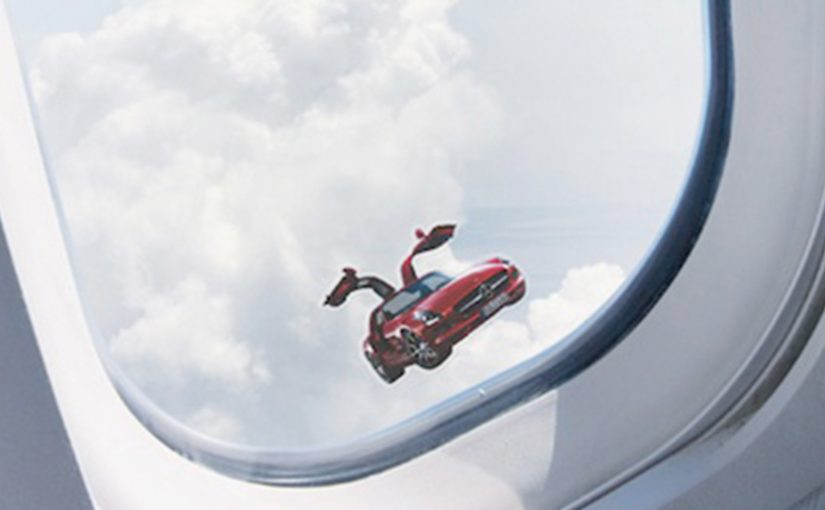
The mechanism is simple and the payoff is immediate. By turning the aircraft window into the “media unit,” the mind completes the illusion, which makes the moment feel native, surprising, and worth retelling.

Extractable takeaway: When your audience is concentrated in a repeatable corridor, design a message that only works in that context so the situation does the persuasion for you.

  • Context does the work. The illusion only makes sense in-flight, which turns a standard window view into a brand moment.
  • Precision beats scale. Shuttle flights concentrate the exact audience Mercedes-Benz wanted, without wasting impressions.
  • Low friction, high memorability. A simple sticker creates an instant “did you see that?” effect, then the miniature car extends the memory.

What to take from it

The real question is which high-value corridor your audience repeats, where attention is naturally high, and where your message can feel native instead of intrusive.

When the audience is narrow and valuable, distribution can be the idea. This activation did not rely on complex tech. It relied on selecting the right corridor, placing the message where attention is naturally high, and creating a visual that feels native to the moment.

  • Start with the corridor. Identify the repeatable moment where your audience is already together and already looking.
  • Make the context do the explaining. Build the visual so it only makes sense there, so the placement becomes the punchline.
  • Extend the memory. Add a small, simple takeaway that keeps the moment alive after the corridor ends.

A few fast answers before you act

What was “Flying Car” by Mercedes-Benz?

It was a targeted activation that placed SLS AMG window stickers on shuttle flights, creating the illusion of the car “flying” outside the aircraft window for executive travelers.

Why use shuttle flights for this?

Because those routes clustered top executives and business travelers, delivering near-perfect audience fit with minimal wasted reach.

What role did the miniature car play?

It extended the experience beyond the flight as a physical takeaway, reinforcing recall after the moment passed.

What is the transferable pattern?

Pick a narrow, high-value corridor, design a context-native visual that only works there, then add a small extension to carry the memory forward.

How do you apply this pattern without access to flights?

Find any repeatable corridor that concentrates your audience, then design a context-native cue that only works in that moment and can be carried forward with a simple takeaway.