
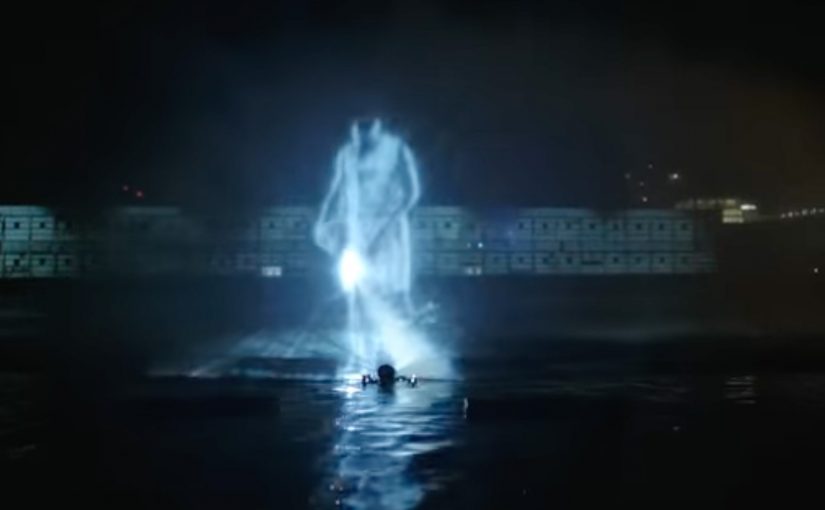
Nike: Jordan Melo M8 Water Projection

I have seen plenty of projection mapping in the last year or so, but this Nike execution for the Jordan Melo M8 takes a different route. Instead of treating a building as the canvas, it turns the Hudson River into the screen and uses a water curtain to make the visuals feel alive.

Trade coverage describes the launch as a live event at Pier 54, where a crowd gathered for performances and then got hit with a large-scale water projection moment featuring Carmelo Anthony and the Melo M8, layered with mapped effects that made the “explosive” theme feel physical.

When projection mapping stops being “mapping”

The mechanic is simple and smart. Water gives you motion for free, so the visuals do not need to do all the work. Every splash, ripple, and mist edge amplifies the animation and makes the illusion feel bigger than it would on a flat wall.

It also creates a built-in contrast. The shoe is a hard, engineered object. The canvas is fluid and unpredictable. That tension is what makes people stare.

In global sportswear launches, the fastest way to earn attention is to make the product reveal feel like a public event, not a private ad.

Why the water screen is the brand message

The most important thing this stunt communicates is not “this is a new shoe”. It is “this is an event-level product”. The audience reads production scale as product importance, especially in a category where new drops appear constantly.

Using water also supports the narrative hook that appears in reporting around the event. Melo “walks on water” as a visual flex. Whether you call it projection, illusion, or theatre, the point is the same. The launch gives people a story they can retell without describing a single feature.

Business intent

This is launch-week acceleration. Get a live crowd. Create a spectacle that looks unreal on camera. Seed the footage. Then let the audience do the distribution, because the clip is more shareable than a standard product film.

What to steal

  • Choose a canvas that adds value. Water, smoke, ice, and mirrors all contribute “movement” that visuals can ride.
  • Make the environment part of the claim. A river-scale reveal says “major” before any copy does.
  • Design for the recap video. If it does not look unbelievable on a phone screen, it will not travel.
  • Give people one sentence to repeat. “They projected Melo and the shoe onto the Hudson” is enough.

A few fast answers before you act

What is a water screen projection?

A water screen projection uses a thin curtain of mist or falling water as the surface. A projector throws imagery onto it, creating a floating effect that feels more dimensional than a wall projection.

Why does projection on water feel more “real”?

Because the surface moves. Ripples and spray add natural variation, so the visuals feel integrated with the environment rather than pasted onto it.

What makes this kind of stunt effective for a product launch?

It signals importance through scale, creates immediate talk value, and produces recap footage that performs better than a standard reveal because it looks like an event, not an ad.

What is the main operational risk?

Reliability. Water, wind, sightlines, and crowd control can all degrade the experience. If the image is not crisp and the moment does not land fast, the spectacle becomes confusion.

What metrics matter most?

Earned pickup, social share rate of the hero clip, completion rate, and correct retelling of the mechanic. If people remember “Hudson water projection” and connect it to the shoe, the stunt did its job.
Nike Take Mokum: graffiti you paint by running

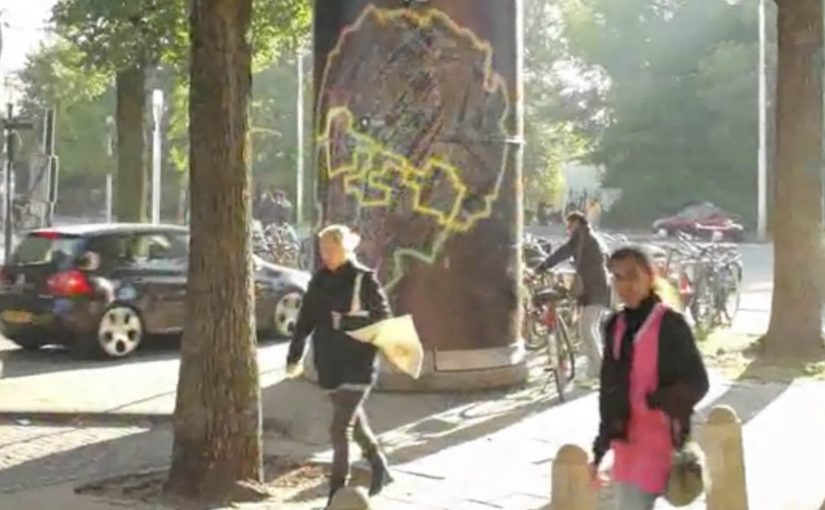
Boondoggle Amsterdam came up with a campaign for Nike that made running less serious. They distracted youngsters from their boring running schedules and challenged them to release their creativity on Amsterdam by using their feet as paint instead.

A Facebook app called “Take Mokum” (Amsterdam’s local nickname) was developed that allowed runners to make digital graffiti on the map of Amsterdam. All they had to do was actually run the route and upload their KMs with Nike+. The app would then paint the graffiti for them. These graffiti pieces could then be shared, and liked fanatically.

Running as a creative tool, not a discipline

The mechanism is beautifully simple: convert effort into expression. The runner designs a “tag” by choosing a route. The city becomes the canvas. Nike+ becomes the proof that the route was actually run. Then the app visualises the path as graffiti, so the output feels like art rather than exercise data.

That flips the motivation model. You are not running to hit a number. You are running to create something worth showing.

Why it lands with youngsters

This campaign taps into identity and visibility. Graffiti culture is about leaving a mark. Take Mokum lets people do that in a digital layer without vandalising anything. The “like” loop adds social reward. The route becomes content, not just a workout.

It also removes the seriousness that can make running feel like punishment. The challenge is playful. The accomplishment is shareable.

The intent: make Nike’s running promise felt, not claimed

The business intent is aligned with Nike’s broader mission to change running. Instead of telling young people that running is cool, the campaign makes running a means to do something else: create, compete for attention, and express style. The product story is embedded in the behaviour.

The result: young Amsterdam started running, and Nike’s mission to change running was actually experienced by youngsters.

What to steal from Take Mokum

  • Turn effort into an artefact. People stick with habits when the output feels worth keeping or sharing.
  • Let users design the challenge. The route is the creative input. That increases ownership.
  • Use data as validation, not as the headline. Nike+ proves the run. The graffiti is the reward.
  • Build a social loop. Sharing and liking are not add-ons. They are the motivation engine.
  • Match the culture. The campaign borrows from street expression rather than “fitness discipline”.

A few fast answers before you act

What is Nike Take Mokum?

It is a Facebook app that lets runners create digital graffiti on an Amsterdam map by running a route and uploading the kilometres through Nike+.

How does the app turn a run into graffiti?

The runner’s route becomes the “drawing”. After the Nike+ upload, the app visualises the path as a graffiti-like mark on the city map.

Why is this motivating compared to a normal running plan?

Because the reward is creative and social. You produce something you can share and get reactions to, not just a time and distance record.

What audience behaviour did this campaign aim to create?

To get young people running by making the activity feel playful, expressive, and socially visible, rather than structured and serious.

What is the key takeaway for behaviour-change campaigns?

Motivation improves when you convert effort into identity. Give people a way to express themselves, then let the community reinforce it.

Nike Air Digital Installation

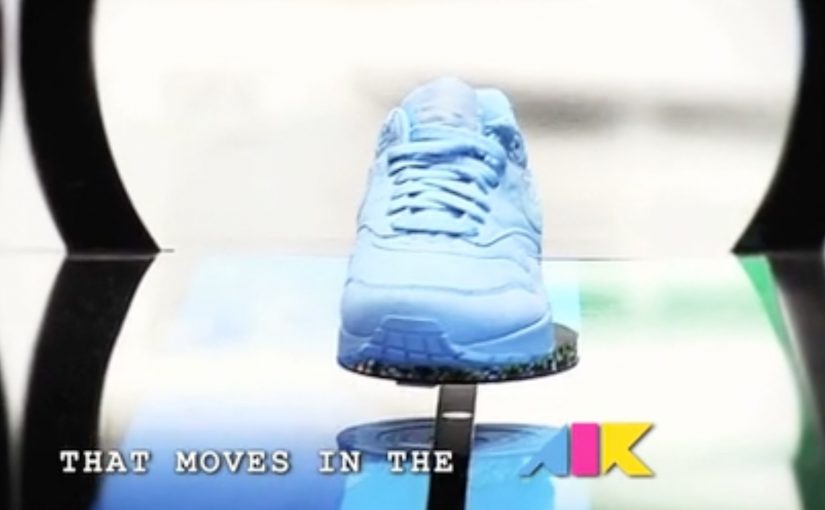
A Nike Air shoe hovers above a levitating platform in-store. The installation makes “Air” physical. The shoe looks suspended, and the display behaves like it is defying gravity.

The idea. Bringing “Air” to life

This digital installation for Nike, by +Castro and BBDO Argentina, turns the Nike Air story into something you can experience in a store. A levitating shoe platform suspends the new range of Nike Air shoes and makes the benefit feel real, not claimed.

How it works. Blow to race

The twist is that the experience is not limited to the store. If you are in-store, or even online at The Nike Air Show, you get to race the Nike Air shoes live by blowing into a microphone. The installation reads the volume of air you blow and translates it into power for your Nike Air Race.

Why it works. In-store plus online, one mechanic

The activation keeps the interaction simple and intuitive. Air in. Speed out. It also connects two environments that are usually separate. A physical point of sale moment and an online experience. With one shared mechanic.


A few fast answers before you act

What is the Nike Air digital installation?
A levitating shoe platform in-store that suspends Nike Air shoes and turns the “Air” benefit into a physical experience.

What is the interactive element?
A microphone-based mechanic where people blow air to generate power for a live Nike Air Race.

Where does the race happen?
In-store, and also online at The Nike Air Show.

Who is behind the work?
+Castro and BBDO Argentina.

What is the transferable pattern?
Make the product benefit tangible, then use one simple input to connect the in-store moment to a parallel online experience.