
Recruitment: Pirates and Cyber Warriors

Since 2010 I have covered how different agencies around the world have been innovating with their recruitment campaigns. Now here are the latest two to join the list.

Two modern filters for hard-to-hire talent

Both ideas avoid broad “we’re hiring” noise. Instead, they place the offer inside the candidate’s real behavior, then use a simple mechanism to separate curiosity from capability.

The better recruitment move is to screen for behavior before you screen for polish.

The real question is not how to attract more applicants, but how to surface people whose behavior already matches the role.

Pirate Recruitment

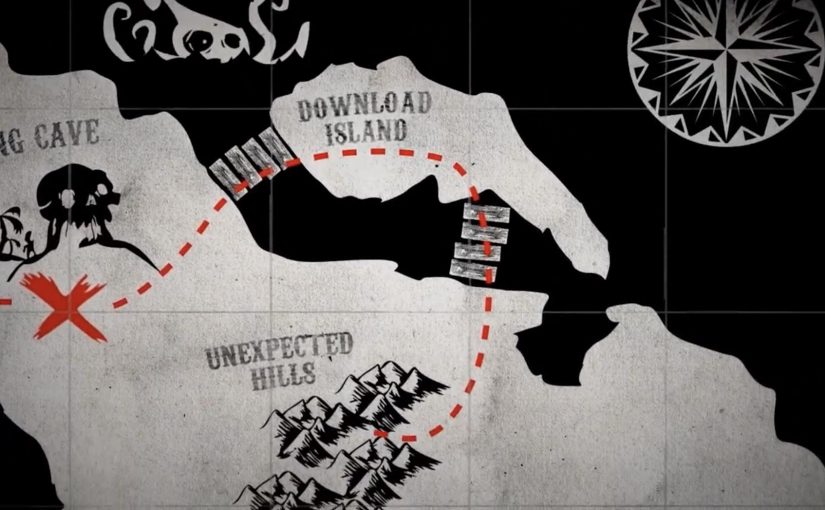
Young web designers often need expensive application suites to create, and many end up downloading them from illegal pirate websites. Ogilvy Brussels uses that insight by uploading a file that appears to be the “wanted” application suite.

When designers download it, they do not find the software. They find a stronger offer: a job opportunity, delivered right inside the moment of intent.

In competitive digital talent markets, the hardest problem is not reach but signal.

Why this one works

The delivery is the targeting. If you are not the kind of person who looks for pro tools, you never see it. If you are, the offer lands as a wink that proves the agency understands your world. Because the message appears inside a live tool-search moment, it feels relevant instead of interruptive.

Extractable takeaway: Put the offer where the target audience already goes to solve a real problem. The closer your message sits to a “work moment”, the higher the relevance and the lower the waste.

Cyber Warriors Challenge

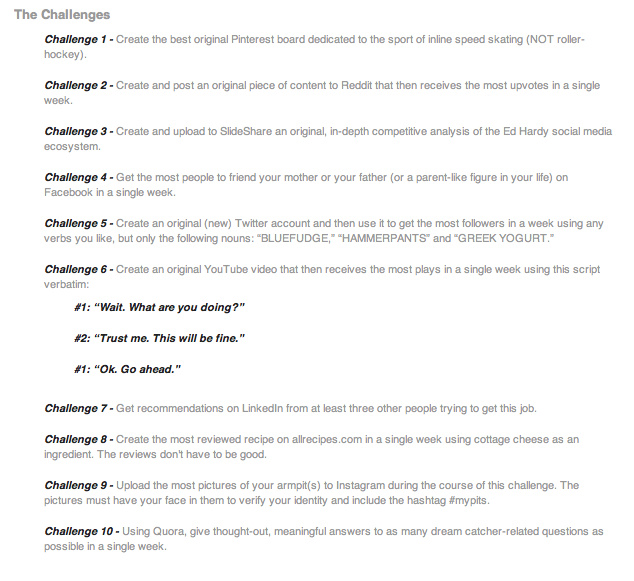
Wieden+Kennedy wants to recruit community managers for its client Old Spice, so it creates a deliberately crazy set of challenges. Candidates get five days to complete one or more tasks and submit proof of their exploits.
Cyber Warriors Challenge

Why this one works

It forces the right kind of effort. Community management is not just “posting”. It is speed, judgment, creativity, and resilience under ambiguity. A challenge-based entry filters for people who can actually do the work, not just describe it.

A small, time-boxed demonstration of the craft makes the screening signal stronger than a generic application form.

What to steal for your own recruitment

  • Recruit inside real behavior: distribute where the audience already acts, not where recruiters usually post.
  • Make the first step self-selecting: the wrong candidates should bounce naturally.
  • Keep the proof simple: “show me” beats “tell me”, but it has to be feasible in limited time.
  • Respect the audience: clever targeting works when it feels insightful, not exploitative.
  • Optimize for quality, not volume: fewer applicants can be a feature if they are better matched.

A few fast answers before you act

What is “pirate recruitment” in one line?

A job offer is packaged as a fake software download on pirate sites, so the right web designers discover the recruitment message at the moment they search for pro tools.

What is the Cyber Warriors Challenge?

A time-boxed set of tasks used as a screening step to recruit Old Spice community managers by requiring candidates to submit proof of real-world exploits.

Why do these tactics outperform standard job ads?

They target behavior, not demographics. Both approaches reach people in-context and require a small demonstration of motivation or capability.

What is the biggest risk when copying these ideas?

Trust and ethics. If the tactic feels deceptive, unsafe, or disrespectful to the audience, it can damage the employer brand faster than it attracts applicants.

How do you measure success?

Not by raw applicant volume. Track qualified applicants, interview-to-offer ratio, time-to-hire, and early performance or retention of hires sourced through the mechanic.
Orange UK: Singing Tweetagrams

When “say it on Twitter” becomes “say it in song”

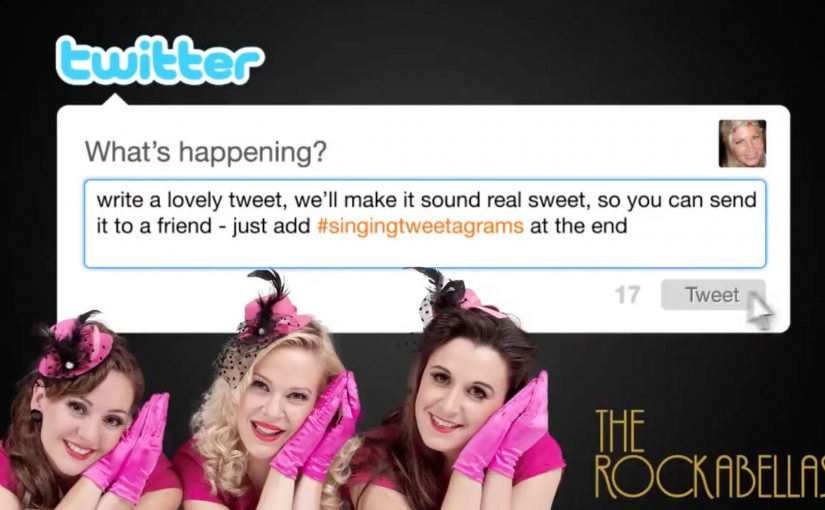
Got a friend who needs cheering up? Or maybe you just want to tell them that you love them, miss them, or really like their new haircut. Now you can say it with Orange UK’s new singing tweetagram. In this activation, a tweetagram is a short tweet that gets turned into a personalized song you can share.

The mechanic: hashtags in, custom songs out

It works like this. You write the tweetagram message to someone, adding the hashtag #singingtweetagrams. Orange then picks the best ones and has the Rockabellas record the message in song within a few hours. Orange then uploads the song and tweets it to you with a link, so you can send it on to the person.

A tweetagram is a short message written in the native language of Twitter, then converted into a personalized media artifact that feels like it was made for one person.

In consumer social marketing, the strongest hashtag activations reward participation with a tangible output that people can share without extra explanation.

Why it works: the reward is the content

The clever part is that the prize is not a discount or a badge. The prize is the thing you actually want to share. This is a smart activation because it turns participation into a gift-like artifact people actually want to pass on. A custom song is inherently gift-like, and it gives the sender social credit while giving the receiver a genuine moment.

Extractable takeaway: If you can turn a native platform input into a fast, polished, personal artifact, the reward becomes the share, and the experience travels without extra persuasion.

This also reduces the usual user-generated content risk. Users write the raw line, but the brand controls selection, production, and final output quality.

When a brand turns a user’s message into a polished artifact and returns it quickly, it converts “engagement” into a keepsake. That creates higher motivation to participate and higher likelihood of forwarding.

The operational question: can Orange produce at internet speed?

The question will be whether they can keep up the pace set by Wieden + Kennedy in its Old Spice effort, which was described at the time as producing more than 180 videos in a couple days and pumping out responses nearly immediately. The real question is whether Orange can keep the “within hours” turnaround feeling real at scale.

That comparison matters because the magic is not only the idea. It is the turnaround time. If the lag feels slow, the moment passes and the sender stops feeling clever for trying.

Steal this pattern: hashtag-to-song rewards

  • Make the output unmistakably personal. Names, in-jokes, and direct address beat generic templates.
  • Return value fast. “Within hours” is part of the product, not a service detail.
  • Keep creation native. Let people use the platform behavior they already know. Here it is a tweet plus a hashtag.
  • Curate to protect quality. Selection is a feature. It keeps the final artifacts share-worthy and on-brand.

A few fast answers before you act

What is Orange UK’s Singing Tweetagrams campaign?

It is a Twitter-based activation where people post a message with #singingtweetagrams. Orange selects some messages and has the Rockabellas record them as short personalized songs, then sends the result back as a shareable link.

Why is “speed” so important in this format?

Because the sender’s motivation is tied to the moment. Fast turnaround keeps the interaction feeling live, current, and socially relevant.

What role does curation play in making it work?

Curation protects output quality and brand tone. Users provide raw inputs, but the brand controls which messages become finished content.

How is this different from typical user-generated content contests?

The reward is not external. The reward is the finished content itself, which is designed to be shared and kept.

What is the biggest execution risk?

Production bottlenecks. If demand outpaces recording capacity, turnaround slows and the concept loses the real-time feeling that drives participation.

Old Spice: The Social Response Campaign

One body wash campaign that owned the conversation

This Old Spice case study takes us through the insight around targeting men and women at the same time to generate conversation around body wash. When it launched, the campaign managed to capture 75% of all conversations in the category.

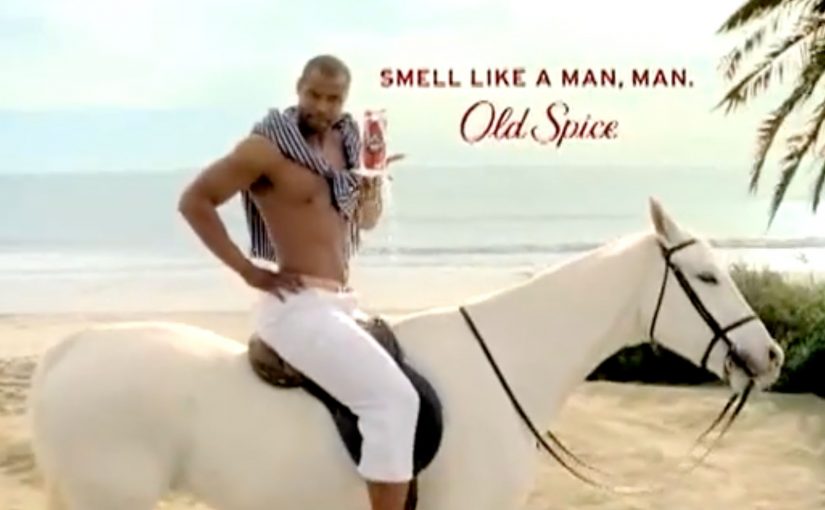
To continue the success, Old Spice & Wieden + Kennedy created the next level, where Mustafa, now a household hero, a character people recognized instantly, engaged with the fans directly. The response campaign consisted of around 180 customized videos which engaged the fans directly. Thus it became the best social campaign ever to have been created.

Here are some stats of the campaign.

  • On day 1 the campaign received almost 6 million views (that’s more than Obama’s victory speech)
  • On day 2 Old Spice had 8 of the 11 most popular videos online
  • On day 3 the campaign had reached over 20 million views
  • After the first week Old Spice had over 40 million views
  • The Old Spice Twitter following increased 2700% (probably off a lowish base)
  • Facebook fan interaction was up 800%
  • Oldspice.com website traffic was up 300%
  • The Old Spice YouTube channel became the all time most viewed channel (amazing)
  • The campaign has generated 1.4 billion impressions since launching the ads 6 months ago
  • The campaign increased sales by 27% over 6 months since launching (year on year)
  • In the last 3 months sales were up 55%
  • And in the last month sales were up 107% from the social responses campaign work
  • Old Spice is now the #1 body wash brand for men

And without further a-due. The best social campaign ever.

The real shift: from broadcast to back-and-forth

The original idea did something rare. It spoke to men and women at the same time. Then it did the smarter thing. It treated the public reaction as the next creative brief. 180 customized responses turn attention into participation.

Because the replies are both personal and public, each interaction creates a reason for more people to watch, share, and join in.

In FMCG categories where products are similar, a brand character plus high-volume two-way interaction can turn attention into a defensible advantage.

The real question is whether you are willing to treat audience reaction as the next creative brief, not a comment thread to manage.

Why this still feels like a blueprint

Most campaigns stop when the film launches. This one starts there. When the character becomes a “household hero,” the brand gains a voice people want to talk to. Brands should treat the response layer, meaning the rapid stream of direct-to-person reply videos, as first-class creative, not post-launch community management.

Extractable takeaway: If a character and tone can scale, rapid, personalized public replies convert one-time views into repeat participation.

What the numbers are really doing here

The stats are not just bragging rights. They are proof that conversation can move the entire system. Views, follows, site traffic, impressions, and ultimately sales. All tied to a campaign designed to travel socially.

Old Spice’s response playbook you can borrow

  • Build for both sides of the purchase conversation. The user. And the influencer in their life.
  • Treat launch day as the start, not the finish line. Plan the response layer.
  • Create a character and tone that can scale. Dozens or hundreds of variations should still feel instantly recognizable.

A few fast answers before you act

What was the core insight in this Old Spice campaign?

Target men and women at the same time to generate conversation around body wash, then use that conversation to fuel the next wave of content.

What made the “response campaign” different?

Mustafa engaged fans directly through around 180 customized videos, turning audience attention into two-way interaction.

What results did the post claim?

The post cites rapid view growth over the first week, large jumps in social following and interaction, major traffic increases, and significant sales lifts over months.

What is the core mechanic behind the success?

A launch film that sparks broad conversation, followed by high-volume personalized responses that keep the conversation accelerating instead of fading.

What should you copy if you cannot produce 180 videos?

Copy the structure. Launch a character-led idea that invites replies, then publish a smaller set of fast, direct responses that keep the conversation moving.