
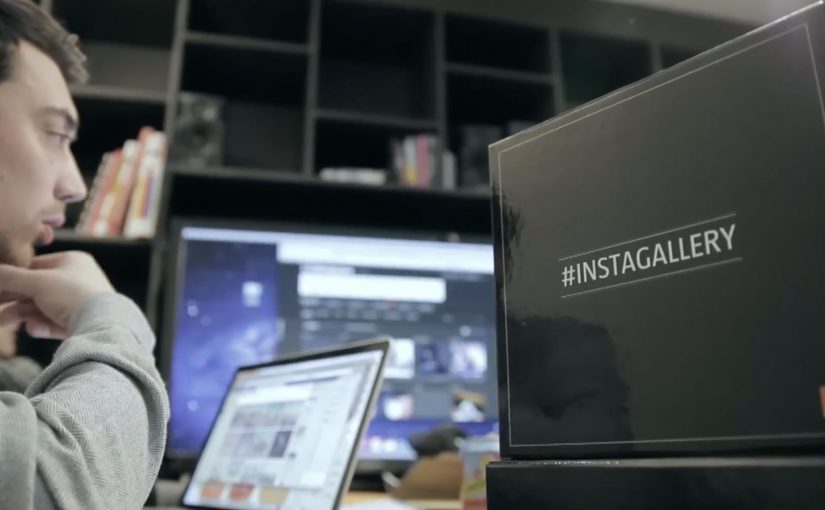
Orange: Instagallery

Orange: Instagallery

An Instagrammer posts a photo and suddenly sees it displayed as “art” in a gallery setting, complete with strangers commenting on it in real time. That is the hook behind Orange France’s Instagallery. A campaign built to make network speed feel like instant cultural presence.

A gallery built from other people’s feeds

To promote a new high-speed network, Orange works with Cake Paris to target influential Instagram users by pulling their photos into a staged photo exhibition in Los Angeles. The exhibition becomes a physical set for a second move. Capturing the reactions.

The mechanism: personal proof sent back to the source

Orange films people walking through the gallery and making awkward, unfiltered comments on the displayed photos. Those short films are then sent directly to the original Instagrammers, who share the clips with followers. The sharing loop creates buzz for Orange France without buying classic reach in the same way a traditional launch campaign would.

In European telecom marketing, speed messaging becomes more believable when it is demonstrated as immediacy inside a social platform people already use daily.

Why this lands

It works because it is personal before it is promotional. The influencer is not asked to “post an ad”. They receive a surprising artifact starring their own content, with a built-in narrative their audience wants to watch. The physical gallery in Los Angeles adds a scale cue, and the awkward commentary makes the clip feel real rather than polished brand content.

Extractable takeaway: If you need influencers to spread the message, give them a shareable object that is already about them, and let the brand benefit ride inside the story instead of sitting on top of it.

What Orange is really buying

The real question is how to make a technical speed claim travel through social sharing without feeling like a telecom ad.

This is less an Instagram stunt and more a distribution design. By distribution design, this means structuring the idea so the creator’s reason to share also becomes the brand’s route to reach. Orange turns “network speed” into a reason for participation, then uses personalization to lower friction. The brand benefit is present, but it is not the main character. The creator is.

What to borrow from Instagallery

  • Start with the creator’s ego, not your slogan. Make the shareable asset feel like a reward for them.
  • Move digital into a physical set. A real-world installation creates legitimacy and better footage.
  • Build a loop, not a one-off post. Content goes from user, to brand, back to user, then out to audience.
  • Make the reveal fast. The audience should understand “why this exists” in the first seconds.

A few fast answers before you act

What is Orange’s Instagallery?

It’s a campaign that turns selected Instagram photos into a staged gallery exhibition, then sends creators short reaction films they can share to drive buzz for Orange France.

Why build a gallery in Los Angeles for a French telecom brand?

A distant, recognisable cultural setting amplifies perceived scale and surprise. It makes the creator’s photo feel like it “travels” instantly and matters beyond their feed.

How does the influencer loop work here?

Creators post normally, the brand repackages their content into an event and a film, and the creator then shares the film because it features them, not because they were handed a script.

What are the main risks with this pattern?

Rights and permissions for using user photos, avoiding a “creepy” feeling, and ensuring the brand role stays clear enough that the message does not get lost behind the stunt.

How can a non-telecom brand adapt this?

Create a “real-world upgrade” of customer-created content, capture authentic reactions, and return a ready-to-share edit to the creator so distribution feels like self-expression.

LEGO France: Creativity Forgives Everything

LEGO France: Creativity Forgives Everything

A child gets caught mid-creation. The scene looks like trouble at first glance, then the line flips the judgement: “We forgive everything to their creativity”. LEGO has recently launched this campaign in France around that exact tension between mess and imagination.

Click here to watch the video on AdsSpot website.

Turning “naughty” into proof of imagination

The core mechanism is a simple reframe. Instead of defending play as “educational”, the work leans into the moments parents normally correct. The child’s act is still a transgression, but it is also a creative act. The signature gives parents permission to smile first, and judge later.

In brand advertising for physical toys competing with screens, the fastest way to win attention is to make imagination look like something happening right now in the room.

Why the line sticks

“Creativity forgives everything” works because it treats creativity as a social contract, not a product feature. Here, “social contract” means an unspoken trade-off: parents tolerate the mess because it signals imagination at work. Parents recognise the micro-drama instantly. You want boundaries, but you also want your child to be bold, curious, and inventive. The campaign positions LEGO as the tool that triggers that boldness, even when it comes with collateral damage.

Extractable takeaway: If your category is crowded with functional claims, choose a human tension your audience already lives with. Then write a line that resolves the tension emotionally, and let the product become the enabler of that resolution.

What LEGO is protecting

This is brand defence disguised as humour. The real question is how LEGO stays culturally distinctive when screens can deliver endless entertainment without leaving any real-world evidence. It keeps LEGO out of a specs battle and away from “learning toy” cliches. By celebrating the messy edge of creativity, the brand claims a territory that is hard for digital entertainment to steal. Real-world play that leaves evidence.

What brands can borrow from LEGO here

  • Use a permission-giving signature. A great brand line does not just describe. It authorises a feeling or behaviour.
  • Stage recognisable “caught in the act” moments. When the scenario is instantly familiar, the audience supplies the backstory for you.
  • Make the brand the ally. The work does not lecture parents. It makes them complicit, which is more persuasive.
  • Let the theme travel across formats. This idea naturally fits film, print, and outdoor because the tension can be captured in a single moment.

A few fast answers before you act

What is LEGO’s “Creativity forgives everything” campaign?

It is a LEGO France brand campaign built around the idea that adults can forgive children’s small “misbehaviours” when they are clearly driven by creativity and imaginative play.

What is the core idea in one sentence?

Reframe mischief as imagination, then position the product as the trigger for that imagination.

Why does this positioning work for LEGO specifically?

Because LEGO is a physical system for building anything. The campaign connects that open-endedness to real, observable behaviour rather than abstract “learning” benefits.

How do you adapt this approach to another category?

Identify a daily tension your audience recognises, write a line that gives emotional permission, then demonstrate the product as the enabling tool inside that tension.

What should you avoid when copying the pattern?

Avoid moralising. The power comes from empathy and recognition, not from telling the audience how they should behave.

Turismo de Portugal: Cobblestone QR Codes

Turismo de Portugal: Cobblestone QR Codes

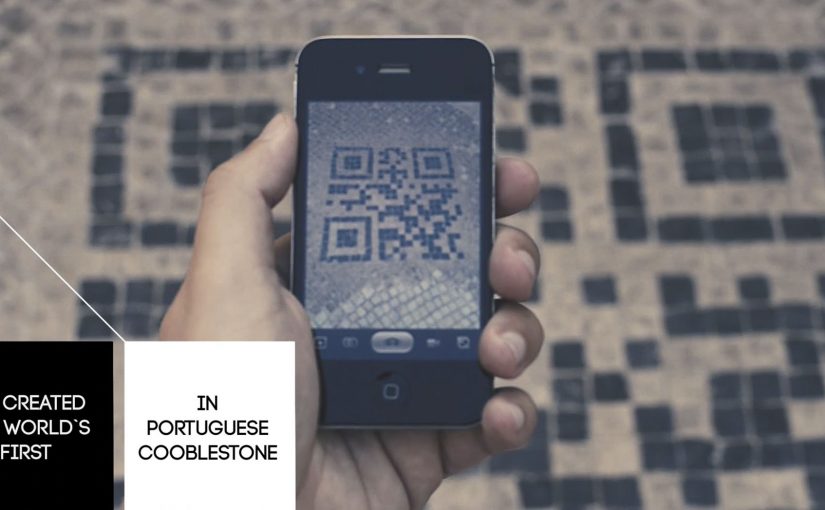
To get into the minds of tourists, Turismo de Portugal decides to fuse QR code technology with Portugal’s historical cobblestone tradition. The result is described as the first QR code made from Portuguese cobblestones.

The first QR code is embedded into the city ground in Lisbon, followed by an installation in Barcelona. Reported write-ups describe the campaign as successful enough to spark plans for similar cobblestone QR codes in other cities such as Berlin, Paris, Tokyo, New York, Vienna, Goa, Lima, and Oslo.

When street craft becomes the interface

The mechanism is simple. A familiar tourist behavior, looking down at the street and looking for cues, is turned into a scan trigger. The QR code is physically “native” to the place because it is built using the same black-and-white stone patterns people already associate with Portuguese streets, especially in historic areas like Chiado.

In destination marketing and city tourism promotion, bridging physical street culture to mobile content is a reliable way to convert foot traffic into deeper engagement. Destination brands should treat the street as the interface, not just the backdrop.

In European destination marketing, the most scalable activations turn street-level cues into a clear mobile doorway.

Why this lands with visitors

It does two jobs at once. It signals “authentic Lisbon” through material and craft, and it gives the tourist an immediate next step through their phone. The real question is how you turn a place’s own cues into a frictionless next step without making it feel like advertising. Unlike a poster or a billboard, the code is part of the ground people are already walking on, so discovery feels like finding something, not being targeted.

Extractable takeaway: If you want mobile interaction in public space, embed the call-to-action into something the place already owns. Local texture first, technology second. The scan should feel inevitable, not imported.

What to steal for your own place-based activations

  • Make the trigger belong to the environment. Use local materials, patterns, or rituals so the interaction feels contextual.
  • Design for tourist attention spans. The best street interactions reward a 5-second decision, not a long explanation.
  • Use “discovery” as the media buy. When people feel they found it, they are more likely to scan, share, and talk about it.
  • Plan for maintenance and legibility. Outdoor codes live or die based on wear, lighting, contrast, and camera-readability.

A few fast answers before you act

What is the Cobblestone QR idea in one sentence?

A QR code built into the street using Portuguese cobblestones, so tourists can scan a piece of the city itself to access content.

Why does making a QR code “physical” matter?

Because it turns a generic tech behavior into a place-specific experience. The scan feels like interacting with Lisbon, not with a random sign.

What makes this different from putting a QR code on a poster?

Placement and meaning. A poster is rented space. A street pattern is owned space. The medium carries authenticity before the message even loads.

What should the QR code open to?

A fast-loading mobile page that confirms you are in the right place and offers one clear next step. If the page feels generic or slow, the “found it” magic disappears.

What is the biggest execution risk?

If the code is hard to scan or the content behind it is weak, the novelty collapses. The physical build earns attention. The mobile experience must repay it.