
Europcar: Crush Hour

A crushed-car prank with a very public punchline

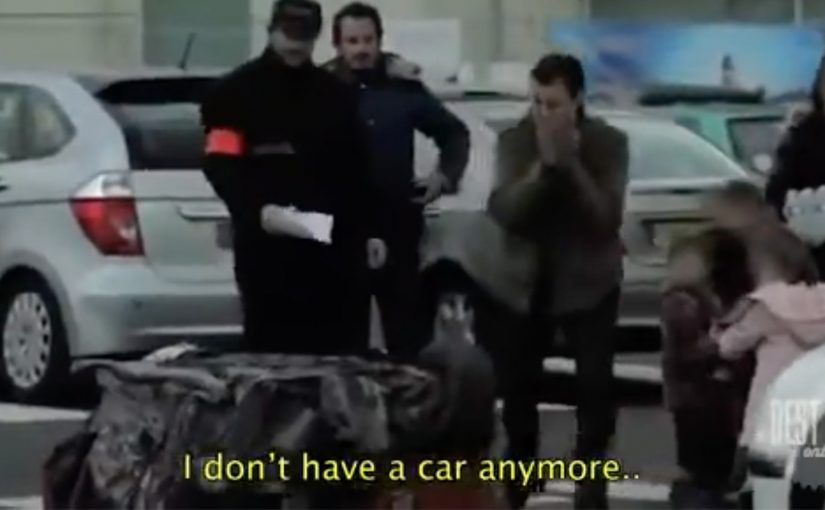
Ogilvy Paris was entrusted to drive acquisition for Europcar’s Auto Liberte, a service that aims to have you rent cars instead of buying them. So, they devised a wicked prank in which they towed away unsuspecting people’s cars, while replacing them with crushed cube cars, and a number to call for help.

The phone number given was of a local radio station that was broadcasting live to everyone in Paris.

The mechanism: make “car ownership pain” impossible to ignore

The stunt works because it hijacks a real ownership fear. Your car is gone. Then it escalates the feeling by replacing it with a cube that looks final, and a phone number that turns the private panic into a public moment. Here, “car ownership pain” means the sudden anxiety, time loss, and hassle that can come with owning and managing a car in a city.

Instead of resolving the situation quietly, the call routes into live radio, so the story instantly becomes shareable content and social proof.

In urban mobility markets, moving people from ownership to access depends on reframing convenience, cost, and hassle in a way that feels personal and immediate.

Why it lands: it turns a product claim into lived experience

Auto Liberté is an alternative to owning a car. The prank makes “owning a car is a headache” feel visceral in seconds, without needing a brochure explanation. It also flips the usual persuasion order. Emotion first. Rationalization second. Once the audience feels the pain, the rental alternative feels like relief.

Extractable takeaway: Make the old habit’s hidden costs felt in seconds, then let the alternative arrive as immediate relief.

The business intent behind the spectacle

This is acquisition marketing dressed as entertainment. The goal is to create talk value at street level, then convert that attention into brand consideration for a service that competes with a deeply ingrained habit.

The real question is whether you can make the old habit feel costly enough that the alternative feels like relief.

Prank marketing like this is worth doing only when the reveal is safe and the resolution is fast.

By integrating radio, the campaign extends the moment beyond the people on the sidewalk to a city-scale audience, while keeping the message anchored to everyday reality.

Four moves for ownership-to-access campaigns

  • Attack the habit, not the competitor. The target here is ownership friction, not another rental brand.
  • Build a simple reveal. Missing car. Crushed cube. One number to call. Instant comprehension.
  • Make the amplification native. Live radio turns reactions into content without needing a separate distribution plan.
  • Design the story to travel in one sentence. “They crushed my car and put me live on radio” spreads fast.

A few fast answers before you act

What is Europcar’s “Crush Hour” campaign?

It is a street prank created for Auto Liberté where parked cars were towed away and replaced with crushed cube cars, pushing owners to call a number for help.

How does the prank actually work, step by step?

Remove the real car. Replace it with a visually shocking “final” object. Add a single instruction. Call the number. Then route the call into a live broadcast so the reaction becomes the content.

Why use a crushed cube car instead of a simple “your car was towed” sign?

Because it escalates emotion instantly. It makes the loss feel irreversible and personal, so the audience experiences “ownership pain” before they ever hear the service pitch.

How does the live radio element change the impact?

It turns a private moment into a public story. The call becomes instant broadcast content, which amplifies reach and makes the message feel socially real, not just advertised.

What is the campaign trying to persuade people to do?

It positions Auto Liberté as an alternative to car ownership, using a high-drama metaphor to make ownership feel stressful and renting feel like relief.

What should brands be careful about with prank marketing?

Intensity and consent. If the “moment of truth” feels unsafe, humiliating, or too punitive, the brand can lose trust even if the stunt earns attention.
AIDES: A Life

AIDES is described as a leading association in the fight against HIV/AIDS in France and Europe, with a long-running focus on both rights and prevention.

One of its prevention messages is delivered through a short film by TBWA\Paris called “A Life.”

A life story told in reverse

The film is structured as a life narrated backwards. It starts with old age and rewinds through the expected milestones. Family, love, travel, the sense of a full life. Then the rewind lands on a single moment in youth where HIV enters the story, and the future we just witnessed is revealed as the life that will not happen.

In public-health communications, prevention messages compete with fatigue and stigma, so narrative devices have to create attention without sounding like a lecture.

Why the reversal hits harder than a warning

The real question is how to make a familiar prevention warning feel personal enough to interrupt complacency.

Instead of describing risk, the spot makes the consequence legible as absence. It turns prevention from “avoid a bad outcome” into “protect the life you think you are going to have.” The backwards structure keeps the viewer engaged because it feels like a human story first, and only becomes a prevention message at the moment the timeline snaps into focus.

Extractable takeaway: If your message is easy to ignore in abstract form, anchor it in a relatable future, then reveal the single preventable turning point that removes that future.

What the campaign is trying to change

The intent is not awareness of HIV as a concept. It is behavior. That is the stronger strategic move, because the film is built to influence a decision, not just to restate a known risk. Use protection, and treat the decision as something that safeguards years, not minutes. The creative also avoids positioning people living with HIV as “other.” It focuses on a moment anyone can recognize. A choice made early that reshapes everything later.

What to steal for prevention and behavior-change work

  • Start with a human narrative. Let the viewer lean in before you reveal the message.
  • Make the consequence concrete. Show what disappears, not just what might happen.
  • Link the call-to-action to identity. “Protect your life” often motivates more than “avoid a disease.”
  • Use one clear turning point. A single, memorable moment is easier to recall than a list of risks.

A few fast answers before you act

What is the core creative device in “A Life”?

A backwards life narration that rewinds from old age to youth, then reveals the preventable moment where HIV changes the future that was just described.

What behavior is the film trying to encourage?

Prevention, especially the consistent use of protection, by reframing it as protecting your future rather than reacting to fear.

Why does telling the story in reverse work?

It sustains attention and makes the twist meaningful. The viewer first invests in a life they recognize, then understands what is at stake when that life is taken away.

What should a marketer avoid when using a similar approach?

Over-explaining the moral. The power comes from the reveal. If you add heavy-handed copy, you reduce the emotional clarity the structure creates.

When is this structure a good fit?

When a prevention message is well-known but routinely ignored, and you need a fresh device that turns a familiar warning into a personal, memorable stake.

Flashback Book Facebook App

You scroll through years of Facebook updates, realise how quickly your best moments disappear into the feed, then hit a button to turn them into something you can actually keep. Flashback Book takes your statuses and photos and produces a printed Facebook book you can hold.

The brief. Launch a Facebook platform without the usual gimmicks

Bouygues Télécom asks ad agency DDB Paris to come up with an idea to launch their Facebook platform. The goal is to go beyond using profile pictures in a funny way, or pranking friends with small jokes.

The insight. We post every day, then forget what we shared

DDB looks at the way we use Facebook and finds a simple truth. Even though we use the social networking site every day, we forget our favourite moments we share online. So they create an app that changes that, and keeps Facebook, in a book.

How the Flashback Book is created

Facebook ads engage people to participate in the creation of their books and receive a printed copy of their statuses and photos. You can also choose up to 10 friends to add into your book, as well as the desired timeframe, whether it is your birthday, your wedding, or from the very beginning of your profile.

That works because a few simple choices turn passive scrolling into light curation, which makes the printed outcome feel personal without making the experience feel like work.

Why turning the feed into a book lands

The real question is how you make a social platform feel valuable when most social content is designed to disappear into the next post. The answer here is to turn forgotten updates into a keepsake. This is a smarter launch move than another lightweight Facebook stunt because it gives people something worth finishing.

Extractable takeaway: When people feel their digital history is worth preserving, participation stops feeling like promotion and starts feeling like recovery.

In social platforms built on endless feeds, one durable way to create value is to convert personal traces into something people can keep, gift, or revisit.

After only two days they receive 15000 fans, and the limited edition of 1000 books are gone in only an hour.

What to steal from turning social memories into products

  • Turn the feed into a tangible artefact. A physical output makes “I should do this later” become “I want this now”.
  • Let users curate with a few meaningful choices. Timeframe and included friends are enough control to feel personal without slowing the flow.
  • Use life events as the organising logic. Birthdays and weddings are natural prompts for reflection and gifting.
  • Make the reward feel scarce and real. A limited edition run pushes completion and makes the outcome feel worth the effort.

A few fast answers before you act

What is Flashback Book in one sentence?

It is a Facebook app concept that turns your statuses and photos into a printed book, so your favourite moments live outside the feed.

What choices does the user control?

You choose the timeframe and can include up to 10 friends, which makes the book feel personal and event-based rather than generic.

Why does a physical book work as a social idea?

Because it flips ephemera into permanence. It turns “endless scrolling” into a curated artefact you can keep, gift, and revisit.

What is the key execution lesson here?

Make participation lightweight and the output tangible. When the reward is a real object, the motivation to complete the flow increases.

What makes the experience feel personal without becoming slow?

The user only chooses a timeframe and up to 10 friends. That gives enough control to feel personal without turning the flow into a long editing task.