
Carlsberg: Probably the Best Ad in the World

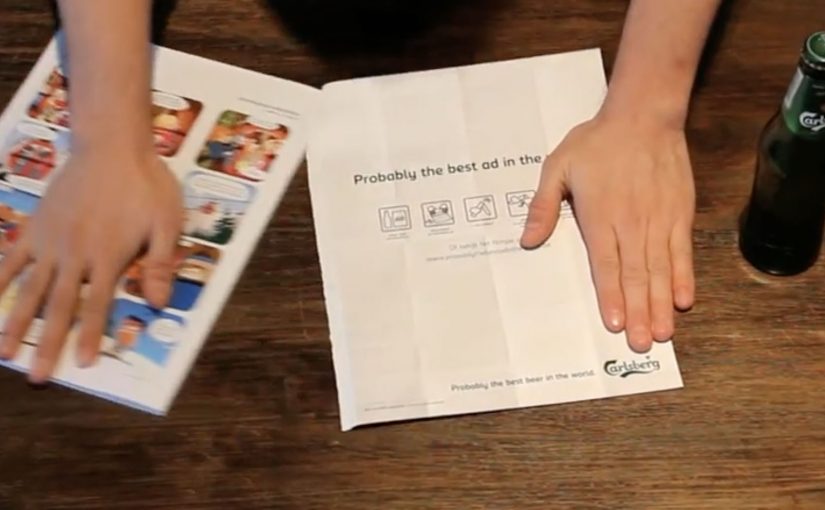
You can debate the effectiveness of magazine advertising all day long, but this Carlsberg ad from Belgian agency Duval Guillaume is undeniably useful. The advertisement reportedly appeared in Men’s magazine Menzo. Follow its instructions and you can use the flimsy piece of paper to open a bottle of Carlsberg.

How the idea is built

The mechanic is the message: the page is not just media. It is a tool. The ad teaches you how to tear and fold it into a working opener, which turns “try the product” into a physical action inside the magazine.

In print-led FMCG marketing, the fastest way to earn attention is to make the medium do something the viewer can immediately test.

The real question is whether your medium can deliver proof, not promises.

Why it lands

It turns a claim into proof. There is no argument to win and no feature list to remember. You either open the bottle, or you do not.

Extractable takeaway: Interactive print works when the action is the demonstration. Here, “interactive print” means the paper itself triggers a physical action, not just reading or looking. If the audience can do the product benefit with their hands in under a minute, the ad becomes memorable because it turns attention into a small personal “win”.

It forces participation. The reader cannot stay passive. The ad only completes itself when someone follows the instructions.

It earns a second look. Utility creates curiosity. People keep it, show it, and try it, which is the opposite of how most print gets treated.

Try it out yourself by downloading the advertisement from: www.probablythebestadintheworld.be.

But does it make this “probably the best ad in the world”? Not if you consider the likely inspiration below. The video shows someone using a piece of paper to open a bottle of Carlsberg.

Steal this: make the page a tool

  • Make the medium carry the benefit. If the product is about a moment. Build an execution that creates that moment.
  • Keep the instruction set frictionless. Fewer steps. Clear folds. Obvious success condition.
  • Design for sharing in the real world. The best print innovations get passed around physically before they get shared digitally.

A few fast answers before you act

What makes this print ad “interactive”?

It is not just read. It is folded into a functional bottle opener, so the reader completes the ad by doing something.

Why is a bottle-opener mechanic effective for beer?

It links the ad directly to the consumption moment. The ad becomes part of opening the product, not just talking about it.

Does utility automatically make a print ad effective?

It improves attention and memorability, but effectiveness still depends on distribution and whether people actually try it.

What is the biggest risk with “useful” print ideas?

If the build is fiddly or fails, the novelty collapses. The interaction must work reliably with minimal effort.

What is the most transferable lesson for advertisers?

When possible, replace messaging with demonstration. If the audience can experience the benefit through a simple action, persuasion gets easier.

Yellow Pages: Yellow Chocolate

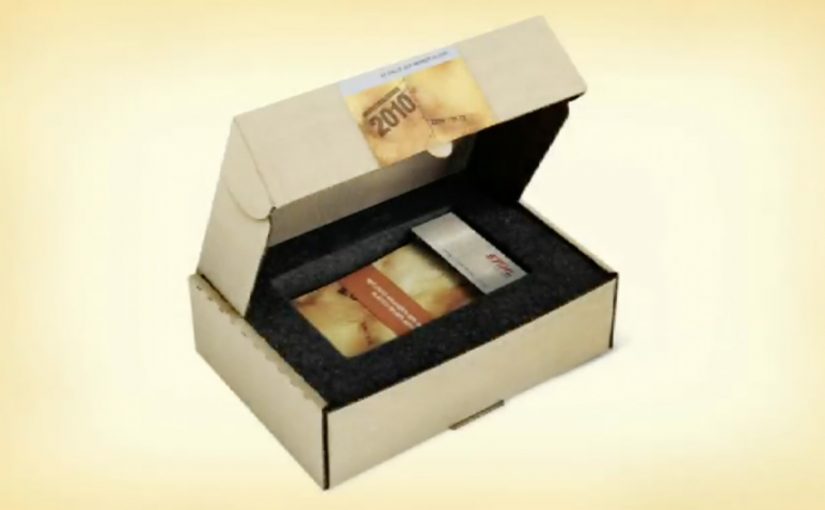
A phone directory brand sells a real chocolate bar, and the public lines up to buy it. That is the core twist behind Yellow Pages New Zealand’s “Yellow Chocolate”.

When a “job to be done” becomes a product on a shelf

The premise is simple and weird enough to travel. A regular New Zealander, Josh Winger, is tasked with creating, marketing, and distributing a chocolate bar that “tastes like the colour yellow”, using only businesses he can source via Yellow Pages across print, online, and mobile.

Here, a “job to be done” means the practical outcome people need help achieving, not the channel they use to achieve it.

The campaign is described as starting with a call for entries and then turning Josh’s progress into episodic content that pulls people into the build, not just the reveal.

How it works as an integrated proof, not a stunt

The mechanism is a live product demonstration disguised as entertainment. The brand does not claim usefulness. It forces a public, time-boxed build where every dependency is a Yellow Pages lookup, and the finished output is a retail product that carries the proof story with it.

That works because a public build turns a vague claim of usefulness into a visible chain of evidence people can watch, judge, and later buy.

At Cannes Lions 2010, the work is listed as winning a Gold Lion in Media, a Silver Lion in Titanium and Integrated, and a Bronze Lion in Cyber.

In mature categories where a brand needs to prove relevance to a search-first audience, turning the proof into something people can buy and share compresses “brand promise” into observable behavior.

Why “taste like yellow” sticks

An abstract brief invites participation. People argue about what “yellow” should taste like, contribute ideas, and then follow the build to see whose intuition survives contact with manufacturing, packaging, distribution, and retail reality.

Extractable takeaway: If your product is a utility people underestimate, stage a public build where your tool is the only allowed method. Then ship a tangible artifact that carries the proof narrative into everyday life.

What Yellow Pages is really buying

This is repositioning by demonstration. The chocolate bar is a carrier for a bigger reset: Yellow Pages is not an “old book your parents used”. It is framed as a modern system that can still help anyone get a job done, end to end, under real constraints.

The real question is whether a legacy utility can make usefulness feel current again without leaning on nostalgia or category habit.

What the results are described as

Results are reported as unusually strong for something that is, technically, a piece of marketing communications. The bar sold for $2. Some supermarkets reportedly sold out on launch day, and some bars were later traded online for up to $320. The campaign is described as building an online audience of more than 80,000, including around 16,000 Facebook fans and about 800 Twitter followers.

What to steal for your next “prove it” campaign

  • Make the constraint the headline. “Only use businesses found via X” is clearer than any brand manifesto.
  • Design for contribution. Pick a problem the audience can argue about in public, then let them feed the build.
  • Ship an artifact. A real product, sample, tool, or output beats a landing page when you need belief, not awareness.
  • Carry the proof inside the thing. Packaging and POS that explain “how it was made” extends the story past the content moment.

A few fast answers before you act

What is the Yellow Pages “Yellow Chocolate” campaign?

It is an integrated campaign where Yellow Pages challenges a participant to create and launch a chocolate bar that “tastes like yellow” using only Yellow Pages listings to source everything needed. The finished bar becomes the proof artifact.

Why does a physical chocolate bar matter here?

Because it turns an abstract brand claim into observable reality. People can buy the output, and the story of how it was made becomes a portable demonstration of the directory’s usefulness.

Which Cannes Lions awards is it listed as winning?

Cannes Lions listings for 2010 show the work winning a Gold Lion in Media, a Silver Lion in Titanium and Integrated, and a Bronze Lion in Cyber.

What outcomes are reported?

Reported outcomes include rapid sell-outs in some supermarkets, bars traded online for high prices, and sizeable social followings. Some recall and usage-lift figures are also reported, but vary by secondary retellings.

What is the transferable principle?

When you need to change perception of a legacy utility, do not argue. Force a public build where your tool is the only allowed method, then ship the proof as a tangible artifact.

STIHL: The Self-Tearing Autumn Calendar

STIHL asked Euro RSCG Germany to develop a business gift promoting its range of leaf blowers. The target audience was international key accounts, and the brief was clear: create something they had never seen before.

Euro RSCG invented an autumn calendar that tears off its “leaves” automatically. The gag is that the calendar behaves like a tree in fall, dropping leaves without you touching it, and making the “clean-up problem” feel immediate and slightly annoying. Exactly the moment where a leaf blower becomes the satisfying solution.

How the product demo is baked into the gift

The mechanism is pure physical storytelling: an object that creates a small mess on schedule. Each day, another leaf falls. Over time, the pile builds. The calendar turns passing time into accumulating clutter, so the product need is not explained, it is experienced.

In B2B product marketing, tactile gifts are most effective when they are not branded trinkets but working demonstrations of the problem the product solves.

The real question is whether your demo makes the problem felt without a salesperson in the room.

Why it lands

It turns a convenience category into felt relief from a recurring irritation, and it does it repeatedly through a daily trigger that keeps resurfacing without loud branding.

Extractable takeaway: B2B gifts perform when they create a recurring micro-problem that mirrors the customer’s real pain, then let the product category be the obvious, satisfying fix.

  • It makes necessity visible. Leaf blowers are often sold as convenience. This calendar reframes them as relief from a recurring irritation.
  • It creates repeated moments, not a one-time impression. A calendar is a month-long touchpoint. The idea keeps resurfacing every day the “leaf” drops.
  • It respects the key-account audience. The gift is novel, engineered, and story-worthy. It earns attention without needing loud branding.

Borrow this mechanic for B2B demos

  • Turn time into a narrative device. Calendars, subscriptions, and scheduled triggers are built for repeat exposure.
  • Create a controlled irritation. A controlled irritation is a small, reversible annoyance that stays playful. The best demos let people feel the problem in a safe, playful way.
  • Make the object retellable. If the recipient can explain it in one sentence, it becomes a story they share inside the company.

A few fast answers before you act

What is the “autumn calendar”?

A calendar designed so its leaf-shaped pages tear off automatically, mimicking falling leaves and creating a small daily mess.

Why does that sell leaf blowers?

Because it dramatizes the nuisance of accumulating leaves and makes the “cleanup solution” feel immediate and obvious.

Who was this made for?

International key accounts, as a business gift intended to be novel and memorable rather than a standard brochure or giveaway.

What makes this a strong example of B2B creativity?

The gift demonstrates the problem through behavior, not messaging. It earns repeated attention through daily interaction.

What is the transferable lesson?

If you can make the pain point show up physically and repeatedly, you reduce the need for persuasion. The demo does it for you.