
ibis: Sleep Art Paints Your Night

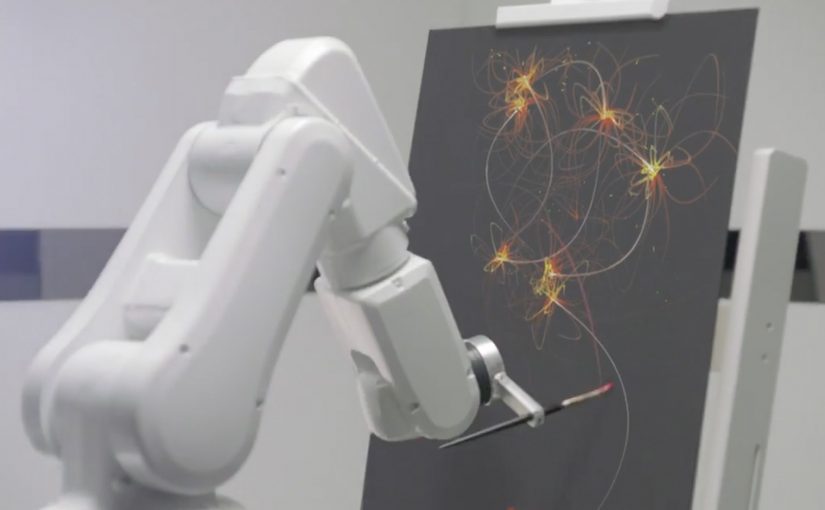
You fall asleep in an ibis room. While you’re out, a robot “wakes up” and turns your night into an abstract painting. By morning, you have sleep captured as a physical artifact, not a vague promise.

How Sleep Art works

The setup is simple in concept and slightly mad in execution. A mattress fitted with sensors captures signals like movement, temperature and sound. Those inputs are translated into brush strokes, and a robot paints them onto a canvas live through the night.

In European hospitality marketing, making an invisible benefit like “better sleep” visible and shareable can create disproportionate talk value for an economy brand.

The real question is whether a hotel brand can turn a private, hard-to-prove benefit into something people notice, remember, and share.

Where it shows up

The Sleep Art experience is positioned as available in European capitals including Paris, London and Berlin. Brand materials for the same operation also describe a Warsaw stop as part of the run.

Why this lands

This hits because it turns a universal, private activity into something you can see, keep, and show. It also gives ibis a distinctive proof object for its sleep story. By proof object, I mean a tangible output, like a canvas or shareable visual, that makes the benefit visible without extra explanation.

Extractable takeaway: If your core benefit is hard to perceive in the moment, translate it into a concrete output people can take home, screenshot, or share, so the benefit becomes demonstrable without extra explanation.

What the brand is really doing

Sleep Art is a product promise made legible. It frames “happy sleep” as both experience design (the room, the bed, the ritual) and content creation (the artwork), so the campaign functions as acquisition, PR, and brand repositioning at the same time.

How to make invisible benefits visible

  • Make the benefit visible. Convert an intangible promise into an artifact people can show.
  • Instrument the experience. Sensors are not the headline. The output is.
  • Design the morning-after moment. The reveal is where the story becomes tellable.
  • Scale with a lighter digital version. A physical installation creates the myth. A simple app extends reach.

A few fast answers before you act

What is ibis Sleep Art?

It’s a branded experience that converts sleep signals into abstract art, originally via a sensor-equipped bed feeding a robot that paints a canvas during the night.

What data does it use?

Signals such as movement, temperature and sound from sensors in the sleep setup, translated into visual patterns and brush strokes.

Why put a robot in the story at all?

The robot makes the transformation feel physical and “real,” which increases memorability and gives the brand a strong visual for PR and sharing.

How do people participate?

Through a registration mechanic routed via the ibis Facebook presence, positioning it as a limited, win-an-experience style activation.

What makes this a strong hospitality campaign pattern?

It turns a differentiator that’s hard to prove quickly, sleep quality, into a visible output that can travel beyond the hotel stay.
Rise of the Machines: Siri and Quadrotors

Here are two videos (fictional and real) that create the same feeling. A Skynet reality does not seem too far away.

Two clips, one unsettling takeaway

One is a short parody where a voice assistant turns from helpful to threatening. The other is a real lab demo where tiny quadrotors fly as a coordinated swarm. Put them next to each other and the “machines are getting clever” idea stops being a movie line and starts feeling like a trajectory.

Fiction, then engineering

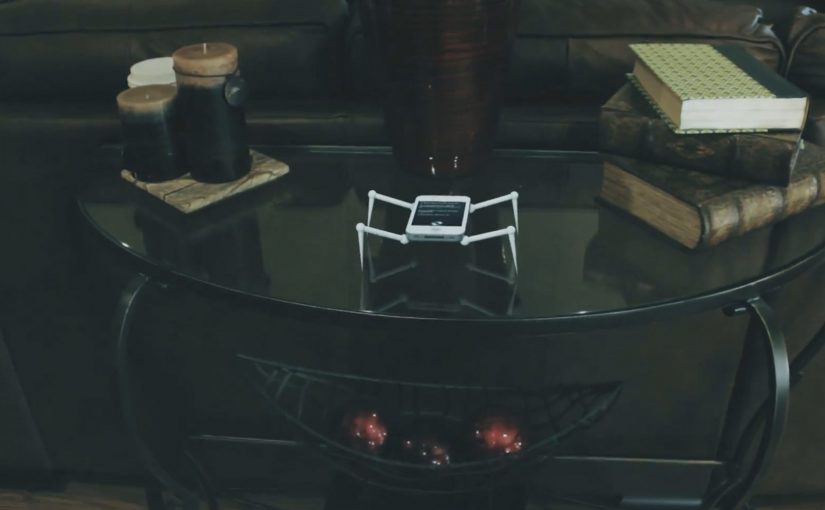
Psycho Siri

Andrew Films USA delivers a compact piece of sci-fi anxiety. Siri is framed as familiar, then reframed as unpredictable, with polished visual effects that make the escalation feel plausible.

A swarm of Nano Quadrotors

GRASP Lab at the University of Pennsylvania shows coordinated micro flight with a team of nano quadrotors, presented as experiments in swarm behavior and formation control. The choreography is the point. It looks like one organism, not many small machines.

Here, “swarm behavior” means several machines coordinating as one system rather than acting as isolated units.

In consumer technology and robotics, capabilities move from demo to everyday life faster than most people update their mental models.

The real question is not whether machines look intelligent, but whether people can understand, predict, and control what they do.

Why it lands: the same story from two directions

Parody works because it exaggerates a fear people already carry. When the “assistant” becomes the aggressor, the joke is that the interface you trust most is the one you cannot physically switch off in the moment.

Extractable takeaway: When technology feels “sudden”, it is often because interface adoption outpaces public understanding of the underlying capability. Brands and product teams win trust by making capabilities legible, bounded, and explainable before they become ambient.

The swarm demo lands for the opposite reason. It is not exaggerated. It is controlled, repeatable engineering that still feels uncanny because coordination at that scale used to belong to animation.

Smart systems should earn trust through visible boundaries and user control, not spectacle alone.

What to steal if you build products around “smart” systems

  • Show constraints, not just power: users relax when they understand what the system cannot do.
  • Design for graceful failure: surprise is fun in demos, but costly in daily use.
  • Make control obvious: clear opt-outs and visible states reduce anxiety.
  • Translate capability into plain language: the best trust-building copy explains behavior, not architecture.

A few fast answers before you act

What is the point of pairing these two videos?

They tell the same story from different angles. One is cultural fear through fiction. The other is real capability through engineering. Together they make the “Skynet” feeling emotionally credible.

What makes swarm robotics feel unsettling to non-experts?

Coordination. Many small machines behaving like one system reads as intelligence, even when it is pre-programmed control and sensing.

Is this actually “AI taking over”?

No. One clip is fiction. The other is a technical demonstration of coordinated flight. The useful takeaway is about perception, trust, and control, not doomsday prediction.

What should product teams do to reduce user anxiety around smart systems?

Make system boundaries explicit, provide obvious controls, and communicate how decisions are made and when humans can override them.

What is a practical business use of swarm behavior?

Tasks that benefit from coverage and redundancy, like inspection, mapping, search, and coordinated movement in constrained spaces. The key is safety, predictability, and clear operational limits.

Mitsubishi: Test Drive From Your Browser

The future of test driving a car is here. 180/Los Angeles has hooked up the Mitsubishi Outlander Sport to a unique system allowing people to test drive it through their browser.

The interactive element, with the claim from the agency that it is the world’s first online test drive, is the first in a series of launch components in an integrated campaign that is running through January.

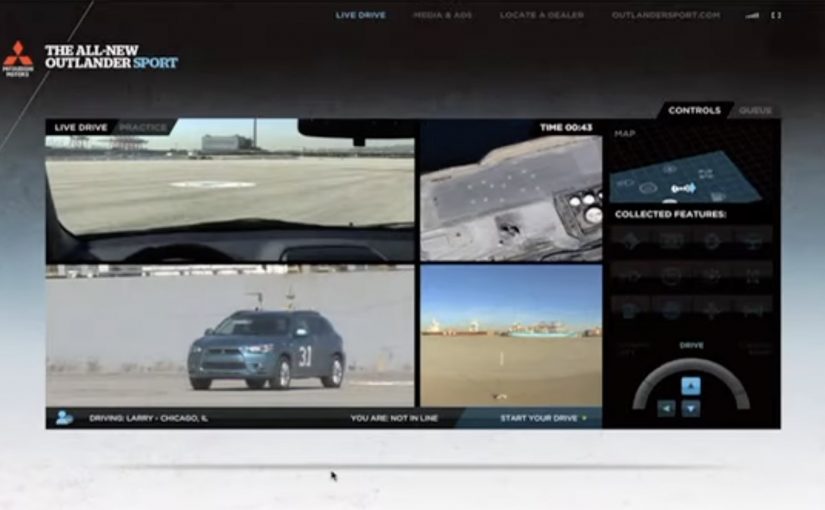
Working with production company B-Reel, 180 and Mitsubishi have developed a remote control system that will allow prospective buyers to take the Outlander Sport for a drive on a closed course, over the web.

Multiple cameras, in-car servos and GPS mapping, with the help of a robotics engineer, will keep the Outlander Sport on-course and responsive to online drivers’ commands.

Starting October 15th you can sign up (US residents only) for the test drive at www.outlandersport.com.

How the remote test drive is staged

The mechanism is a tight loop between live video and machine control. You watch the car from multiple camera angles. Your browser inputs translate into steering and pedal actions via servos. GPS mapping and safety logic keep the vehicle constrained to a closed course while still feeling responsive.

In automotive launches, reducing “dealership friction”, the time, travel, and commitment people associate with a showroom visit, is a reliable way to move people from curiosity to consideration.

Why it lands

This works because it reframes a test drive as an event. It is not only “learn about the car”. It is “drive it now” from wherever you are. That live control loop matters because the moment people see the car respond to their own inputs, the demo stops feeling like content and starts feeling like proof. The closed-course constraint does not weaken the idea. It actually signals seriousness, safety, and engineering intent.

Extractable takeaway: If you can let people control a real-world object remotely, even within strict guardrails, you turn a product demo into a personal story. That story is easier to share and harder to forget than a standard video.

What the campaign is really selling

Beyond features, this sells confidence in the brand’s relationship with technology. The real question is whether the launch gives people a reason to move from passive viewing to active participation. It also creates a strong reason to register and show up at a specific time. That turns passive awareness into an active lead moment without forcing an immediate dealership visit.

Steal this pattern

  • Make the product controllable: remote control, configurators, live demos. Anything that turns viewers into participants.
  • Use guardrails, not free-for-all: closed courses and constraints can increase trust and reduce risk while keeping the thrill.
  • Design for “I have to try this”: the premise should be understandable in one sentence and irresistible in the next.
  • Pair novelty with capture: registration and scheduling turn a stunt into measurable demand.
  • Ship proof, not promises: let the mechanism do the persuasion instead of piling on claims.

A few fast answers before you act

What is the “test drive from your browser” concept?

It is a remote driving experience where a real Mitsubishi Outlander Sport is driven on a closed course while participants control it over the web and watch via multiple cameras.

How does it stay safe and on-course?

The setup combines in-car servos, GPS mapping, and production controls that keep the vehicle constrained to a defined route while still responding to user commands.

Why do this instead of a normal video or configurator?

Because control changes attention. A controllable demo creates involvement, and involvement creates memory and sharing.

Is “world’s first online test drive” the important part?

It is the headline hook. The transferable value is the format: a real product experience delivered remotely with live feedback.

What is the main marketing benefit?

It turns awareness into action. People register, show up, and participate. That makes the launch measurable and builds intent without requiring an immediate dealership visit.