
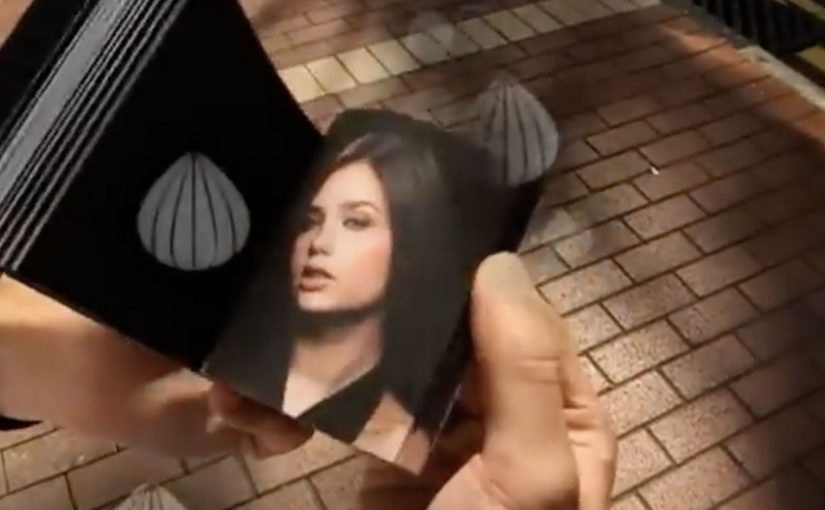
Listerine: Flipbook With Bad Breath

Bad breath is one of the most embarrassing issues for people when they socialize. Listerine decided to bring this experience to life with a flipbook that released a pungent onion scent.

To induce trials, a coupon was attached to the back of the flipbook and people could redeem it for a free Listerine bottle at nearby locations. Reported redemption rates reached 66%.

How the flipbook makes “bad breath” real

The mechanism is sensory contrast. By sensory contrast, the idea uses an unpleasant smell to make the problem felt before presenting relief. The flipbook invites curiosity, then the onion scent turns the message into a physical reaction rather than a line of copy. The coupon sits at the exact moment of discomfort, offering a clean, immediate next step.

In personal care and FMCG trial programs, multi-sensory sampling can convert awareness into action by making the problem visceral and the solution frictionless.

Why it lands

This works because it skips explanation and goes straight to feeling. The real question is whether the brand can make an invisible hygiene problem feel urgent without needing a long explanation. People do not need to be persuaded that bad breath is awkward. The scent creates instant empathy, and the coupon makes the brand’s role clear. This works because the unpleasant smell collapses the distance between message and felt need, so the offer lands exactly when the problem feels most real. It is not just “remember Listerine”. It is “fix this now”.

Extractable takeaway: If you can make an invisible problem tangible in seconds, you earn attention. When the solution is placed immediately at the point of reaction, trial becomes the natural next move.

What to steal from this trial mechanic

  • Use one sensory punch: pick a single sense and make the idea unmistakable, not subtle.
  • Place the offer at peak relevance: the call to action should appear exactly when the user feels the problem.
  • Keep the conversion step simple: a clear redemption path beats a complex signup flow.
  • Design for public reaction: when people react visibly, the activation creates its own distribution.
  • Measure beyond reach: redemption and repeat behavior are the real KPIs, not just views.

A few fast answers before you act

What is the Listerine “flipbook with bad breath” activation?

It is a flipbook handout infused with an onion scent to simulate bad breath, paired with a coupon for a free bottle to drive trial.

Why add scent instead of just showing a message?

Scent turns an abstract problem into an immediate, physical experience. That speed is what makes the idea memorable and shareable.

What role does the coupon play?

It converts the reaction into a next step. The coupon makes the solution actionable at the exact moment people feel the discomfort.

Is the 66% redemption figure reliable?

It is reported in trade coverage. If you need it as a hard metric, keep it but treat it as reported unless you have the primary source.

Where does this pattern work best?

When the product solves a problem people already recognize, and when you can make the problem instantly tangible without crossing into humiliation or offense.
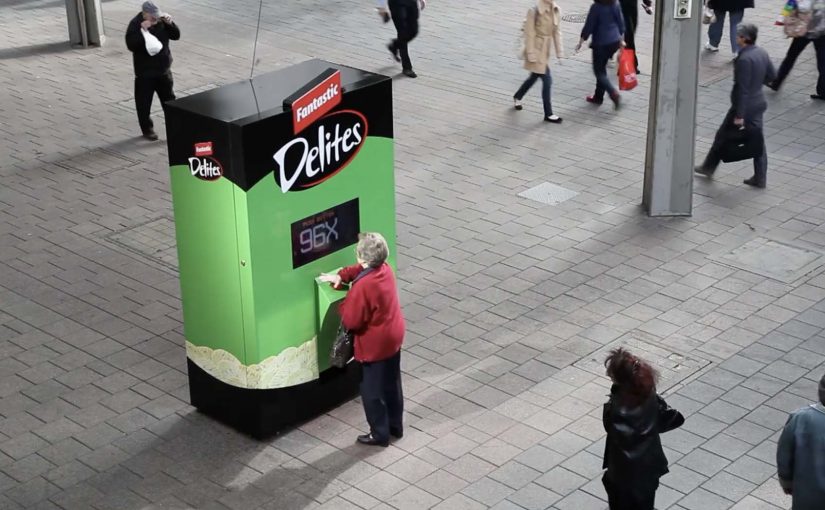
Fantastic Delites: Delite-O-Matic

In this latest example, ad agency Clemenger BBDO Adelaide set out to see how far people will go for a free pack of Fantastic Delites.

So a machine dubbed the “Delite-O-Matic” was created that gave people a free pack of Fantastic Delites by means of pushing a button hundreds of times or performing challenges. It was then put out on the streets to prove that because Fantastic Delites taste so good, people would go to incredible lengths to get them.

Sampling that people choose to earn

Interactive vending machines are a great way to get consumer participation and engagement on the ground. There are tons of examples out there, of which some have been covered here.

The mechanic that makes it watchable

The mechanism is effort-based reward. The machine sets an instruction, the participant complies, and the prize is dispensed only after the effort is visible. The escalating “work” becomes the entertainment, and the entertainment becomes the message.

In FMCG sampling and retail activations, interactive vending machines are a repeatable way to exchange effort for product trial.

That structure works because visible effort gives the crowd a simple story to follow before the product appears.

Why it lands

This works because it turns sampling into a story people can instantly judge. The point is not only “free snack”. The real question is what kind of visible effort makes a simple product feel worth watching and worth wanting. Each extra button press or challenge makes the product feel more desirable, and the crowd becomes a built-in audience.

Extractable takeaway: When you make the cost of entry visible, you turn a giveaway into a social moment. That moment carries the brand further than a silent handout ever could.

What to steal from Delite-O-Matic

  • Make the exchange legible: people should understand the rule in one glance, and the effort should be obvious on camera.
  • Escalate, then release: tension comes from “will they do it”. Satisfaction comes from the dispense moment.
  • Keep the prize simple: the product is the hero. The machine is the stage.
  • Design for bystanders: the best sampling stunts recruit a crowd even before the first pack comes out.
  • Let participation become proof: the more people comply, the stronger the implicit claim becomes.

A few fast answers before you act

What is the Delite-O-Matic?

It is an interactive vending machine activation that dispenses a free pack of Fantastic Delites after people complete button-mashing or challenge-style tasks.

Why use effort instead of a simple giveaway?

Effort creates a story. It increases attention, pulls in bystanders, and makes the reward moment feel earned, which boosts recall and sharing.

What’s the key behavioral trick?

Visible commitment. When people publicly invest effort, the product feels more “worth it”, and the scene becomes entertainment for everyone around.

Where does this work outside snacks?

Anywhere trial is the goal and the product is easy to dispense or unlock. Beauty samples, quick-service food, entertainment promos, and event activations.

What’s the main risk?

If the tasks feel humiliating or unfair, the tone can flip. The sweet spot is playful challenge with a clear, quick payoff.

Coca-Cola: Hug Me Machine

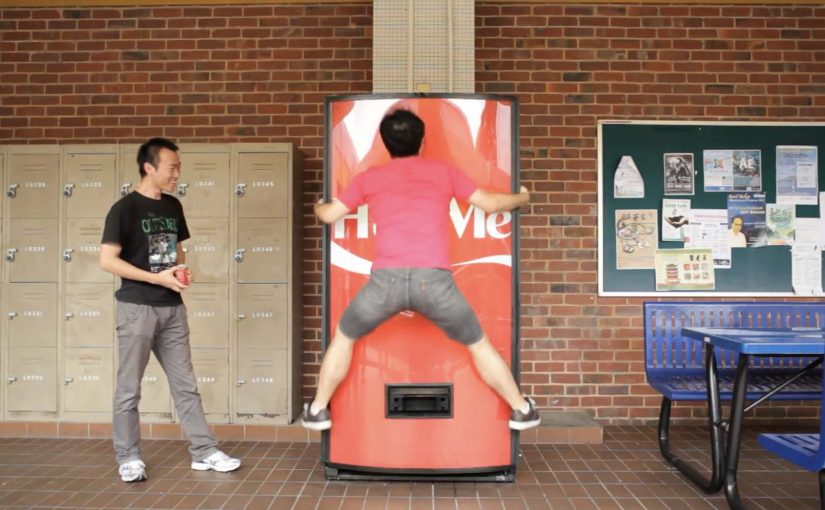
As part of its global “Open Happiness” campaign, Coca-Cola set up a vending machine at the National University of Singapore that doesn’t take coins or any other cash. It only takes hugs. For every public display of machine love, the Coca-Cola “Hug Me” machine gifts the person a free can of Coca-Cola.

A vending machine that runs on human behavior

The mechanism is a single, universal trigger. Instead of payment, the machine asks for a hug. That one action creates a public moment, signals the brand promise instantly, and makes the reward feel earned through emotion rather than money.

In FMCG sampling and brand experience work, replacing “transaction” with a simple human gesture is a repeatable way to turn distribution into a story.

Why it lands

This works because it transforms a functional object into a social catalyst. A vending machine is normally private and transactional. A hug is public and disarming. That contrast generates smiles, draws a crowd, and makes the brand feel like the instigator of the moment rather than the sponsor of a giveaway. The real question is whether the brand can make the giveaway feel like a public act people want to witness and copy. Coca-Cola gets this right because the machine itself turns sampling into visible, social participation.

Extractable takeaway: If you can swap payment for a simple, universally understood gesture, you turn sampling into participation. Participation creates social proof, and social proof is what makes the experience travel beyond the physical location.

The machine is one of a number of Happiness Machines Coca-Cola has deployed around the world since 2009.

What to steal from the Hug Me machine

  • Pick one obvious action: the trigger should be instantly understood without instructions.
  • Make the behavior visible: public participation is the engine for attention and sharing.
  • Keep the reward immediate: the dispense moment is the payoff that seals the memory.
  • Design for bystanders: the crowd reaction is part of the product.
  • Let the object carry the message: the machine itself should explain the campaign in one glance.

A few fast answers before you act

What is the Coca-Cola “Hug Me” machine?

It is a branded vending machine that dispenses a free Coke when a person hugs it, turning sampling into a public, playful interaction.

Why use a hug as the trigger?

A hug is universally understood, emotionally positive, and visibly social. It signals “happiness” faster than copy, and it recruits bystanders naturally.

What’s the marketing job this format does best?

It converts distribution into a shareable moment. The product is delivered, but the real value is the public reaction and the story people retell.

Where does this work well outside campuses?

Any high-footfall environment where people are open to playful participation. Events, malls, transit hubs, and city centers.

What is the biggest risk with this kind of activation?

If the gesture feels awkward or culturally mismatched, participation drops. The trigger has to feel comfortable, obvious, and safe for the audience.