
Volkswagen LinkedUit: A LinkedIn API Campaign

Volkswagen has released a LinkedIn-based campaign which takes full advantage of the new LinkedIn API. Here, “LinkedIn API” simply means the permissioned interface that lets an app read profile information after you sign in.

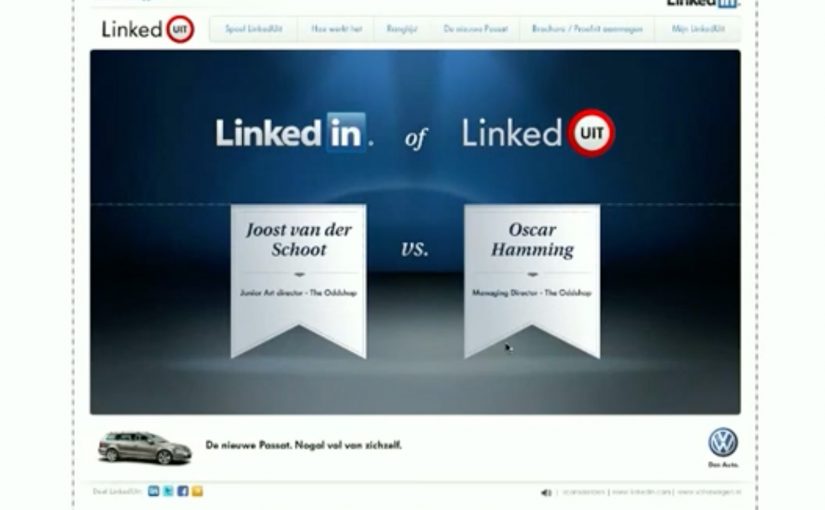
The campaign is called “LinkedUit” (LinkedOut) and gives anyone who challenges a friend on LinkedIn a chance to win a Volkswagen Passat.

The game is really simple. After signing in using your LinkedIn profile, the app lets you choose others in your network to challenge. A LinkedIn victor and a LinkedOut loser is then chosen based on education, experience, recommendations and connections.

Mechanically, the app pulls profile fields after sign-in and turns them into a score you can compare against someone in your network. This pattern is worth copying when you can explain the scoring in plain language and keep participation clearly opt-in. Because the inputs are already curated, the result feels personal with almost no extra work.

In European automotive marketing, platform-native games like this only stay credible when the data use is explicit and the scoring feels fair.

The real question is whether the value of the interaction outweighs the discomfort of being compared.

Why this is a smart use of platform data

This campaign uses something people already curate and care about. Their professional identity. Instead of asking for attention, it uses existing LinkedIn data as the raw material for the experience.

Extractable takeaway: If you can make a platform’s identity data the mechanic, you lower friction and raise relevance. But you only earn repeat use when people can predict why they won or lost.

  • Low input for users. The profile is already built. The game simply reads it.
  • High personal relevance. Comparisons feel personal because they are based on your own history.
  • Built-in social spread. Challenges create a natural loop through networks.

The Passat benefit: “feature-rich” as a metaphor

The creative link is straightforward. Passat equals feature-rich. LinkedIn profile equals information-rich. The experience makes the metaphor tangible by turning profile depth into a competitive score.

That kind of metaphor works when it is easy to explain in one sentence and easy to experience in one click.

What makes this type of social game succeed or fail

  1. Fair scoring logic. If the rules feel arbitrary, people reject the result.
  2. Fast time-to-result. The payoff must arrive quickly after sign-in.
  3. Friendly rivalry. Challenges should feel playful, not judgmental.
  4. Clear reward. A chance to win a Passat is a simple, memorable incentive.

What to take from this if you are building platform-native campaigns

  • Use the platform’s native data as the experience. The more you rely on what already exists, the lower the friction.
  • Make the mechanic social by default. Challenges, invites, and comparisons drive distribution.
  • Keep the brand connection clean. One strong metaphor beats multiple weak links.
  • Design for credibility. When you use personal data, transparency and perceived fairness matter.

A few fast answers before you act

What is Volkswagen “LinkedUit”?

It is a LinkedIn-based campaign that uses LinkedIn profile data to create a challenge game, giving participants a chance to win a Volkswagen Passat.

How does the game determine a winner?

The app compares elements such as education, experience, recommendations, and connections to choose a “LinkedIn victor” and a “LinkedOut” loser.

Why is the LinkedIn API important here?

Because it enables the experience to pull in profile information automatically, making the game quick to start and personally relevant without extra data entry.

What is the creative link to the Passat?

The campaign uses the idea that the new Passat is full of features, just like a LinkedIn profile is full of information, then turns that into a competitive mechanic.

What is the main lesson for social platform campaigns?

If you build around native identity and data, and make the interaction social by default, you can create an experience that spreads through the network naturally.

Macedonia Education: Religion Is Knowledge Too

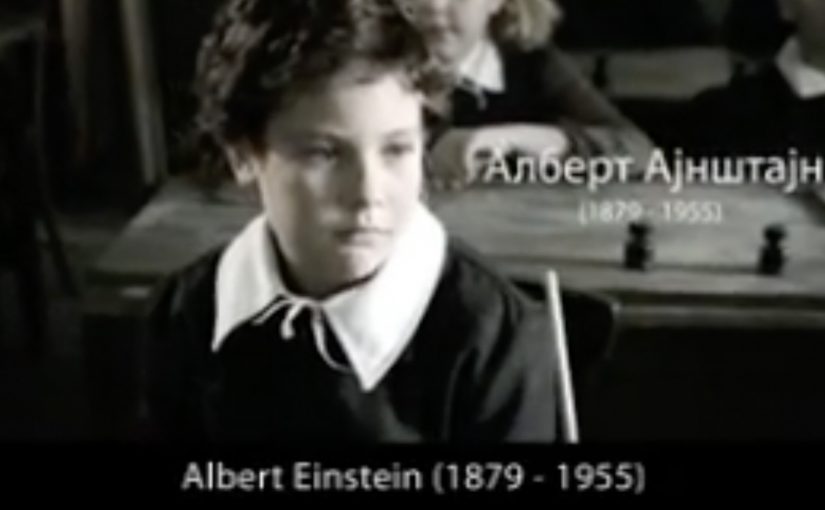
Here is a social campaign aimed at promoting education, created by New Moment New Ideas Company as a TV commercial for the Government of the Republic of Macedonia, Ministry of Education and Science.

The mechanism behind the message

The execution leans on a deliberately provocative framing. It takes a policy-adjacent topic, religion in school, and places it inside a broader “education equals empowerment” argument, using a short, declarative headline structure that is designed to be debated as much as it is watched.

In public-sector education communication, provocation is often used to force attention onto curriculum choices that would otherwise be discussed only in administrative language.

The real question is whether a campaign can use provocation to drive education attention without turning the message into a referendum on belief.

Why it lands

It turns a policy topic into a binary statement. You may agree or disagree, but you are unlikely to ignore it, which is typically the point of a social campaign trying to break through apathy.

Extractable takeaway: Public-interest campaigns win attention by making a curriculum or behavior choice feel like a values choice, but credibility depends on details like accurate attribution, because authority shortcuts can backfire when audiences fact-check.

It borrows authority cues. The line “Knowledge is power” is familiar and often associated with big-name attribution. If the spot leans on an Einstein association, note that this attribution is widely disputed, and misattributed quotes can weaken credibility even when the intent is strong.

It collapses values and education into one frame. By calling religion “knowledge”, it reframes the topic away from belief and toward curriculum, which is a strategic shift even if it remains contentious. Because the framing is blunt and declarative, it triggers instant agreement-or-rebuttal, which expands discussion beyond passive viewing. Provocation can be a valid attention tactic, but only when every credibility cue is defensible.

Borrowable moves for education PSAs

  • Use short headline architecture. A campaign line plus a spot line gives people two levels of meaning to repeat and argue about.
  • Engineer “talk value” intentionally. By “talk value,” mean a message that people can repeat, argue about, and share in one breath.
  • Stress-test credibility signals. Quotes, attributions, and “famous authority” cues should be defensible, or they become the story instead of the issue.

A few fast answers before you act

Who is this commercial for?

It is framed as a public campaign tied to the Government of the Republic of Macedonia, Ministry of Education and Science.

What is the central claim of the spot?

That religion should be treated as a form of knowledge and positioned as part of schooling, under a broader “knowledge equals empowerment” campaign idea.

Why does the campaign use such blunt language?

Because blunt claims create attention and debate quickly, which is often the goal in social messaging where indifference is the main competitor.

What is the main risk with this style of PSA?

Polarization and credibility challenges. If the audience argues about the quote, the messenger, or the framing, the educational intent can get diluted.

What is the transferable lesson for communication leaders?

If you choose provocation as the hook, protect the trust layer. Every supporting detail has to be clean enough to survive scrutiny.

Pepsi Refresh: Monthly Grants for Ideas

Pepsi wants to make the world a better place and so it has up to $1.3 million in Refresh grants to give out every month, ranging from $5,000 through to $250,000.

The social investment campaign can be seen online at www.refresheverything.com, and is being presented as Pepsi’s alternative to spending on television advertising at the Super Bowl this year.

From January 13, US residents can submit an idea online, choosing categories of health, arts and culture, food and shelter, the planet, neighborhoods, and education.

From February 1, 2010, visitors to the site will be able to vote on ideas, with the first 32 awards being announced on March 1.

The clever part is the trade

The headline here is not just the money. It is the positioning. The real question is whether you can trade a single paid burst for a repeatable participation loop without losing clarity or trust. Pepsi is framing this as an alternative to a single high-cost burst of attention, and shifting that investment into a participatory program where people submit, rally support, and vote.

Why this format can generate momentum

It works because the format creates a loop people can re-enter. Each month resets urgency, gives participants a clear job to do, and turns support-building into something visible.

Extractable takeaway: If you want participation to create reach, make recruiting support effortless and make the cycle easy to repeat.

  • A clear incentive. Monthly grants create repeated urgency, not a one-off moment.
  • Built-in categories. Health, arts, food and shelter, the planet, neighborhoods, and education make participation easy to understand.
  • Voting creates distribution. If your idea needs votes, you recruit your network. That recruitment becomes the media.

In large-scale brand purpose programs, participation grows when funding, voting, and sharing are designed as a repeatable cycle rather than a one-off moment.

What to watch if you run campaigns like this

  1. Transparency. People will want to understand how ideas are evaluated and funded.
  2. Participation fatigue. Monthly cycles help, but the experience has to stay simple to repeat.
  3. Proof of impact. The long-term credibility comes from showing what the funded ideas actually achieved.

What to steal from Pepsi Refresh

  • Make the trade explicit. Position the program as the alternative to a single high-cost attention burst.
  • Design for repeat participation. Use a simple monthly rhythm, clear categories, and a predictable submit-and-vote flow.
  • Let supporters do the distribution. Require votes so participants recruit their networks, and that recruitment becomes the media.

A few fast answers before you act

What is the Pepsi Refresh Project?

It is a social investment program where Pepsi offers monthly “Refresh grants” and invites people to submit community ideas and rally votes to get them funded.

How much funding is available?

Up to $1.3 million in grants per month, with awards ranging from $5,000 to $250,000.

When can people submit and vote?

From January 13, US residents can submit ideas. From February 1, 2010, visitors can vote, with the first 32 awards announced on March 1.

What categories can ideas be submitted under?

Health, arts and culture, food and shelter, the planet, neighborhoods, and education.

What is the strategic alternative being positioned here?

Pepsi is presenting the program as an alternative to spending on television advertising during the Super Bowl, shifting that spend into a participatory grant platform.