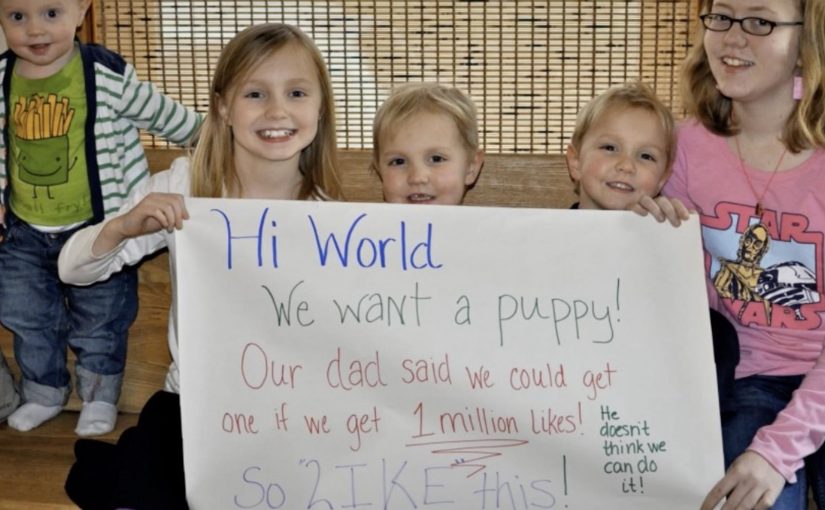
In the last months there have been cases of people uploading photos on Facebook and successfully asking for 1 million likes. So keeping that in mind, Doctors Without Borders decided to turn their campaign idea “good intentions don’t save lives” on its head and actually make people’s intentions count.
Through a special Facebook app people could create a post and ask their friends for likes while donating 1 Danish Krone to Doctors without Borders for each like they got. Each collection was run for 48 hours and only likes from your own Facebook friends counted. By setting a maximum amount you could also make sure you don’t go bankrupt. If your friends were too slow, you could also simply decide to donate more.
At the end of each donation drive people could post a picture saying thank you to all their friends who helped them donate. The campaign’s success is described as having made it a permanent solution and can still be found running for people who want to turn their friends likes into donation.
Turning “like hunting” into a donation engine
The mechanic is deliberately simple. Here, “like hunting” means asking friends to turn their likes into a capped donation total. You post, you ask for likes, and the counter becomes money. The 48-hour window adds urgency, and the “friends only” rule keeps it personal instead of turning it into a popularity contest across strangers.
In European nonprofit fundraising, micro-donations work best when the unit action is already a habit and the rules stay frictionless.
Why this lands on Facebook
It does not fight the attention behavior. It repurposes it. People already know how to like and how to help a friend. The campaign bundles those instincts and makes the cost feel manageable by letting the donor set a cap, then top up if momentum is slow. The real question is whether a low-value social signal can become a credible donation act, and this campaign proves it can when the cost is capped and the ask stays social.
Extractable takeaway: If you want participation at scale, do not ask people to learn a new behavior. Convert an existing social reflex into a counted contribution, and make the risk feel controllable.
What the “cap” is really doing
The maximum amount is more than budgeting. It is permission. When people know they cannot accidentally overspend, they are more willing to start, and starting is the hardest step in any donation flow.
What to steal for your next donation mechanic
- Make the unit obvious. “One like equals one krone” is instantly understandable.
- Time-box the drive. A short window creates a reason to ask now, not later.
- Keep it inside the social graph. Friends-only engagement protects trust and reduces spam dynamics.
- Build in safety rails. Caps remove fear, and optional top-ups preserve ambition.
A few fast answers before you act
What is Like Hunting?
It is a Doctors Without Borders fundraising mechanic that converts Facebook likes into donations, using a short, time-boxed “drive” created by an individual supporter.
Why does “friends-only likes” matter?
It keeps the action personal and credible, and it stops the drive from turning into mass like-begging from strangers. That helps the campaign feel like helping a person, not feeding an algorithm.
What makes the cap important?
The cap reduces perceived risk. People participate more readily when they know the maximum cost upfront, and the option to add more later keeps the mechanism flexible.
Why does the 48-hour window matter?
It gives the ask a deadline, which makes supporters more likely to post now and friends more likely to respond quickly. Without that time-box, the mechanic risks becoming passive background noise.
When should brands or NGOs use this pattern?
When there is a simple, repeatable action that people already perform socially, and when turning that action into a counted contribution can happen without heavy explanation or new habits.