
Feel the View

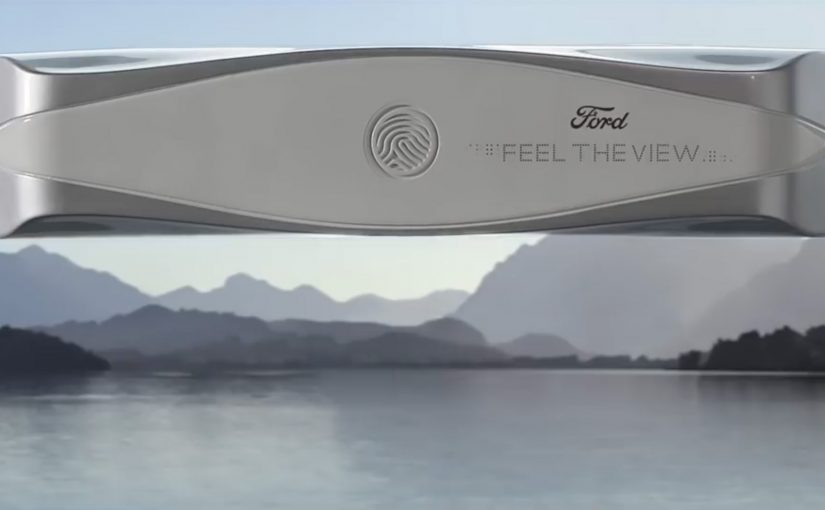
Ford in Italy, together with agency GTB Rome, teams up with Aedo, a local start-up that creates devices for people with visual impairments. Together they design a prototype device that attaches to a car window and decodes the landscape outside, allowing visually impaired passengers to experience it with the tip of their fingers.

The device transforms the flat surface of a car window into a tactile display. The prototype captures photos via an integrated camera and converts them into haptic sensory stimuli. Here, “haptic” means tactile patterns you can feel with your fingertips. The result is not primarily visual. It is perceptible through touch and hearing.

In automotive and mobility experience design, the real bar is whether the same journey can be translated across senses without creating a separate experience.

Why this matters as accessible experience design

This is an assistive interface built around a real, emotional moment. Looking out of a window during a drive. It treats “the view” as an experience that can be translated into other senses, rather than a privilege reserved for sighted passengers. Because the window is where attention naturally goes, using it as the tactile surface makes participation feel shared rather than segregated.

Extractable takeaway: If you want inclusive innovation to land, translate the same moment into multiple senses instead of designing a parallel version of the experience.

Inclusive innovation should be judged by whether it expands participation in the same moment, not by how novel the technology sounds.

The product idea in one line

Capture what is outside the car, then render it on the window surface as a tactile and audio layer that can be explored in real time.

The real question is whether your design lets people participate in the same moment as everyone else, without extra friction or stigma.

What to take from this if you build inclusive innovation

  • Start with a human moment. Here, it is shared travel and the desire to participate in what others are seeing.
  • Use the environment as the interface. The window is already where attention goes. It becomes the display.
  • Translate, do not replace. The concept does not mimic sight. It converts the same input into touch and sound.

A few fast answers before you act

What is “Feel the View”?

A Ford Italy concept with GTB Rome and Aedo that prototypes a car-window device converting outside landscapes into a tactile and audio experience for visually impaired passengers.

How does the prototype work at a high level?

An integrated camera captures what is outside, then the system transforms the input into haptic stimuli on the window surface, supported by audio cues.

What is the core design principle?

Make the experience accessible by translating the same real-world scene into senses the user can rely on, in the moment.

Is this a production product or a prototype concept?

It is described as a prototype concept rather than a production feature, so treat it as a design pattern more than a released product.

What can you apply even if you do not build haptics?

Start from a shared human moment, pick the surface where attention already goes, then translate the same scene into other senses instead of creating a parallel experience.
Smart Apps: Audi Start-Stop and Reborn Apps

Here are two mobile apps that recently caught my eye…

Audi Start-Stop App

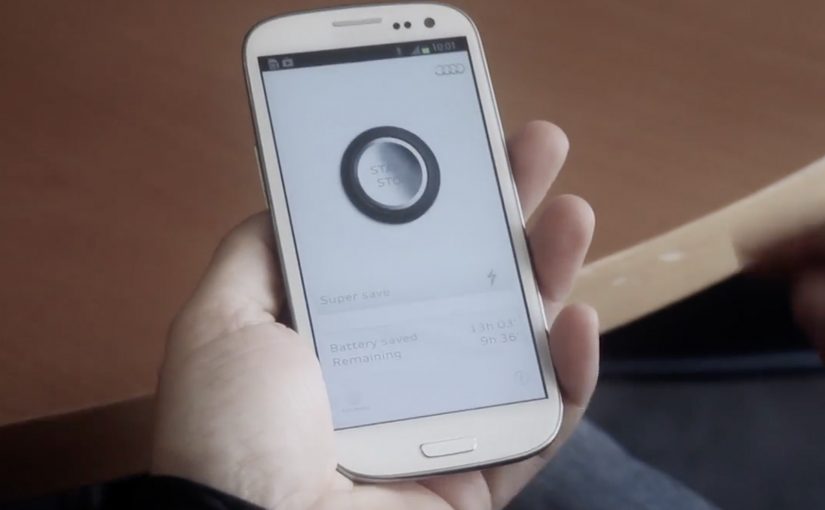
The Audi start-stop system turns off the engine when the car stops at a traffic light and turns it on again when the car starts. Using the same principle, Audi along with DDB Spain creates an Android app that detects which applications have been open longest without being used and sends an alert to the user to close them. Thus saving battery and making the phone a more efficient tool.

Reborn Apps

Many events create their own smartphone apps. But when the event is over, the apps lose their usefulness and are then hardly used. To give these apps a second life, Duval Guillaume gets various Belgium organisations to push out an update which turns their event apps into a registration medium for organ donation.

In European mobile marketing, the strongest brand apps behave like practical utilities first and brand messages second.

The real question is whether your app earns its place by doing one useful thing so well that people choose it again tomorrow.

Brand apps should be judged on repeat usefulness, not on campaign polish.

Why these app ideas work

Both concepts start with a familiar trigger and then make the next best action nearly frictionless, which is why the prompt feels helpful instead of noisy.

Extractable takeaway: Both apps translate a familiar real-world idea into a simple mobile behavior change. One nudges you to close what you are not using. The other repurposes what you already have installed.

  • They solve a real friction. Battery drain and app clutter are everyday pains. Low donor registration is a societal pain.
  • They use a clear trigger. “Unused for long” becomes the reason to act. “Event is over” becomes the reason to update.
  • They keep the action lightweight. A close action or a signup action can happen in seconds.

Two different intents, one shared pattern

The Audi app is a utility story. It borrows a car feature metaphor to make an Android housekeeping task feel purposeful. The Reborn idea is a “mobile for good” story. By “mobile for good,” I mean using everyday mobile touchpoints to drive a public-interest action, not just brand engagement. It turns leftover event attention into a meaningful registration moment, without asking people to download something new.

Patterns to borrow for brand apps

  • Start from a known behavior. People already ignore background apps. People already keep old event apps installed.
  • Make the trigger obvious. If users cannot explain why the app pinged them, they ignore it next time.
  • Design for the next best action. One tap to close. One short flow to register.
  • Let the brand sit behind the benefit. If the utility feels real, the brand halo follows naturally.

A few fast answers before you act

What is the Audi Start-Stop App?

It is an Android utility idea that identifies apps left open for a long time without being used and alerts you to close them, borrowing the metaphor of Audi’s start-stop engine system.

What problem does it try to solve?

It targets battery and resource drain caused by apps that stay running in the background after you stop actively using them.

What are Reborn Apps?

It is an idea that asks event app publishers to push an update after the event ends, transforming those unused apps into a simple organ donation registration tool.

Why is the “update instead of download” approach smart?

It removes acquisition friction. The app is already on the phone, so the campaign can focus on conversion rather than installs.

What is the common lesson across both examples?

Make the desired behavior the easiest behavior. Use a clear trigger, keep the action simple, and let usefulness do the persuasion.