
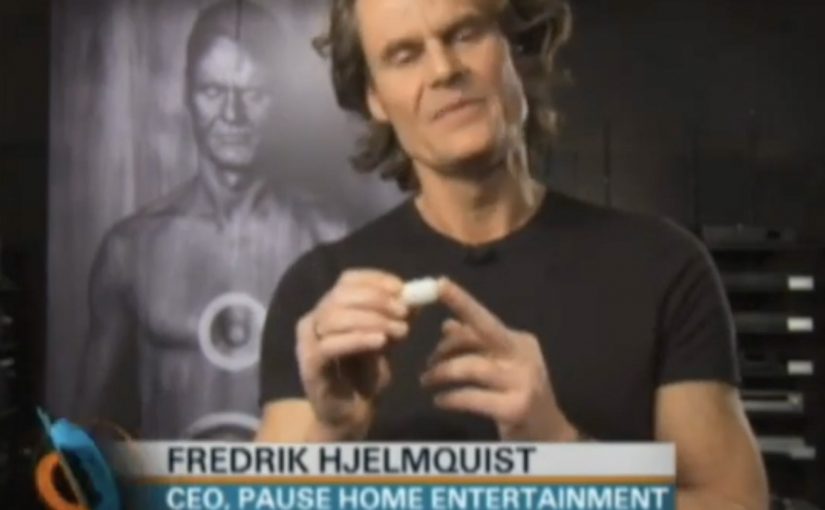
Pause: The Human Jukebox Stunt

On 26 November 2010, Fredrik Hjelmquist, CEO of Pause Home Entertainment, is described as swallowing a specially made wireless sound system to transform himself into a Human Jukebox, a person whose body becomes the live playback point for the stunt.

The device is then controlled wirelessly. Anyone can trigger music “inside him” by visiting the company website and selecting a track. The stunt exists to make one claim feel literal. When it comes to custom sound systems by Pause, anything is possible.

How the Human Jukebox mechanism is staged

The mechanic is built around an extreme demo. Put the product promise into a body. Add a remote interface. Make the public the operator. The point is not technical detail. The point is a story so concrete that people can repeat it in one sentence. That works because a concrete, repeatable image is easier to remember and retell than a broad capability claim.

In consumer electronics and specialist retail, physical proof beats specification sheets when the goal is to signal “custom” and “no-limits” in a way people actually remember.

Why it lands

It makes the brand promise impossible to ignore. The act is absurd, slightly uncomfortable, and therefore sticky. It also turns a passive viewer into a participant, because the audience is invited to choose the track and trigger the result.

Extractable takeaway: If you sell “anything is possible”, show a single, outrageous proof point that compresses the promise into an unforgettable image, then give the audience a simple way to control the outcome.

What Pause is really buying

This is not about reach first. It is about credibility and talk value. The real question is whether the brand can turn “custom” from a vague service claim into a story people repeat. A custom sound systems retailer needs to feel like a destination for people who care about uniqueness, and a stunt like this functions as a shortcut to that perception.

What to steal for your own product story

  • Demo the promise, not the product. Show the meaning of the benefit in one memorable scene.
  • Make the audience the trigger. When people can activate the outcome, they feel ownership and retell it more.
  • Keep the rules simple. One action. One result. No explanation required.
  • Build a proof artifact. A single film that captures the idea cleanly is the distribution unit.

A few fast answers before you act

What is the core idea of Human Jukebox?

A stunt that turns a person into a playable sound system, controlled by the public through a simple track-selection interface.

Why does this communicate “custom sound systems” effectively?

Because it demonstrates extreme customization as a story. The audience infers capability from the proof, without needing specs.

What makes the mechanic shareable?

It is summarizable, visual, and slightly shocking. Those traits make it easy to retell and hard to forget.

Why does audience control matter here?

Because letting people choose the track makes the proof participatory, not just watchable. That increases involvement and makes the stunt easier to remember and repeat.

What is the main risk in copying this approach?

If the stunt feels unsafe or irresponsible, the brand pays for attention with trust. The proof must still feel controlled and credible.
Kalles Kaviar: Egg Timer iPhone App

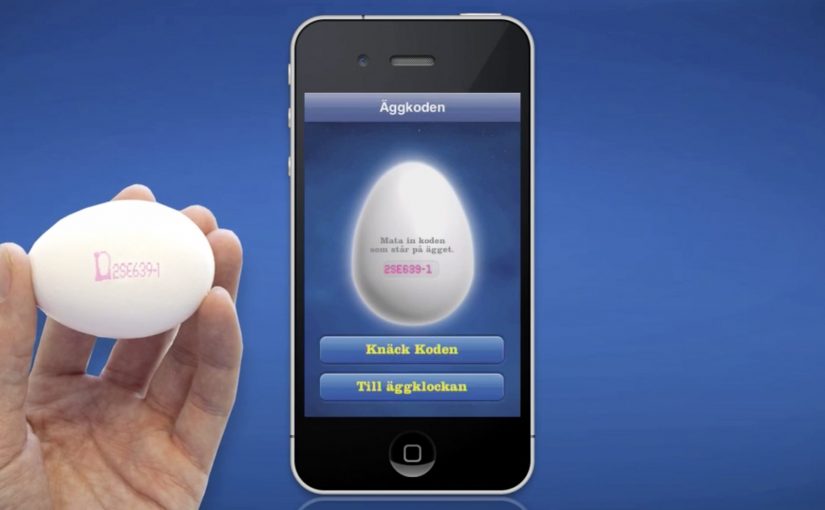
This egg timer iPhone app was created by CP+B for Swedish sandwich spread Kalles Kaviar.

The idea behind the app is to help users boil the perfect egg. It goes further than a simple countdown. It accounts for variables like egg size and how you like it cooked, and it even builds an iTunes playlist where the end of the music means your egg is ready.

The campaign is described as a hit with caviar and egg lovers. It reportedly passed 53,000 unique iPhone downloads and reached number three in Sweden’s iTunes list of the most downloaded free apps.

A breakfast brand that ships something useful

The clever move here is the product logic. Kalles is frequently eaten with sliced boiled egg, so the brand does not start by shouting about taste. It starts by making the egg outcome easier to get right, which makes the pairing more likely to happen again.

How the app turns boiling into a timed soundtrack

  • Input choices. The user selects preferences like softness, and the app adjusts timing accordingly.
  • Playlist as timer. Instead of watching the clock, you listen. When the playlist ends, the egg is done.
  • Extra detail for the obsessed. The experience is described as accounting for factors like altitude, and in some write-ups it is also credited with letting users enter the code printed on Swedish eggs to trace the farm.

In FMCG breakfast categories, small utility tools can turn a habitual pairing into a repeatable ritual and a sales lever.

Why it lands

It respects the moment. People boil eggs while distracted, usually in the morning, and they want confidence without effort. The playlist mechanic is memorable because it is a sensory shortcut, and it also turns waiting time into entertainment.

Extractable takeaway: If your product is most often consumed in a “pairing,” build utility around the pairing step, not around the product claim. Help the ritual succeed, and the product sells itself inside that ritual.

What it is really trying to grow

The real question is whether the utility increases the frequency of the Kalles-plus-egg pairing, not whether the app feels clever.

This is not primarily an “app idea.” It is a demand-shaping idea. By “demand-shaping,” I mean shifting how often the adjacent habit happens, not just which brand wins when it does. If more people boil eggs more often, Kalles has more occasions to be squeezed onto the table. Some coverage also credits the work with lifting egg sales in Sweden, which is a neat reminder that expanding the adjacent habit can be bigger than fighting for share in the core category.

Steal the pairing-first utility play

  • Attach utility to the highest-friction step. Fix the thing people get wrong or avoid.
  • Make the mechanic feel inevitable. A playlist that lasts exactly as long as boiling time is easy to explain and easy to trust.
  • Design for the real context. Morning routines reward hands-free, glance-free interaction.
  • Use delight as reinforcement, not distraction. The music is not decoration. It is the timer.

A few fast answers before you act

What is the Kalles Egg Timer app in one line?

A branded iPhone egg timer that uses your inputs to calculate boiling time and plays a music playlist that ends exactly when the egg is ready.

Why use a playlist instead of a normal countdown?

Because it reduces the need to watch the screen. The soundtrack becomes a passive, low-effort signal that fits cooking behaviour.

What brand problem does this solve?

It makes the product pairing easier to repeat. If the egg step becomes more reliable, the Kalles plus egg habit becomes more frequent.

What makes a branded utility app worth downloading?

It must do a real job better than a generic alternative, and it must fit naturally into a routine people already have.

What should you measure if you run a similar utility idea?

Downloads are not enough. Track repeat usage, time-to-task success, how often the utility is used per week, and whether it correlates with increased occasions for the core product.

McDonald’s: Pick N’ Play Billboard Game

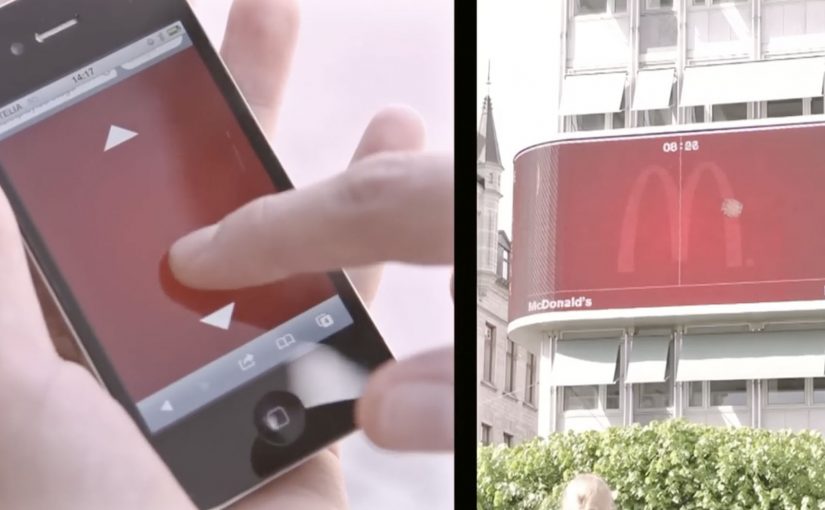
You are walking through central Stockholm and a McDonald’s billboard does something unusual. It invites you to play a quick Pong-style challenge on the screen, using your own phone as the controller.

DDB Stockholm has created another interactive outdoor campaign for McDonald’s Sweden called Pick N’ Play. Passers-by use their mobile phones as controllers to play for a chosen McDonald’s treat. If they last for more than 30 seconds, they score a coupon that earns them free fast food at a nearby McDonald’s.

Reportedly, the interaction avoids an app download and instead uses a simple mobile web flow, with proximity checks (via phone location) so only people physically near the screen can play.

Why this one pulls a crowd

The mechanic is instantly legible. Most people recognize Pong in a split second, which lowers hesitation and increases participation. The billboard also creates a public spectacle, which adds social proof and makes stopping feel normal, not awkward.

Extractable takeaway: This is rewarded interactivity, meaning the payoff is gated behind sustained attention instead of a tap. In outdoor, that simple “earn it” rule turns a public glance into a deliberate, measurable action.

What McDonald’s is really buying

The prize is not the point. The real value is a measurable bridge from street attention to store visit. A time-based win condition filters for people who are actually willing to pause, focus, and then act, which makes the coupon a higher-signal trigger than a generic discount blast.

The real question is whether your DOOH idea can turn a public moment into a private, trackable action without adding friction.

In global consumer brands and retail environments, interactive digital out-of-home earns its keep when it connects a public moment of attention to a private, trackable action on a personal device.

Steal these moves for your next DOOH game

  • Use a mechanic people already know. Familiar rules beat clever rules in outdoor contexts.
  • Make the phone the interface. It turns a billboard into a controllable experience and a trackable session.
  • Reward endurance, not clicks. Time-in-game is a simple proxy for real attention.
  • Close the loop fast. A coupon that can be redeemed nearby turns novelty into footfall.

Last year they had challenged pedestrians to take pictures of McDonald’s food to get it for free.


A few fast answers before you act

What makes an interactive billboard work in practice?

An interactive billboard works when the invite is understood in seconds and the first action feels effortless on a phone.

Do you need an app to control a billboard with a phone?

No. Campaigns like this are often built as mobile web experiences so participation is immediate and friction stays low.

How do you stop people from playing remotely?

By verifying proximity. A common approach is using phone location to confirm the player is physically near the screen before the session starts.

Why use a 30-second target?

It is long enough to prove engagement, short enough to feel achievable, and simple enough to explain with one line of copy.

What is the business upside versus a normal coupon?

You get a higher-intent audience. The coupon is earned through attention and action, which tends to correlate with stronger redemption and store visitation.