
Renault Clio: A Test Drive Takes a Sexy Turn

TNT’s “A dramatic surprise on an ice-cold day” meets Pepsi MAX’s “Jeff Gordon test drive prank” in this latest test drive video for the all new Renault Clio.

In the video a couple of guys are seen taking the Renault Clio for a spin. After a regular beginning, the salesman shows off the “va va voom” button, a prank trigger that flips the drive into a choreographed romantic scene.

This is a staged test-drive prank, not a feature demonstration. The “va va voom” button is the trigger that flips an everyday drive into a choreographed French fantasy.

And here is a version for the ladies.

The button as a narrative trigger

The mechanism is a single, irresistible cue. A salesman introduces a mysterious button. The driver presses it. The world outside the windows transforms into a set-piece built from instantly recognizable signals, so the passenger can “feel” the promise without a single spec sheet.

In automotive marketing, test drive formats often double as shareable entertainment that reaches far beyond the dealership.

The real question is whether the launch gives people a story worth retelling once the drive is over.

Why it lands

This works because it turns a low-drama ritual into an event with a clear before-and-after. The joke is simple enough to follow in seconds, and the escalation is visual enough to hold attention without context. Most importantly, it makes the test drive itself the content, not the car brochure. The stronger creative move is the trigger-led transformation, not the flirtation itself.

Extractable takeaway: If you can attach a single, obvious trigger to a dramatic “world change”, you turn a routine product interaction into a personal story. Personal stories are easier to retell, and harder to forget, than feature lists.

What to borrow without copying the exact gag

  • One trigger, one transformation: keep the entry point unmistakable and the payoff immediate.
  • Design for first-time viewers: someone should understand the premise even if they start watching mid-scene.
  • Let the participant stay authentic: the strongest moments are the unscripted reactions, not the actors.
  • Use stereotypes carefully: shorthand can make an idea legible fast, but it can also age poorly if the tone tips.
  • Make the edit do the persuasion: pace and escalation matter more than how many “surprises” you add.

A few fast answers before you act

What is the Renault Clio “va va voom” test drive video?

It is a staged test-drive prank where pressing a “va va voom” button triggers a choreographed romantic, Paris-themed scene around the car.

Why does this format work for car launches?

Because it makes the test drive itself feel like an event. That creates watchable reactions and gives people a reason to share the experience, not just talk about the vehicle.

What’s the key mechanic to reuse?

A single, easy-to-understand trigger that causes an immediate, visible change in the environment. The trigger creates curiosity. The transformation creates the story.

Is the “va va voom” button a real product feature?

No. In this context it functions as a storytelling device that kicks off the prank and reframes the test drive as a fantasy sequence.

What’s the main risk with this style of stunt?

Tone control. If the surprise feels awkward, intrusive, or relies on stereotypes in a way that offends, the conversation can flip from “fun” to “cringe” fast.
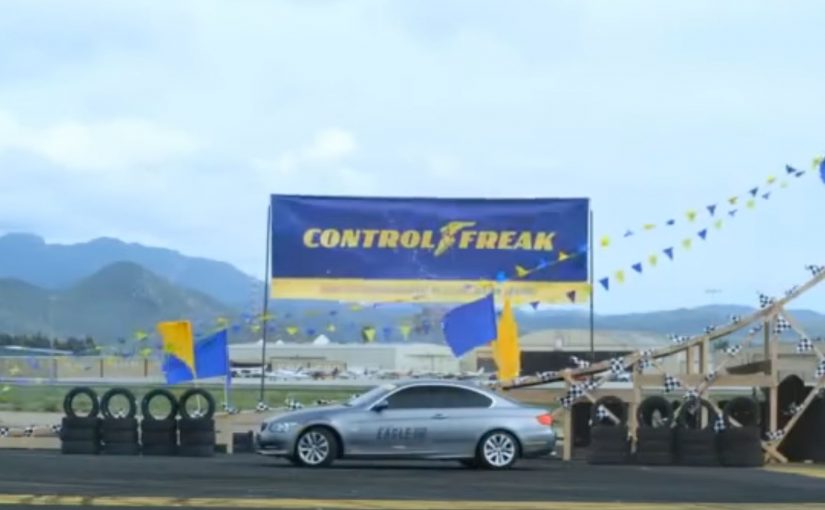
Goodyear Eagle F1 Test Drive

Goodyear does not try to “tell” you that a tire grips better. They stage a test drive that makes you feel it.

A customer walks into a Goodyear retail store expecting the usual sales conversation. Instead, a salesperson offers a test drive. The customer gets into a performance car with what looks like a normal driver. Then the drive turns into a controlled, choreographed, Hollywood-grade demonstration. The driver is a disguised stunt professional. The “test route” includes conditions that exaggerate what traction and control actually mean when things get unpredictable.

That single choice is the unlock. The product story is no longer a brochure. It is an experience.

Goodyear describes this execution as entertainment built around retail-store proof for its Eagle F1 Asymmetric All-Season line, often referred to as “Control Freak”. The point is not the stunt. The point is that grip becomes a felt outcome, not a claim.

The core move

Goodyear turns a retail test drive into entertainment that proves performance.

The real question is: how do you turn an “invisible” performance claim into belief at the moment intent is forming.

How the proof is staged

The stunt is engineered as a sequence of “proof moments” that escalate. The customer starts in a familiar retail context, then the driver introduces controlled chaos where traction and handling show up as outcomes you can feel. Because the demo is structured around cause and effect, the viewer does not need tire expertise to understand what is being proven.

In enterprise marketing organizations where retail, brand, and performance teams operate in different rhythms, retail-first proof content is one of the fastest ways to shorten the distance between awareness and intent.

Why this works so well

Most tire marketing struggles with the same problem. Performance is hard to visualize until you are already in a situation where you need it. “Better grip” sounds like every other claim until something slips.

Extractable takeaway: When a benefit is hard to evaluate in everyday life, do not buy more media to repeat the claim. Engineer one credible moment where the benefit becomes undeniable, then scale that moment through video.

This activation removes that abstraction by doing three things at once. Here, “activation” means a real-world, point-of-sale experience designed to prove one product claim with live human reaction and camera-ready structure.

  1. It makes proof visible.
    The story is designed around moments where traction and handling show up as a physical result. You do not need to understand tread compounds to understand what you just felt.
  2. It creates real human reaction.
    A staged product demo can feel like a stunt. A real customer reaction makes it believable, and shareable, at the same time.
  3. It anchors the brand in the point of sale.
    This is not a distant TV spot. The narrative starts inside the tire store. The purchase context is baked into the content, so the jump from awareness to intent is shorter.

The “retail first” storytelling pattern

A lot of experiential marketing starts with spectacle, then tries to connect it back to the product.

This one starts with the most ordinary commercial moment. A customer is about to buy tires. Then the experience expands outward. That sequencing keeps the brand motive clear. This is not adrenaline for its own sake. It is a dramatic way to demonstrate a benefit that is otherwise invisible.

If your category is dominated by price and familiarity, you win by making functional proof unignorable. You do not win by shouting “better” louder.

The deeper point

This is a category where functional proof usually loses to price promotions and familiarity. Goodyear flips that by turning functional proof into an event.

It is a reminder that “performance marketing” does not always mean dashboards and retargeting. Sometimes it means engineering a moment where the product benefit cannot be unseen.

What to borrow if you run marketing or commerce

  • Design for “proof moments,” not messages. Write down the one thing a customer must believe for your product to win. Then define the single moment they would need to see, feel, or experience for that belief to become non-negotiable.
  • Build the experience around the buying context. Placing the opening scene in a retail outlet removes friction. The story is already where the decision happens. For many categories, that is the most underrated advantage.
  • Treat the camera as a distribution strategy. The activation is designed to be filmed. Multiple angles. Real people. A sequence that escalates. In practice, the video becomes the scalable media layer on top of a physical stunt.
  • Make the customer the hero, not the brand. The most memorable part is not a feature list. It is the reaction. The brand earns attention by giving the customer an experience worth talking about.

A few fast answers before you act

What is the campaign actually demonstrating?

It demonstrates traction and handling by forcing controlled situations where grip and stability show up as physical outcomes, not claims.

Why stage it in a retail store instead of a track?

Because the purchase decision lives in retail. The story starts where intent is highest, so the proof is already in the buying context.

What makes this feel credible instead of gimmicky?

Real customer reactions plus a clear cause-and-effect link between the stunts and the product promise. The entertainment serves the proof.

What is the repeatable lesson for other categories?

Find your “invisible benefit,” create a safe way to make it visible through one engineered proof moment, then film it so it scales beyond the physical experience.

When does this approach fail?

When the experience is spectacle with no causal link to a product benefit. If you cannot explain what is being proven in one sentence, you are buying attention, not belief.

Chery M11: Road M11

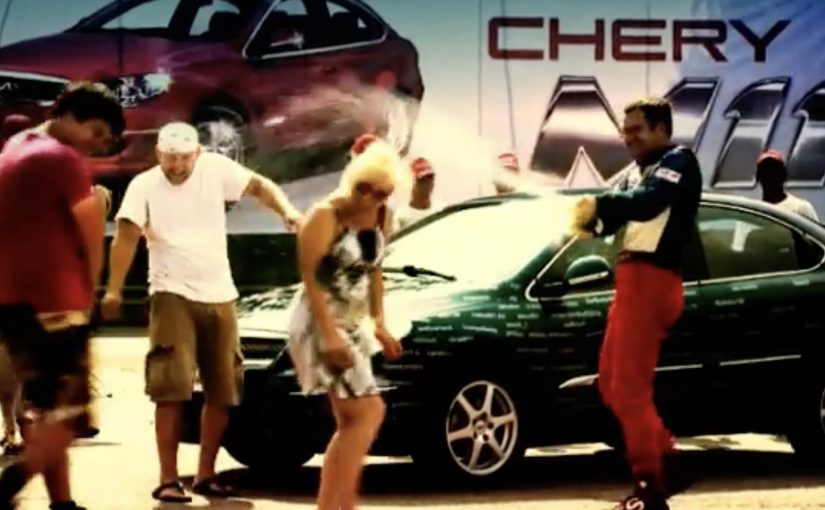
Hundreds of people design their own “dream roads” online. Then one of those roads gets built in the real world, and the person who created it ends up navigating a rally run alongside a professional driver.

That is the core idea behind Chery M11’s “Road M11” project by Voskhod, built to tackle a real market perception problem. In Russia, Chinese cars were widely seen as unreliable and unpleasant to drive, so the campaign had to create proof, not promises.

Instead of leading with specs, the brand launches an internet game where anyone can create roads and drive them using a computer model of the Chery M11. People race against the clock and vote on the best road. After a month and more than 800 submitted roads, a winner is selected. The winning road is then constructed in reality for a rally-style event, journalists are invited, a Russian rally champion is chosen as driver, and the road’s creator becomes the navigator.

Turning “prove it” into a participation loop

The mechanic is not just gamification. It is co-creation with consequences. The audience builds roads, competes, and votes. The brand takes the best idea and commits to building it at full scale, then lets independent observers experience the car on a course the public designed rather than a track the brand curated.

In automotive categories where trust is the main barrier, converting digital participation into a real-world test creates credibility that advertising claims cannot buy.

Why it lands

The campaign reframes skepticism as a challenge the audience can test. That matters because the negative belief is about performance and reliability, and those beliefs tend to change only through experience or trusted proxy experience. The road-building game gives people viewer control over what the car is “asked to do”, and the real rally event creates a clean narrative of proof. If the car cannot handle it, the idea collapses publicly. That risk is what makes the demonstration persuasive.

Extractable takeaway: When a category suffers from “untrusted origin” bias, meaning buyers discount the product because they distrust where it comes from, move the claim from messaging into a public test. Let the audience help define the test, then invite credible witnesses to validate the outcome.

What the business intent really is

The obvious goal is traffic and attention. The deeper goal is to earn test drives and journalist coverage by making the car’s capabilities feel observed rather than asserted. The legacy write-up reports strong site visitation and sales impact, which fits the logic of the mechanism. Participation creates investment, investment creates trial, trial creates conversion.

The real question is whether the brand can turn skepticism into a public proof event that feels harder to dismiss than an ad.

What to borrow from Road M11

  • Design a proof that scales. Digital participation can scale fast, but the proof moment must be simple enough to summarize.
  • Let the public set the challenge. Co-creation increases trust because it reduces suspicion of “staged conditions”.
  • Bridge online to offline. The handoff from game to real-world event is where credibility is minted.
  • Invite credible witnesses. Journalists, experts, or known practitioners make the proof travel beyond your owned channels.

A few fast answers before you act

What is “Road M11” in one sentence?

An online road-building game for the Chery M11 where the winning user-created road is built in real life for a rally-style demonstration with journalists and a pro driver.

Why use a game instead of a traditional test-drive campaign?

Because the barrier is trust. A participatory mechanic creates investment, and the game-to-real-world conversion creates a visible proof story that journalists and viewers can follow.

What perception problem is this designed to solve?

That Chinese cars in the Russian market were seen as unreliable and poor to drive, so performance had to be demonstrated rather than claimed.

What results did the legacy write-up claim?

It reported more than 340,000 visitors in three months, sales exceeding plan by 76%, and annual sales growth of 186% versus market averages. Treat these as campaign-reported figures unless you have primary reporting to validate them.

What is the biggest risk in this approach?

If the real-world build and rally experience does not match the promise, the proof flips into a public counter-proof. The execution has to be operationally strong, not just creatively strong.