
Metro Trains Melbourne: Dumb Ways to Die

Accident rates on the Melbourne Metro were rising due to an increase in risky behavior around trains, and a rail safety message was the last thing people wanted to hear.

So McCann Melbourne turned the message people needed to hear into a message people wanted to hear, by embedding it into a song and an accompanying music video. Dumb Ways to Die.

Entertainment-first safety communication

The mechanism is a deliberate format swap. Replace shock tactics and lecturing with an original song, a playful animated world, and a chorus that makes the safety points memorable enough to repeat.

In large urban public-transport systems, the most effective safety communication often feels like entertainment first, with the message carried by repetition and recall rather than warning language.

Why it lands

It works because it respects audience resistance instead of fighting it. The real question is how you make a safety message travel when the audience does not want to hear a safety message at all. For resistant audiences, entertainment-first is the stronger safety strategy because it earns voluntary attention before it asks for behavior change. People who tune out safety ads will still watch and share a catchy video, and the refrain makes the cautionary points stick through rhythm and humor. The legacy write-up reports that the campaign quickly moved beyond advertising into social currency, with very high sharing in its first month.

Extractable takeaway: When your audience actively avoids the topic, make the format shareable enough that people choose to spread it for the entertainment value, then let repetition do the behavior-change work.

The proof of spread

By using entertainment rather than shock tactics, the message is described as transcending advertising to become something people shared. Here is the case video.

What safety communicators can borrow

  • Start with a format people opt into. If attention is the barrier, do not begin with a PSA tone.
  • Write for recall. A chorus and simple phrasing can outperform “important information” copy.
  • Build a visual system. Distinct characters and repeatable scenes make the idea remixable and memorable.
  • Package the case story separately. A dedicated case video helps the idea travel in marketing circles without diluting the original film.

A few fast answers before you act

What is Dumb Ways to Die?

A rail-safety campaign for Metro Trains Melbourne that delivers the safety message through a catchy song and animated music video instead of traditional PSA warnings.

Why use humor for a serious safety topic?

Because the target audience resists conventional safety messaging. A humorous, musical format earns voluntary attention and repeat viewing, which increases recall.

What made it spread so widely?

A simple hook, a memorable chorus, and highly shareable animation that people could pass along as entertainment, with the safety message embedded inside.

What is the case video for?

It explains the strategy and rollout behind the campaign, and it packages results and rationale for marketers and stakeholders.

What is the main risk with “entertainment-first” safety work?

If the humor overwhelms the behavioral point, the audience remembers the joke but not the safety action you want them to change.

Frijj: You LOL You Lose

Frijj, a UK-based milkshake brand, and Iris Worldwide developed a campaign to help people build their tolerance to the unexpected. The aim was to make Frijj’s new flavours, Honeycomb Choc Swirl, Jam Doughnut, and Sticky Toffee Pudding, feel like a challenge worth trying.

So they created an advergame, a branded game designed to promote a product through play. It pits you against friends from your social networks in a challenge of who can keep a straight face for the longest period of time while the web app serves up funny and weird YouTube videos.

A “don’t laugh” game that sells flavour confidence

The mechanic is straightforward. You start a session, the site throws escalating clips at you, and you try not to crack. The moment you smile, you lose. The format turns passive viewing into competitive viewing, which is exactly what makes it sticky. Here, “flavour confidence” means making unusual flavours feel safe and fun to try rather than risky or strange.

In FMCG launches, simple competitive mechanics are a reliable way to turn a product message into repeatable social behavior.

Why it lands

This works because it reframes product novelty as a playful test. Instead of saying “these flavours are bold”, it says “prove you can handle bold”. Social comparison does the rest. You want a better score than your friends, so you replay, you share, and you bring others into the same loop. The use of face tracking is also a smart constraint. If the system can “catch” a smile, the challenge feels fair and measurable rather than self-reported.

Extractable takeaway: If your product promise is “unexpected”, build a mechanic where the audience has to demonstrate composure or control. The brand benefit becomes the rule of the game, not the line of copy.

What Frijj is really buying with this advergame

This is a strong launch mechanic because it turns trial curiosity into repeatable social play at scale. The real question is whether the product promise can become a rule people want to test with friends. The game creates time spent, repeat visits, and a socially distributed invitation mechanic, all while keeping the brand message consistent. New flavours that might feel risky in a supermarket become a badge of fun online.

Design rules worth borrowing from Frijj

  • Make the rule binary. Smile equals lose. Simple rules travel.
  • Use content people already understand. YouTube “weird and funny” clips need no explanation.
  • Turn replay into the product benefit. Each retry reinforces “unexpected” as the brand’s territory.
  • Design social competition as the default. Friends, scores, and bragging rights beat generic “share this”.
  • If you use webcam detection, be explicit. Clear consent and clear on-screen feedback keep trust intact.

A few fast answers before you act

What is the core idea of “You LOL You Lose”?

A straight-face challenge where the “payment” is composure. You watch funny clips and try not to smile longer than your friends.

What is an advergame?

An advergame is a branded game designed to promote a product by turning the message into gameplay rather than traditional advertising.

How does the game know you “lost”?

It is described as using face tracking through your webcam to detect a smile. When you smile, the session ends.

Why is this a good fit for launching unusual flavours?

Because it converts “new and unexpected” into a playful challenge, which makes novelty feel fun instead of risky.

What should you measure if you run something similar?

Repeat plays per user, share and invite rate, average session duration, and any lift in branded search or retail trial during the launch window.

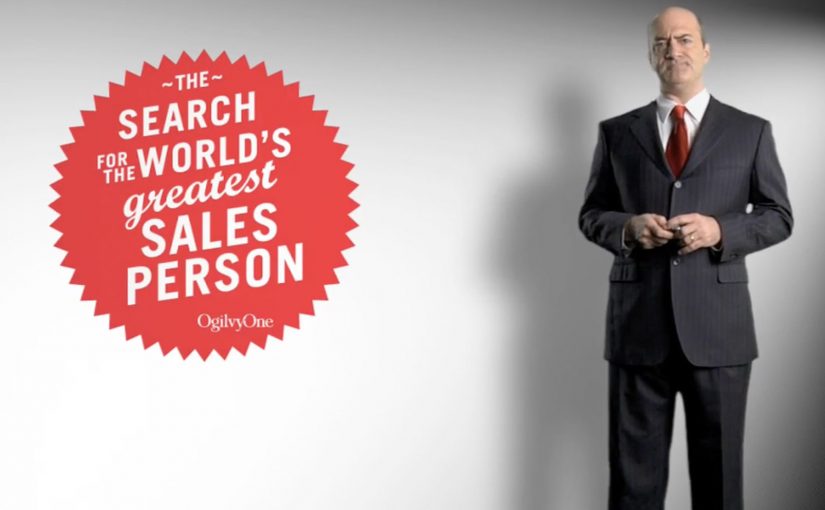
Ogilvy: The World’s Greatest Salesperson

News just out. Ogilvy & Mather Worldwide is looking for “The World’s Greatest Salesperson”.

Ogilvy’s founder, David Ogilvy, went door to door selling stoves before he got into advertising. He was so good at it that the company asked him to write a manual for other salesmen. Now, after decades as one of the best-known agencies in the world, Ogilvy is creating a contest to celebrate the art of selling.

The contest is designed to live where modern pitching lives: on YouTube. Entrants are asked to prove they can sell, not just claim they can sell, by submitting a short video pitch.

A recruiting idea disguised as a sales lesson

The mechanism is simple. Use a public challenge to attract people who can communicate clearly under constraints, then let the internet do the first round of filtering through visibility and voting signals. Because the entry is a short video work sample, the first screen is proof, not claims.

In global agency recruiting and employer branding, open challenges like this turn hiring into content and let capability show up in public rather than on a CV.

This is a stronger recruiting filter than a conventional careers campaign because it forces proof under a shared constraint.

The real question is whether a video-first work sample can replace traditional screening without diluting quality.

Why it lands

It works because the entry format turns “sales ability” into a comparable work sample, so judgment starts with evidence instead of self-description.

Extractable takeaway: The best recruiting campaigns behave like a job preview. A job preview is a small, real slice of the role. They ask candidates to demonstrate the exact skill you care about in a constrained, comparable format, then use curation to turn submissions into a public proof of standards.

It makes “sales ability” observable. The work samples are the application. You can see clarity, empathy, structure, and persuasion in minutes.

It borrows the founder’s origin story without turning it into nostalgia. The David Ogilvy reference sets a standard. Selling is treated as craft, not hype.

It rewards ambition with a real stage. The promised prize, including a Cannes Lions trip and a seminar slot, gives the contest a credible career upside rather than a token reward.

Borrowable moves for video-first recruiting

  • Ask for a work sample, not a statement. Make the entry itself the evidence.
  • Use one consistent prompt. A shared constraint makes submissions comparable and curation easier.
  • Build a reward that signals seriousness. A meaningful stage and exposure attracts serious entrants.

The three winners of this contest will win a trip to the 57th annual Cannes Lions International Advertising Festival. They will also get to make a presentation at the festival seminar on June 21.


A few fast answers before you act

What is Ogilvy actually trying to find with this contest?

Someone who can sell convincingly, on camera, with a clear structure and customer understanding, not just someone with a polished resume.

Why run it on YouTube?

Because sales is performance plus clarity. Video makes both visible, and it scales submissions globally without heavyweight logistics.

What makes this more than a PR stunt?

The entry format is a real work sample, and the prize includes a meaningful industry stage. That combination turns attention into a talent pipeline.

What does David Ogilvy’s backstory add to the idea?

It anchors the contest in a specific belief: selling is foundational craft. The founder story is used to justify why sales ability is being celebrated publicly.

What is the most transferable lesson for leaders hiring for commercial roles?

Design selection as demonstration. Give candidates a single prompt that mirrors the real job, then judge the work, not the claims.