Volvo Trucks: The Hamster Stunt

Volvo Trucks: The Hamster Stunt

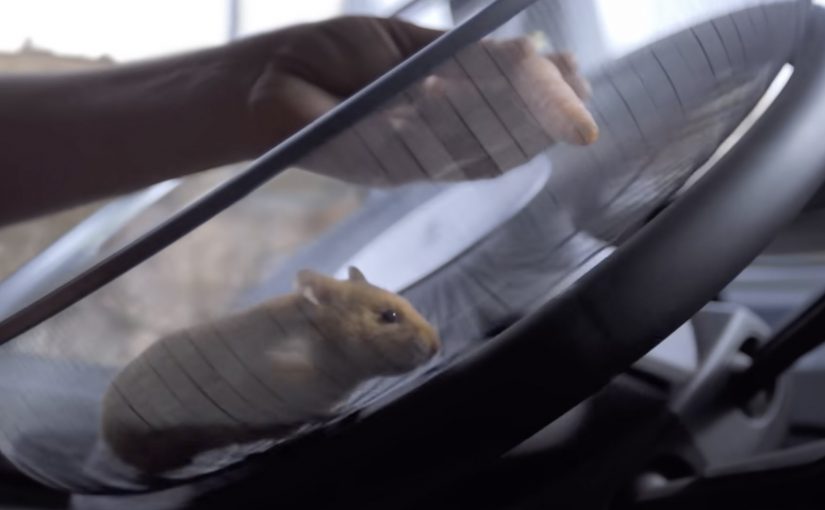
Brands everywhere are chasing branded content. Volvo Trucks picks a sharper route: it turns a technical feature into a spectacle by letting a hamster “steer” a Volvo FMX out of a quarry using Volvo Dynamic Steering.

The gag is simple to explain and hard to ignore. A hamster wheel is mounted to the steering wheel, and a precision driver handles pedals and safety while guiding the hamster with a carrot. The result feels like a ridiculous idea that somehow still proves something real.

When the product proof is the entertainment

Volvo Dynamic Steering is not an easy feature to dramatize in a way non-truck buyers want to watch. This film solves that by making “light steering” visually absurd, then grounding it with a credible live-test frame. A live-test frame is a visibly real setup that keeps the demonstration believable even when the idea is silly.

In global B2B and industrial marketing, this is a clean blueprint for turning an engineering benefit into mass-reach content without losing the proof.

The real question is whether your product proof can be watched by people who will never buy the thing.

B2B brands should bias toward demos that carry the claim in the image, not explanations that require patience.

Why the hamster works as a device

The hamster is not just cuteness. It is a proxy for “minimum force.” If a tiny animal can move the wheel, the viewer instantly understands the claim before any explanation arrives.

Extractable takeaway: If you can embody your benefit in a single visual proxy, the claim lands before the explanation.

That is the key branded-content trick: build an image that carries the message on its own, then let the technical story catch up afterwards.

Reported reach, and the deeper lesson

Volvo Trucks reports the film drew millions of views quickly, and industry press echoes that early momentum. The bigger point is not the number, it is the audience expansion. A feature aimed at fleet operators becomes something broadly watchable because the demonstration is designed like a story, not a spec.

What to copy from the hamster stunt

  • Turn the benefit into a visual impossibility that still stays true.
  • Keep the proof readable without narration, the image should carry the claim.
  • Use a live-test frame so entertainment does not undermine credibility.
  • Design a one-sentence retell, “a hamster steers a truck” is instant recall.

A few fast answers before you act

What feature is Volvo proving here?

Volvo Dynamic Steering, positioned as making the steering feel unusually light and precise even in demanding conditions.

Is the stunt “real” or purely visual effects?

It is presented as a controlled live test executed in a managed environment, with safety handled by a precision driver while the hamster influences the steering wheel.

Why does this count as strong branded content?

The product truth is inseparable from the story. The plot only works because the feature exists, which makes the content feel earned rather than bolted on.

What makes this approach effective for B2B brands?

It recruits non-buyers as viewers. When the demo is entertaining on its own, reach grows beyond the immediate purchase audience, while still reinforcing the proof.

What is the biggest risk when copying this pattern?

If the spectacle overwhelms the claim, people remember the stunt but not the feature. The visual must map cleanly to the benefit.
Coca-Cola: Personal Road

Coca-Cola: Personal Road

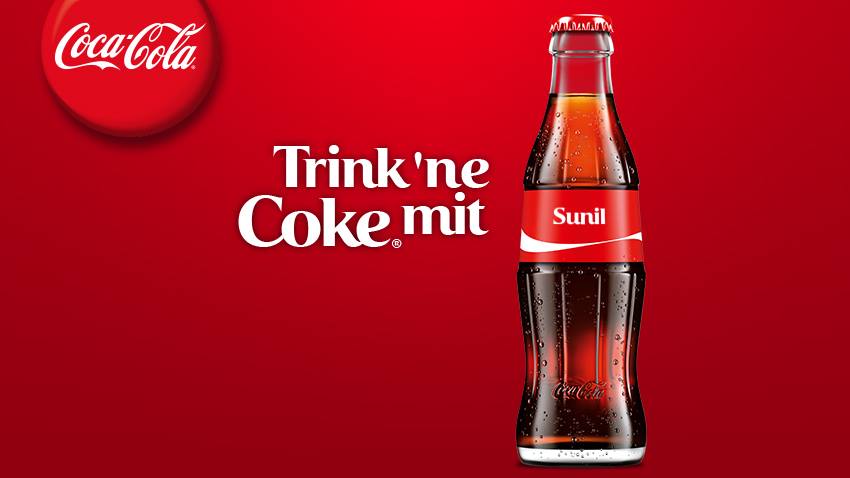
Coca-Cola has an ongoing global campaign that allows consumers to personalise bottles and cans…

The real question is how you extend a personalization promise beyond the package without turning it into a gimmick.

Enjoy a Coke with Sunil

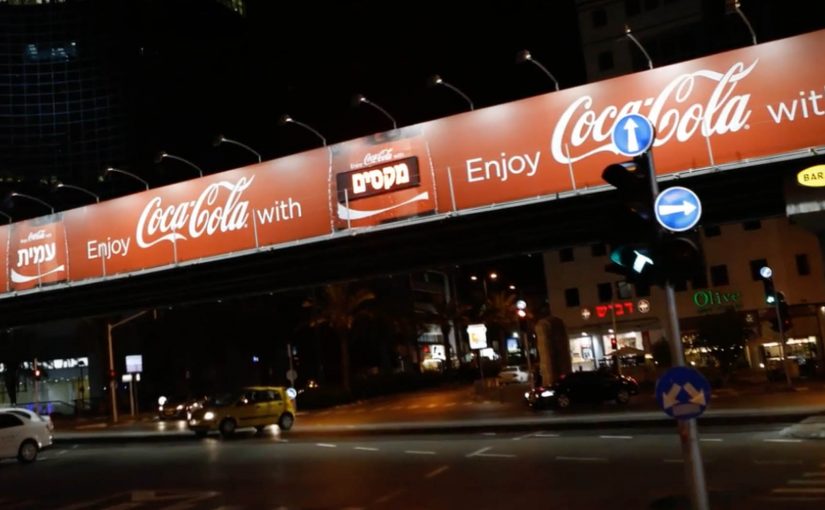
Building on the success of this campaign Coca-Cola Israel decided to take the idea further with personalised billboards.

A mobile app was developed where consumers could enter their name. Then using geo-fence technology, the Coca-Cola billboard displayed the name when it was approached. Geofencing here means the app detects when you enter a defined area around the billboard. The same trigger also sends a phone message, which is what makes the public moment feel personal and easy to share.

In global consumer brands running mass-personalization campaigns, this kind of simple, location-triggered reveal is a clean way to turn a name into a real-world moment.

Since its launch the app has reached 100,000 downloads and is currently ranked #1 in Israel’s app store.

Why this extension makes sense

It keeps the original “Share a Coke” promise intact, then amplifies it with one visible surprise that is immediately confirmed on the device you are already holding.

Extractable takeaway: If you want personalization to stick, pair one unmistakably personal output people can see with one immediate confirmation they can keep.

  • It keeps the personalization promise. The name is not only on the package. It shows up in the world around you.
  • Location makes it feel “for me”. The moment you approach the billboard, the experience becomes uniquely yours.
  • Mobile closes the loop. The phone notification confirms the moment and turns it into something you can share.

The reusable pattern

Start with a personalization mechanic people already understand. Then add a single “surprise and confirm” moment in the real world, powered by location and a simple mobile action.

  • Keep the input tiny. Ask for one thing, like a name, and make it obvious what happens next.
  • Make the output public and specific. Put the person’s name somewhere they cannot miss in the real world.
  • Confirm on mobile. Send a message at the same moment so the experience is memorable and shareable.

A few fast answers before you act

What is Coca-Cola “Personal Road”?

It is a Coca-Cola Israel extension of the personalised-name campaign that uses a mobile app and geofencing so a billboard displays your name as you approach, and your phone notifies you.

How does the billboard know when to show a name?

The app uses geo-fence technology to detect proximity, then triggers the personalised billboard moment when the user approaches.

Why pair the billboard moment with a smartphone message?

The message confirms what just happened and makes it easy for the consumer to capture and share the experience.

What is the key takeaway for location-based campaigns?

Make the rule simple and the payoff instant: one input from the consumer, one visible personalised output, and one mobile confirmation that seals the memory.

Roman Atwood: The World’s Most Contagious Prank

Roman Atwood: The World’s Most Contagious Prank

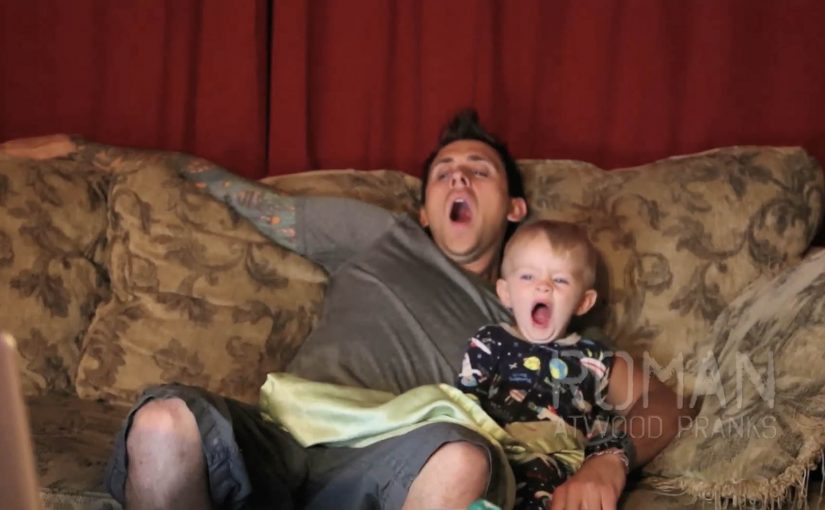
Here is an infectious yawning video created by YouTuber Roman Atwood. Try watching this nearly three minute clip of constant yawning without letting one loose yourself. I could not help but yawn while watching it.

The simplest mechanism in the world

The mechanism is pure mimicry and suggestion. You see a yawn. You anticipate a yawn. Then your body does the rest. The prank is not about shock. It is about stacking the same trigger again and again until your reflex gives in.

In social video, simple human reflexes and repeatable triggers can outperform high production because the viewer feels personally involved.

Why it lands

This works because it turns the viewer into the subject. The content is not only “watch someone yawn”. It is “can you resist”. That tiny competitive frame, a simple self-test with a clear pass-or-fail outcome, creates attention, and attention makes the reflex even harder to ignore. The real question is how you turn a passive viewer into an active participant with almost no friction. The smarter lesson for marketers is that participation can beat production value when the trigger is immediate and universal.

Extractable takeaway: If you can anchor a video around a universal, involuntary response and wrap it in a clear challenge, the audience participates while they watch. Participation is what makes the clip shareable.

How to build your own contagious challenge

  • Start with the reaction you want: pick a response that is immediate and universal, then build backwards.
  • Use repetition with purpose: one trigger is a gag. Many triggers become a challenge.
  • Make the premise explainable in one sentence: “watch this without yawning” is the whole pitch.
  • Let viewers test themselves: self-tests create comments, shares, and rematches.
  • Keep it short and focused: the tighter the loop, the stronger the contagion.

A few fast answers before you act

What is “The World’s Most Contagious Prank”?

It is a yawning prank video where the creator yawns repeatedly in public to see if bystanders and viewers “catch” the yawn reflex.

Why do people share videos like this?

Because the challenge frame is social. People want to test friends, compare reactions, and prove whether they can resist.

Is this a prank or a social experiment?

It sits in between. It uses a prank setup, but the entertainment comes from observing a predictable human reflex spread from person to person.

What is the key lesson for video marketing?

Design around a specific viewer response, then make the viewer feel like the outcome depends on them.

What is the main risk of copying this format?

If the trigger is not truly universal or the loop feels repetitive without payoff, people drop off quickly. The mechanic has to be instantly felt, not only understood.