
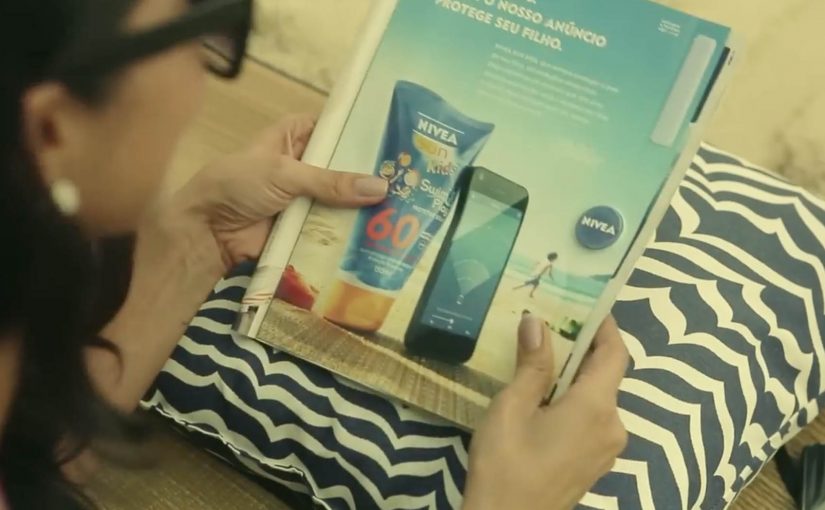
NIVEA: Protection Ad

NIVEA: Protection Ad

Last year NIVEA transformed a regular print ad into a portable solar charger for smartphones. Now in its latest ad, NIVEA has made the right side detachable, so people on the beaches of Brazil can use it as a trackable bracelet.

Parents who want to keep an eye on their children can rip off the bracelet, attach it to a child’s arm, and then download the companion app. In the app, they can add each child’s name and set the maximum distance each child can wander. If a child goes too far, the app sends a loud alert.

From print to proximity

The clever part is that it is not just a “detachable freebie”. The bracelet is described as embedding Bluetooth proximity tech, so the printed unit becomes a functional signal that a phone can detect and monitor.

In FMCG innovation, utility-based media works best when the object removes a real anxiety in the exact moment the product is used. Utility-based media here means an ad unit that doubles as a small tool people use right away.

The real question is whether the utility you build into the media unit is reliable enough to earn trust when the anxiety spikes.

Why the idea lands on the beach

NIVEA’s product promise is protection, but protection on a beach is not only about skin. It is also about the panic of losing sight of a child in a crowded, noisy, high-movement environment. The bracelet reframes the brand benefit from a claim to a service. This works because it shifts “protection” from a claim about skin into a service parents can experience in minutes.

Extractable takeaway: If you want a print placement to behave like product, compress the mechanism into four verbs that anyone can repeat. Tear it out. Put it on. Set a safe radius. Get alerted. That simplicity is what turns a print placement into something people talk about, and something press can repeat without over-explaining.

Business intent

This is a campaign designed to win preference in a category full of parity. It makes NIVEA Sun Kids feel like an innovator in a place where it matters, and it creates a reason to choose the brand that is not only SPF.

The work later received major awards recognition, including winning the Mobile Lions Grand Prix at Cannes Lions.

Steal the protection-to-service pattern

  • Turn media into a usable object. If it solves a real problem, people keep it and share it.
  • Map the utility to the brand promise. The best “useful ads” make the benefit feel literal.
  • Make setup frictionless. Clear instructions and a fast pairing experience are the difference between buzz and abandonment.
  • Design for the real environment. Beach. Noise. Distance. Movement. The alert has to work in the messy world.

A few fast answers before you act

What is NIVEA’s Protection Ad?

It is a print ad that includes a tear-out bracelet for children, paired with a mobile app that alerts parents if a child moves beyond a preset distance on the beach.

How does the bracelet connect to the phone?

Coverage describes the bracelet as using Bluetooth proximity technology. The phone detects the bracelet, and the app uses distance thresholds to trigger alerts.

Why does this count as strong “useful advertising”?

Because the ad delivers a real service in-context. It does not only talk about protection, it provides an extra layer of it during a real beach day.

What is the biggest risk with safety-themed tech campaigns?

Trust and reliability. If pairing fails, alerts misfire, or the experience feels unclear, the concept turns from reassurance into frustration.

What should you measure if you build something similar?

Redemption and pairing success rate, app installs driven by the ad unit, repeat usage during real outings, and brand preference uplift versus a control region or period.
Nike Football: The Last Game

Nike Football: The Last Game

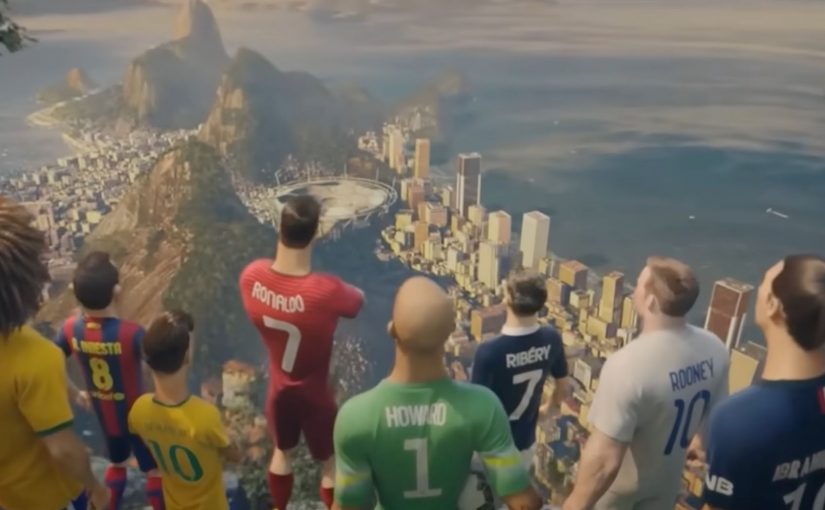
In a build up to the first match of the 2014 FIFA World Cup, Nike Football released a five minute animated film that features some of the world’s greatest footballers on a mission to save football from the hands of a villainous mastermind, The Scientist.

In a future where brilliant football has ceased to exist and the game has become almost extinct, Brazilian legend Ronaldo (O Fenómeno) decides enough is enough and goes on a mission to reignite the game with brilliant football with the help of a re-assembled group of the world’s most brilliant players.

In the final minutes of the film, Cristiano Ronaldo, Wayne Rooney, Neymar Júnior, Zlatan Ibrahimović, Andrés Iniesta, David Luiz, Franck Ribéry, Tim Howard and Ronaldo (O Fenómeno) are seen battling the “perfect” football clones in a winner take all match.

How the plot carries Nike’s platform

The film pits “brilliant football” against a future of optimized, risk-free play, so “Risk Everything” reads like a choice between creativity and extinction. Here, a brand platform means the recurring campaign idea that frames the work.

In global tournament marketing, this kind of work competes with entertainment, not other ads.

The real question is how you turn a tournament moment into a story people choose to watch and share, even when they do not care about the sponsor.

Why this story structure is so effective

By giving creativity a face (the players) and safety a face (The Scientist and his clones), the film turns an abstract brand message into a clear, watchable conflict.

Extractable takeaway: If your platform is an attitude, dramatize it as a choice with consequences, then let the audience feel the outcome instead of explaining it.

  • It turns a brand platform into a myth. “Risk Everything” translates naturally into a fight for football’s soul.
  • It uses a clear villain to sharpen the message. The Scientist represents control, safety, and sameness. The players represent creativity and individual brilliance.
  • It makes the product message implicit. You do not need to be told that creativity wins. You watch it win.

What marketers can take from “The Last Game”

When you have a cultural moment as big as the World Cup, the winning work often behaves like entertainment first. Nike built a mini-universe with stakes, characters, and a simple conflict. That gives the story a reason to be shared beyond football fans, and it gives the brand a clear point of view without sounding like advertising.

  • Lead with stakes. Make the outcome matter before you ask anyone to share.
  • Give the tension a face. A clear opponent sharpens what you stand for, and what you stand against.
  • Keep the product message implicit. Show the behavior you want to reward, then trust viewers to connect the dots.

A few fast answers before you act

What is Nike Football “The Last Game”?

It is a five-minute animated film released ahead of the 2014 FIFA World Cup where Ronaldo (O Fenómeno) and a group of top players try to save football from The Scientist and his “perfect” clones.

Who are the players featured in the final match?

Cristiano Ronaldo, Wayne Rooney, Neymar Júnior, Zlatan Ibrahimović, Andrés Iniesta, David Luiz, Franck Ribéry, Tim Howard and Ronaldo (O Fenómeno).

What is the core idea behind the villain “The Scientist”?

He represents a future of controlled, optimized, risk-free football. The film positions creative, brilliant play as the antidote.

Why does this work so well ahead of a tournament?

It amplifies the emotion people already bring to the World Cup and gives them a shareable story that feels like culture, not a commercial break.

McDonald’s: Save the Sundae Cone

McDonald’s: Save the Sundae Cone

A melting cone that asks the street to help

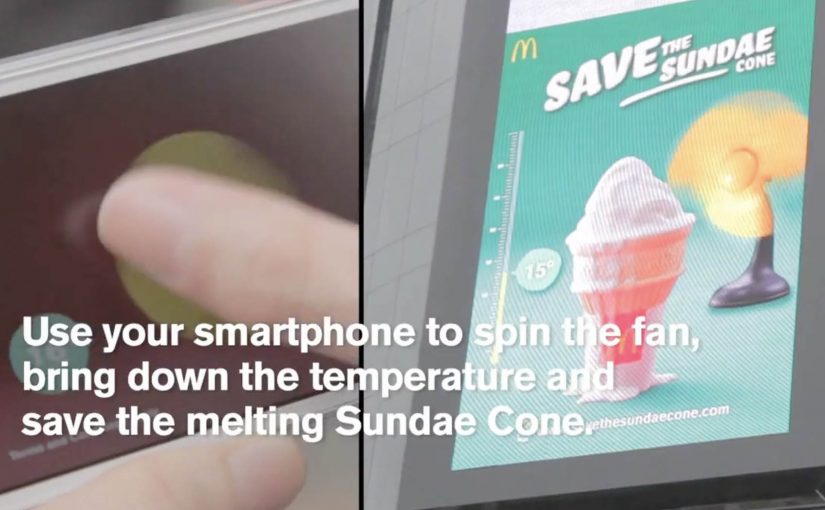
Summer is here and McDonald’s is back with an interactive outdoor campaign built around one simple problem. A giant LED billboard in Bukit Bintang, one of Kuala Lumpur’s best-known shopping districts, showcases the iconic Sundae Cone. But it is melting.

To save it, people use their smartphones to spin a fan on the billboard, bring the temperature down, and stop the cone from disappearing.

The mechanic: one shared control, one visible outcome

The execution translates an abstract idea, “cool it down,” into a single piece of viewer control. You open the experience on your phone and spin a fan. The billboard responds in real time. When more people join in, the cooling effect accelerates, so the experience naturally becomes collaborative rather than solo.

In some write-ups, participation is also rewarded with a Sundae Cone e-voucher that arrives on the phone, adding a clean payoff to the play.

In high-footfall retail districts, interactive DOOH, meaning public digital screens that react to what people do, works best when the action is obvious, social, and instantly rewarded.

In high-density urban retail districts, the win is not interactivity by itself but a public action that converts attention into nearby store traffic.

Why it lands

It is instantly legible from a distance. Something is melting. A crowd can fix it. Because the phone gesture maps directly to the visual problem on the screen, people understand the task instantly and the crowd can follow the result without explanation. That clarity creates a low-friction loop: notice. join. watch the shared progress. earn the reward. The “melting” constraint also adds urgency without needing any heavy messaging, and the big screen makes every participant feel like they are influencing something larger than a banner.

Extractable takeaway: If you want people to interact in public, reduce the mechanic to one familiar gesture, make the result visible to everyone, and design the reward so participation feels worth it even for a 30-second engagement.

What McDonald’s is really buying

The real question is whether the screen can turn public play into store-proximate action before attention drifts. This is a strong retail DOOH execution because the interaction, the product promise, and the path to redemption all reinforce each other. This is not only awareness. It is behavior. Get people to take out their phone, do a playful action tied to heat and refreshment, and then convert that attention into a reason to walk into a nearby store. The billboard becomes a live demo of “cool relief,” not a static claim.

What retail teams should borrow

  • Design for crowds first. If spectators cannot immediately understand what participants are doing, participation stalls.
  • Make progress collective. Shared outcomes create social proof and naturally recruit more people.
  • Keep the gesture native. One simple interaction beats a clever multi-step flow in outdoor environments.
  • Tie reward to proximity. If you can convert engagement into a nearby redemption moment, the media becomes a traffic engine.

A few fast answers before you act

What is “Save the Sundae Cone”?

It is an interactive digital out-of-home campaign in Kuala Lumpur where a billboard shows a melting Sundae Cone and invites the public to cool it down using their smartphones.

How do people control the billboard?

They use their phone to spin a fan mechanic that cools the on-screen temperature. More participants increase the effect, making it collaborative.

Why is the melting mechanic effective?

Melting creates urgency that anyone understands, and it turns participation into a visible “save” moment the crowd can watch.

What makes this a strong example of interactive DOOH?

The action is obvious, the feedback is immediate, and the experience becomes social because progress is shared on a large public screen.

What is the key takeaway for other brands?

Use one native gesture, show real-time feedback in public, and reward participation quickly so interaction feels like a fair trade.