
Bike Guide: Detachable Bike Tour Vehicle

A tour bus that splits into bikes when the city gets interesting

“Bike Guide” is an innovative concept from Seoul based designer Kukil Han. He has conceptualized a convenient two-in-one tour bus, which enables the passengers to detach their bikes at specific checkpoints in order to explore the surroundings.

Bike Guide is a detachable-bike tour vehicle concept where a single bus carries multiple bikes, lets riders peel off at checkpoints to explore independently, then recombines the group at a planned rendezvous.

Two-in-one tour bus here means one vehicle that functions as group transport and also as a mobile dock for individual bicycles.

The mechanic: modular touring with a built-in regroup button

Each individual bike is supposed to be equipped with a GPS, which would also notify the user of when and where to rejoin the group.

A checkpoint in this concept is a planned stop where riders detach bikes, explore a nearby area, then meet the bus again at the next agreed point.

In urban tourism and micro-mobility, the winning experiences blend group convenience with moments of solo freedom, without making regrouping stressful.

Why the idea is clever. Even before it becomes real

The promise is simple: you get the efficiency of a guided tour without the feeling of being dragged past everything. You ride when you want to ride. You rejoin when you want the tour to move on.

The GPS layer matters because it turns “go explore” into “go explore safely”. It reduces anxiety about getting lost or missing the group, which is the main barrier to letting tourists detach at all.

What to steal if you are designing modular mobility

  • Design the detach and rejoin moments. The “handoff” is the product. Not the vehicle.
  • Make the rule-set obvious. Where do I split. How long do I have. Where do I meet.
  • Use navigation as reassurance. GPS is not a feature. It is permission to roam.
  • Plan for mixed energy levels. Some people want to pedal. Others want to sit. This concept serves both.

A few fast answers before you act

What is the Bike Guide concept?

It is a tour-bus concept that carries detachable bicycles. Passengers can split off at checkpoints to explore by bike, then rejoin the bus later.

How does it keep riders from losing the group?

Each bike is supposed to include GPS guidance and notifications that tell riders when and where to rendezvous, so exploration stays bounded and regrouping stays predictable.

What problem does this solve for city tours?

It combines the efficiency of group touring with the autonomy of cycling, reducing the common trade-off between “seeing more” and “feeling free”.
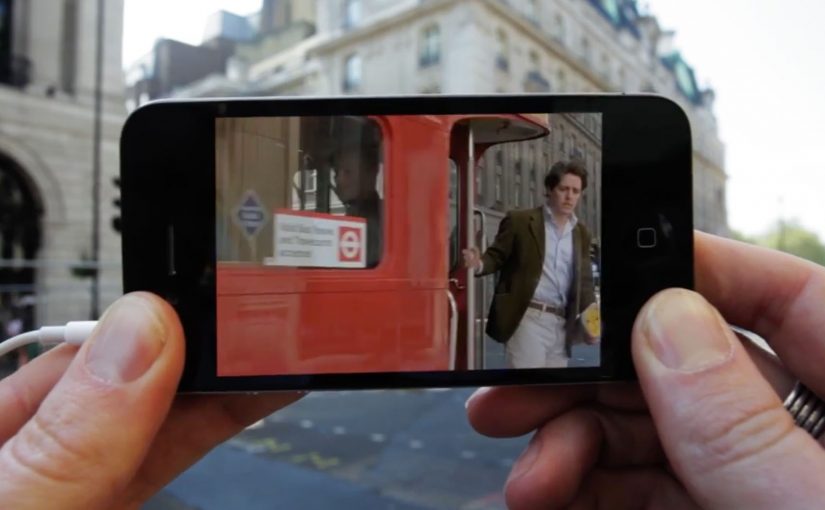
AR Cinema: London Movie Scenes on iPhone

Turn London into a living movie map

The Augmented Reality Cinema app for the iPhone allows you to walk around London and discover all the places where movies have been shot. Just point your iPhone in the direction of a sweetspot and get a replay of the movie scene that was shot there.

The app is currently a work in progress prototype. But if and when it does see the light of day, I am sure it will make a great gizmo for all the movie buffs out there.

The magic is not AR. It is time travel

The clever part is the juxtaposition. You stand in the real location. Then you pull the filmed moment back into that exact space. That overlap between “here” and “then” is what makes the concept feel instantly shareable and instantly fun.

In city exploration experiences, the strongest mechanics turn real-world wandering into a lightweight mission with an instant payoff.

Why this fits the way people explore cities

It turns wandering into a mission without forcing a route. You move naturally, and the city rewards curiosity with a scene. That is a strong mechanic for tourists and locals alike because it makes discovery feel personal.

What this prototype is really aiming for

A new kind of location-based entertainment. Part guided walk, part trivia, part nostalgia. Built around the simplest action. Point. Watch. Move on.

What to steal if you build AR experiences

  • Anchor the experience to real places people already want to visit.
  • Give the user one simple gesture that unlocks the payoff. Point and replay.
  • Use “before vs now” contrast as the hook. It creates emotion without heavy storytelling.

A few fast answers before you act

What does the Augmented Reality Cinema app do?

It lets you walk around London, point your iPhone toward a location “sweetspot,” and replay the movie scene filmed there.

Is the app available?

The post describes it as a work-in-progress prototype.

Who is it for?

Movie buffs and anyone who enjoys exploring film locations while walking the city.

What is the core mechanic?

Location-based discovery paired with an AR replay that overlays a movie scene onto the real place where it was shot.

Miami Ad School

This year Miami Ad School has produced some great conceptual projects from their current students. Here are a couple that caught my eye…

McDonalds Burger Roulette App

This student concept has been designed for McDonald’s and is a Facebook app that offers to help find the perfect burger for your mouth…

UNICEF Donate A Word

This student concept has been designed to create a new way to donate money for child education by utilizing the spelling feature inside Google Chrome to trigger donation prompts…

Heineken Invite

This student concept uses a social media connected bottle opener that invites friends over for a beer. Whoever has the most friends attending, gets a free case of Heineken…