
Microsoft HoloLens: Elevator Maintenance

Augmented reality leaves the demo room

Microsoft HoloLens is not only about futuristic consumer experiences. Its real power emerges in enterprise environments.

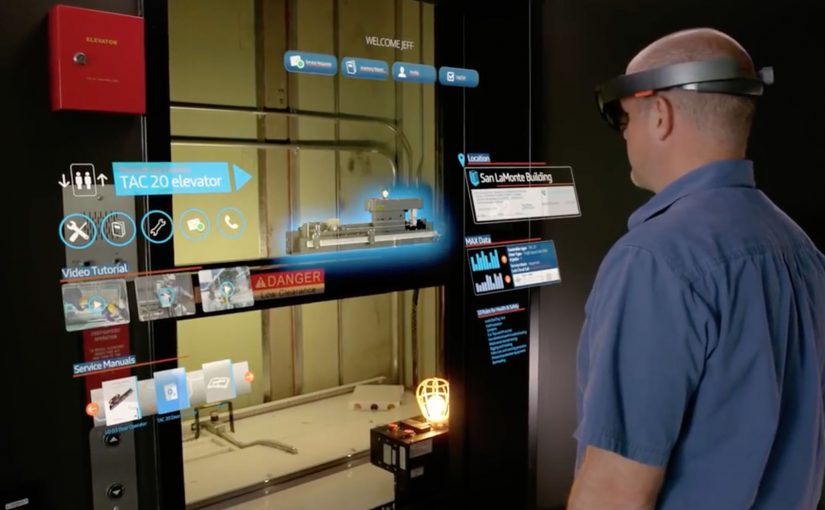
A strong example is ThyssenKrupp, which uses HoloLens to redefine how elevator maintenance is performed in the field.

Instead of relying on manuals, phone calls, or trial and error, technicians receive contextual, real-time information directly in their line of sight.

How HoloLens changes elevator servicing

With HoloLens, elevator technicians see what they need while keeping their hands free.

Technical documentation, schematics, and checklists appear as holograms overlaid onto the physical elevator system.

Remote experts can see exactly what the technician sees and guide them step by step.

This turns maintenance into a guided, collaborative process rather than an isolated task.

In industrial field service teams, the constraint is getting expert judgement to the point of work fast enough to prevent rework and downtime.

Why this matters for industrial operations

The impact goes beyond convenience. Because guidance is delivered in-context and hands-free, technicians can complete complex steps with fewer avoidable mistakes.

Extractable takeaway: When you embed expert guidance into the job itself, you turn specialist knowledge into a repeatable operating system for the frontline.

The real question is whether you can make frontline expertise repeatable inside the workflow, not whether you can ship an AR pilot.

Enterprise AR is worth doing when it removes friction from real maintenance workflows, not when it adds another screen.

  • Reduced downtime
  • Shorter training cycles
  • Improved first-time fix rates

Most importantly, expertise becomes scalable.

Knowledge is no longer locked in the heads of a few specialists. It becomes part of the workflow.

A glimpse of the future of work

This use case shows what augmented reality does best.

It does not replace workers. It augments them.

Complex tasks become easier. Errors decrease. Confidence increases. Work becomes safer and more efficient.

This is where mixed reality stops being a novelty and starts being infrastructure. By mixed reality here, I mean digital guidance and remote expertise anchored onto the physical job, not a virtual-world detour.

What to copy from this AR service pattern

  • Instrument the moment of work. Put the next step where the technician is looking, not in a manual that forces context switching.
  • Make escalation visual. Let remote experts share the same view so guidance is specific and actionable.
  • Scale expertise as workflow. Capture checks, sequences, and decision points so outcomes do not depend on a few specialists.

A few fast answers before you act

What is the Microsoft HoloLens elevator maintenance use case?

ThyssenKrupp uses Microsoft HoloLens so field technicians can see schematics, checklists, and contextual guidance overlaid onto the elevator system while working hands-free.

How does HoloLens change the maintenance workflow?

It puts documentation and step-by-step instructions into the technician’s line of sight, and enables remote experts to see what the technician sees so they can guide the job in real time.

Is this only relevant for elevators?

No. The same pattern applies to any field service or industrial maintenance scenario where hands-free guidance, fast troubleshooting, and expert escalation reduce downtime and errors.

What is the measurable value driver in enterprise AR like this?

Reduced downtime, faster training, and higher first-time fix rates. The key is that expertise becomes repeatable and scalable inside the workflow instead of remaining locked in a few specialists.

Where does this pattern break down?

It breaks down when the underlying documentation is outdated, connectivity is unreliable, or remote support is not operationalized. The hardware alone does not change outcomes.

100% Real Virtual Reality

A passerby in Tbilisi, Georgia (the country), puts on a VR headset and starts touring Ireland. Irish countryside. The streets of Dublin. A traditional Irish bar. Then the headset comes off, and the “virtual” bar is suddenly real. A pop-up pub has been built around them in seconds, complete with actors performing Irish clichés, and beer in hand. The reveal does not explain the slogan. It makes the slogan unavoidable.

Turn “100% real” into proof

Use virtual reality as misdirection, then land the brand promise by turning the “virtual” experience into a physical surprise.

How the stunt is engineered

Old Irish is a craft beer launch in Georgia (the country). Leavingstone takes a line that could sound like every other beer claim, “100% real,” and makes it literal. Here, “misdirection” means the tech holds attention just long enough for the real-world payoff to be built with zero narration.

  1. Invite the public into VR
    People on the streets of Tbilisi are offered a VR “tour of Ireland,” including nature, Dublin streets, and a typical Irish bar.
  2. Build the punchline in real life
    While they are inside VR, a crew builds a pop-up Irish bar around them. The space is filled with actors performing how locals imagine Ireland.
  3. Reveal the promise as a lived moment
    The moment the headset comes off, the audience is already “in Ireland,” except it is physically there, and the product is part of the scene.

In challenger FMCG launches in mid-sized markets, the fastest way to earn “authentic” is to stage a moment people can witness and retell without explanation.

Why the reveal sticks

Beer marketing often tries to borrow authenticity through language. This one manufactures belief through an experience that collapses the gap between claim and proof. Because VR locks attention and suspends context, the physical build happens unnoticed, which makes the reveal feel like undeniable evidence.

Extractable takeaway: When your promise is “real,” design a before-and-after moment that makes “real” physically undeniable in under five seconds.

The proof is theatrical, but the reaction is real

The campaign bets on ordinary people’s genuine surprise. That reaction becomes the content people want to share.

VR is not the product. VR is the timer

Virtual reality is used as a temporary attention lock so the physical transformation can happen without explanation. The innovation is the transition, not the headset.

The brand promise lands in one repeatable beat

“100% real” is not argued. It is demonstrated when the environment jumps from virtual to physical.

Results Leavingstone reports

Leavingstone reports the stunt video was posted on the Old Irish Facebook page on March 18 with a modest placement budget. They report it engaged more than 50% of internet users in Georgia (the country), reached 1 million views in 72 hours, and was followed by 515,698 liters sold in the first month (described as 2x more sales).

Leavingstone also lists multiple awards for the campaign, including Cannes Lions Bronze and Eurobest Bronze.

What the brand is really buying

The real question is how to turn a generic authenticity claim into proof people can feel and retell. The stance is simple: treat tech as misdirection and timing, then make the product truth the thing people physically experience together.

How to reuse the reveal move

  • Use tech as a timer, not a headline. If the product truth is physical, make the physical payoff the main act.
  • Design the reveal beat. The win is a single, clean “before/after” moment that needs no voiceover.
  • Cast for real reactions. The most credible asset is ordinary people processing surprise in real time.
  • Map the stunt to one promise. If the promise cannot be “felt” in the reveal, the stunt becomes spectacle.

A few fast answers before you act

What is the core mechanic?

A VR tour of Ireland distracts participants while a real pop-up Irish bar is built around them, so the reveal converts “virtual” into physical.

Why use VR at all?

It creates a believable reason to pause someone in public, and it buys time to build the physical environment unnoticed.

What makes it shareable?

The surprise is immediate, visual, and human. Ordinary people’s reactions are the story engine.

What is the transferable pattern?

Use an emerging-tech interface as a controlled setup, then deliver the brand promise through a physical, social payoff people can experience together.

What is the biggest risk?

If the reveal does not map cleanly to the product truth, the stunt becomes spectacle with no belief gain.

Cornetto: Series Commitment Rings

Netflix has taken the world by storm, transforming itself from a mail order DVD company into a streaming behemoth that consumes immense amounts of internet bandwidth worldwide. Along the way, it helped normalize a cultural habit called binge-watching, where you watch multiple episodes of the same TV show in one sitting.

Cornetto looks at that habit and pulls out a relationship insight. People “binge-watch cheat”. Skipping ahead without their partner, then pretending they did not. Campaign materials from Cornetto described this as widespread behavior and framed it as “Netflix infidelity”, including stats about how often people watch ahead while the other person sleeps, or re-watch episodes later to cover it up.

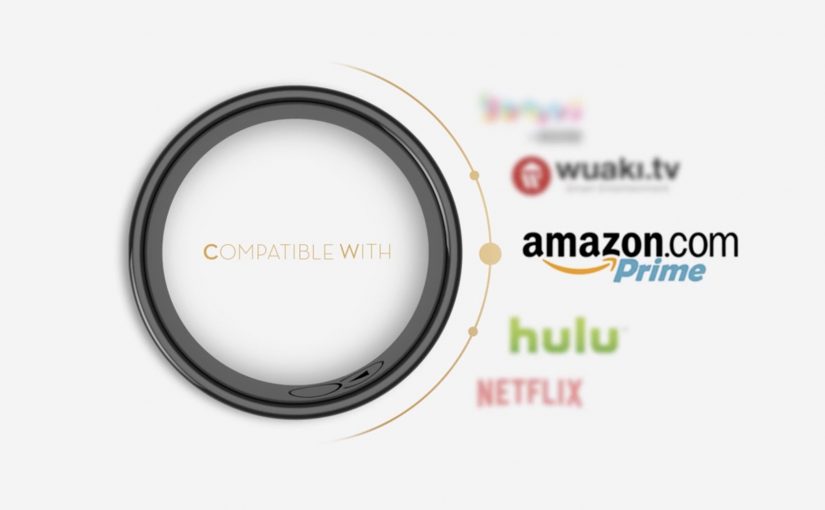
To “fix” the problem, Cornetto creates Commitment Rings. A pair of smart wearable rings designed to block access to agreed shows unless both partners are watching together.

How the rings enforce “we watch together”

The mechanism is NFC proximity plus a companion app. The rings connect to a smartphone over NFC. In the app, users register the shows they want to watch as a couple. From that point on, the next episode only plays if both people are present and their Commitment Rings are nearby, effectively locking the series unless the pair is together.

In subscription streaming culture, shared series have become a relationship ritual, so small “watching ahead” moments can carry real emotional weight.

Why it lands

This idea works because it treats a modern micro-conflict as if it deserves a formal solution, and that exaggeration is the joke. The rings also make the conflict visible and measurable. Either both are present or the episode does not start, which turns a vague promise into a concrete rule. It is a product-shaped punchline that still maps cleanly to a real behavior.

Extractable takeaway: When a cultural habit creates a recurring “tiny betrayal”, build a playful constraint that makes the rule unmistakable, then let the product itself carry the story in one sentence.

What Cornetto is really buying

This is not about launching a scalable wearable business. It is a brand move that places Cornetto inside a current cultural conversation, binge-watching, couples, and the social etiquette of streaming. The rings function like a physical metaphor for commitment, then redirect that metaphor back to the brand’s role in shared moments.

The real question is whether a brand can turn a small relationship rule into a product-shaped cultural story people want to share.

At the moment there aren’t any pricing details or release dates for this particular wearable, so you’ll have to keep checking the Series Commitment website for more details about it, or register with the site to receive more information about the product.

What to borrow from the idea

  • Start from a recognizable behavior. The audience must immediately know the “problem” from their own life.
  • Make the solution overly literal. The comedy comes from treating a small issue with disproportionate tech seriousness.
  • Build a crisp constraint. A simple rule is more shareable than a clever explanation.
  • Create a proofable mechanic. NFC proximity is easy to understand and easy to demonstrate on camera.

A few fast answers before you act

What are Cornetto’s Commitment Rings?

A pair of NFC-enabled rings designed to prevent “watching ahead” by only unlocking selected shows when both partners and their rings are nearby.

How does the locking actually work?

Users register the shows in an app. When someone tries to play a new episode, the app checks whether both rings are in close proximity, then blocks or allows playback.

What problem is the campaign targeting?

So-called “binge-cheating”. Watching episodes alone, out of sync with a partner, then hiding it or re-watching to cover it up.

Is this positioned as a real product or a campaign stunt?

It is presented as a product concept tied to a campaign, with sign-up messaging and no clear pricing or release timing in the original write-up.

What is the key lesson for marketers?

If you can translate a current cultural tension into a simple, demonstrable rule, the rule becomes the shareable story, and the brand becomes part of the conversation.