
AR in 2013: Three Retail-Ready Examples

Augmented Reality in 2013: when the real world becomes the interface

With smartphones and tablets becoming part of our everyday life, we also see more augmented reality apps mixing the virtual and the real world in 2013. Here are some examples from ARworks that recently caught my eye.

Audi Singapore Showroom app

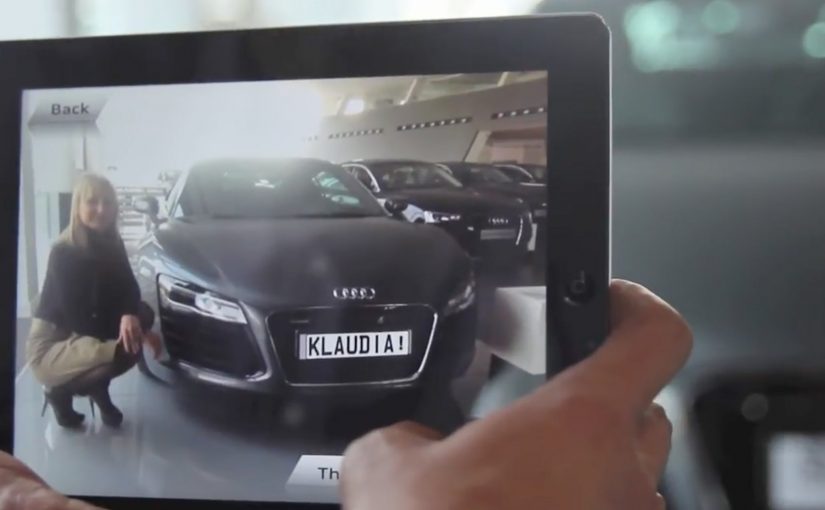
For the opening of their biggest showroom in South-East Asia, Audi created AR experiences that allowed visitors to fly around the showroom building without actually boarding a plane, or drive the Audi R18 race car around Singapore at full speed without the risk of getting a ticket. What’s more, they even allowed visitors to personalize their individual license plates and then take photos with the car.

Dakar race in a shopping mall

A real Dakar desert racecourse was built for the new Opel Mokka on a 4mtrs long table that was placed in a shopping mall. Visitors could use the provided iPads to race against time and each other. The results were then shared on Facebook, and the weekly and overall winners received various prizes.

Christmas Ornament Sling

Deutsche Telekom, for their Christmas promotion, developed an iPad app where visitors could throw virtual Christmas ornaments containing their personal message onto a huge Christmas tree erected in a mall. A successful hit to one of the real ornaments on the tree lit it up through an integrated server application.

The pattern across all three: AR turns “watching” into doing

None of these examples treat AR as a gimmick. Each one uses the device as a bridge between curiosity and action. You explore a building. You race a course. You aim a message at a real tree. The screen stops being a place to consume. It becomes a tool to participate.

In retail and shopper environments, augmented reality works best when it turns a physical setup into a simple, repeatable action loop for the visitor.

The real question is whether your AR layer gives the visitor a simple verb and a payoff worth repeating.

Why retail is the natural habitat for AR

Retail already has the ingredients. Footfall, dwell time, and physical objects that can anchor the experience. AR simply adds a layer of viewer control. The visitor decides where to look, what to try, and what to share. This works because the physical anchor keeps the choice set small, so the device can turn curiosity into a low-friction action with an immediate outcome.

Extractable takeaway: AR earns its keep when the physical setup stays simple and the device turns it into a repeatable action that produces a visible outcome worth sharing.

What’s really being built here

These are not “apps.” They are engagement machines, meaning they turn a physical setup into an interaction loop with a reward and an easy share path. Each one creates a clear reason to interact, a clear reward for completing the action, and a clear path to share or repeat. That is how you turn novelty into behavior.

Four retail-ready AR mechanics to copy

  • Anchor it physically. Anchor the experience to a physical object people can gather around. A showroom, a tabletop course, a tree.
  • Give the visitor a simple verb. Fly, drive, race, sling. Actions beat features.
  • Design a tangible payoff. A photo, a score, a lit ornament. Make the outcome tangible.
  • Make sharing a by-product. Make sharing a natural by-product of the activity, not a forced button at the end.

A few fast answers before you act

What makes these 2013 AR examples feel “ready” for real audiences?

They are built around clear actions and clear rewards. The device is used to do something in the physical environment, not just view an overlay.

Which devices are central to these activations?

Tablets and phones are the delivery mechanism. The examples explicitly reference iPads and handheld devices for the AR interaction.

What role does sharing play in these concepts?

Sharing is tied to the activity. Photos with the car, results shared on Facebook, and personal messages sent as virtual ornaments.

What is the common mechanic across the three examples?

The camera-enabled device acts like a controller that links a real-world setup to a virtual experience, giving the viewer control over exploration and interaction.

How do you keep AR from feeling like a gimmick?

Make the overlay serve a real action and a visible outcome. If the visitor can do something concrete and see a result that is worth showing, the experience stops being novelty and starts being behavior.

ASICS: Run With Me at the Gold Coast Marathon

ASICS has a fine history not just in running sports, but also in the innovative use of technology. So at the Gold Coast Airport Marathon, a grueling 42km run, they created a powerful demonstration of running and technology by connecting runners with their supporters like never before.

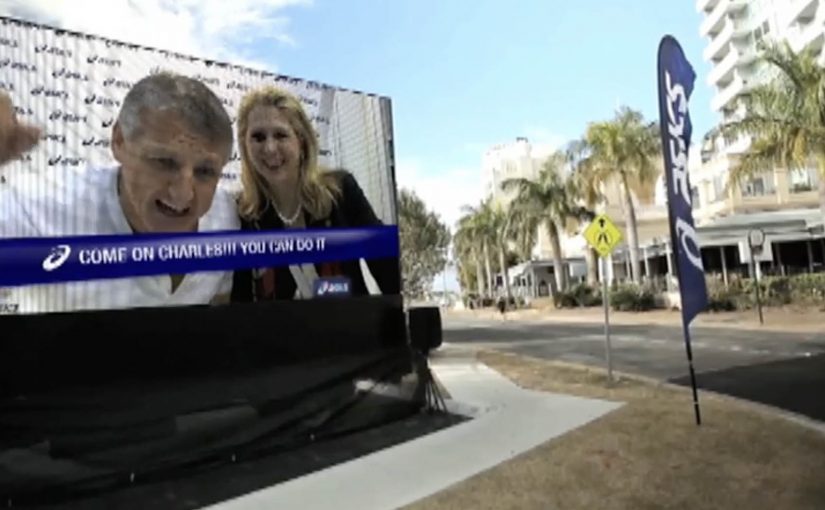
Runners were given RFID timing chips to connect their run with Facebook. RFID, or radio-frequency identification, lets a small chip be detected automatically at checkpoints. This allowed them to automatically post pre-written messages at checkpoints, along with distance run and remaining, live timing, and location data plotted on Google Maps. At the same time, friends and loved ones were able to upload video messages of support, which were triggered and played as runners approached giant screens along the course.

A marathon that posts for you, at the moments that matter

The clever part is not “Facebook integration.” It is the timing. Checkpoints are already emotional beats in a race. Effort spikes. Doubt kicks in. Motivation dips. By tying updates to those exact points, the campaign makes every status feel earned, and every reply from friends feel relevant. The real question is whether you can make that support arrive inside the effort, not after the finish.

Extractable takeaway: Automate sharing only at moments participants already care about, so updates feel like earned progress and support can land at the exact point it matters.

RFID is doing quiet work here. It removes manual posting friction, and it makes the updates feel live rather than staged, because the data is anchored to race progress.

In large-scale sports events, real-time data and social signals can turn spectators into an active support system that changes how the race feels while it is happening.

Support that shows up on the course, not just in the comments

Most event social campaigns keep encouragement on a screen at home. This one brings encouragement into the race environment. The supporter uploads become on-course content, triggered when the runner is near, so the message arrives in the body, not just in the feed.

That shift matters. It turns “cheering” from a passive gesture into an intervention, and it gives runners a reason to care about the system mid-race, not only after finishing. This kind of activation is worth building only when the trigger system is reliable enough to feel invisible to the runner.

Reported outcomes, and what they imply

The campaign reported that 2,000 runners, described as 15%, connected their run with Facebook. It also reported 6,000 messages of support uploaded, 1,000 video messages created at the event, and 35% of runners receiving video support. Additionally, it reported thousands of unique status updates from inside the race, 25,850 unique visitors to the microsite, and tens of thousands of return comments from friends and family.

Even if you strip the numbers back, the strategic takeaway is clear. When you connect performance data to social response, you create a loop. Effort generates updates. Updates generate support. Support reinforces effort.

Steal this support-loop pattern for your next event

  • Attach the experience to natural moments. Checkpoints, milestones, and thresholds beat “post whenever you want.”
  • Automate the boring part. If the participant must manually publish, most will not.
  • Bring support into the physical environment. On-course screens, audio, or wearable prompts outperform distant encouragement.
  • Give supporters a real role. Uploading a message is simple, but it feels meaningful when it is triggered at the right time.

A few fast answers before you act

What is the core mechanic of “Run With Me”?

RFID-triggered race checkpoints publish pre-written social updates, while supporter videos are triggered on giant screens as runners approach.

Why does RFID matter here?

It makes the experience hands-free. The system captures progress automatically, so runners do not have to stop or think about posting.

What makes the supporter videos more powerful than normal social comments?

They appear in the runner’s world during the effort, not after it. Timing plus proximity turns a message into motivation.

What is the biggest risk when building this kind of live experience?

Reliability. If triggers misfire or content appears late, the emotional payoff collapses. The tech has to feel invisible and dependable.

How do you measure success beyond impressions?

Opt-in rate, supporter participation rate, trigger completion rate, and whether the loop changes behavior, for example more mid-race engagement and higher repeat participation intent.

Marie Claire: Print Pages You Can Tap to Buy

Enabling readers to buy directly from magazines or newspapers is slowly going to become the industry standard, as revenues from print continue to slip.

Last year Ikea re-imagined their catalog via a special visual recognition app that brought its pages and offerings within to life. Now Marie Claire has taken it one step further by letting their readers use the Netpage app to interact with its printed pages, clip, save, share, watch and buy.

The Netpage app is described as using a combination of image recognition, augmented reality and digital twin technology. Hence no special codes, watermarks or special printing processes are required. In this context, “digital twin” is used to describe a digital counterpart of each page that can be recognized and linked to interactive layers.

Shoppable print, without QR code clutter

Shoppable print is the fusion of editorial content and commerce, where a reader can move from “I want that” to checkout directly from the page. The key difference here is interaction that is designed to feel native to reading. Not bolted on as a separate scanning ritual. Because the interaction stays inside the reading flow, it reduces friction, which is why it can earn repeat use instead of feeling like a one-time gimmick.

In magazine and brand teams trying to keep print premium while still making it measurable, invisible recognition is the interaction pattern that scales best.

The real question is whether your print pages can create measurable intent without forcing readers out of the reading flow.

Why this matters for magazines and brands

Once print becomes tappable, meaning a phone can recognize a specific page and surface actions, the page stops being an endpoint. It becomes a trigger for a whole set of actions, saving for later, sharing with friends, watching richer product context, and buying immediately.

Extractable takeaway: If a page can trigger trackable actions and even checkout, the magazine is no longer only monetized by ads and subscriptions. It can also participate in the transaction path.

Practical moves for tappable print commerce

  • Design interaction as a reading behavior, quick actions that fit the moment, not a separate “tech demo.”
  • Reduce visual noise, if recognition can be invisible, the page stays premium.
  • Offer multiple intent paths, not everyone wants to buy now, but they might save, share, or watch.
  • Make the jump from inspiration to action short, the fewer steps, the more commerce you unlock.

Publishers and brands should treat tappable print as a measurable commerce layer, not a novelty. The future is all about content being fused with commerce so that it’s a quick step from reading about an item to buying it. So get ready!


A few fast answers before you act

What does “interactive print” mean here?

It means a printed page can be recognized by a phone app and instantly connected to digital actions like clipping, saving, sharing, watching content, and buying.

How is this different from QR codes?

The interaction is designed to be code-free on the page. The recognition layer is meant to feel invisible, so the magazine layout stays clean.

What is the core value for readers?

Convenience. Readers can act on interest immediately, whether that means saving an item, sharing it, or purchasing it, without leaving the content context.

What is the core value for publishers?

A measurable engagement layer and a commerce path. Pages can generate trackable actions and potentially incremental revenue beyond print ads.

What is the biggest adoption risk?

Habit change. If the scanning flow feels slow or unclear, people will not repeat it. The first experience must be fast, obvious, and rewarding.