MINI: Getaway Stockholm 2010

After their recent Talent Poaching via Facebook Places campaign, Jung von Matt is back with the MINI Getaway Stockholm 2010 campaign.

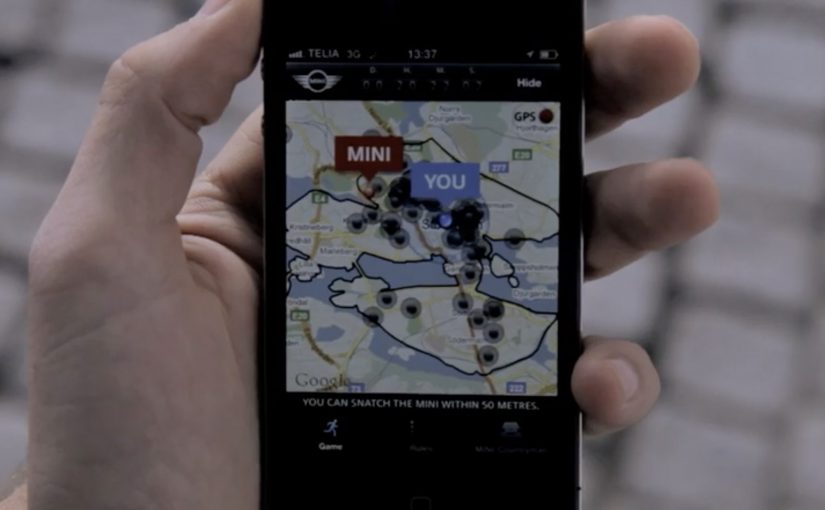
The premise is a reality game that challenges you to do the impossible: stay at least 50 metres away from everybody else in Stockholm city between October 31st and November 7th 2010. If you succeed, you win the new MINI Countryman.

A city-wide game disguised as a launch

This is not a typical “watch and forget” film. It is a product introduction that behaves like a week-long public challenge, using the city as the playing field and social friction as the difficulty setting. Here, “social friction” means the everyday collisions and proximity of city life that make distance hard to maintain.

The mechanic that makes it feel impossible

Mechanically, the campaign turns distance into drama: the rule is simple, but enforcing it in a dense capital city is the whole point. Every street corner becomes a decision, and every near-miss becomes part of the story players tell afterwards.

In European automotive launches, turning a product message into a participatory public challenge is a reliable way to earn attention without leaning on price or specs.

Why this breaks through

Most launches compete on features. This one competes on behavior. It gives people a clear goal, a clear constraint, and a clear reward, then lets the public generate the content through their attempts to win. Because the rule forces constant micro-decisions in public space, it creates tension that keeps spectators watching and participants talking. A constraint-led public game beats a feature-led launch when you need sustained talk value. The real question is whether your launch can earn attention by making the public do the storytelling.

Extractable takeaway: If you can express your launch as one repeatable rule plus one real-world constraint, you turn passive awareness into a week of attempts, near-misses, and shareable stories.

The business intent behind the play

The obvious headline is the prize, but the deeper intent is talk value and repeated engagement over a full week. By “talk value,” I mean the likelihood people will mention it to others and keep the story alive. A launch that unfolds day by day creates more chances for people to hear about it, join late, or simply follow along as a spectator.

Launch moves worth copying

  • Build one rule people can repeat. If the mechanic fits in a single sentence, it spreads faster.
  • Use a constraint, not just a reward. Difficulty creates stories. Stories create sharing.
  • Make the environment part of the experience. When the city is the stage, the campaign feels larger than the media.
  • Stretch the reveal over days. A week-long cadence beats a one-day spike if you want sustained attention.

A few fast answers before you act

What is MINI Getaway Stockholm 2010 in one line?

A week-long reality game in Stockholm with one simple rule and a real prize: stay 50 metres away from everyone else and win a MINI Countryman.

Why does the “50 metres” rule matter?

It turns a basic challenge into something socially and logistically hard in a busy city, which creates tension, stories, and spectator interest.

What makes this feel less like advertising?

The campaign centers on participation and behavior. People engage with the challenge first, and the brand benefits as the enabler of the experience.

What is the transferable lesson for other brands?

If you want attention without shouting, turn your launch into a simple public game with a constraint that generates stories over time.

How do you adapt this pattern without a big prize?

Keep the single repeatable rule, make the constraint genuinely hard in the real world, and use a reward that feels meaningful enough for people to attempt and for others to follow.

Skoda Fabia RS: Augmented Reality Test Drive

Skoda has just released a rally-based, augmented reality test drive for the Fabia RS. Here, “augmented reality test drive” means an AR overlay combined with a live webcam feed so you appear inside the cockpit view. The hook is simple and instantly personal: you become the driver, right down to a helmet view that pulls your face in via the webcam.

A rally fantasy built on a very real webcam

The execution borrows the language of motorsport. Helmet cam framing, tight cockpit perspective, and the feeling that you are inside the run rather than watching an ad.

Mechanically, the idea is an AR layer plus a live camera feed. The interface does not just show the car. It places you into the experience so the “test drive” feels like a game you are starring in.

In European automotive launch teams, webcam-first interactivity can differentiate faster than another spec-led asset.

In automotive launches where feature parity is high, interactive test drives create faster differentiation than another spec sheet or beauty film.

Why the helmet view is the smartest detail

Most virtual test drives keep the viewer outside the car. This one pulls the viewer into the cockpit, which changes the emotional contract. You are no longer evaluating. You are participating.

Extractable takeaway: Move the viewer from evaluator to participant, and the demo becomes something they remember and share without being asked.

That participation is what makes the concept naturally shareable, even without shouting for shares. People want to show the version where their own face is in the helmet view, because it is proof they “did the thing.”

What the brand is really reinforcing

The real question is whether the experience makes performance identity feel personal, not just visible.

On the surface, it is a playful rally twist. Underneath, it signals performance identity. The Fabia RS is framed as a car with motorsport DNA, not just a faster trim level.

The AR wrapper also makes an implicit promise: this is a modern car for people who like modern interfaces. The experience becomes a proxy for the product personality.

How to borrow the webcam POV trick

  • Make the viewer the protagonist, not just the audience. Webcam and POV tricks do more than cinematic polish.
  • Choose one unmistakable motif that communicates the category story fast, here it is rally and helmet cam.
  • Turn “try” into “play” so the time spent feels like entertainment, not evaluation.
  • Design a single talkable detail people can retell in one sentence, for example “it pulls your face into the helmet view.”

A few fast answers before you act

Is this more ad or more game?

It sits in the middle. The structure behaves like a lightweight game, while every element points back to a single product identity, rally performance.

What is the core mechanism that makes it work?

Personalization through webcam plus a strong point-of-view frame. The experience feels like it is happening to you, not in front of you.

Why does AR help here, instead of just a normal virtual drive?

AR adds “presence.” It creates the feeling of being inside the moment, which is harder to achieve with a standard video or configurator flow.

What is the biggest execution risk with webcam-based experiences?

Friction and permission. If setup is clunky or people feel uncertain about using the camera, completion drops fast. The first 10 seconds must feel safe and effortless.

What is the transferable lesson for other categories?

Put a real person into the proof. When the viewer’s face, voice, or choices become part of the demo, the demo becomes content people want to share.

3D projection mapping on a Toyota Auris

Instead of projecting onto a building, Glue Isobar projects a CG car directly onto a real Toyota Auris Hybrid. Here, projection mapping means aligning animated visuals to the contours of a physical object so the imagery appears built into the car itself. With seven projectors working together, the result is a true 3D, 360-degree projection mapping experience on all sides of the car. You can walk around it and experience the visuals from any angle.

What makes this projection mapping different

The twist is the surface. A real car brings complex curves, edges, and reflections. Mapping to that shape, and keeping the illusion consistent as people move around it, is the challenge that makes this feel genuinely new.

How the experience is delivered

The work uses a mix of keyframe, 2D, 3D, algorithmic, and dynamic animation to deliver the experience. The projection setup supports a 360-degree view, which is why the story holds up from multiple angles instead of depending on a single “best seat”.

In live auto launches and showroom-style reveals, this matters because the product demo and the spectacle happen in the same physical moment.

Why this lands as a launch moment

This format turns a product reveal into a live event. It gives people a reason to stop, watch, walk around, and talk. The real question is not whether the projection looks advanced, but whether the launch makes the car feel worth approaching, discussing, and remembering. The business job of a launch moment is not passive viewing but active attention that carries into conversation and recall. This is stronger than a static display because it turns the car itself into the source of attention.

Extractable takeaway: When the product becomes the performance surface, the launch works harder because the spectacle and the proof of product presence happen in the same place.

What to steal for live product reveals

  • Make the product the canvas. When the object carries the story, the experience feels specific and harder to copy.
  • Design for movement in the crowd. A 360-degree setup keeps the illusion intact even when people walk around and viewpoints change.
  • Use complexity where it creates visible payoff. Multiple projectors are justified when they unlock surfaces and angles a single beam cannot cover.
  • Treat it as a performance, not a display. The reveal works best when the product appears to “do something”, not just sit there.

A few fast answers before you act

What is 3D projection mapping in this example?

It is the technique of projecting animated visuals onto a physical object, aligned to its shape so the imagery appears to belong to the object rather than a flat screen.

Why use seven projectors?

To cover the full vehicle and maintain the illusion across multiple surfaces, including areas you can only see when walking around the car.

Why project onto the car instead of a separate screen?

Because the effect feels more product-specific. The visuals appear attached to the vehicle, which makes the reveal more memorable than showing the same animation beside it.

What makes “360-degree” important for live audiences?

People do not stand in one spot. If the experience works from many angles, it feels real in a public space and stays compelling as crowds move.

What is the main lesson for product launches?

Make the product the stage. When the object itself becomes the canvas, the experience feels specific, memorable, and inherently shareable.