AT&T: ZugMO webcam heading banner game

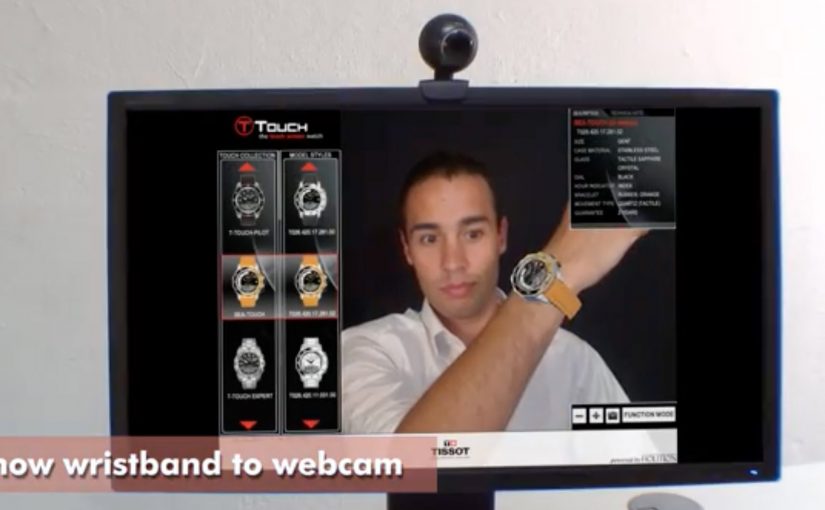
The AT&T banner brings you right into the game, using Zugara’s augmented reality motion capture technology called ZugMO. Here, “augmented reality” means webcam-based motion capture with game graphics layered over live camera input. ZugMO translates head movement into game input. You use your webcam to “head” crosses toward goal, with five shots to score as many as possible. There isn’t much more to it than that. But it is a very cool concept, especially because it is described as having run as a banner placement on ESPN.com with BBDO and Zoic Studios involved.

Why this banner feels different to click on

Most banners ask for a click and then try to convince you after the fact. This one flips the sequence. It gives you a tiny game first, then lets AT&T benefit from the time, focus, and small dopamine hit that comes from trying to score.

Extractable takeaway: A playable banner works when the mechanic is instantly legible, the interaction is frictionless, and the reward arrives fast enough that people try “just one more shot.”

What “augmented reality” means here

In this execution, “augmented reality” is less about 3D worlds and more about webcam-based motion capture layered with game graphics. Your movement is the controller. The screen overlays the ball path and goal feedback on top of live camera input, so the interaction feels physical even though you are still inside a standard banner unit.

The mechanic is the message

There are only a few moving parts. A webcam feed. Face and head tracking. A corner-kick animation. A simple scoring loop with five attempts. That minimalism matters because banners do not have time for onboarding. If the player cannot understand it in one glance, the banner has already lost.

In performance-driven digital advertising, the fastest way to earn attention is to let people experience the message with their own body in seconds.

The real question is whether your ad can earn five seconds of voluntary play without explaining itself.

Playable banners are worth doing when the first interaction is immediate, legible, and ends quickly enough to invite a replay.

The business intent behind the “cool concept”

Positioned around football attention, the deeper message is speed and responsiveness. Not by claiming it, but by making the ad itself respond to you. It is a small but smart translation of “fast network” into an experience you can feel.

Steal this pattern for playable banners

  • Design for zero instructions. If the mechanic cannot be understood instantly, simplify it.
  • Use the body as the controller. Webcam motion beats mouse clicks when you want memorability, not just reach.
  • Keep loops short. Five shots is a clear session boundary. It invites replay without feeling endless.
  • Make the feedback loud. Clear “goal” and “miss” cues turn confusion into compulsion.
  • Let the format prove the claim. If your message is speed, make the interaction snappy and responsive.

A few fast answers before you act

What is a “playable banner”?

A playable banner is a display ad that includes a lightweight interactive experience, usually a mini game, inside the ad unit itself. The goal is to trade passive impressions for active participation.

Why does webcam motion capture increase engagement?

Because it turns the user from a viewer into the controller. When your body movement drives the outcome, attention becomes harder to drop and easier to remember.

What makes this AT&T banner easy to understand?

The interaction maps to a real-world action. You head the ball. The scoring loop is obvious. The session is short. That combination removes the need for instructions.

What is ZugMO in simple terms?

ZugMO is Zugara’s webcam-based motion capture layer that detects user movement and converts it into game input. In this case, it translates head movement into a “header” action.

What is the biggest failure mode for interactive banner ads?

Too much friction. If the ad requires setup, permissions confusion, slow loading, or unclear controls, most people leave before the first reward moment arrives.

QR Codes: Travel Back in Time to Graffiti

QR Codes are now being used to preserve graffiti for posterity by photographing the graffiti before it is removed. After the graffiti has been cleaned off by local authorities or a building owner, a QR Code is placed in the exact location which leads to the original image of the graffiti. In this way, a mobile phone with a QR-Code Reader can be used to travel back in time. Here, “time travel” means scanning a code on a cleaned wall to see the photo of what used to exist there.

How the “time travel” mechanism works

The system is straightforward: capture the artwork while it exists, then replace the physical mark with a digital pointer after it disappears. The QR code becomes a permanent address for a temporary piece. Because the code stays put while the paint does not, the link between place and memory survives removal.

In cities where street art is constantly overwritten, cleaned, or redeveloped, lightweight digital markers can preserve cultural memory without freezing the city in place.

The real question is whether you want to erase the mark, or keep a findable trace of it in the same place.

This is the right preservation trade-off: let surfaces change, but keep the memory retrievable where it mattered.

Why it lands

It respects ephemerality instead of fighting it. Graffiti stays transient, but its trace stays findable.

Extractable takeaway: Preservation becomes compelling when it is tied to a precise location and low-friction. If people can access “what used to be here” in the exact place they are standing, the archive feels like part of the city rather than a separate museum.

It puts the archive back on the street. The documentation is not hidden in a database. It is anchored to the exact wall where the work lived.

It makes discovery participatory. You have to scan, which turns the passer-by into an active retriever of the past, not just a viewer.

Borrowable moves for place-linked archives

  • Anchor digital content to a precise physical spot. Place is the interface, not just the backdrop.
  • Design for “after removal”. If the thing you love will disappear, make the replacement object carry the memory.
  • Keep the interaction simple. A scan is a smaller ask than an app download or a long URL.

A few fast answers before you act

What problem does this solve?

It preserves the visual record of graffiti that is likely to be removed, while still letting the city clean or repaint surfaces.

Why use QR codes instead of a normal plaque or sign?

A QR code can point to a photo archive and scale cheaply. It also keeps the physical footprint small.

What makes this feel like “traveling back in time”?

You stand in the present at a cleaned wall, scan the code, and instantly see what used to exist in that exact location.

What are the key dependencies for this to work long-term?

The linked image hosting must stay live, and the code must remain readable and not be removed or damaged.

How could a city or brand adapt the idea?

Use location-linked markers to preserve temporary culture. Murals, pop-up installations, event posters, even construction hoardings, while keeping the interaction one-step simple.

McDonald’s digital billboard game

Menu items bounce and fly through a digital billboard screen. If you are quick enough to capture one in a cell-phone picture, it is yours for free at the nearest McDonald’s.

The idea. Speed turns attention into reward

DDB Stockholm creates a clever and simple interactive billboard game for McDonald’s that turns a familiar format, the outdoor ad, into a real-time challenge with a tangible payoff.

Here, “interactive” means the challenge happens on the billboard itself and the phone is only the capture tool.

The real question is how you turn a two-second glance at out-of-home into an action people will actually complete.

This is the right kind of interactivity for out-of-home: visible, no-download, and tied to local redemption.

How it works. Capture the moment

  • Menu items animate across the billboard screen.
  • People try to “catch” an item by snapping it with their phone camera at the right moment.
  • The captured item becomes the proof that unlocks the free product at the nearest McDonald’s.

In high-traffic urban environments, out-of-home works best when the interaction is obvious in seconds and the reward is immediately redeemable nearby.

Why it works. A physical moment that feels earned

The mechanic is immediate and legible from a distance. It is also fair in a way people understand. If you are fast, you win. That converts passive viewing into active participation without asking anyone to download an app or learn a new interface.

Extractable takeaway: If the challenge is visible from a distance and the payoff is local and immediate, people will opt into participation without onboarding.

Moves to borrow for your next OOH play

  • Make the rule self-explanatory. Someone walking by should understand how to win without instruction.
  • Use the phone as proof, not as the product. No app, no setup, no learning curve.
  • Close the loop locally. Tie the win to a nearby redemption so the moment turns into footfall.

A few fast answers before you act

What is McDonald’s digital billboard game?

An interactive billboard activation where animated menu items move across the screen and people try to capture one with a phone photo to win it.

What do you have to do to win?

Take a cell-phone picture fast enough to capture a flying menu item on the billboard.

What do you get if you succeed?

The captured item is redeemed for free at the nearest McDonald’s.

Who creates the activation?

DDB Stockholm.

What is the transferable pattern?

Turn a high-reach format into a simple, visible challenge. Then reward the behavior with an immediate, local redemption loop.