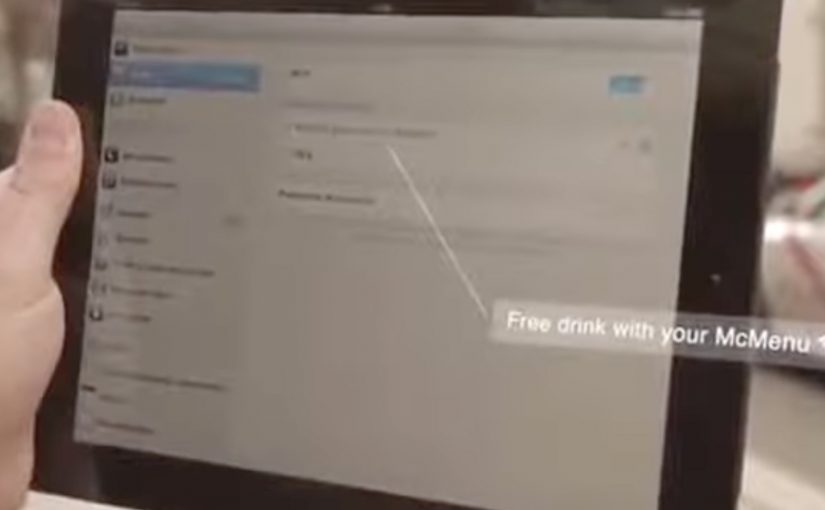
iBeacon moves from concept to real retail
Apple is working to bring iBeacon technology into retail stores. But the first real-world deployment lands fast.
On November 20, Shopkick deploys an iBeacon system at Macy’s, effectively bringing beacon-driven retail experiences live before Apple’s own retail rollout becomes mainstream.
At Macy’s, the implementation is branded as shopBeacon, an iBeacon-based in-store experience.
What iBeacon makes possible in-store
iBeacon, introduced with iOS 7, uses Bluetooth Low Energy (BLE) signaling to enable micro-location services inside stores, meaning aisle-level positioning rather than GPS-level proximity.
That matters because it changes what mobile in-store experiences can do. Because the signal is precise inside the environment, experiences can trigger at the moment of intent, reducing the need for shoppers to search.
Stores can deliver information and value based on a shopper’s precise location inside the environment, not just on GPS-level proximity.
Micro-location enables location-specific deals and discounts, product recommendations by aisle or department, loyalty rewards triggered by presence, and contextual content that enhances the shopping journey.
The promise is simple. The store becomes a responsive, context-aware interface.
In brick-and-mortar retail, micro-location only matters when it is permissioned, useful, and tied to measurable in-store behavior change.
What makes Macy’s deployment noteworthy
This is not a lab demo. It is a live retail environment.
The shopBeacon trial runs as a closed beta at Macy’s Herald Square in New York and Macy’s Union Square in San Francisco.
This marks the shift from talking about beacons to operationally testing them in flagship stores, where footfall, density, and shopper intent are real.
The strategic signal for retailers and brands
Beacon technology is not another channel. It is an in-store intelligence layer that links a shopper’s physical context to digital triggers and measurement.
Extractable takeaway: Micro-location only becomes strategic when it turns permissioned context into real utility that changes behavior, not just into more messages.
The real question is whether you can turn aisle-level context into permissioned help that measurably changes in-store behavior.
If executed with permission and relevance, it can reduce friction in discovery and decision-making, increase the utility of mobile without forcing shoppers to search, and bridge physical browsing with digital personalization.
If executed poorly, it becomes noise. The win condition is not proximity. It is context plus permission plus usefulness.
What to borrow for your beacon pilot
- Win permission first. Treat opt-in and relevance as the product, not an afterthought.
- Design for usefulness at the moment of intent. Use aisle-level context to reduce discovery and decision friction, not to spam offers.
- Make measurement non-negotiable. Track opt-in rates, perceived usefulness, and impact on dwell and conversion to prove behavior change.
A few fast answers before you act
What does “micro-location” mean in a store context?
It means detecting a shopper’s location at aisle or department level, not just “near the store”, enabling experiences that change based on where the shopper is standing.
Why is BLE central to iBeacon-style deployments?
Bluetooth Low Energy enables persistent, low-power proximity signals that make in-aisle triggers and experiences feasible without draining devices.
Is the main value just pushing offers?
No. Offers are one use case. The stronger value is contextual service, guidance, and relevance when it reduces shopping friction.
What should retailers measure in early pilots?
Opt-in rates, perceived usefulness, impact on dwell and conversion, and whether the experience feels helpful rather than intrusive.
What is the quickest way for this to fail?
When it becomes noisy, repetitive, or unpermissioned. Proximity alone is not value. Context and usefulness are the win condition.