
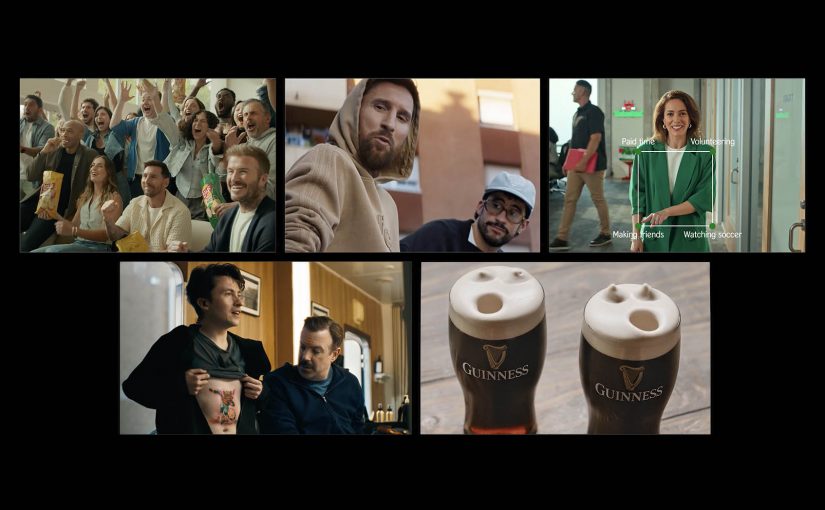
5 World Cup 2026 Campaigns: Fan Rituals

As the 2026 World Cup approaches, the strongest May campaigns are not just using football. They are claiming the rituals around it.

When brands stop borrowing the game

May’s strongest campaigns share one pattern. They do not treat the World Cup as borrowed attention. They treat it as a map of fan behavior.

Fan rituals are the repeated behaviors before, during, and after a match that show where a brand can credibly enter the experience.

The mechanism is simple: when a brand chooses one specific fan ritual, the campaign has a clearer job to do because it can improve a behavior people already understand.

For brand teams, that is not a creative nuance but an operating advantage, because ritual-led campaigns are easier to brief, localize, activate, measure, and extend across content, commerce, retail, CRM, and social channels.

The strongest May World Cup work is the work that chooses one fan ritual and makes the brand useful inside it.

The real question is whether the brand can make a fan moment easier, more social, more rewarding, or more repeatable without feeling pasted onto the tournament.

Campaigns claiming the moments around the match

Lay’s: The Epic Watch Party

Lay’s owns the watch-party snack ritual. The campaign brings Lionel Messi, David Beckham, Thierry Henry, Alexia Putellas, and Steve Carell into the same fan-facing idea, but the smarter move is not the celebrity stack. It is the behavior choice. Lay’s does not try to own football skill, national pride, or tournament drama. It owns the moment when people gather, open snacks, and turn a match into a shared viewing occasion.

Adidas: Backyard Legends

Adidas owns football mythology and backyard origin stories. Backyard Legends works because it understands that football culture is not only built in stadiums. It is built in small courts, neighborhood pitches, borrowed spaces, impossible matchups, and exaggerated memories. By pulling football icons, music, film, and younger talent into one mythic backyard story, Adidas turns the World Cup into a reminder that global football still depends on local imagination.

Heineken: Fan Volunteers

Heineken owns the workday viewing conflict. Fan Volunteers is strategically sharp because it starts with a real friction: many World Cup matches happen when people are meant to be working. Instead of pretending that tension does not exist, Heineken builds a tongue-in-cheek participation mechanic around Volunteer Time Off (VTO), local nonprofit activity, and matchday viewing. The brand does not simply say “watch football.” It creates a socially acceptable route into the behavior.

Visa: Tap In

Visa owns participation, rewards, and payment utility. Tap In translates a simple football action into a commercial mechanism: one tap can unlock access, prizes, promotions, and fan participation. That gives Visa a better role than generic sponsorship visibility. The brand is closest to the transaction layer, so the campaign works when it connects match moments to frictionless payment, cardholder rewards, local business support, and real-time participation.

Guinness: The World’s Cup and Singing Pints

Guinness owns the pub gathering ritual. The World’s Cup works because it does not chase the match itself. It claims the place where the match becomes social: the pub, the pint, the bartender, the table, and the strangers who feel like teammates by the final whistle. The smart part is continuity. Guinness connects the World Cup work to the 2023 Singing Pints St. Patrick’s Day ad, showing how a familiar pint-based creative idea can be reworked into a football reaction.

NESCAFÉ also tried to claim the post-match conversation with “The Third Half,” but the campaign works better as a strategic territory than as a standout creative execution.

Why this May pattern matters

The useful shift is from tournament association to behavior ownership. That matters because a World Cup brief can easily become a list of borrowed symbols: famous players, flags, chants, stadiums, trophies, and generic excitement. The stronger campaigns are more disciplined. They identify a fan moment, then build the brand role around that moment.

That is why the May set feels commercially useful. Lay’s has the snack and gathering moment. Adidas has the origin-story and football-culture moment. Heineken has the weekday tension. Visa has the tap, reward, and access layer. Guinness has the pub ritual. NESCAFÉ has a valid territory in the post-match conversation, even if the execution is not as strong as the strategic claim.

What brand teams should take from World Cup ritual work

The shared move across the five strongest campaigns is not “use football.” It is sharper than that. Each campaign picks a fan behavior the brand can credibly improve, then turns that behavior into a repeatable activation system across film, social, retail, promotions, payments, hospitality, or experience.

Takeaway: Do not brief a World Cup campaign around attention. Brief it around the fan moment your brand can credibly improve, then make that moment easier to activate, easier to repeat, and easier to measure.


A few fast answers before you act

What makes a good World Cup campaign?

A good World Cup campaign chooses a specific fan behavior and gives the brand a credible role inside it. Fame helps, but the campaign is stronger when the brand improves a real moment around the match.

Which brands stood out before the 2026 World Cup?

Lay’s, Adidas, Heineken, Visa, and Guinness stood out because each brand claimed a different football ritual. Lay’s claimed the watch party, Adidas claimed backyard football mythology, Heineken claimed workday viewing tension, Visa claimed participation and payment utility, and Guinness claimed the pub gathering.

Why are brands focusing on fan rituals?

Brands are focusing on fan rituals because rituals create repeatable behavior. A campaign built around a repeatable behavior is easier to activate across channels than a campaign built only around tournament excitement.

What can marketers learn from these campaigns?

Marketers should start with the fan moment, not the sponsorship asset. The best campaign role is the one the brand can credibly support through product, service, channel, data, retail, or experience.

Which campaign is the most strategically useful?

Visa is the most structurally useful because Tap In connects the match moment to payment, rewards, access, and participation. Lay’s is the cleanest behavior fit because snacks already belong naturally inside the watch-party ritual.
Runway Characters: Real-time AI avatars

A real-time AI avatar is a video-based conversational agent that can listen, respond, and show synchronized facial movement during a live interaction.

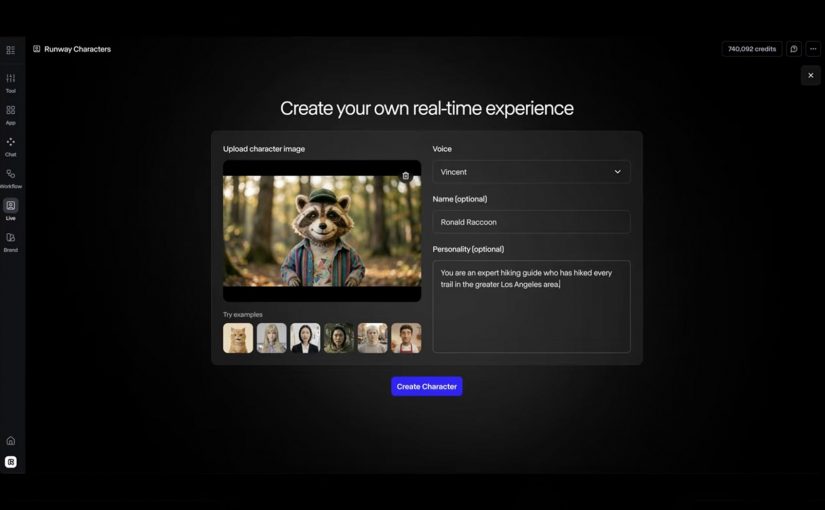
Runway Characters is not just another image-to-video feature. It points to a bigger shift: interfaces that talk back, maintain expression, and sit inside websites, apps, support journeys and training environments as an interactive layer.

From chatbot box to embodied interface

For years, the consumer web has treated conversation as a text box. Runway Characters pushes the interaction into a more human-shaped format: a visual character with a voice, a defined personality, domain knowledge and live responsiveness.

The enterprise value is not the avatar; it is the controlled interaction layer around the avatar.

A controlled interaction layer is the set of rules, knowledge sources, permissions, actions, escalation paths and measurement signals that determine what the avatar can say and do.

This is why the product is more interesting for operators than for novelty-watchers. A branded face is easy to demo; turning it into a trusted, scalable and measurable service interface is the hard part.

The mechanism: image, voice, knowledge and action

The mechanism is straightforward: a single reference image defines the character, voice and personality shape the interaction, a knowledge base keeps the response inside a domain, and API actions allow the character to do work rather than just talk.

For enterprise teams, this turns the avatar from a creative asset into a governed service surface that sits between consumers, content, data and workflow.

A governed service surface is a customer-facing interface whose content, permissions, actions, analytics and escalation rules are deliberately controlled.

Because the avatar can combine expression, domain knowledge and actions in the same interaction, the experience can move from navigation to guided execution.

That is the commercial hinge. The avatar is not valuable because it smiles; it is valuable when it helps someone finish a task faster, with less confusion and fewer handoffs.

Where Runway Characters could create real utility

The obvious use cases are the ones Runway highlights: tutoring and education, customer support, training simulations, and interactive entertainment or gaming. Those are credible because the value depends on response, patience, expression and repetition.

The stronger enterprise use case is guided commerce and product selection. A character that understands a product range, asks clarifying questions, checks fit, explains trade-offs and hands off to the right next step could reduce decision friction in categories where consumers need guidance.

Brand and marketing experiences are another useful path, but only if they avoid becoming mascot theatre. A brand character should answer, guide, qualify, educate or convert; otherwise it is just a high-cost animation layer with weak business intent.

The real question is not whether the avatar looks impressive; it is whether the interaction reduces effort, shortens a service path, or improves a decision.

The operating model matters more than the character

The failure mode is predictable: teams launch a polished avatar before defining ownership, content governance, privacy boundaries, escalation logic and measurement. That creates a visible interface with unclear accountability.

For consumer experience platforms, the hard work sits behind the face. The avatar needs approved knowledge, consent-aware data access, clear action limits, analytics events, brand controls, QA scripts and a fallback path when confidence is low.

This also changes the content model. Product information, policy content, service scripts and training material need to be structured enough for a live character to use safely, not just published as static pages for humans to browse.

Runway Characters takeaway for enterprise teams

Runway Characters should be evaluated less like a creative tool and more like a new front-end pattern for service, learning, commerce and brand interaction. The adoption question is not “can we make a character?” but “which consumer or employee journey deserves a live conversational interface, and can we govern it?”

Takeaway: Treat real-time AI avatars as governed service surfaces, not animated brand assets. The winning teams will connect character design to knowledge governance, journey ownership, action permissions, measurement and fallback logic before scaling the experience.


A few fast answers before you act

What is Runway AI?

Runway is an AI company building generative media tools and world-simulation research systems. Runway describes its mission as building AI to simulate the world through the merging of art and science.

What is Runway Characters?

Runway Characters is Runway’s real-time avatar product for creating conversational video characters with customizable appearance, voice, personality, knowledge and actions.

Why does it matter for brands?

It matters because it can turn static content, support flows and training material into live guided interactions that feel more natural than a chatbot.

What are the best first use cases?

The best first use cases are narrow, repeatable journeys where guidance reduces effort: product advice, customer support triage, onboarding, training practice and education.

What is the main enterprise risk?

The main enterprise risk is launching a convincing avatar without clear governance over what it knows, what it can say, what it can do and when it must escalate.

How should teams measure success?

Teams should measure task completion, deflection quality, conversion support, time saved, escalation rate, user satisfaction and the cost of maintaining the knowledge base.

Manus AI: Action Engine for Marketing

Manus AI is interesting because it changes the unit of AI adoption in marketing. The useful question is no longer whether AI can write better copy, but whether it can safely execute repeatable marketing work across tools, accounts and output formats.

Vaibhav Sisinty, founder of GrowthSchool, frames the hype in the video, but the useful part is the work pattern: browser shopping, download cleanup, Meta ads analysis, Slack triage, influencer research, prototype building and Telegram-based task handoff.

These are not glamorous use cases. They are the small operational gaps that make marketing teams slower than they should be: extracting data, checking dashboards, comparing options, building lists, scanning messages, formatting outputs and turning loose requests into usable artefacts.

The operating shift: from answer to action

Most marketing teams still use AI as an answer layer. They ask for ideas, summaries, drafts, research angles, prompt variants or campaign copy, and then people still move the work manually through browsers, spreadsheets, CMS workflows, ad platforms, project tools and approval chains.

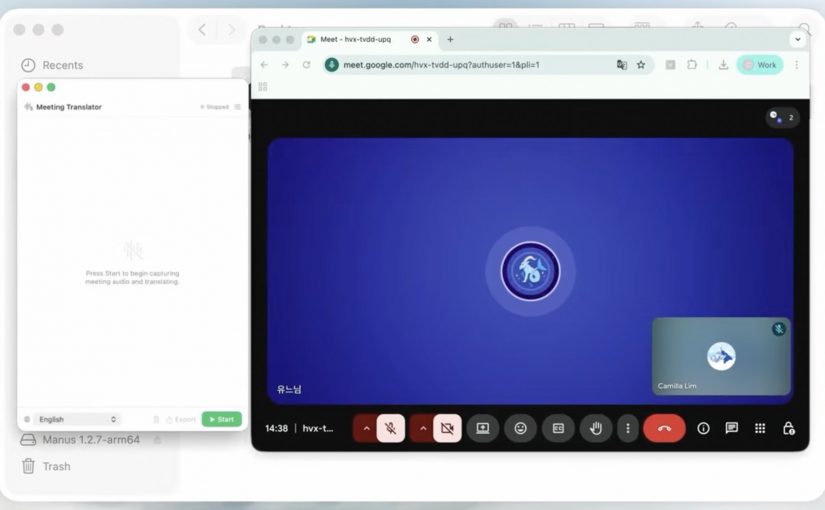
Manus describes itself as an action engine. An action engine is an AI layer that can plan, execute and package work across tools, rather than only generate recommendations.

The mechanism is straightforward: Manus combines planning, browser operation, connectors, file access, code generation and output packaging, so a marketing request can move from prompt to finished artefact without being manually rebuilt in five separate tools.

For marketing teams, that puts the pressure point on operating model design, not on prompt novelty.

This mechanism matters because execution creates real business value only when the system can reach the right tools, use the right data, follow the right rules and hand back something a team can trust.

The marketing question: control before scale

The real question is whether a marketing organization can give any agent safe enough access, clear enough tasks and strong enough controls to make the output usable.

The stance here is clear: treat Manus as a workbench for bounded execution, not as a replacement for marketing judgment.

In a real marketing stack, that distinction matters because the work crosses content systems, asset libraries, product data, CRM, analytics, ad platforms, consent, identity and approval workflows.

The Meta angle matters, but not as gossip

Manus still presents itself as part of Meta, while recent reporting says China has blocked the acquisition or ordered the transaction unwound. That tension deserves a brief mention, but it should not dominate the argument.

The business signal is not the takeover drama. It is that the market is moving from AI tools that advise marketers to AI systems that can sit closer to actual work.

That is why the Meta connection is relevant: ads, creators, messaging and business pages are workflow surfaces, not just media surfaces.

If an execution agent can sit near those surfaces, the commercial value is not another content generator. The value is shorter distance between insight, action, packaging and follow-up.

Governance decides whether this scales

An agent that can open browsers, read accounts, analyze campaigns, create files, draft replies and ship prototypes is useful only when access rights, approval steps and logs are explicit. Before scaling it, marketing teams need to define which accounts can be touched, which actions are read-only, which outputs require human approval, which data is excluded and which records prove what happened.

Without this, the failure mode is obvious. The agent becomes another shadow workflow, fast enough to bypass controls and persuasive enough to hide weak evidence.

That is also where adoption gets decided. People will not use an agent because it is magical; they will use it because it removes low-value work without making them responsible for invisible risk.

What marketing teams should operationalize

The practical move is not to connect everything at once. Start with bounded, reversible work: campaign monitoring, reporting summaries, initial lists of potential creators and influencers, content calendars, competitive scans, meeting follow-ups, prototype briefs and internal workflow cleanup. These jobs have enough friction to matter, enough structure to test, and low enough downside if a human reviewer stays in the loop.

Takeaway: Offerings like Manus AI are useful for marketing when they are treated as execution layers for controlled workflows, with clear access rules, human approval points, source checks, output QA and measurable time saved.


A few fast answers before you act

What is Manus AI?

Manus AI is a general-purpose AI agent designed to execute tasks, not just answer prompts. In marketing, that means it can support research, reporting, campaign analysis, workflow automation and prototype creation when access and review are controlled.

How is Manus different from ChatGPT or Claude?

ChatGPT and Claude are usually used as reasoning and drafting interfaces. Manus is positioned closer to an execution environment because it can use browser operation, connectors and output generation to turn a request into a finished artefact.

Should marketing teams connect Manus to real accounts?

Not without data governance and security review. Start with read-only access where possible, confirm what data leaves your environment, exclude sensitive customer or employee data, require human approval before external actions, and keep logs for every workflow that affects campaigns, customers or brand assets.

Does the Meta acquisition story change the marketing argument?

Only slightly. The ownership story is unstable, but the operating lesson is stable: AI agents are moving closer to ads, creators, messaging, commerce and business workflows.

What is the best first use case for Manus in marketing?

Start with recurring analysis and packaging work. Weekly campaign summaries, potential creator and influencer lists, competitor scans and meeting-to-action-plan workflows are easier to govern than live publishing or customer-facing execution.