
Doctors Without Borders: Like Hunting

Doctors Without Borders: Like Hunting

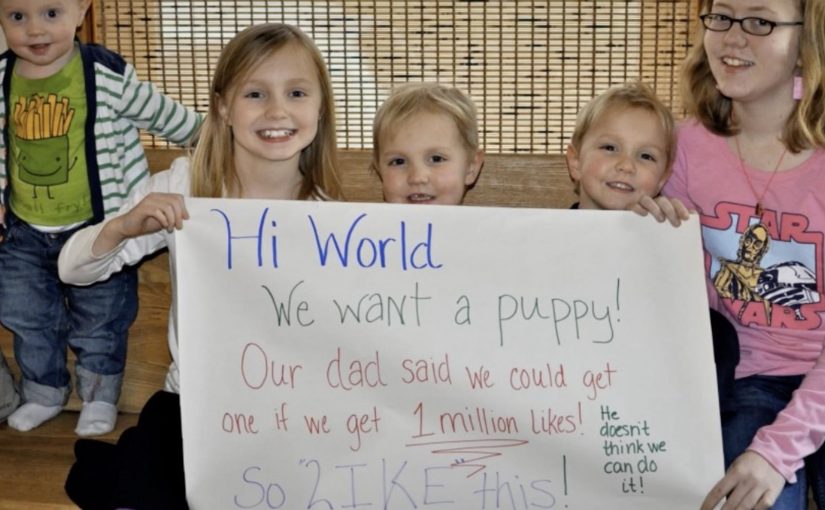
In the last months there have been cases of people uploading photos on Facebook and successfully asking for 1 million likes. So keeping that in mind, Doctors Without Borders decided to turn their campaign idea “good intentions don’t save lives” on its head and actually make people’s intentions count.

Through a special Facebook app people could create a post and ask their friends for likes while donating 1 Danish Krone to Doctors without Borders for each like they got. Each collection was run for 48 hours and only likes from your own Facebook friends counted. By setting a maximum amount you could also make sure you don’t go bankrupt. If your friends were too slow, you could also simply decide to donate more.

At the end of each donation drive people could post a picture saying thank you to all their friends who helped them donate. The campaign’s success is described as having made it a permanent solution and can still be found running for people who want to turn their friends likes into donation.

Turning “like hunting” into a donation engine

The mechanic is deliberately simple. Here, “like hunting” means asking friends to turn their likes into a capped donation total. You post, you ask for likes, and the counter becomes money. The 48-hour window adds urgency, and the “friends only” rule keeps it personal instead of turning it into a popularity contest across strangers.

In European nonprofit fundraising, micro-donations work best when the unit action is already a habit and the rules stay frictionless.

Why this lands on Facebook

It does not fight the attention behavior. It repurposes it. People already know how to like and how to help a friend. The campaign bundles those instincts and makes the cost feel manageable by letting the donor set a cap, then top up if momentum is slow. The real question is whether a low-value social signal can become a credible donation act, and this campaign proves it can when the cost is capped and the ask stays social.

Extractable takeaway: If you want participation at scale, do not ask people to learn a new behavior. Convert an existing social reflex into a counted contribution, and make the risk feel controllable.

What the “cap” is really doing

The maximum amount is more than budgeting. It is permission. When people know they cannot accidentally overspend, they are more willing to start, and starting is the hardest step in any donation flow.

What to steal for your next donation mechanic

  • Make the unit obvious. “One like equals one krone” is instantly understandable.
  • Time-box the drive. A short window creates a reason to ask now, not later.
  • Keep it inside the social graph. Friends-only engagement protects trust and reduces spam dynamics.
  • Build in safety rails. Caps remove fear, and optional top-ups preserve ambition.

A few fast answers before you act

What is Like Hunting?

It is a Doctors Without Borders fundraising mechanic that converts Facebook likes into donations, using a short, time-boxed “drive” created by an individual supporter.

Why does “friends-only likes” matter?

It keeps the action personal and credible, and it stops the drive from turning into mass like-begging from strangers. That helps the campaign feel like helping a person, not feeding an algorithm.

What makes the cap important?

The cap reduces perceived risk. People participate more readily when they know the maximum cost upfront, and the option to add more later keeps the mechanism flexible.

Why does the 48-hour window matter?

It gives the ask a deadline, which makes supporters more likely to post now and friends more likely to respond quickly. Without that time-box, the mechanic risks becoming passive background noise.

When should brands or NGOs use this pattern?

When there is a simple, repeatable action that people already perform socially, and when turning that action into a counted contribution can happen without heavy explanation or new habits.

British Airways: Barcode Reader

British Airways: Barcode Reader

You pick up a travel guide, walk to the barcode reader, and scan it to check the price. Instead of only showing numbers, the scanner delivers a British Airways message that nudges you toward destinations beyond the UK.

The placement is the whole strategy. British Airways runs this in the travel section of a bookstore, right when people are already thinking about leaving town. If someone is browsing Rome, New York, or Buenos Aires, the brand can show up in a way that feels like a useful prompt rather than a random interruption.

The mechanic is simple. The barcode scan is the trigger, and the barcode reader becomes the display. British Airways uses that moment to broaden perception of its route network, aimed at Brazilians who may only associate BA with the UK.

In travel marketing, the planning moment is the highest-intent moment, and well-timed messages can feel like help rather than advertising.

Why the bookstore aisle is the right “media channel”

Travel guides are a proxy for intent. People do not usually buy a destination book by accident. So a bookstore travel aisle acts like a real-world keyword search, with the added benefit that the customer is already in decision mode.

What makes the barcode reader feel credible

The message arrives from the same device people trust for pricing and checkout. That matters because it borrows the authority of a functional tool. The ad does not ask for a click or a download. It simply uses an existing action and adds a relevant layer.

Extractable takeaway: Put your message inside a trusted utility that already supports the customer’s task, so the “ad” inherits credibility instead of fighting for it.

What the campaign is really trying to change

The real question is whether you can change route perception by showing up inside the tools people already use to plan.

This kind of placement beats broad-reach travel ads because it earns attention at the moment of intent.

This is not a fare promotion first. It is a mental map update. By “mental map update” I mean shifting which destinations people associate with the brand before they default to “UK airline.” The brand wants travellers to store British Airways as “global option,” not “UK airline.” The work is credited to AGE Isobar São Paulo and was later shortlisted in the Direct Lions under Ambient Media, small scale.

What to steal for your own context-first activation

By “context-first activation” I mean a placement where the environment and the user’s current task create relevance before the copy does.

  • Target the moment of intent. Find the real-world behaviour that signals “I am planning.”
  • Use the tools already in the environment. Functional devices carry trust and reduce friction.
  • Make the message additive. Add information that fits the action, do not derail it.
  • Design for instant comprehension. If it needs explanation, it will be ignored.

A few fast answers before you act

What is the British Airways Barcode Reader activation?

It is a contextual bookstore execution where scanning travel books on a barcode reader triggers British Airways messaging about flying to destinations beyond the UK.

Why does it work better than a generic travel ad?

Because it appears at the exact moment people are considering travel. The placement creates relevance before the copy even starts.

What is the core behaviour the campaign hijacks?

Price checking. The scan is already happening, so the brand adds a message to an existing action rather than asking for a new one.

What business problem is this solving?

Route perception. It aims to expand awareness that British Airways serves many destinations, not only the UK, in a market where that belief is limited.

What is the main risk with this kind of tactic?

If the message feels intrusive or slows down the checkout flow, it turns from helpful to annoying. The execution has to stay lightweight and quick.

Volkswagen Smileage: Road Trips with Google

Volkswagen Smileage: Road Trips with Google

With the Volkswagen Smileage app, road trips are never going to be the same again. Smileage is the in-app points system you earn from trip activity and social participation. Powered by Google the app is set to socialise road trips world over.

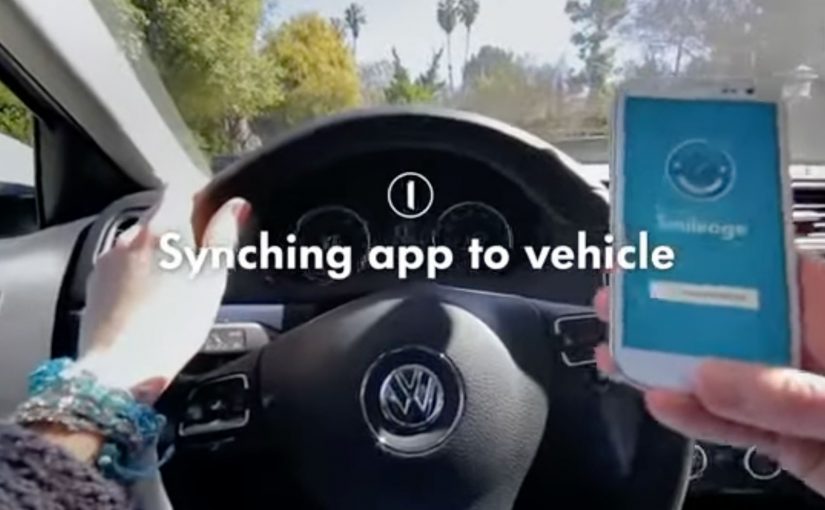
To start earning Smileage you have to pair the app with your car and sign in with your Google account. Once synced, the app automatically connects each time you go for a ride.

Friends can then watch and comment on your journey in real time while you earn Smileage through shared photos, kilometers, checkins, comments, likes and punches, the app’s name for quick in-app interactions from other nearby Volkswagens.

The car becomes a social object

The concept here is not just “tracking”. It is making the trip legible and interactive for people who are not in the car. Because spectators can react and contribute in real time, the drive becomes more shareable and more repeatable than a private commute.

  • Automatic connection. Pair once, then the app connects when you drive.
  • Live participation. Friends can watch and comment in real time.
  • Gamified reward loop. Points are earned through trip activity and social interactions.

Why the Google sign-in matters

In global automotive and mobility brands, the growth lever is turning driving time into something other people can see and join in.

The real question is whether your product turns real-world activity into something other people can participate in, not just something you can track.

Signing in with a Google account signals that this is more than a standalone app. It is built to plug into existing identity, location, and potentially mapping behavior. That is what enables a smoother experience and a more connected ecosystem around the trip. This is the right trade when you want engagement to extend beyond the driver.

Gamification that is tied to behavior

The points system is not abstract. It is linked directly to what happens on a trip. Photos, kilometers, check-ins, comments, likes, and even “punches” from nearby Volkswagens. The incentives are designed to encourage both movement and sharing.

Extractable takeaway: When rewards map to real-world actions and make those actions socially visible, the loop feels earned and keeps paying out after the trip ends.

  1. Drive. Kilometers and check-ins create baseline progress.
  2. Share. Photos create moments worth reacting to.
  3. Engage. Comments and likes add social energy.
  4. Connect. Nearby Volkswagens add community and surprise.

In connected consumer products, engagement grows fastest when real-world activity, identity, and social participation are designed as one loop.

What to take from this if you build connected experiences

  1. Reduce setup friction. Pair once. Auto-connect later.
  2. Design for spectators. The audience is part of the experience, not just the driver.
  3. Reward real activity. Gamification works best when points map to meaningful behavior.
  4. Use social to extend usage. Trips become more memorable when others can join in.

A few fast answers before you act

What is Volkswagen Smileage?

It is an app that pairs with your Volkswagen and Google account to make road trips social, letting friends follow and comment live while you earn points for trip activity and engagement.

How do you start earning Smileage?

You pair the app with your car and sign in with your Google account. Once synced, it connects automatically each time you go for a ride.

How do you earn points in the app?

Through shared photos, kilometers, check-ins, comments, likes, and “punches” from other nearby Volkswagens.

What is the main experience benefit for users?

Road trips become shareable in real time, turning the drive into a live story that friends can react to and participate in.

What is the transferable lesson for connected products?

If you combine automatic sensing with social participation and rewards tied to real behavior, you can turn routine usage into a repeatable engagement loop.