
Orange: Instagallery

Orange: Instagallery

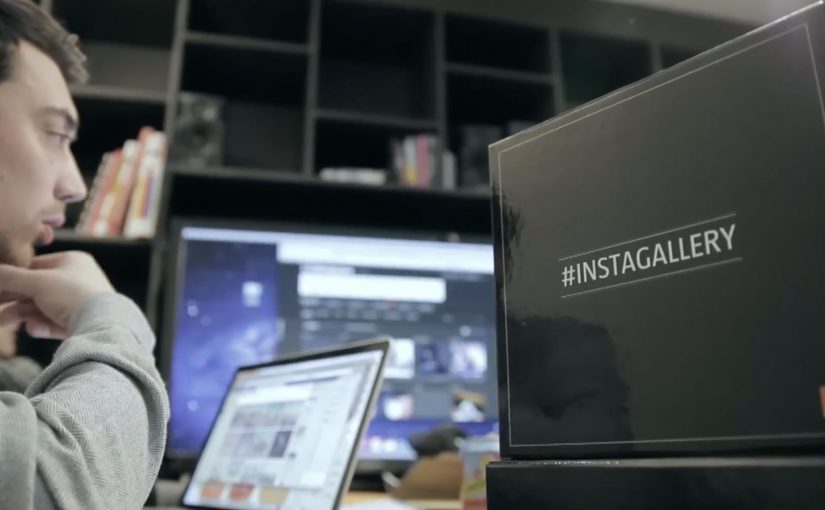
An Instagrammer posts a photo and suddenly sees it displayed as “art” in a gallery setting, complete with strangers commenting on it in real time. That is the hook behind Orange France’s Instagallery. A campaign built to make network speed feel like instant cultural presence.

A gallery built from other people’s feeds

To promote a new high-speed network, Orange works with Cake Paris to target influential Instagram users by pulling their photos into a staged photo exhibition in Los Angeles. The exhibition becomes a physical set for a second move. Capturing the reactions.

The mechanism: personal proof sent back to the source

Orange films people walking through the gallery and making awkward, unfiltered comments on the displayed photos. Those short films are then sent directly to the original Instagrammers, who share the clips with followers. The sharing loop creates buzz for Orange France without buying classic reach in the same way a traditional launch campaign would.

In European telecom marketing, speed messaging becomes more believable when it is demonstrated as immediacy inside a social platform people already use daily.

Why this lands

It works because it is personal before it is promotional. The influencer is not asked to “post an ad”. They receive a surprising artifact starring their own content, with a built-in narrative their audience wants to watch. The physical gallery in Los Angeles adds a scale cue, and the awkward commentary makes the clip feel real rather than polished brand content.

Extractable takeaway: If you need influencers to spread the message, give them a shareable object that is already about them, and let the brand benefit ride inside the story instead of sitting on top of it.

What Orange is really buying

The real question is how to make a technical speed claim travel through social sharing without feeling like a telecom ad.

This is less an Instagram stunt and more a distribution design. By distribution design, this means structuring the idea so the creator’s reason to share also becomes the brand’s route to reach. Orange turns “network speed” into a reason for participation, then uses personalization to lower friction. The brand benefit is present, but it is not the main character. The creator is.

What to borrow from Instagallery

  • Start with the creator’s ego, not your slogan. Make the shareable asset feel like a reward for them.
  • Move digital into a physical set. A real-world installation creates legitimacy and better footage.
  • Build a loop, not a one-off post. Content goes from user, to brand, back to user, then out to audience.
  • Make the reveal fast. The audience should understand “why this exists” in the first seconds.

A few fast answers before you act

What is Orange’s Instagallery?

It’s a campaign that turns selected Instagram photos into a staged gallery exhibition, then sends creators short reaction films they can share to drive buzz for Orange France.

Why build a gallery in Los Angeles for a French telecom brand?

A distant, recognisable cultural setting amplifies perceived scale and surprise. It makes the creator’s photo feel like it “travels” instantly and matters beyond their feed.

How does the influencer loop work here?

Creators post normally, the brand repackages their content into an event and a film, and the creator then shares the film because it features them, not because they were handed a script.

What are the main risks with this pattern?

Rights and permissions for using user photos, avoiding a “creepy” feeling, and ensuring the brand role stays clear enough that the message does not get lost behind the stunt.

How can a non-telecom brand adapt this?

Create a “real-world upgrade” of customer-created content, capture authentic reactions, and return a ready-to-share edit to the creator so distribution feels like self-expression.
Lacta: Love in the End

Lacta: Love in the End

Lacta, a leading chocolate brand in Greece, has been creating innovative film content since 2009 around its strategy of being a symbol for the sweetness of love.

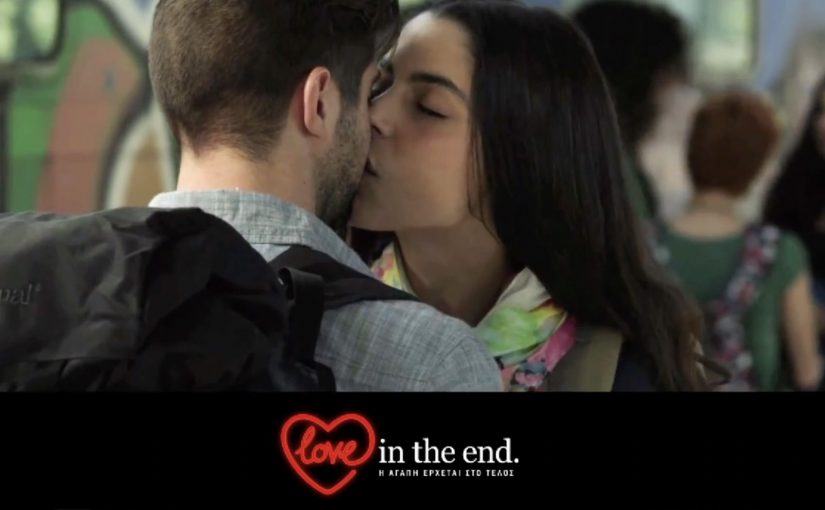
For this installment, Lacta invited fans to submit their stories of unfulfilled love, with the promise to give them the happy end they never had. On the cinema screen.

Finally three stories formed the basis of a film screenplay, entitled “Love in the end”, that was released on Valentine’s Day 2013. A transmedia campaign promoted the film and it became a big hit with audiences in Greece. Here, transmedia means connected teasers and social storytelling across channels that all build anticipation for the same release.

From real stories to a cinema-screen happy end

The mechanism is an audience-to-cinema pipeline. Collect true stories of unfulfilled love, select a small number that can carry a broader narrative, adapt them into a screenplay, then build anticipation through connected channels so the audience feels ownership before opening night. The real question is whether a brand can turn private emotion into a public release without draining it of authenticity. That structure works because early participation creates emotional investment before release, so the opening feels like a shared payoff rather than a pushed campaign.

In European FMCG branded entertainment, this kind of storytelling works best when participation is a source of meaning, not just a source of reach.

Why this lands

This works because it makes the brand the enabler, not the author. The stronger strategic move is to let audience truth carry the emotion and keep the brand in the enabling role. Lacta does not just “tell a love story”. It invites vulnerability, then pays it back with a public resolution in a culturally heavyweight format. The cinema.

Extractable takeaway: If you want a branded film to feel earned, start with real human input, curate hard, and give the audience a clear public moment to rally around, so anticipation becomes part of the product.

The results the campaign reported

Campaign reporting stated that 17% of the Greek internet population saw the online teasers, generating 700,000 views and hundreds of rave comments.

Reported social momentum was also strong. Lacta’s Facebook fans increased by 100,000, making its Facebook page the biggest for any brand in Greece at the time, with 650,000 fans.

On release, the film was described as having the biggest opening night for any Greek movie in the last five years, with more than 75% of all movie tickets being sold for it.

Here are the past film based campaigns

What to borrow from Lacta’s film playbook

  • Use a human intake. Real stories create emotional permission that scripted copy rarely earns.
  • Curate into a single release. Selection and adaptation turn raw submissions into a coherent film people can anticipate.
  • Build anticipation with episodic crumbs. Teasers and social updates make a film feel like a season.
  • Anchor to a calendar moment. Valentine’s Day creates a natural reason to care now.

A few fast answers before you act

What is “Love in the end”?

It’s a Lacta branded-entertainment film built from fan-submitted stories of unfulfilled love, adapted into a screenplay and released on Valentine’s Day 2013.

What does “transmedia campaign” mean in this case?

It means the film was promoted through multiple connected channels using teasers and social storytelling to build anticipation before the main release.

What results were reported for the online teasers?

Reported results said 17% of the Greek internet population saw the teasers, producing 700,000 views and hundreds of positive comments.

What results were reported for Facebook growth?

Reported results said Lacta gained 100,000 new fans, reaching 650,000 fans and becoming the biggest brand page in Greece at the time.

What was reported about opening night?

The film was described as the biggest opening night for a Greek movie in the last five years, with more than 75% of all movie tickets sold for it.

VW Polo Principle: Crowdsourced 3D Prints

VW Polo Principle: Crowdsourced 3D Prints

Volkswagen last year launched “The Polo Principle” ad campaign to convey the message that high-end innovations were now available to Polo drivers.

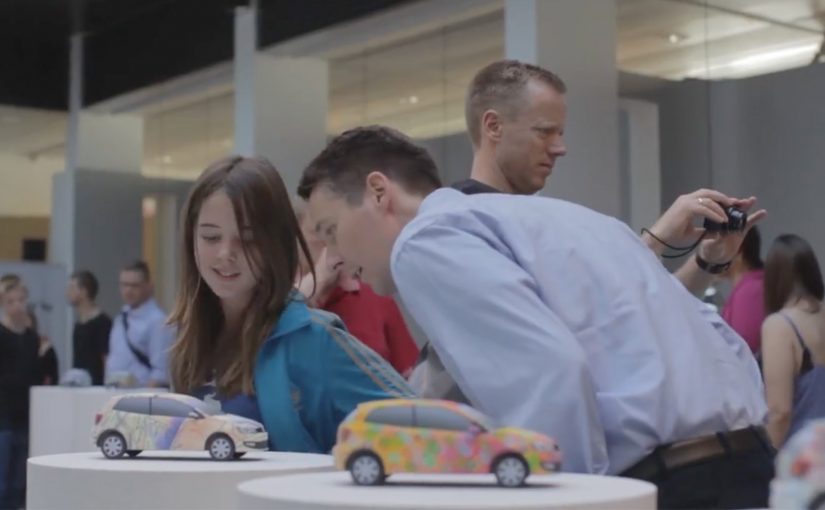
Then, to democratize the innovation process, they allowed people to actually design their very own 3D Volkswagen mock ups. The top 40 designs were chosen by a panel of judges and then put on display in Copenhagen, with the entrants receiving their (mini) 3D printed Volkswagens in the mail.

From innovation message to innovation participation

The mechanism is a neat escalation. The campaign starts with a claim: premium innovation is no longer reserved for premium models. Then it turns that claim into an action: if innovation is being “democratised,” people should be able to shape it. A 3D design tool becomes the interface for participation.

Instead of asking audiences to agree with the brand message, Volkswagen invites them to contribute to it, visually and playfully.

In co-creation campaigns, participation becomes persuasion when people can make something that physically proves the brand promise.

In enterprise marketing teams, co-creation only scales when the participation interface is simple and the payoff is concrete.

Why it lands: ownership beats persuasion

This works because creating something triggers a different level of engagement than watching something. Designing a mock up requires time, intent, and taste. Once you invest that effort, you become emotionally tied to the campaign. And when your design is selected, the brand is no longer a distant manufacturer. It is a platform that amplified you. Co-creation is most persuasive when the act of making produces an object people can keep or show.

Extractable takeaway: When you claim “innovation for everyone,” turn the claim into something people can make, so the audience owns a proof of the promise.

The Copenhagen display adds a public payoff. It moves the work out of the browser and into a real space, which signals seriousness and status.

The intent: make “accessible innovation” feel real

The business intent is to attach innovation to the Polo brand without sounding like advertising. Here, “accessible innovation” means making premium innovation cues feel reachable for everyday Polo drivers, not only for flagship models. The real question is whether your “innovation” story can be experienced, not just believed. User-generated designs create social proof. The 3D printed mini cars make the campaign tangible. “Innovation is available to you” becomes “here is something you made, and here is a physical object that proves it.”

Make co-creation tangible

  • Turn a message into a mechanism. If you claim democracy, build a democratic action people can take.
  • Reward with something physical. A mailed 3D print is a memorable artefact, not a forgettable badge.
  • Curate publicly. Exhibiting the top designs creates status and raises the perceived value of participation.
  • Use judges plus community. A panel can signal craft and quality, not just popularity.
  • Design for shareability. People naturally share what they created, especially when it looks good.

For more examples on brands using 3D printing click here.


A few fast answers before you act

What was the core idea behind the Polo Principle extension?

To move from talking about “innovation for everyone” to letting people participate by designing their own 3D Volkswagen mock ups.

Why add 3D printing to a campaign?

It creates a physical proof point. A printed mini model makes the experience feel real, personal, and worth keeping.

What role did the Copenhagen display play?

It gave public status to the best designs and signalled that the brand took the contributions seriously, beyond a digital stunt.

Is co-creation mainly an awareness play?

It can drive awareness, but its deeper value is emotional ownership. People remember what they helped create.

What is the main takeaway for brands claiming “democratisation”?

If you want the message to stick, build a mechanism that lets people experience the claim directly, and reward participation in a tangible way.