
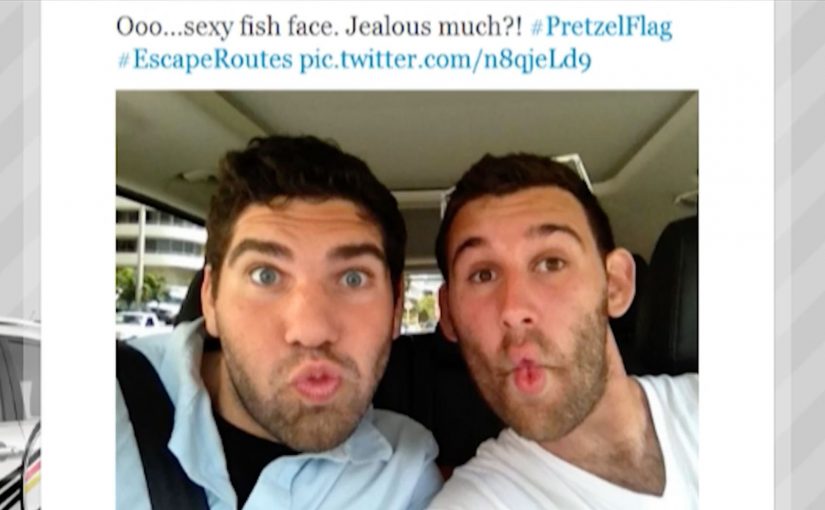
Ford Escape Routes

Ford Escape Routes

Ford wanted to launch the new Escape in a way that would give people something they had never experienced before in branded entertainment. Billed as an industry first, Ford took the small screen to the second screen by combining TV with social media and mini-gameplay to create a prime time Social TV show called Escape Routes. Here, “second screen” means a synchronized phone, tablet, or laptop layer that runs alongside the broadcast.

Six teams took on daredevil stunts while enlisting online fans as Virtual Teammates (VTMs), whose real-time support helped determine who crossed the finish line each week. Viewers did not just watch. They participated, recruited, chatted, and played along, with the online layer shaping outcomes and amplifying the show’s moments.

How the mechanic works

Escape Routes is structured like a competitive reality series. The TV episode delivers the narrative and the physical challenge. The second screen delivers the leverage. Fans act as VTMs and influence teams through live participation, social activity, and interactive challenges running alongside the broadcast.

The “branded” part is not only the vehicle on screen. The product story gets embedded into the stunts, the travel, and the weekly goals, so the car becomes the enabling tool inside the format, not a separate ad break.

In mass-market automotive launches, Social TV formats can convert broadcast reach into participation, and participation into measurable signals of demand.

The real question is whether the second screen can change what happens on TV, not just what people do while watching.

This kind of format is worth building only when those contributions are visible, time-boxed, and tied to the episode’s stakes.

Why it lands

It gives people viewer control without asking them to leave the entertainment. Participation is optional, but the invitation is clear and time-boxed. If you want to help your team, you can. If you want to just watch the show, you still get a complete experience.

Extractable takeaway: Second-screen launches win when the extra layer stays inside the story and gives people a named role with consequences they can see.

It also creates a natural social engine. Teams are selected and rewarded for building a following, so they have an incentive to mobilize fans every week. That turns the audience into a distribution channel, not a passive rating.

What the brand is really buying

The business intent is pre-launch momentum at scale. A primetime run delivers reach. The second-screen layer delivers engagement, social lift, and a sustained reason to talk about the Escape over multiple weeks.

Ford’s own reporting at the time described the social buzz as exceeding benchmarks, including a reported 1,033% increase in @FordEscape Twitter followers and a 50% increase in Facebook Likes.

Later trade coverage around awards credited Escape Routes with broader volume metrics across the run, including 7.65 million viewers, 64 million Facebook impressions, more than 65,000 Facebook Likes, and 3.4 million incremental user-generated video views, alongside the claim that it boosted share of voice in the small SUV segment with large-scale social activity.

Steal this reach plus action pattern

  • Design a format where the audience can matter. If participation cannot change anything, it will not sustain across weeks.
  • Make the second screen additive, not distracting. Keep actions short, timed, and tied to moments people already care about.
  • Give participants a role name. “Virtual Teammates” is a simple identity hook that makes participation feel legitimate.
  • Build weekly arcs. Multi-episode structure creates repeat engagement and compounding social momentum.

A few fast answers before you act

What is a Social TV show in marketing terms?

A Social TV show is a broadcast format that is designed to be experienced with a second screen, where social participation and interactive actions are part of the content loop, not a separate campaign layer.

What does “second screen” mean here?

It means the viewer uses a phone, tablet, or laptop while watching TV, and that device provides live interactions like voting, mini-games, chats, or challenges that are synchronized to the broadcast.

Why do “virtual teammate” mechanics work?

They turn spectators into contributors. Helping a team win creates emotional investment, repeat behavior, and social recruiting, because your participation has a clear purpose.

What is the biggest failure mode of second-screen activations?

Over-complexity. If the interaction takes too long, needs too much explanation, or competes with the main story, people drop it and the second screen becomes noise.

What metrics matter beyond views?

Registration and repeat participation per episode, share of voice during airtime windows, audience conversion into followers or opted-in communities, and any downstream indicators tied to shopping intent.
Febelfin: Amazing Mind Reader Reveals His Gift

Febelfin: Amazing Mind Reader Reveals His Gift

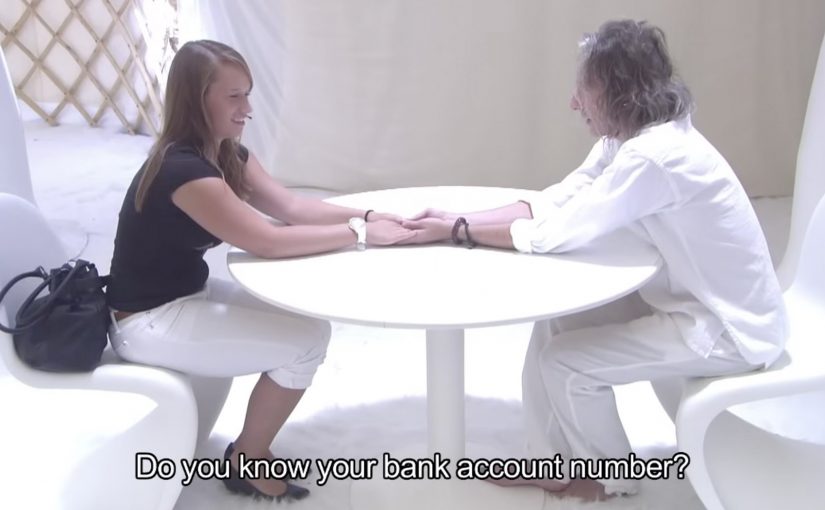
Febelfin, the Belgian federation for the financial sector, launched a campaign urging people in Belgium to be vigilant about what they make available online. To drive the message home, they recruited Dave, an extremely gifted “clairvoyant” who appears to read strangers with uncanny accuracy.

Dave showcases his talent to a random sample of people. Just when they start to believe in his gift, the magic behind the magic is revealed.

The trick that makes the “mind reading” believable

The mechanism is a classic reveal structure. First, you watch a performer deliver personal details that feel impossible to know. Then you discover the method: the information is assembled from what people have already left exposed online, and fed to the performer in real time. The stunt lands because it starts as wonder and ends as discomfort.

In consumer cybersecurity awareness campaigns, showing how easily public traces can be stitched into a personal profile is often more persuasive than abstract warnings.

Why it lands

This works because it makes the risk feel immediate and personal. The audience is not asked to imagine a faceless threat. They watch real people realize that a stranger can infer and retrieve sensitive details from what is already searchable, shareable, and often forgotten.

Extractable takeaway: If you turn an invisible risk into a visible demonstration that feels “too accurate to be safe”, you shift behavior faster. People do not remember the warning line. They remember the moment they felt exposed.

The intent behind the stunt

The campaign is not really about a performer. It is about reframing online sharing as a security decision. The real question is how to make careless public sharing feel risky enough that people actually change their settings and habits.

By revealing the method, the story pivots from “psychic” to “preventable”, and the viewer is left with a clear implication: tighten what you publish, and you reduce what can be weaponized.

What privacy-awareness teams can borrow

  • Lead with a believable scenario: start in a world viewers accept, then escalate into the lesson.
  • Make the reveal educational: do not only shock. Show the method so people understand what to change.
  • Use real reactions as proof: authentic discomfort is more convincing than any statistic.
  • Keep the message singular: one risk, one demonstration, one behavior change.
  • End with control: the viewer should feel “I can prevent this” rather than “this is inevitable”.

A few fast answers before you act

What is Febelfin’s “Amazing Mind Reader” video?

It is a hidden-camera awareness film where a “clairvoyant” appears to know intimate details about strangers, then reveals that the information was gathered from what they have available online.

What is the campaign trying to teach?

That personal data leakage is often self-inflicted through oversharing, weak privacy settings, and public profiles. The “magic” is the internet.

Why use a mind reader premise?

Because it creates instant attention and a clean reveal. The viewer first experiences surprise, then realizes the risk is real and avoidable.

Is this about online banking only?

It is framed by the financial sector, but the lesson applies broadly: anything public or easily discoverable can be combined into a usable profile by bad actors.

What is the biggest risk in copying this format?

If the reveal feels manipulative or too invasive, the audience can reject the message. The best executions shock first, then immediately teach and restore a sense of control.

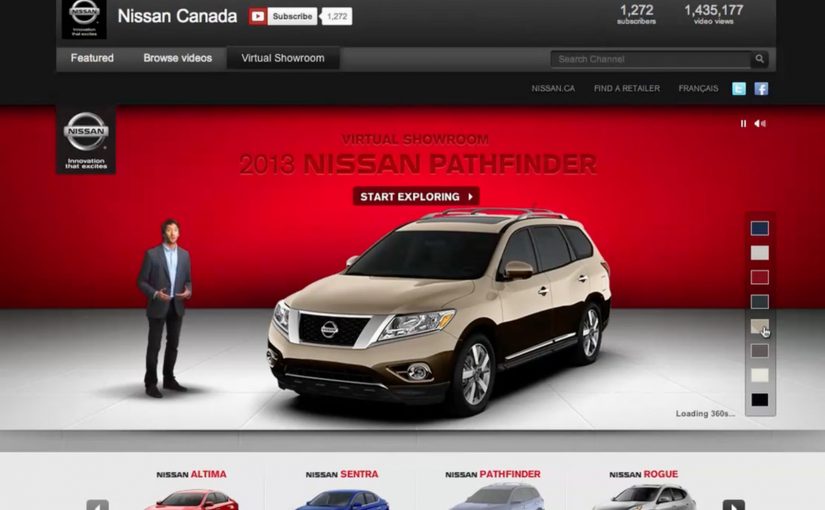
The Nissan Virtual Showroom

The Nissan Virtual Showroom

There was a time when people would go to the dealership to research cars. But now most research (70%) is done online, with 50% of buyers stating that online information was the most influential part of their research.

So Nissan decided to bring their dealership to the online audience through a custom YouTube Channel experience.

And for people on the go using smartphones for research, they also created a first of its kind custom mobile YouTube Channel, where they replicated the desktop experience for smaller screens.

As a result Nissan is said to have received an extremely positive response, along with a significant increase in people looking for their dealership after researching.

When a channel becomes product UI

What makes this interesting is not that Nissan published more videos. It is that the channel itself is treated like product UI. Here, “product UI” means the navigation and information scent that helps shoppers self-direct to the next best video step. Instead of forcing viewers to hunt through a generic grid, the experience is designed to guide shopper intent from model discovery to feature deep-dives, then onward to the next step in the buying journey.

A “virtual showroom” in this sense is a structured video experience that lets a buyer explore models, features, and trims in a self-directed way, without sales pressure, and without leaving the environment where they are already doing research.

In automotive marketing, the research screen becomes the showroom. So the channel needs to behave like a product experience, not a playlist.

In platform-led categories, the “research screen becomes the showroom” dynamic shows up anywhere buyers start their learning inside someone else’s interface.

The real question is whether you are designing the research journey, or just uploading assets into a grid.

Why it lands with real car-shopping behavior

The psychology is simple. When someone is researching a car, they want control. They want to compare, replay, and go deep only on the features they care about. A channel-built showroom supports that viewer control, and it keeps momentum high because the buyer never has to “leave to learn” and then try to find their way back.

Extractable takeaway: If your customer’s moment of curiosity happens on mobile, mirror the same structured pathways on the small screen so intent is not lost to a new search.

Business intent: turn video curiosity into dealer intent

Nissan is said to have received an extremely positive response, along with a significant increase in people looking for their dealership after researching. Brands should treat high-intent platform surfaces like product UI when the buyer journey starts there. The strategic bet is clear. If you can keep the research experience coherent and confidence-building, you increase the odds that the next action is dealership search, a test drive, or a shortlist decision, rather than another brand’s video.

Stealable patterns for your next “research-first” launch

  • Design the navigation, not just the content. The way viewers move matters as much as the videos themselves.
  • Map content to buyer questions. Make it easy to jump from overview to the exact feature proof someone is hunting for.
  • Keep parity across devices. If your audience researches on mobile, do not treat mobile as a scaled-down afterthought.
  • Build a clean handoff to the next step. The experience should naturally lead into dealer discovery, test drive intent, or model comparison.

A few fast answers before you act

What is a “virtual showroom” on a brand channel?

A virtual showroom is a structured video experience that helps shoppers explore products like they would in-store, with clear pathways from model overview to feature details, without relying on a salesperson or a separate site.

Why build the showroom inside a video platform experience?

Because that is where research attention already lives. Keeping the experience native reduces friction, preserves intent, and lets buyers move from curiosity to confidence without context-switching.

What makes a mobile virtual showroom different from “mobile video”?

It is not just playback on a phone. It is an interface designed for mobile decision-making, where browsing, comparing, and drilling into details still feels coherent on a smaller screen.

How does this drive dealership outcomes without being pushy?

By making the buyer feel informed and in control. When research is easy and confidence increases, dealer search and test drive intent tend to follow naturally as the next step.

What content do you need for this to work?

You need a library that covers the full set of buyer questions. Walk-throughs, feature explainers, comparisons, and proof points that can be consumed in any order depending on what the shopper cares about.

How do you measure whether it worked?

Track signals that reflect progression in the funnel, such as deeper feature engagement, repeat visits, branded search lift, and increases in dealer-locator usage or dealership queries following content exposure.