
Philips Russia: The Art of Ironing

Philips Russia: The Art of Ironing

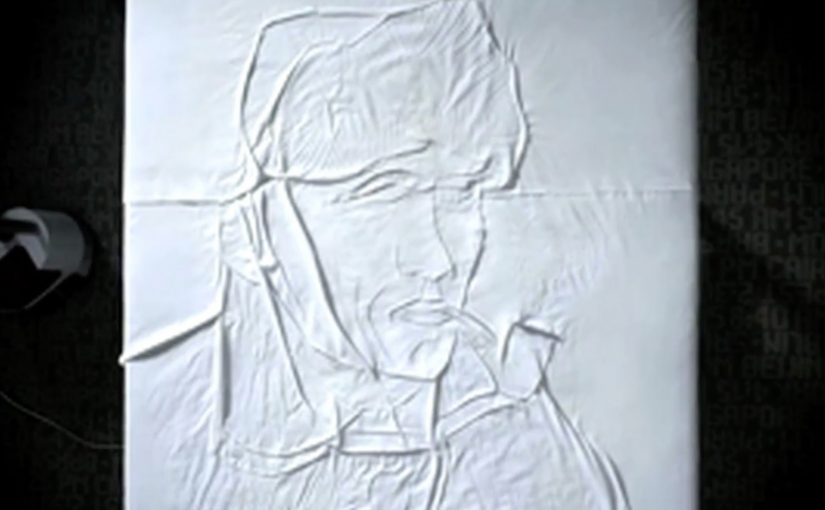
Earlier this year I had covered a couple of novel approaches to art. Joining that collection is this film from Philips Russia, where the performance of its irons and steamer products is demonstrated by recreating famous Dutch paintings on a plain piece of white cloth.

It is a simple setup with a surprising payoff. A sheet. A tool you already understand. Then, with pressure, heat, and steam, the fabric starts behaving like a canvas.

When fabric becomes a canvas

The craft trick is that wrinkles and flattened areas act like light and shadow. Steam relaxes fibres, pressure fixes the fold, and controlled temperature makes the result repeatable. In other words, the “brushstroke” is not pigment. It is texture, created and locked in by the iron.

In global consumer electronics and home appliance marketing, the hardest job is to make small performance differences feel tangible in seconds.

Why it lands

This works because it makes an invisible promise visible. Most iron claims are abstract. More steam. Better glide. Fewer wrinkles. Here, the demonstration turns those claims into a proof you can read from across the room. That is why the idea persuades so quickly: the same steam, pressure, and temperature control needed to shape fabric into a portrait also signals control over everyday wrinkles. If an iron can reliably “draw” with fabric, it can reliably handle a shirt collar.

Extractable takeaway: When your product benefit is hard to evaluate (speed, precision, consistency), design a demo where the benefit becomes a visible artefact. The artefact should be legible instantly and hard to fake without the real capability.

What Philips is really selling

The paintings are the hook, but the real message is controllability. Consistent steam output. Predictable temperature. Even pressure. The art is not the point. It is the credibility vehicle that lets viewers infer performance without needing specs.

The real question is how to make product control visible before a viewer has to trust the spec sheet.

The spot is credited to DDB Moscow, which fits the overall approach. Make the proof the story, not the claim.

What to steal for your next product demo

  • Pick a “hero capability” and exaggerate it safely. If precision matters, show precision at a level nobody expects in the category.
  • Use a familiar reference. Famous paintings function as a built-in quality benchmark. Viewers know what “good” looks like.
  • Make the proof readable without explanation. If the demo needs narration to work, it is probably not a demo yet.
  • Engineer for repeatability. The best demos look like magic, but behave like a process.

A few fast answers before you act

What is “The Art of Ironing”?

It is a Philips Russia film that demonstrates iron and steamer performance by recreating classic Dutch paintings using wrinkles and flattened texture on white cloth.

What product point does the demo prove?

Control and consistency. Steam output, temperature stability, and pressure control are implied by the ability to create repeatable, detailed fabric texture.

Who is credited for the campaign?

The campaign is credited to DDB Moscow.

Why use famous paintings instead of an original design?

Recognition compresses understanding. Viewers instantly know the reference, so they can judge the fidelity without being taught the criteria.

How can another brand use this approach without copying it?

Translate the principle, not the prop. Choose a culturally familiar benchmark in your category, then create a visible artefact that only your real capability can produce.
Heineken: The Real Master of Intuition

Heineken: The Real Master of Intuition

Just last week I wrote about the Heineken Star Player app, designed to let fans interact in real time with the nail-biting action of the UEFA Champions League.

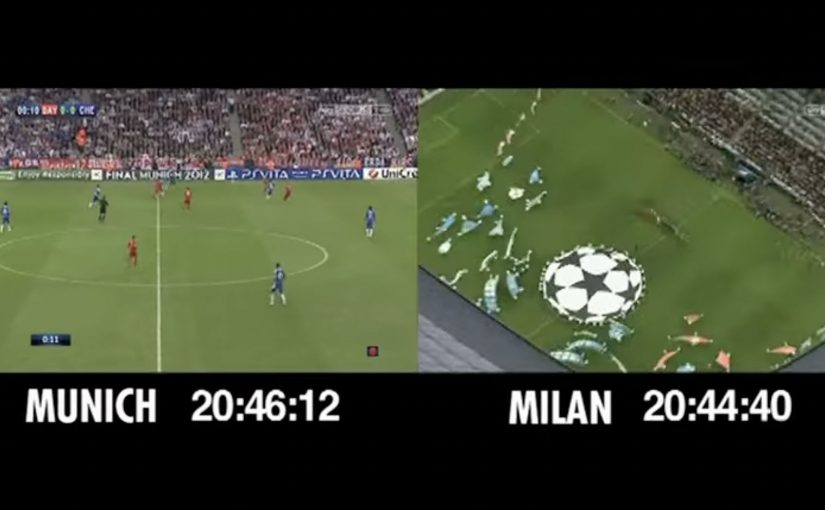
To promote the same Star Player app in Italy, Heineken decides to prank a famous sports bar in Milan, with Italian football legends Billy Costacurta and José Altafini providing live commentary on the UEFA Champions League final. What nobody in the pub knows is that Heineken has hidden cameras everywhere, and the match broadcast is delayed by two minutes, so people in the audience can upstage the legends by calling shots before they are even made.

A prank built on timing and social proof

The mechanism is simple and ruthless. Put credible legends in the room. Keep the crowd confident and loud. Then create a small information advantage by delaying the broadcast, so “intuition” looks like supernatural match-reading instead of a technical trick.

In European football marketing, second-screen ideas work best when they turn match tension into something people can perform together, not just watch.

Why it lands

This works because it weaponizes the most contagious thing in a sports bar: certainty. When one person confidently predicts a moment, everyone else starts scanning for the next prediction. The prank uses that energy to make the app’s promise, real-time interaction, feel like a natural extension of how fans already behave during big matches.

Extractable takeaway: If you want to demonstrate “real time” as a benefit, do not explain it. Create a live situation where the audience experiences the advantage socially, in front of other people, with instant feedback.

What the brand is really proving

This is not only entertainment. It is a credibility transfer. By that, I mean the authority of the commentators spills over onto the app experience and makes the real-time feature feel legitimate inside football culture.

The real question is whether Heineken can make real-time interactivity feel credible enough to belong in serious match culture.

By putting famous voices in the room, Heineken frames Star Player as something that belongs in serious match culture, while the hidden-camera format makes the proof shareable beyond the bar.

How to dramatize real-time advantage

  • Demonstrate the benefit under pressure. Big-match stakes make the mechanic feel meaningful.
  • Use a believable setting. A sports bar is already a “live commentary” environment.
  • Design for group contagion. The best moments are the ones other people in the room amplify.
  • Make the reveal the product story. The twist is the proof of what “real time” can do.

A few fast answers before you act

What is “The Real Master of Intuition”?

It is a Heineken hidden-camera prank in a Milan sports bar where a delayed match broadcast makes fans appear to predict plays before two football legends do, to promote the Star Player app.

Why delay the broadcast?

Because a small timing advantage is enough to create the illusion of extraordinary intuition, and it produces a strong, repeatable demonstration moment on camera.

What does this have to do with a second-screen app?

It dramatizes the idea of being “ahead of the action” and turns real-time interaction into a story people can feel, not just understand.

What makes the idea shareable?

Public embarrassment and surprise, plus a clear “how did that happen?” mystery that gets answered by the reveal.

What is the transferable lesson for marketers?

Create a live scenario where the audience experiences your product advantage socially, with immediate feedback, rather than relying on feature explanation.

Kellogg’s Tweet Shop: Pay with a tweet

Kellogg’s Tweet Shop: Pay with a tweet

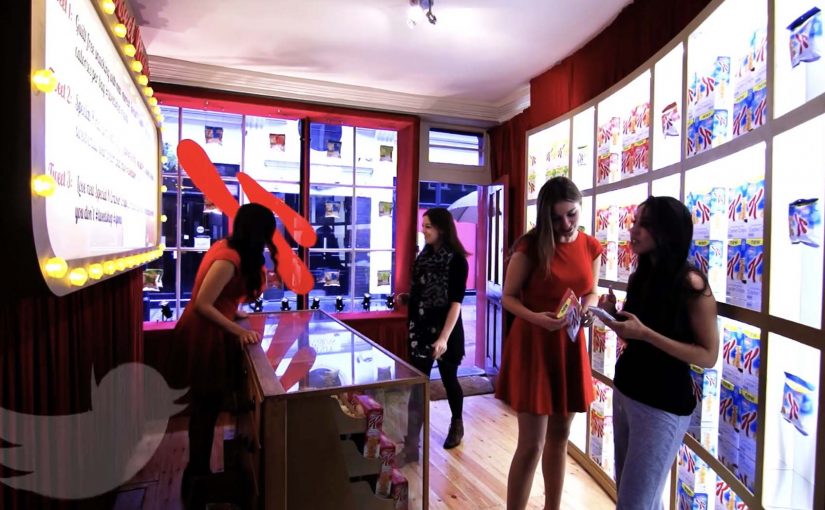
Last month in London, Kelloggs setup a pop up store where passers-by who walked in could try the low calorie snacks and then post a review on Twitter. “Special K girls” in red dresses who manned the store, checked each customer’s tweet before handing over a packet of Special K Cracker crisps.

How the Tweet Shop turns sampling into distribution

The mechanic is deliberately lightweight. Walk in, try the product, then publish a short reaction on Twitter before you leave. Staff verify the tweet on the spot, then you get a pack to take away.

A “pay with a tweet” activation is a pop-up retail format where the transaction is a public social post rather than money, converting product sampling into earned reach and searchable social proof.

In global FMCG marketing, this kind of social-to-sample loop, where a public post unlocks a take-away sample, works when the “payment” is fast, public, and directly tied to a tangible reward.

Why it lands: the tweet is both receipt and recommendation

Most sampling disappears into a bag with no trace. Here, the brand creates a visible record of trial. Each tweet acts like a receipt that confirms participation, and a micro-endorsement that other people can stumble on later.

Extractable takeaway: When you turn trial into a public trace and close the reward immediately, posting feels like participation, not payment.

The real question is whether the post feels like a fair exchange for the product, not a forced endorsement.

The red-dress staffing is not just costume. It makes the interaction unmistakably “Special K” in photos, which helps the moment travel beyond the store.

This is a smart trade only when you can keep the ask lightweight and the reward immediate.

What Kellogg’s is buying with “social currency”

  • Frictionless trial. People try a new product with zero financial risk.
  • Instant word of mouth. Reactions publish in real time, while the experience is still fresh.
  • Searchable proof. A hashtag-based trail can cluster impressions and sentiment in one place.
  • High street theatre. A pop-up adds “I was there” energy that a standard promo rarely achieves.

Design rules for your next “pay with a post” idea

  • Make the ask specific. Tell people exactly what to post and keep it short enough to do without thinking.
  • Verify fast. The handover moment should feel immediate, or it stops being fun.
  • Reward honesty. If you only want praise, people feel manipulated. If you invite real reactions, the format feels fair.
  • Design the store for photos. If the space is not camera-ready, you waste the free distribution you just created.

A few fast answers before you act

What is the “Tweet Shop” concept in simple terms?

It is a pop-up shop where people receive a product after posting a tweet about their experience, with staff checking the post before the handover.

Why would a brand accept tweets instead of money?

Because a public post can create awareness and credibility at scale, while the product cost stays predictable and controlled.

What makes this different from a normal free sample?

The sample creates a visible social trace. Each person who tries it leaves behind a shareable review that others can discover.

What is the biggest risk with “pay with a tweet” activations?

If the ask feels forced or takes too long, people opt out. If the experience is not worth sharing, the format collapses into awkward bribery.

How do you judge whether this worked?

Track trial volume, unique posts, sentiment, and whether conversation continues after the pop-up closes, not just during the event.