
Durex: Baby App

Making the consequence tangible, not the lecture louder

In consumer health marketing, the hardest problems are rarely about information. They are about motivation in the moment. This Durex idea is a clean example of turning a behavior barrier into an experience.

Condoms can feel like a downer. So how do you convince guys to put one on, and make Durex the favored choice?

This is the right move when information is not the problem. Make the consequence tangible, not the lecture louder.

Using the iPhone, Nicolai Villads, Peter Ammentorp and Raul Montenegro created what is called the Durex Baby application for the iPhone.

How the Durex Baby app worked as a behavioral nudge

The mechanism was simple. If the barrier is that protection feels like a mood killer, shift attention to what happens without it.

The app simulated the realities of having a baby, using the phone as a constant companion device. It turned an abstract risk into a persistent, personal experience that could be felt rather than explained. Because the phone stays close, the simulation can interrupt everyday moments, which is why it lands as a nudge instead of a lecture.

In consumer health marketing, consequence simulation works best when the audience already knows the facts but needs a visceral prompt.

The real question is how you make “responsible” feel like the easiest choice in the moment.

Why simulation can change decisions faster than persuasion

Most messaging about safe sex competes with optimism bias, the tendency to assume consequences happen to someone else. A simulation reduces that distance by making “later” feel like “now,” reframing the trade-off from short-term inconvenience to long-term responsibility.

Extractable takeaway: When persuasion stalls, build a simulation that collapses time and personal distance so the audience feels the outcome and re-evaluates the trade-off on their own.

The intent behind building it for Future Lions

The app was created for the Future Lions 2010 competition organized by digital agency AKQA and the Cannes Lions Advertising festival.

The business intent is clear. Use mobile to translate a sensitive topic into a playful but pointed interaction that can travel socially and be discussed without heavy moralizing, while keeping the brand associated with the responsible choice.

What to borrow from Durex Baby

  • Turn abstract risk into felt experience. Simulation can outperform warnings when the audience tunes out lectures.
  • Use the device people always carry. Mobile is effective when the behavior change depends on everyday moments.
  • Reframe the trade-off. Move attention from short-term friction to long-term consequence in a way people can grasp instantly.
  • Make it discussable. Playful interaction can open conversation on topics people avoid in direct language.

A few fast answers before you act

What is the Durex Baby app?

An iPhone app concept that simulates the realities of having a baby to encourage safer choices and reduce resistance to using condoms.

What was the core mechanism?

Behavioral reframing through simulation. The phone delivers an ongoing experience that makes the consequence of not using protection feel immediate.

Why does this approach work better than a warning for some audiences?

Because it reduces optimism bias. People are more likely to change behavior when the consequence feels personal and present, not distant and theoretical.

What business goal does it serve for Durex?

Positioning the brand as the responsible default choice by shifting the decision from mood-based resistance to consequence-based clarity.

What is the main takeaway for marketers?

If persuasion is failing, design an experience that makes the outcome feel real, then let the audience reach the conclusion themselves.
T-Mobile Netherlands: The Rematch

A tiny final that deserved a real crowd

The strongest brand stories make connectivity feel human: it is not about coverage maps, it is about helping people reconnect what mattered.

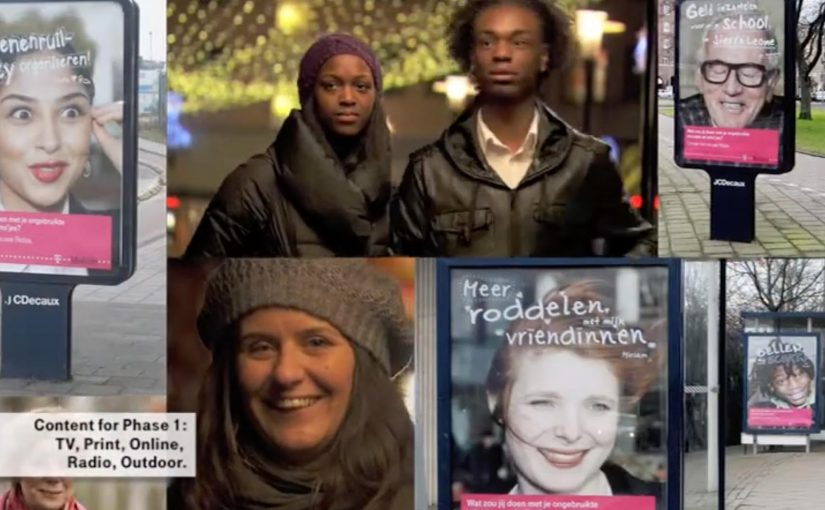
Martijn, a 39-year-old carpenter, attempted to bring back his football team from 1997 for a rematch of a 13-year-old championship final that was then witnessed by a grand crowd of three people.

This time, he wanted his entire village to be there to see him win. A dream enabled by T-Mobile Netherlands.

How the rematch premise worked

The mechanism was classic. Take an unfinished personal story, add a clear goal, then remove the practical barriers that made it impossible before.

Reuniting a team after 13 years is not just a scheduling challenge. It is a social one. Finding people, persuading them, coordinating them, and turning “we should” into “we did.” T-Mobile positioned itself as the enabler that made that coordination real.

By “coordination”, I mean the practical work of finding the right people, aligning dates, and making commitments stick.

That removal of friction is why the payoff feels earned: a real crowd becomes proof the reconnection happened.

In European consumer telcos, stories like this work when connectivity shows up as real-world coordination, not as a network claim.

Why the story lands emotionally

The psychological pull is simple: redemption.

Extractable takeaway: If you want emotion without melodrama, make recognition visible: reunions, witnesses, and shared moments people can point to.

The original match mattered deeply to the people who lived it, but it happened almost unnoticed. Three spectators is not a crowd. It is practically private. The rematch reframed the same sporting moment as something the whole village could witness, validate, and share.

It also taps into identity. A village team is not just sport. It is belonging. Bringing everyone back together turns an individual need into a community event.

The business intent behind enabling the dream

T-Mobile was not selling minutes or data here.

The real question is how a telco earns emotional ownership of reconnection without making itself the hero.

Here, “reconnection” means turning a desire to meet again into a plan people can actually execute.

This kind of brand film works best when the brand enables and stays out of the spotlight.

The intent was to associate the brand with making real-life reconnection possible. Helping people organize, mobilize, and show up. In a category where offers are easy to copy, emotional ownership is the differentiator.

If your category is copyable, the durable edge is removing friction around moments people already care about.

What to steal for your next brand film

  • Start with a concrete, human objective. A rematch with a real stake beats any abstract message.
  • Make the “before” painfully small. Three spectators sets up a powerful contrast for the payoff.
  • Let the brand enable, not star. The hero is the person. The brand removes friction.
  • Scale the moment socially. A private memory becomes a public event. That is where shareability comes from.

A few fast answers before you act

What is T-Mobile Netherlands’ The Rematch about?

A 39-year-old carpenter reunites his 1997 football team for a rematch of a 13-year-old championship final that only three people watched at the time.

What is the core mechanism of the idea?

Identify an unfinished personal story, then use the brand to remove coordination barriers so the dream can happen at scale.

Why does it resonate with viewers?

It is a redemption story with community payoff. The same moment gets the crowd and recognition it never had.

What business goal does this serve for a telco?

Owning the emotional territory of reconnection and coordination, rather than competing only on interchangeable plans and pricing.

What is the main transferable takeaway?

Make the brand the enabler of a human goal, and build the narrative around contrast: what it was then versus what it becomes now.

Lynx’s online tools for offline dating

Lynx does something smart and very “of its time.” It takes the messy, awkward first 20 seconds of talking to someone offline, and it turns that moment into a mobile toolkit. Here, “toolkit” means lightweight, in-the-moment utilities you can pull up on your phone to create an opening.

BBH London releases a second round of mobile “pickup tools” for Lynx’s “Get In There” campaign. The promise is simple. Give young guys digital tips, tricks, and small utilities that help them make the leap from online confidence to real-world interaction. The tools are built as icebreakers you can actually use in the moment, not just a brand message you nod at and forget.

The idea, stripped down

Turn “offline dating” anxiety into a set of mobile utilities that create an opening.

What the toolkit looks like

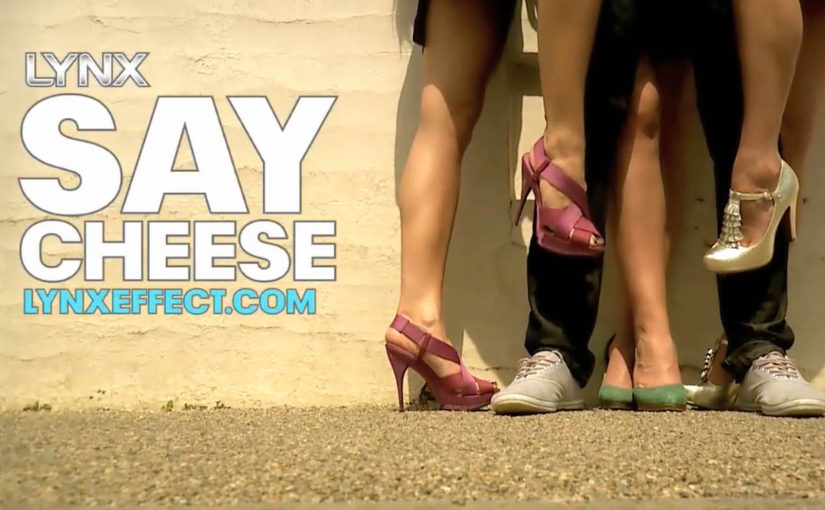
The campaign centers on a suite of mobile experiences backed by video content. Three apps sit at the heart of the set: “Say Cheese,” “Spin The Bottle,” and “Perfect Man Revealed.”

Say Cheese plays with the “take my photo” moment to create a surprise reveal.

Spin The Bottle gamifies group energy and removes the “who do I choose” tension.

Perfect Man Revealed reframes a quiz into a playful personal reveal.

The pattern matters more than the specifics. Each tool is designed to create a socially acceptable reason to start an interaction, then let the person take it from there.

In youth-focused consumer brands, the winning use of mobile is often to reduce in-the-moment social friction, not to replace the interaction.

The real question is whether your digital work helps people take the next awkward step in the real world.

When you want behavior change, utility-first beats message-first.

Why this works as marketing, not just “a funny app”

Most brand campaigns try to persuade with claims. This one tries to equip with utility. By making the icebreaker the mechanic, the brand shows up at the moment of action, which is why it sticks.

Extractable takeaway: When the behavior is awkward, ship a small, optional utility that creates a socially acceptable opening, then get out of the way and let the human interaction do the work.

  1. It inserts the brand into behavior, not media.
    If the tool gets used, the brand is present at the exact moment the customer cares, not ten minutes later in a recall survey.
  2. It makes “digital to physical” a real bridge.
    A lot of digital work stops at clicks. Here, the mechanic is literally about translating screen confidence into real-world action.
  3. It scales with video and gets remembered through the gag.
    The utility is the hook. The humor is the memory device. Video content becomes the distribution layer that makes a niche behavior hack feel like a mainstream campaign.
  4. It is brand-consistent without being product-heavy.
    The “Lynx Effect” idea is not explained. It is implied. The campaign behaves like an accomplice to confidence, which is exactly what the brand wants to stand for.

The deeper point

This is early evidence of a direction many brands move toward. Marketing that ships as tools, not just communications.

Instead of asking for attention, the brand earns a place in real life by being useful in a situation people actually want help with.

Patterns to borrow when you ship tools

  • Start with the awkward moment. Pick the one moment people avoid because it feels risky. Then design a tool that reduces the social friction in that moment.
  • Make the utility the hero. If the only payoff is “branding,” people drop it. If the payoff is a usable social script, they try it once, and that is often enough to create talk value.
  • Design for respect and consent, even when the creative is cheeky. When you play in dating and social dynamics, the difference between playful and creepy is not subtle. Build mechanics that keep choice and comfort with the other person, not tricks that corner them.

A few fast answers before you act

What is Lynx “Get In There” trying to do?

It aims to help guys get offline and start real-world interactions, using tips, tricks, and mobile tools as icebreakers.

What makes these tools different from standard mobile ads?

They are designed to be used in the moment, not just consumed. Utility first, branding second.

Which apps are part of the toolkit?

“Say Cheese,” “Spin The Bottle,” and “Perfect Man Revealed.” Each is designed to create a simple opening for real-world conversation.

What is the reusable marketing lesson?

If you can turn a customer’s friction point into a simple tool that helps them act, you move from awareness to behavior.

What is the main risk with this kind of idea?

If the mechanic crosses into manipulation, it backfires. The tool must stay playful, optional, and respectful.