
Dungville: Klara the Cow Betting Game

Dungville: Klara the Cow Betting Game

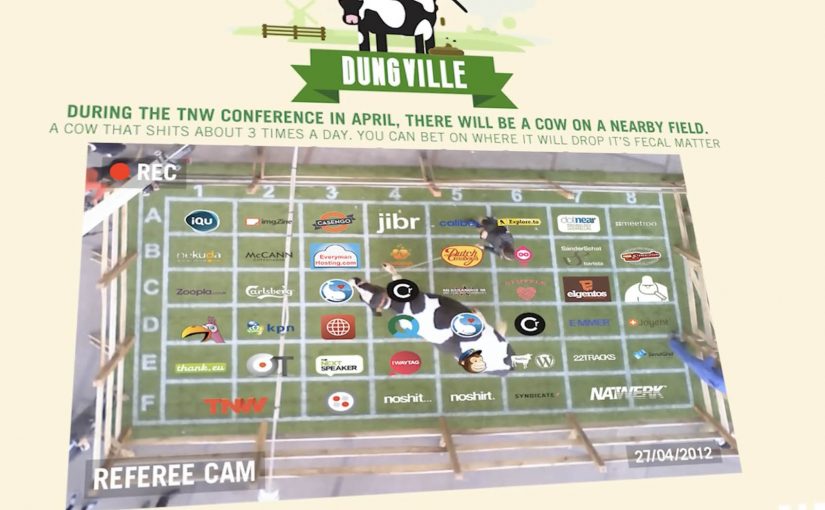
Natwerk was asked to create something playful for the online-minded visitors of The Next Web Conference 2012. So they built an analogue prediction game featuring a real cow, then layered it with an online extension.

Klara, a grid, and a one-day “village”

The installation was framed as a tiny pop-up “village” at the conference venue. One real farmer. One real cow named Klara. A field laid out as a grid. Visitors could place bets on where she would drop her dung.

Mechanism: a physical event drives a digital game

As shown in the case film, Klara was expected to do her business several times a day, and the audience wagered on where it would happen. The web layer turns that unpredictability into a simple loop. Pick squares. Wait. Validate. Win or lose.

That mechanism works because one visible but unresolved physical outcome gives everyone the same reason to watch, talk, and check back.

In event marketing, the strongest activations turn a shared physical moment into a lightweight digital ritual people can join and talk about instantly.

Why it lands

The idea is memorable because it is absurdly literal. A real-world randomizer. A clear grid. A clear outcome. It also fits the conference crowd. People who live online love mechanics that are easy to explain, easy to screenshot, and easy to debate in real time.

Extractable takeaway: If you can attach your digital interaction to an offline moment that nobody can fully predict, you get tension for free, and tension is what keeps people checking back.

What this kind of activation is good for

The real question is whether the game gives people a simple reason to keep returning to the shared moment.

This is not about deep persuasion. It is about creating a shared story at the venue and giving the event a “small legend” people repeat after they leave. It works best when your goal is attention, conversation, and community participation rather than detailed product education.

Steal the event-game pattern

  • Use a single, visible game board. A grid makes rules self-explanatory and outcomes easy to verify.
  • Keep the loop simple. Pick. Wait. Result. Repeat. Complexity kills participation at events.
  • Make the offline moment the engine. When the physical world provides the variability, the digital layer can stay minimal.
  • Design for group talk. The best event games create debate and banter, not solo play.
  • Be deliberate about tone. Toilet-humour mechanics are polarising. If you use them, commit fully and keep it light rather than crude.

A few fast answers before you act

What is Dungville in one sentence?

It is a conference activation where a real cow on a gridded field powers a web game, letting visitors predict where she will drop dung.

Why does a real-world “random” trigger work so well?

Because it creates genuine uncertainty. People keep watching and checking because nobody can fully control the outcome.

What makes this an “online extension” rather than just a stunt?

The web layer turns the physical moment into a repeatable interaction loop, giving people a way to participate, compare picks, and track results.

What is the biggest execution risk?

Drop-off due to waiting. If results take too long, interest fades. The format needs clear timing and frequent enough outcomes to sustain attention.

What should you measure for a similar event game?

Participation rate, repeat participation, time-on-experience, social mentions during the event window, and whether attendees recall the activation as part of the event story.
Salta Beer: The Rugbeer Machine

Salta Beer: The Rugbeer Machine

A vending machine that rewards you for tackling

Argentina is often described as football-obsessed. But up in the northern Salta province, described by some as the “New Zealand of Argentina”, rugby culture runs deep. Salta Beer set out to give those rugby fans a live experience built for what they do best.

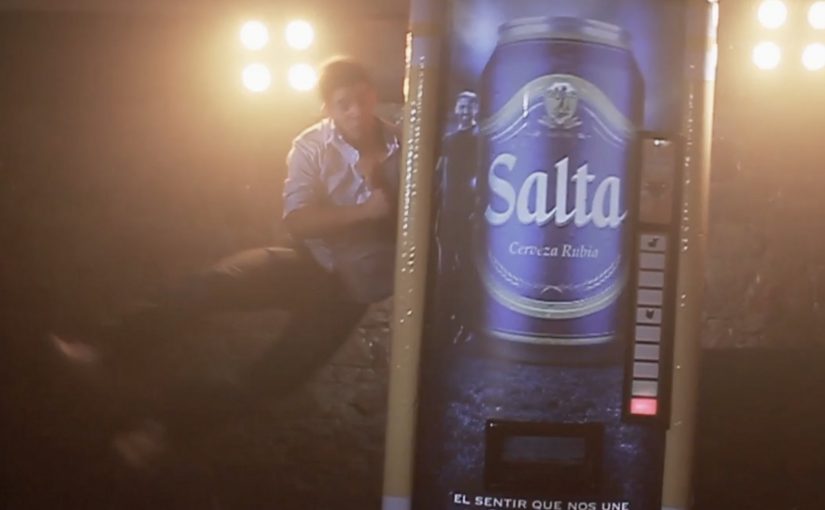
Working with Ogilvy Argentina, the brand created the Rugbeer Machine, a tackle-activated vending machine concept described as first of its kind. It dispenses exactly what rugby players want most after doing what they do best. One cold Salta Beer per tackle.

The mechanic that makes the idea instantly legible

The machine turns a familiar ritual into a simple rule. You do a proper tackle. The machine validates the hit. You get a can. That is it. No explanation needed, no copy deck required, no “brand purpose” lecture.

Because the rule is binary and the reward is immediate, people understand the exchange instantly and decide on the spot whether to join. In global beer marketing, the fastest way to earn attention in a bar is to convert consumption into a participatory challenge that proves the product in the moment.

Why it lands

It respects the audience’s identity. Rugby is physical, social, and performance-driven, so the “payment method” matches the culture. It also creates a crowd dynamic. One person tackles, everyone watches, the machine responds, and the moment becomes a repeatable mini-event that people want to try and film.

Extractable takeaway: If your brand can credibly borrow an audience ritual, turn that ritual into the input, then make the brand reward the output immediately and publicly.

What the brand is really buying

This is a product trial engine disguised as entertainment. The real question is whether the brand can turn rugby identity into a public participation loop that sells the beer without feeling like an ad. The reward is immediate. The proof is physical. And the format creates social permission to engage because it feels like play, not promotion.

What experiential teams should steal

  • Match the mechanic to the tribe. The interaction should feel native to the audience, not imported from a marketing playbook.
  • Make the rule binary. Do the thing. Get the reward. Complexity kills participation in public spaces.
  • Design for a crowd. The best activations create spectators and participants at the same time.
  • Reward immediately. Instant payoff turns curiosity into action, and action into repeat attempts.

A few fast answers before you act

What is the Rugbeer Machine?

It is a rugby-themed vending machine activation for Salta Beer that dispenses a cold beer after a participant completes a tackle on the machine.

Why does “one beer per tackle” work as a mechanic?

Because it is culturally aligned, instantly understandable, and produces a public moment that is fun to watch and easy to repeat.

What makes this more effective than a typical sampling campaign?

Sampling is usually passive. This turns sampling into earned reward, which increases attention, memorability, and social sharing.

What is the transferable principle for other brands?

Turn a core audience behavior into the input. Then deliver an immediate, visible reward that proves the product in context.

What is the most common failure mode if you copy this format?

Forcing an interaction that does not fit the audience culture, or adding friction that makes people hesitate in public.

Camp Nectar: Real Fruit Boxes

Camp Nectar: Real Fruit Boxes

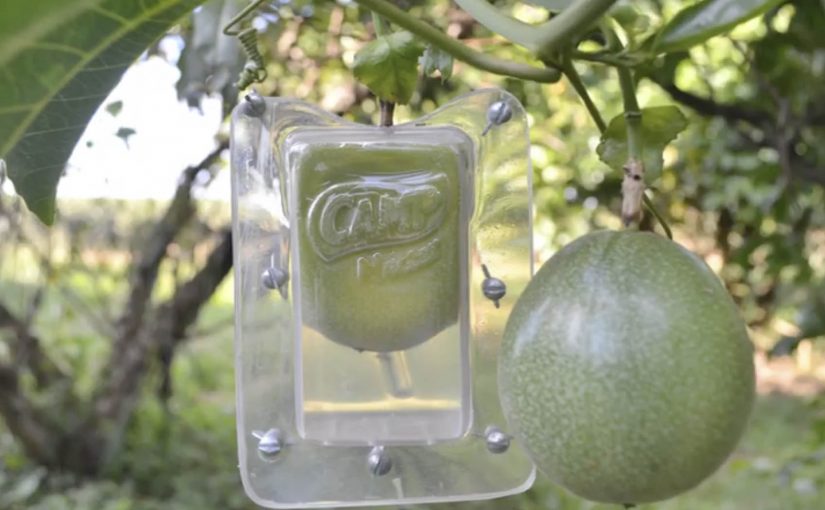
A piece of fruit is hanging from a tree. But it is not round. It is shaped like a juice pack, complete with the unmistakable carton silhouette.

Brazilian agency ageisobar was asked to prove that Camp Nectar juices were all natural. So they created molds in the shape of the brand’s packaging and attached them to fruit as it grew on farms. As the fruit developed and ripened, it took on the exact shape of the juice box, turning “made from real fruit” into something you can see without reading a claim.

The mold-on-tree mechanic

The mechanism is product proof, not persuasion. By product proof, the campaign uses the fruit itself as evidence instead of asking the audience to trust a written claim. Instead of showing ingredients or production steps, the campaign engineers a physical outcome that can only happen if real fruit is involved. The fruit becomes the packaging, and the packaging becomes the argument.

In packaged food and beverage marketing, “natural” claims are often distrusted, so literal demonstrations that collapse the gap between product and source earn attention faster than explanations.

Why the visual is hard to forget

The idea lands because it is a contradiction you can resolve instantly. You see something impossible, then you understand the trick, and the understanding reinforces the claim. It is also inherently shareable because the proof fits in a single frame. A fruit that looks like the pack.

Extractable takeaway: If your claim is routinely doubted, design a one-image demonstration that makes the claim self-evident, then let distribution follow the proof rather than the copy.

What the brand is really doing

Camp Nectar is not just saying “we’re natural”. It is trying to reset the credibility bar in a category full of vague promises. The stronger strategy is to make the claim visible, not louder. The execution borrows the authority of nature itself. Growth, time, and farming become the brand’s endorsement.

The real question is not whether the brand can say “real fruit”, but whether it can make that claim feel self-evident at a glance.

What food and beverage brands can take from this

  • Prove, do not promise. Engineer a physical or behavioral outcome that functions as evidence.
  • Compress the story into one frame. If the proof reads in a second, it travels further.
  • Let the medium match the message. A farm-grown artifact is more persuasive than a studio-made graphic.
  • Keep the claim implicit. When the proof is strong, the audience supplies the conclusion for you.

A few fast answers before you act

What is “Real Fruit Boxes”?

A demonstration campaign where real fruit is grown inside juice-box-shaped molds so it ripens into the shape of Camp Nectar’s packaging.

Why does this work better than ingredient messaging?

Because it is evidence-first. The audience sees a physical result that implies real fruit without needing technical explanation.

What is the core creative principle?

Make the proof visual, literal, and instantaneous. One glance should communicate the point.

What is the main execution risk?

If the proof looks fabricated or overly staged, trust collapses. The craft has to feel like a real-world process, not a prop.

When should brands use “literal proof” ideas?

When the category is saturated with claims and skepticism is high, and you can create a demonstration that is simple, safe, and repeatable.