
Improv Everywhere: Too Old to Sit on Santa

Improv Everywhere: Too Old to Sit on Santa

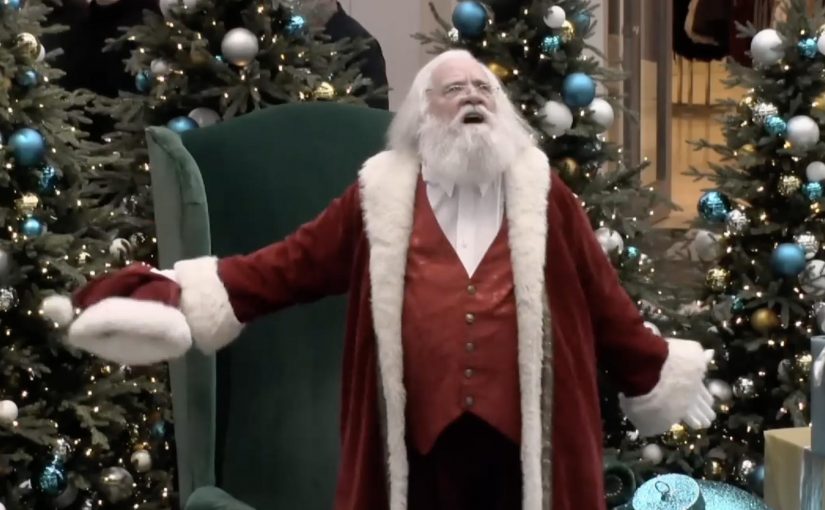
Flash mob specialists Improv Everywhere created this video in a New Jersey mall, where they abruptly transformed the space into a stage for a short musical about Santa.

How the stunt is constructed

The mechanism is classic Improv Everywhere: a normal public setting, a sudden coordinated performance, and a premise that is instantly understandable to bystanders. The “too old to sit on Santa” hook makes the scene both seasonal and slightly awkward, which is exactly what gives it energy. Because the premise is instantly understandable, bystanders decide in seconds whether to watch, film, or share, which is why this format travels.

In public-space entertainment formats, the fastest route to shareability is a concept people can describe in one sentence and recognize in one frame.

The real question is whether a premise people can recognize in one frame can earn genuine reactions fast enough to carry the story.

Prioritize instant legibility and real bystander proof over production polish.

Why it lands

It works because it flips a predictable holiday ritual into musical theatre, so the audience understands the setup immediately and the reactions become the payoff.

Extractable takeaway: Viral public performances work when they remix a familiar ritual and then let real bystander reactions carry the authenticity. The premise must be instantly legible. The payoff must be emotional, not just clever.

It hijacks a familiar ritual. Mall Santas are predictable. Turning that ritual into musical theatre flips the expected script without needing any explanation.

It uses social friction as the joke. The humor comes from watching adults navigate a child-coded tradition, and then watching the crowd get pulled into the performance anyway. Here, “social friction” means the brief discomfort created when adult behavior collides with a kid-coded context.

It turns spectators into proof. The audience reactions are the credibility layer. You believe it because you see people genuinely surprised, laughing, and filming.

Borrowable moves from Too Old to Sit on Santa

  • Choose a setting with built-in footfall and expectation. The more predictable the normal scene, the stronger the contrast when it flips.
  • Write a one-line premise. If the concept cannot be explained in a sentence, it will not travel as a clip.
  • Stage for the camera, but keep it real. The best moments are still the unscripted reactions from people who did not know what was coming.
  • Keep the runtime tight. Short musical beats and quick escalation make the piece rewatchable.

A few fast answers before you act

What is Improv Everywhere known for?

Organized public “missions” that turn everyday spaces into staged moments. The work is designed to surprise bystanders and create shareable video.

Why does a mall work so well for a flash mob musical?

Malls have constant foot traffic, predictable routines, and lots of people already primed to watch. That makes the reveal and crowd reaction stronger.

What is the core hook of this specific piece?

A Santa-themed musical built around whether adults are “too old” to sit on Santa, which creates humor through awkwardness and nostalgia.

What is the difference between a flash mob and a staged commercial?

A flash mob relies on real-time disruption and authentic bystander response. The environment and audience reactions become part of the content.

What is the transferable lesson for brands?

If you want shareability, start from a familiar ritual, flip it with a simple premise, and let genuine reactions provide the proof and warmth.

Norte Beer: Photoblocker

Norte Beer: Photoblocker

After their successful campaigns for Andes Beer in Argentina, Del Campo Nazca Saatchi & Saatchi is back with another beer campaign. This time it is a TV ad that highlights another Argentine beer-related invention.

A beer cooler that fights the camera flash

The invention is described as the Norte “Photoblocker”. A functional beer cooler fitted with sensors that detect camera flashes. When a flash goes off nearby, it fires back its own burst of light to overexpose the photo and make faces hard to recognize.

In nightlife culture and bar marketing, protecting privacy in public spaces is a relatable tension that spreads fast through word-of-mouth.

Why it lands

The idea works because it turns an everyday annoyance into a “brand-powered solution”. Being tagged in a messy night-out photo is a modern fear, and the Photoblocker is a simple, visual punchline that makes the benefit obvious without explanation. It also sets up a clean contrast. With Photoblocker versus without Photoblocker. That before-and-after logic is perfect for TV, but it also hints at a real-world stunt, which is where the campaign earns extra talk value.

Extractable takeaway: If you can productize a social pain point into a physical prop that demonstrates itself in one second, you get both a clear story and a repeatable proof moment people will retell.

What the brand is really doing

This is less about claiming a taste difference and more about claiming a role in the night. The real question is how a beer brand can become useful in the exact social moment where embarrassment starts. Norte positions itself as “on your side” in the club. The brand becomes the enabler of freedom, mischief, and plausible deniability, with a device that dramatizes that promise.

What to borrow from this nightlife privacy stunt

  • Start from a real behavioral pain. Here it is social photo-tagging anxiety.
  • Build a prop that shows the benefit instantly. One flash. One ruined photo. No explanation needed.
  • Use an obvious contrast format. “With / without” is easy to remember and easy to share.
  • Make the stunt feel usable. Even if it is promotional, it should look like something you would want in real life.
  • Keep the brand role credible. The solution must feel like it belongs in the product’s world.

A few fast answers before you act

What is the Photoblocker, in one sentence?

A beer cooler that detects camera flashes and fires back light to spoil photos taken nearby.

Why is this a “beer campaign” and not just a gadget gag?

Because it connects directly to a drinking occasion and positions the brand as a protector of nightlife freedom, not just a beverage.

What makes the mechanic so shareable?

It is visual, instantaneous, and easy to explain. People understand the benefit the moment they see a flash ruin a photo.

What is the biggest credibility risk?

If the audience thinks it is impossible or staged, the “solution” stops being funny and becomes just an ad trick. The execution has to look functional.

How can other brands apply this pattern without copying it?

Identify a socially painful moment in your category, then build a simple, physical demonstration that resolves it in a way anyone can understand at a glance.

eBay: Give-A-Toy Store

eBay: Give-A-Toy Store

One of the things that all people do during the holidays, besides real shopping, is window shopping. Storefront window displays therefore have a stronger significance during the holiday season. Keeping that in mind, eBay has developed a way to make this experience move from passive to interactive and engaging.

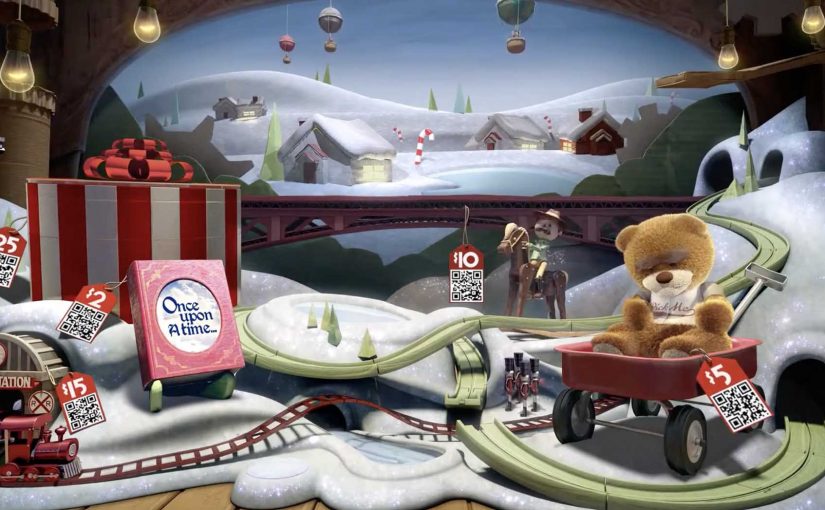
Give-A-Toy Store is a 3D Christmas window installation with QR code tagged toys, built to evoke the passer-by’s giving side. Scanning the QR codes inside the eBay app allows passers-by to donate that toy on the spot, with the window lighting up and rewarding them for the donation.

The window installation is currently available at Toys for Tots in New York (at 35th and Broadway) and San Francisco (at 117 Post St).

Additionally customers can also customize their own toys on eBay’s Facebook page. For each toy created, eBay will donate $1 (up to $50,000).

From window shopping to “giving on the sidewalk”

This is a simple flip. The window is no longer just display media. It becomes a donation interface. You look, you scan, you give. Then you get instant feedback in the physical world.

How the mechanism does the heavy lifting

The mechanic is intentionally friction-light. Toys are visually presented as scannable choices. The QR tag is the call-to-action. The eBay app is the checkout. The window lighting up is the reward loop, confirming that something happened and making the act feel social even if you are alone.

In high-traffic retail corridors, a good interactive storefront turns waiting and wandering into measurable intent, without asking people to step inside.

Why it lands in a holiday crowd

It works because it respects the window-shopping mindset. People are already browsing. They are already comparing. This just adds a small, clear next step that feels aligned with the season. The visual “thank you” in the window also matters. It makes the donation feel immediate and real, not abstract and back-end.

Extractable takeaway: If you can make the environment visibly react to a mobile action, you create trust and momentum. The moment becomes self-explanatory, and bystanders learn the behavior just by watching.

What the brand is really building

The real question is whether a holiday storefront can turn passing attention into a mobile action that feels immediate enough to complete on the sidewalk.

This is not only about donations. It is a product demo for mobile commerce in disguise. It shows that scanning can be a legitimate buying action, that the phone can complete a transaction in seconds, and that the brand can connect physical retail ritual with digital conversion.

What this teaches about interactive storefronts

  • Make the first action obvious. If scanning is the behavior, the codes must look like the product tag.
  • Design a physical confirmation. Light, motion, or animation reduces doubt and makes the act feel rewarding.
  • Keep the choice set tight. Fewer, clearer options beat a cluttered scene when people are walking past.
  • Match the moment. Holiday giving is a natural fit for “instant donate” mechanics.
  • Make it watchable. When others can see the window respond, you get free teaching and free social proof.

A few fast answers before you act

What is the core idea behind Give-A-Toy Store?

Turn a holiday window into a scannable donation experience, so giving happens in the same moment as browsing.

Why does the window lighting up matter?

It provides immediate confirmation and reward. That reduces hesitation, makes the interaction feel real, and invites others nearby to notice and copy the behavior.

What makes this different from a normal QR campaign poster?

The display is the product experience. The scene feels like a store window first, and the QR code is integrated as a natural “price tag” action rather than a separate ad instruction.

What is the biggest execution risk?

Friction. If scanning is unreliable, the app flow is slow, or the codes are hard to spot at walking distance, people will not complete the action.

How would you adapt this if you do not have an app?

Keep the structure. Use a fast mobile entry point, and pair it with a visible physical confirmation so people know their action worked.