
KLM’s Bonding Buffet

KLM’s Bonding Buffet

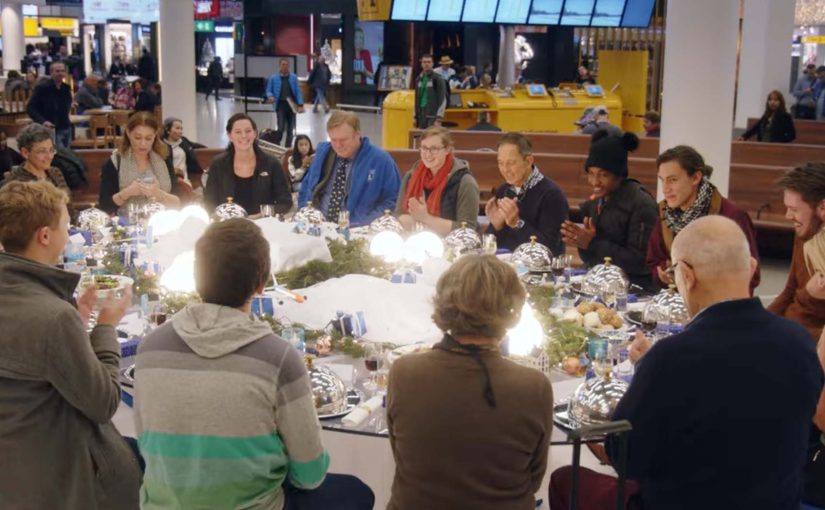
Airports can be lonely places, but Christmas is all about being together. So KLM sets up the Bonding Buffet at Amsterdam Airport Schiphol. A table with a full Christmas dinner sits 4.5 metres above the ground, clearly out of reach. The only way to bring it down is to cooperate.

The mechanic is beautifully simple. Travelers sit on the stools around the table. Each occupied seat lowers the table a little. When every seat is taken, the table is fully lowered and dinner can start. Here, “mechanic” means the rule that links each person sitting down to the table lowering.

In international airports, the fastest way to create togetherness is to make cooperation the only route to a shared reward.

As a result, people from over 20 different countries bond with each other, and the table injects some much-needed Christmas spirit into a busy airport.

The real question is how you design cooperation that feels natural in a place where everyone expects to keep to themselves.

Why this activation works so well

KLM does not “tell” people to connect. It designs a shared outcome that can only be achieved together, because the table only lowers when every seat is taken. The campaign turns a common airport truth. Waiting alone. Into a social moment with a clear reward. Engineered cooperation beats feel-good messaging every time.

Extractable takeaway: If you want strangers to connect, design a visible constraint that can only be resolved through cooperation, then reward the group immediately when they commit.

There are three tight design choices that make it land:

  • A visible constraint. The meal is there, but unreachable.
  • A cooperative mechanic. Everyone has a role. One seat at a time.
  • A shared payoff. The dinner only happens when the group commits.

The brand story is embedded in the experience

This is brand storytelling through behavior, not messaging. KLM positions itself as the airline that understands what travel feels like. Disconnected. Transitional. Sometimes lonely. Then it engineers a moment that flips the emotional state from isolation to togetherness.

The experience is also culturally portable. You do not need language to understand it. Sit down. Help lower the table. Eat together.

What to steal from this if you build live experiences

The transferable lesson is not “build a giant table.” The lesson is how to design bonding:

  • Make the goal obvious.
  • Make the mechanic collaborative, not competitive.
  • Make the payoff immediate and human.
  • Make it impossible to complete alone.

When those conditions are true, the social outcome becomes the content.


A few fast answers before you act

What is KLM’s Bonding Buffet?

It is a Christmas activation at Amsterdam Airport Schiphol where a dinner table starts 4.5 metres high and only lowers when travelers sit together on all seats.

How does the table come down?

Each person who sits on a stool lowers the table a bit. When every seat is taken, the table fully lowers and dinner begins.

Where does it take place?

KLM staged the Bonding Buffet at Amsterdam Airport Schiphol.

What human outcome is KLM designing for?

The activation is designed to help strangers bond, turning lonely transfer time into a shared Christmas moment.

Why is this a strong brand move?

KLM expresses its brand through an engineered experience that changes traveler behavior, not through slogans.
Gatebox: The Virtual Home Robot

Gatebox: The Virtual Home Robot

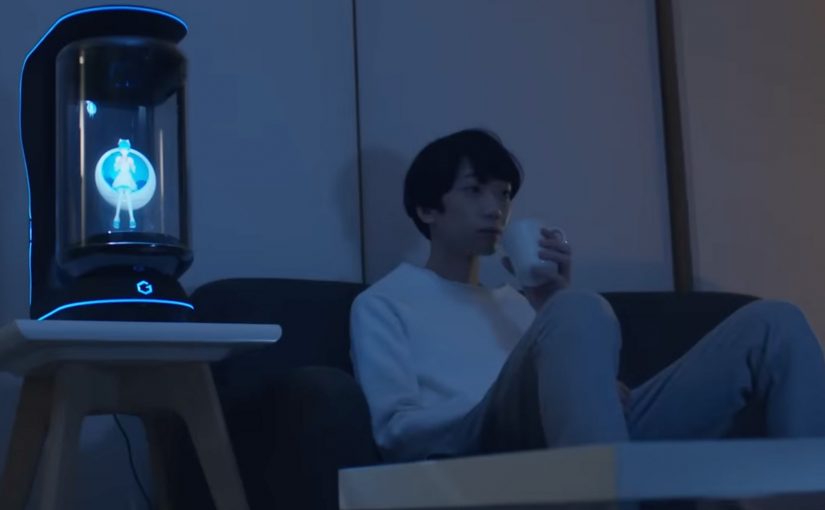
You come home after work and someone is waiting for you. Not a speaker. Not a disembodied voice. A character in a glass tube that looks up, recognizes you, and says “welcome back.” She can wake you up in the morning, remind you what you need to do today, and act as a simple control layer for your smart home.

That is the proposition behind Gatebox. It positions itself as a virtual home robot, built around a fully interactive holographic character called Azuma Hikari. Here, “virtual home robot” means a stationary device that uses a character interface to run simple routines and smart home control, rather than a mobile physical robot. The pitch is not only automation. It is companionship plus utility. Face recognition. Voice recognition. Daily routines. Home control. A “presence” that turns a smart home from commands into a relationship.

What makes Gatebox different from Alexa, Siri, and Cortana

Gatebox competes on a different axis than mainstream voice assistants.

Voice assistants typically behave like tools. You ask. They answer. You command. They execute.

Gatebox leans into a different model:

  • Character-first interface. A persistent persona you interact with, not just a voice endpoint.
  • Ambient companionship. It is designed to greet you, nudge you, and keep you company, not only respond on demand.
  • Smart home control as a baseline. Home automation is part of the offer, not the story.

The result is a product that feels less like a speaker and more like a “someone” in the room.

In consumer smart homes, the interface layer matters as much as the devices, because it shapes whether automation feels like commands or companionship.

Why the “holographic companion” framing matters

A lot of smart home innovation focuses on features. Gatebox focuses on behavior. By keeping a persistent character in your peripheral vision, it turns prompts into small social cues, which is why it can feel relational rather than transactional.

Extractable takeaway: If you want technology to be used every day, design for a lightweight loop of interaction that stays alive between commands, not just for perfect answers on demand.

It is designed around everyday moments:

  • waking you up
  • reminding you what to remember
  • welcoming you home
  • keeping a simple loop of interaction alive across the day

That is not just novelty. It is a design bet that people want technology to feel relational, not transactional.

What the product is, in practical terms

At its most basic, Gatebox:

  • controls smart home equipment
  • recognizes your face and your voice
  • runs lightweight daily-life interactions through the Azuma Hikari character

It is currently available for pre-order for Japanese-speaking customers in Japan and the USA, at around $2,600 per unit. For more details, visit gatebox.ai.

The business bet behind a companion interface

The real question is whether your home interface should be a command surface, or a companion that maintains a simple relationship across the day.

The intent is straightforward: keep the interaction loop alive so “smart home control” becomes a daily habit, not a feature you try once and forget.

Character-first companions are a stronger interaction bet than voice-only assistants when you want sustained engagement, as long as utility stays the default.

The bigger signal for interface design

Instead of:

  • screens everywhere
  • apps for everything
  • menus and settings

It bets on:

  • a single persistent companion interface
  • a character that anchors interaction
  • a device that makes “home AI” feel present, not hidden in the cloud

That is an important shift for anyone building consumer interaction models. The interface is not the UI. The interface is the relationship.

Four patterns to borrow for companion interfaces

  • Design for in-between moments. Build a lightweight loop of greetings, nudges, and routines that persists between explicit commands.
  • Make utility the baseline, not the punchline. The companion framing works only if home control and reminders stay reliable and fast.
  • Anchor interaction in one persistent “someone”. A stable persona reduces friction compared to hopping between apps, menus, and settings.
  • Use presence to change behavior. A visible, ambient interface shifts usage from “ask when needed” to “engage because it is there”.

A few fast answers before you act

What is Gatebox in one sentence?

Gatebox is a virtual home robot that combines smart home control with a holographic companion character, designed for everyday interaction.

Who is Azuma Hikari?

Azuma Hikari is Gatebox’s first character, presented as an interactive holographic girl that acts as the interface for utility and companionship.

What can it do at a basic level?

At a basic level, it can control smart home equipment, recognize face and voice, and run daily routines like wake-up, reminders, and greetings.

Why compare it to Alexa, Siri, and Cortana?

The comparison helps clarify positioning. Gatebox frames itself as more than a voice assistant, using a character-first, companion-style interface instead of a purely voice-first tool.

What is the commercial status?

It is described as available for pre-order for Japanese-speaking customers in Japan and the USA, at around $2,600 per unit.

Burger King Truckvertising

Burger King Truckvertising

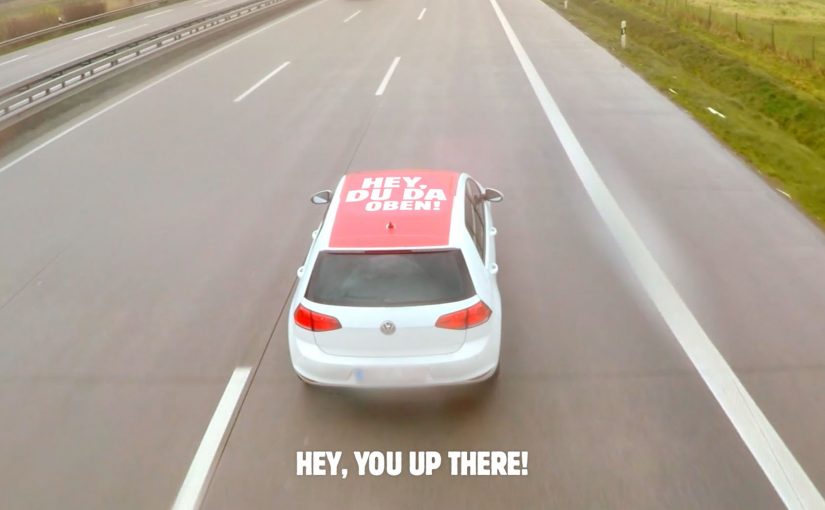
Due to strict laws, reportedly around 13,000km of the German motorway network is ad-free. So to convince truckers in Germany to buy freshly grilled Whoppers, Burger King and agency Grabarz & Partner create ads that only truckers can see. The ads sit on the roof of multiple cars that take turns overtaking trucks.

The cars do not just show an ad. They run a sequence of messages that feels like a conversation from the road:

  • “Hey, you up there!”
  • “You look hungry!”
  • “Why don’t you try out the Whopper?”
  • “Fresh and flame grilled”

Once the first few cars get the truckers’ attention, the remainder guides them to the next Burger King, turning the motorway into a moving funnel:

  • “If yes, then wink”
  • “Follow me to Burger King”

As a result, many truckers give in to temptation and follow the cars to the next XXL Burger King Drive-In.

The constraint that forces the creativity

The starting point is the limitation. Large parts of the German motorway network are ad-free, so the classic roadside billboard play is unavailable at scale.

The execution is “roof media” plus choreography

Here, “roof media” means ads mounted on the roofs of overtaking cars so truck drivers can read them clearly from above.

Burger King turns overtaking cars into a media surface and a delivery system. Roof placements ensure the message is visible from the truck cab. A rotating set of cars keeps the sequence going long enough to land.

The craft is the choreography. It is not one clever line. It is a paced interaction that escalates from attention, to appetite, to direction.

Why this works as shopper marketing in motion

The strength of this idea is that it turns media, message, and route into one conversion system. It works because the format, the sequence, and the physical route all point to the same next action: pull in at the next drive-in.

Extractable takeaway: When the audience is already moving toward a purchasable moment, the strongest creative system is the one that removes the need to interpret the ad and simply guides the next step.

In roadside retail and travel-heavy categories, the scalable advantage often comes from linking visibility, direction, and store access in one uninterrupted journey.

The real question is not how to make drivers notice the message, but how to turn that moment of notice into a low-friction detour.

The business aim is immediate drive-in visits from truckers who are already on the road and close to a Burger King location.

It also respects context. Truckers are not asked to scan, click, or search. They are asked to notice, react, then follow.

What to steal from Truckvertising

  • Turn constraints into the brief: Start with a hard constraint and treat it as a design brief, not a blocker.
  • Match the format to the moment: Use a format the audience cannot ignore in their context, in this case overhead visibility from a cab.
  • Design a behaviour sequence: Build a sequence that moves from attention to action, not a single punchline.

A few fast answers before you act

What is “Truckvertising” in one line?

Car-roof ads overtake trucks on ad-free motorways, deliver messages to truckers, then guide them to the next Burger King drive-in.

Why put the ad on the roof?

The roof is the placement truck drivers can reliably read from the higher truck cab as cars overtake them.

What is the conversion mechanic?

A staged sequence of overtaking cars gets attention, builds appetite, then provides directions to the next Burger King.

Why does the sequencing matter?

The idea is not one static message. Repeated overtakes let the campaign move from attention, to appetite, to direction.

What is the underlying business aim?

The goal is immediate local store visits and Whopper purchase intent from a high-propensity audience already in transit.