
ROM: The American Takeover wrapper switch

ROM: The American Takeover wrapper switch

ROM, made by Kandia Dulce, is the traditional Romanian chocolate bar wrapped in the national flag. It has a nostalgic consumer base. But with younger Romanians it was losing ground to cooler American brands.

So McCann Erickson Bucharest launched “The American Takeover.” ROM’s familiar wrapper was replaced with an American-flag version to provoke the country’s ego and force a reaction. It is a risky deception, because the packaging is the product’s identity.

The trick was not the wrapper, it was the public reflex

The campaign doesn’t try to persuade with copy. It creates a cultural irritant and then lets people do the storytelling for it. By “cultural irritant,” I mean a small, unmistakable provocation that triggers public commentary. The outrage, debate, and defensiveness are the mechanism that “refreshes” ROM back into relevance for the people who had stopped paying attention.

In heritage FMCG categories, packaging is a symbol people feel they own.

The reveal is what makes the stunt more than trolling. The brand flips the wrapper back and turns the backlash into a point about identity, pride, and what it means when local icons try to imitate foreign cool.

The real question is whether you can trigger that reflex and still earn forgiveness when the reveal lands.

This approach is worth attempting only when the reversal is pre-planned and the reveal carries a clear meaning.

Why it worked: it made “cool” feel like betrayal

Younger audiences often default to global brands because the signals are easy. ROM makes that default choice emotionally expensive for a moment. When you see a national icon wearing another flag, you are forced to pick a side, even if you didn’t plan to care.

Extractable takeaway: If you want to revive a heritage brand with youth, you can borrow attention from the culture war around it. But you must do it with a clear reversal and a clear message, otherwise you just burn trust.

What McCann actually engineered

  • A single visual change that could be understood instantly.
  • A provocation that invited discussion beyond advertising channels.
  • A redemption arc that lets the audience feel proud again, and lets the brand look clever rather than cynical.

A legacy-brand refresh playbook

  • Change one symbol, not everything. One sharp deviation creates clarity and talkability.
  • Build a reversible stunt. You need a planned way back to safety once the reaction peaks.
  • Let people carry the message. When the audience argues for you, the brand feels revalidated.
  • Respect the sacred bits. If the brand has a national or cultural role, treat it like identity, not aesthetics.
  • Make the reveal the moral. The stunt is the hook. The reveal is the brand meaning.

A few fast answers before you act

What is “The American Takeover” for ROM?

It is a campaign where ROM replaced its Romanian-flag wrapper with an American-flag version to provoke public backlash, then used the reaction to reassert Romanian pride and renew interest in the brand.

Why was the wrapper switch so risky?

Because ROM’s wrapper is a national symbol as much as a pack design. When you touch that symbol, people react emotionally, not rationally.

What did the campaign win?

It is reported to have won top honours at Cannes Lions, including the Grand Prix in Promo & Activation, and it is also credited with winning the Direct Grand Prix.

What is the core lesson for consumer brands?

If your brand is culturally owned, you can regain relevance by staging a public argument about what it stands for. But the argument must end in a respectful reaffirmation, not a cheap shock.

When should you not copy this approach?

If you cannot control the reversal, if the symbol you are provoking is too sensitive, or if your brand does not have enough goodwill to survive a week of anger.
Jeep Wrangler: Drive Your Track

Jeep Wrangler: Drive Your Track

A road trip, chosen by your favorite song

Tell Jeep your favorite song and their app will tell you where to drive. Jeep Spain and Leo Burnett Iberia come up with an online campaign called “Drive Your Track”.

At www.driveyourtrack.com users are asked to upload their favorite song to discover where their music could take them.

How Drive Your Track works

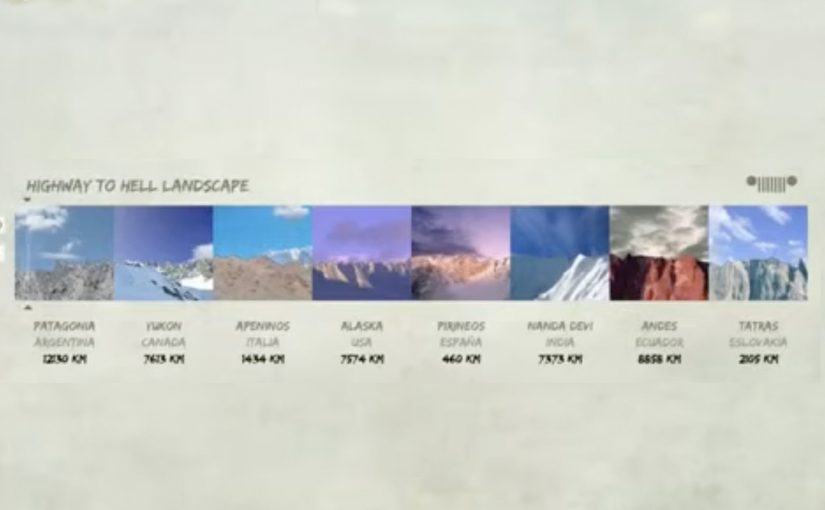
The mechanic is simple and slightly magical. The site reads the shapes of the uploaded track’s sound waves, then matches those shapes to landscape imagery that “looks like” the waveform. With an extra click, users can also discover the route to reach the destination.

In automotive brand building, turning an abstract promise like “freedom” into a playful self-portrait tool helps make exploration feel personally earned. Here, that means the user’s own taste shapes the result, so the experience feels like a reflection rather than a recommendation.

Why it lands

It replaces the usual car-site decision tree with a personal input that people already care about. Their music taste. That shifts the interaction from “find a feature” to “discover a place”, and it gives people a reason to share because the output feels like a quirky reflection of them, not an ad.

Extractable takeaway: If you want people to explore a brand experience, start from an input they feel ownership over, then return an output that looks unique enough to share without needing an incentive.

What Jeep is really buying

This is a soft test-drive nudge disguised as entertainment. The real question is how to make a brand promise about freedom feel personal before anyone even thinks about a vehicle spec sheet. The campaign gets people to imagine themselves on a specific drive with a specific soundtrack, then offers a route so the fantasy can become a plan. Even if the destination is symbolic, the journey cue is real, and that is the brand territory Jeep wants to occupy.

What to steal from Drive Your Track

  • Make the first step emotional, not technical. “Upload a song” beats “choose terrain type”.
  • Turn data into a story artifact. Waveforms become landscapes, so the output is visual and memorable.
  • Give a clear next action. A route option converts discovery into intent.
  • Design for identity sharing. If the result feels personal, distribution comes naturally.

A few fast answers before you act

What is Jeep’s “Drive Your Track”?

It is an interactive campaign where users upload a favorite song and the experience matches the track’s waveform shapes to landscapes, then offers a route to reach the suggested destination.

What is the core mechanic?

Waveform visualization and pattern matching. Your song’s sound-wave shapes are used to generate a landscape-style destination suggestion.

Why does music work as the input?

Music is identity. When the input feels personal, people stay longer, care more about the output, and are more likely to share it.

What makes this more than a novelty?

The route step. It turns a playful recommendation into a concrete next action that can lead toward an actual drive.

What is the transferable lesson for other brands?

Start with a user-owned input, return a shareable artifact, then offer one clear step that turns curiosity into intent.

AR Cinema: London Movie Scenes on iPhone

AR Cinema: London Movie Scenes on iPhone

Turn London into a living movie map

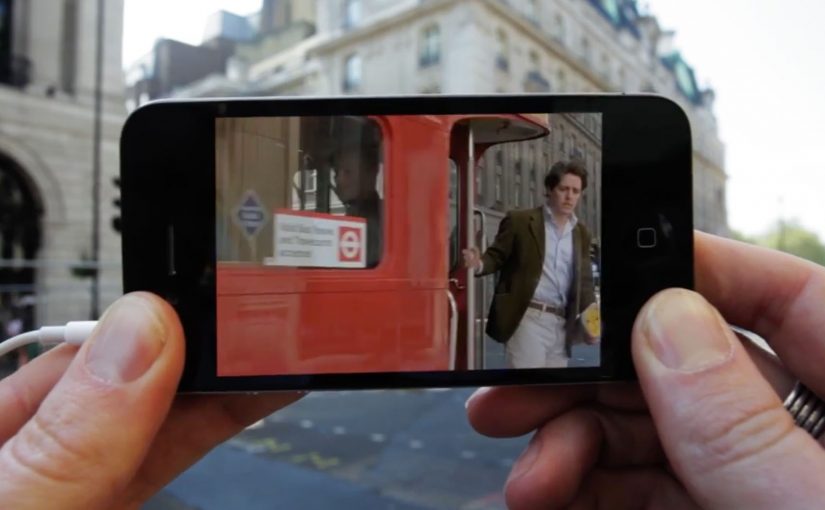
The Augmented Reality Cinema app for the iPhone allows you to walk around London and discover all the places where movies have been shot. Just point your iPhone in the direction of a sweetspot, and get a replay of the movie scene that was shot there. Here, a “sweetspot” is simply a nearby filming-location marker the app points you to.

The app is currently a work in progress prototype. But if and when it does see the light of day, I am sure it will make a great gizmo for all the movie buffs out there.

The magic is not AR. It is time travel

The clever part is the juxtaposition. You stand in the real location. Then you pull the filmed moment back into that exact space. That overlap between “here” and “then” is what makes the concept feel instantly shareable and instantly fun. The AR layer should stay secondary. The scene is the hero.

City exploration experiences land best when they turn real-world wandering into a lightweight mission with an instant payoff.

In European city tourism and cultural discovery, experiences like this work when they reward curiosity without changing how people naturally move.

The real question is whether you can make a place feel different in ten seconds, with one gesture, without breaking the walk.

Why this fits the way people explore cities

It turns wandering into a mission without forcing a route. You move naturally, and the city rewards curiosity with a scene. That is a strong mechanic for tourists and locals alike because it makes discovery feel personal.

Extractable takeaway: If your experience can turn “I am here” into “I was there” with a single action, the user will do the sharing for you.

What this prototype is really aiming for

A new kind of location-based entertainment. Part guided walk, part trivia, part nostalgia. Built around the simplest action. Point. Watch. Move on.

Steal this pattern for AR city walks

  • Real place first. Anchor the experience to real places people already want to visit.
  • One gesture unlocks payoff. Give the user one simple gesture that unlocks the payoff. Point and replay.
  • Use “before vs now” contrast. Use “before vs now” contrast as the hook. It creates emotion without heavy storytelling.

A few fast answers before you act

What does the Augmented Reality Cinema app do?

It lets you walk around London, point your iPhone toward a location “sweetspot,” and replay the movie scene filmed there.

Is the app available?

The post describes it as a work-in-progress prototype.

Who is it for?

Movie buffs and anyone who enjoys exploring film locations while walking the city.

What is the core mechanic?

Location-based discovery paired with an AR replay that overlays a movie scene onto the real place where it was shot.

Why does this feel like “time travel” rather than AR?

Because the payoff is the filmed moment mapped back onto the real location, so you experience “here” and “then” at the same time.