
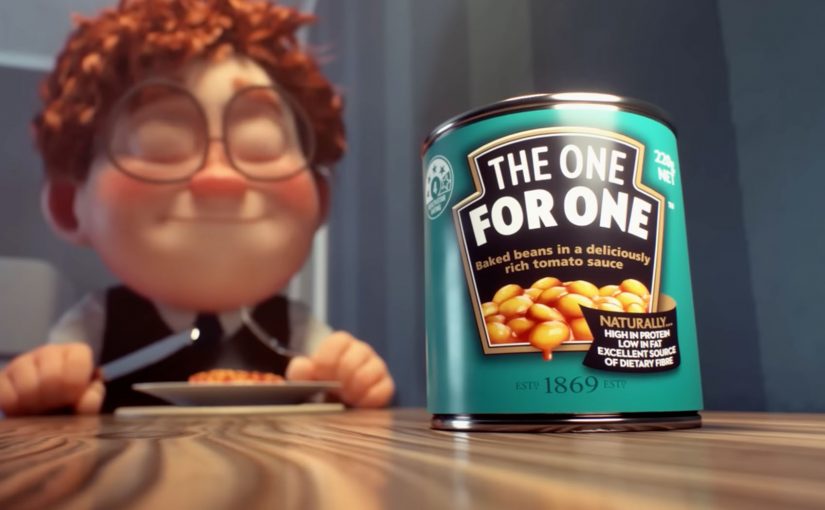
A Can Size for Every Aussie

Kraft launches four new sizes of Heinz baked bean cans with a three-minute “life narrative” film. It follows Geoff, a man addicted to beans, and his future wife, whom he meets in the spaghetti department. The story builds to the punchline. Geoff “invents” a range of can sizes that feels perfect for different Australian occasions.

The creative choice is doing a lot of work. It turns something that is normally functional and forgettable. Pack size. Into a character-driven narrative that is easy to watch and easy to remember.

The insight behind the pack strategy

In 2016, Kraft commissions consumer and shopper research to understand how Australians use Heinz beans and spaghetti. The key finding is straightforward. People want ideal can sizes that suit different occasions.

Four sizes is not “more choice” for its own sake. It is a response to a usage reality. One household does not always need the same portion format.

Why a film is the right container for a packaging story

Packaging benefits can sound like rational product copy. This film makes the point emotionally, then lands it practically.

Extractable takeaway: When the product change is useful but easy to ignore, story can turn the format logic into something people can retell.

In FMCG portfolios, format expansion only scales when shoppers can instantly see why each variant exists.

This is the right strategic move because the job is not to announce four SKUs. It is to make each size feel like an intuitive answer to a real usage moment, so the portfolio looks helpful instead of bloated.

The real question is whether the audience immediately understands why more pack formats improve everyday use.

The narrative format also solves a distribution problem. It gives the campaign a reason to be watched and shared even by people who do not currently care about can sizes.

What to steal if you are launching format variants

  • Start with a concrete usage insight, not a portfolio decision.
  • Give the variant story a memorable mental model. Here, “a can size for every occasion.”
  • Use entertainment to earn attention. Then let the product logic feel obvious, not forced.

A few fast answers before you act

What is being launched here?

Four new sizes of Heinz baked bean cans.

What insight drives the launch?

Kraft’s research shows Australians are looking for ideal can sizes to suit different occasions.

How is the launch communicated?

Through a three-minute life narrative film featuring Geoff and his future wife in the spaghetti department.

What is the core marketing technique?

Use story to make a functional packaging benefit feel human, memorable, and worth sharing.

Why not just announce the new sizes directly?

Because the film helps the audience feel the usefulness of the size range, rather than processing it as a dry packaging update.
The Gyro Monorail

It is pretty clear we are not zipping around in flying cars anytime soon. So the pressure shifts back to the ground. How do modern cities expand public transportation as populations grow?

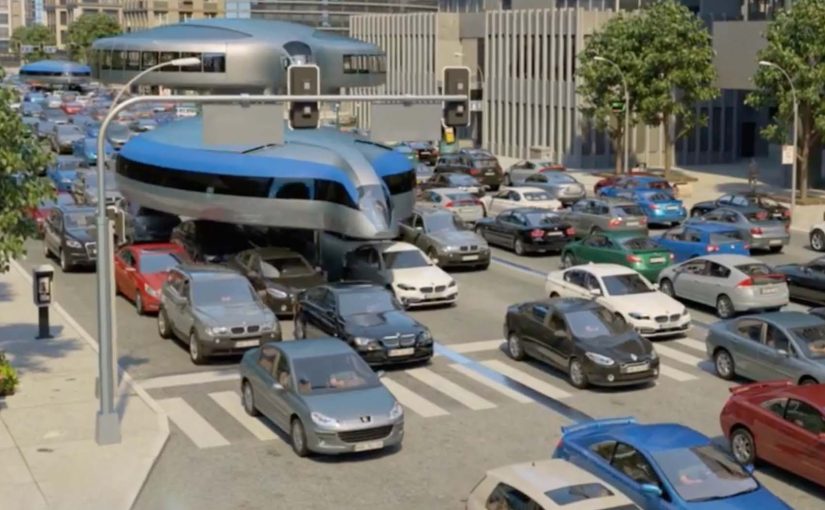
Turkish engineering firm Dahir Insaat believes it has an answer. The company and chief inventor Dahir Semenov argue that gyroscope-equipped vehicles can unlock a new approach to urban transit.

Here, a gyroscope is a spinning mass used to resist tipping, intended to keep the cabin upright on a single rail.

The real question is whether cities can add transit capacity without widening corridors.

What makes the “gyro monorail” idea compelling

A monorail is inherently space-efficient, but stability and ride confidence are always part of the mental model people have of “single rail” transport.

The promise of gyroscope stabilisation in this concept is straightforward. It aims to make a monorail-style vehicle feel stable and controllable even in compact, constrained city environments. If the gyro can keep the cabin level, the ride feels predictable, which is what earns trust for single-rail transport.

In dense, right-of-way-constrained cities, concepts like this live or die on throughput per meter of corridor.

Why this shows up now in future-transport thinking

When a city cannot easily add lanes or widen corridors, transport concepts often converge on two goals.

Extractable takeaway: When space is the constraint, the winning transport idea is the one that increases people moved without asking for more corridor.

  • Use less right-of-way per passenger moved.
  • Increase capacity without building entirely new infrastructure.

A gyro-based mono-track vehicle concept is attractive because it implies a narrower footprint than conventional rail while still signalling “mass transit,” not “one more car.”

Pressure-tests to steal before you buy the hype

The difference between an inspiring transport concept and a deployable system is usually not the visual design. It is the operating model.

This is an intriguing visualization, but without a credible safety case and maintenance model it remains a concept, not a plan.

  • Safety case and redundancy. What happens under failure modes.
  • Maintenance reality. Sensors, moving parts, calibration, and uptime.
  • Network integration. Stations, boarding flow, accessibility, evacuation.
  • Total cost per passenger-km. The number that decides scale.

A few fast answers before you act

What is “The Gyro Monorail” in this post?

A future-transport concept from Turkish engineering firm Dahir Insaat and inventor Dahir Semenov, centred on gyroscope-equipped vehicles.

What problem is it trying to address?

It addresses how modern cities expand public transportation as populations grow, without relying on flying-car fantasies.

What is the core proposal?

Use gyroscope-equipped vehicles as a proposed answer for future public transportation.

What should leaders pressure-test first?

Safety and redundancy. Maintenance and uptime. Integration into stations and operations. Total cost at scale.

The Moby Mart

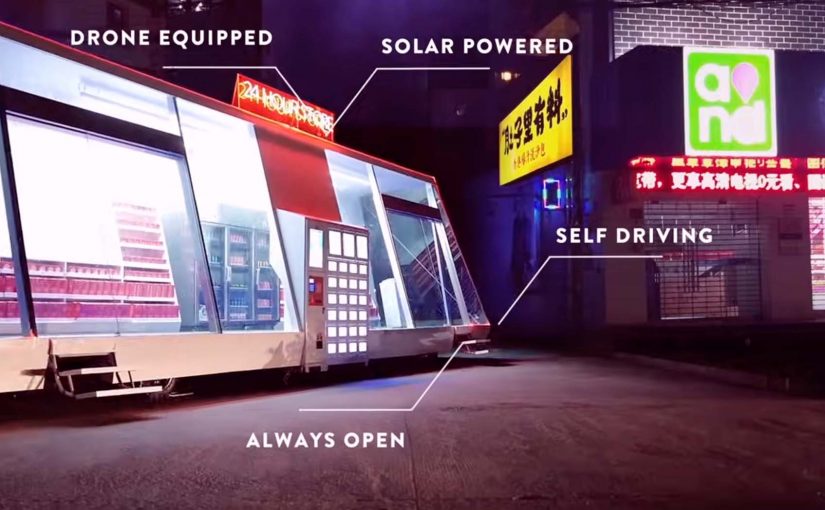
Every parking space becomes a 24-hour store. The Moby Mart is designed to turn ordinary parking spots into always-on retail. Roughly the size of a small bus, it carries everyday products such as snacks, meals, basic groceries, and even shoes. To use it, you download an app, register as a customer, and use your smartphone to unlock the doors. Here, “always-on” means open around the clock without staff on site.

The idea is in trial mode. The store is undergoing trials in Shanghai through a collaboration between Swedish startup Wheelys Inc and China’s Hefei University. For now, the trial prototype is stationary, based permanently in a car park. But the company says it is working with technology partners to develop the self-driving capability, as shown in the video.

The mechanism behind the parking-space store

The mechanism is app-gated access plus self-service. Entry, selection, payment, exit. When that first unlock step feels safe and effortless, an unattended unit starts to feel like normal retail, not a gimmick.

In urban convenience retail, reducing the distance and time between intent and purchase is often the real differentiator.

The real question is whether you can move retail to the moment of demand without breaking trust, support, and replenishment.

If the access and “this worked” confirmation are not rock-solid, mobility and novelty will not save the experience.

What this concept makes tangible

This lands because it reframes “location” as something you can deploy and operate, not just something you lease and staff. The store becomes infrastructure, and the app becomes the front door.

Extractable takeaway: When you make access the first experience, trust and operations become part of the product, not back-office details.

Retail flips from “go to store” to “store comes to you”

The provocation is simple. If the unit can be deployed anywhere, then proximity becomes a variable you can design, not a constraint you accept.

Friction reduction becomes the product

The app unlock and self-service flow compresses the journey. Entry, selection, payment, exit. Less waiting, less staffing, less handoff.

Mobility creates new placement logic

A store on wheels changes what “location strategy” means. Instead of long-term leases, the unit can be positioned where demand spikes, or where fixed retail is uneconomical.

What to copy from Moby Mart

  • Start with a familiar format. People immediately understand a convenience store. That lowers cognitive load.
  • Make access the first experience. App unlock is the “moment of truth.” If that step is seamless, everything downstream feels modern.
  • Design for unattended trust. Clear rules, clear prompts, and a clear “this worked” confirmation prevent anxiety in a staffless space.
  • Prototype the operating model early. Mobility, restocking, and support are not secondary. They are the offering.

A few fast answers before you act

What is the Moby Mart?

A bus-sized, staffless, mobile convenience store concept that aims to turn parking spaces into 24-hour retail, accessed via a smartphone app.

How do customers use it?

They download an app, register, and unlock the doors with their phone to shop inside.

Where is it being tested?

It is undergoing trials in Shanghai through a collaboration between Wheelys Inc and China’s Hefei University.

Is it already self-driving?

The trial prototype is stationary in a car park. The company says it is working with partners on self-driving capability.

What is the core lesson for marketers and innovators?

Move the experience to the moment and place of demand. Then design the access, trust, and operations as the real product.