
Kaiak: The Online Banner You Could Smell

Kaiak: The Online Banner You Could Smell

A banner that refuses to stay “just digital”

Everyone loves cool ad executions, but some are clearly advertising for advertising people. This one shows up at exactly the right time. Award-show season.

The work comes out of Brazil for Kaiak, Natura’s men’s fragrance. Kaiak has been reformulated, and the brief is simple but brutal. How do you sell a new scent online when the one thing people want to do is smell it?

Click the banner. Get the scent.

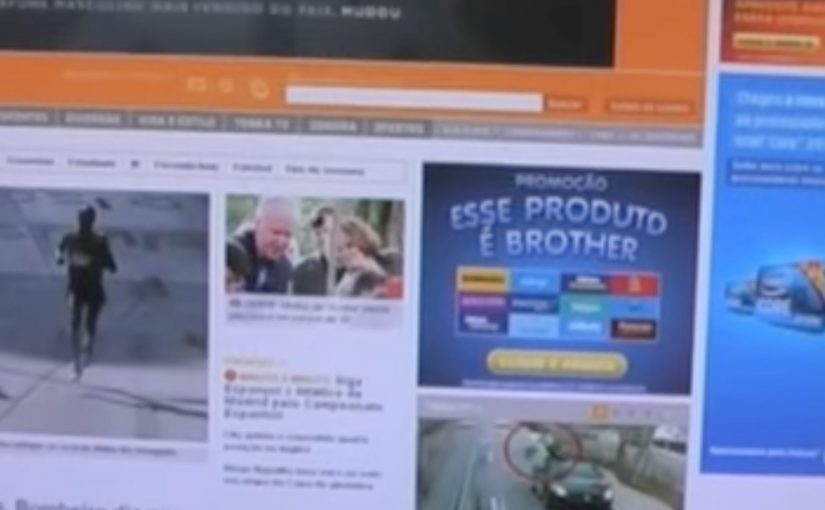
ID/TBWA solves it by building the missing sense into the media placement itself. Custom hardware is attached to computers in lan houses (cyber cafés) across Brazil. A special banner appears on the browser start page and reads, “The best selling men’s fragrance in the country just changed. Want to try it? Click this banner. It’s scented.”

When someone clicks, a scented strip physically emerges from the attached device. The digital impression turns into a real sample in the moment where “try” normally breaks down online.

In Brazilian urban markets where lan houses function as high-traffic digital hubs, turning a cyber café PC into a sampling machine creates mass trial without needing retail testers.

Why it lands: the medium becomes the product experience

The reason it works is not novelty alone. It removes the biggest barrier in fragrance e-commerce. Confidence. The real question is how you create purchase confidence for a sensory product when the screen cannot deliver the sensation. By turning the click into immediate sampling, the campaign makes the claim verifiable in the moment of intent, which is why it converts curiosity into trial. For sensory categories, the best digital work engineers a real trial moment, even if that means adding physical infrastructure. The click is not a promise. It is the delivery mechanism.

Extractable takeaway: If a product’s value depends on a sense the screen cannot deliver, redesign the media so “try” happens at the click, not after it.

The business intent: accelerate trial for a reformulated bestseller

This is a trial engine dressed as a banner. The goal is to reduce hesitation around change, create fresh talk value around “it’s different now”, and push people toward purchase with a sensory proof point that normal digital formats cannot provide.

How to make digital do something physical

  • Identify the missing sense. If the product relies on touch, smell, or taste, do not pretend pixels can replace it.
  • Build a credible “try now” moment. Sampling only works when the action and the reward are tightly coupled.
  • Choose distribution points with dwell time. Cyber cafés, waiting rooms, and shared devices can behave like miniature retail networks.
  • Keep the instruction brutally simple. The banner copy does not explain the tech. It explains the outcome.

A few fast answers before you act

What is the “scented banner” for Kaiak?

An online banner placed on cyber café computers that dispenses a physical scented strip when the viewer clicks, enabled by custom hardware attached to the PC.

Why build hardware for a banner campaign?

Because fragrance requires sampling. The hardware turns a digital click into immediate product trial, removing the biggest barrier to buying scent online.

What is the core mechanism?

“Try now” is built into the media unit. The banner instruction is simple, and the click triggers a physical delivery moment that proves the claim.

What does this teach about selling “sensory” products digitally?

If touch, smell, or taste drives purchase confidence, you need a credible bridge to real-world experience, not just better copy or imagery.

What is the most transferable takeaway?

Identify the missing sense, then engineer a sampling moment where action and reward are tightly coupled and instantly legible.
QR Codes: Travel Back in Time to Graffiti

QR Codes: Travel Back in Time to Graffiti

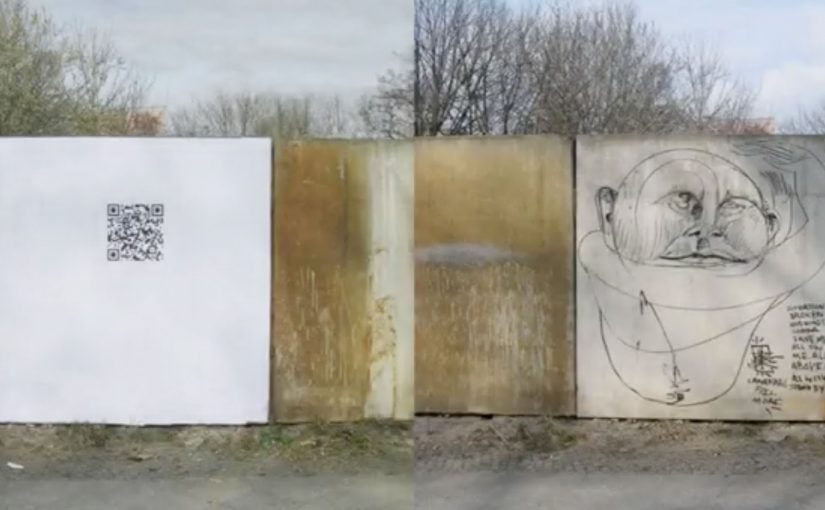
QR Codes are now being used to preserve graffiti for posterity by photographing the graffiti before it is removed. After the graffiti has been cleaned off by local authorities or a building owner, a QR Code is placed in the exact location which leads to the original image of the graffiti. In this way, a mobile phone with a QR-Code Reader can be used to travel back in time. Here, “time travel” means scanning a code on a cleaned wall to see the photo of what used to exist there.

How the “time travel” mechanism works

The system is straightforward: capture the artwork while it exists, then replace the physical mark with a digital pointer after it disappears. The QR code becomes a permanent address for a temporary piece. Because the code stays put while the paint does not, the link between place and memory survives removal.

In cities where street art is constantly overwritten, cleaned, or redeveloped, lightweight digital markers can preserve cultural memory without freezing the city in place.

The real question is whether you want to erase the mark, or keep a findable trace of it in the same place.

This is the right preservation trade-off: let surfaces change, but keep the memory retrievable where it mattered.

Why it lands

It respects ephemerality instead of fighting it. Graffiti stays transient, but its trace stays findable.

Extractable takeaway: Preservation becomes compelling when it is tied to a precise location and low-friction. If people can access “what used to be here” in the exact place they are standing, the archive feels like part of the city rather than a separate museum.

It puts the archive back on the street. The documentation is not hidden in a database. It is anchored to the exact wall where the work lived.

It makes discovery participatory. You have to scan, which turns the passer-by into an active retriever of the past, not just a viewer.

Borrowable moves for place-linked archives

  • Anchor digital content to a precise physical spot. Place is the interface, not just the backdrop.
  • Design for “after removal”. If the thing you love will disappear, make the replacement object carry the memory.
  • Keep the interaction simple. A scan is a smaller ask than an app download or a long URL.

A few fast answers before you act

What problem does this solve?

It preserves the visual record of graffiti that is likely to be removed, while still letting the city clean or repaint surfaces.

Why use QR codes instead of a normal plaque or sign?

A QR code can point to a photo archive and scale cheaply. It also keeps the physical footprint small.

What makes this feel like “traveling back in time”?

You stand in the present at a cleaned wall, scan the code, and instantly see what used to exist in that exact location.

What are the key dependencies for this to work long-term?

The linked image hosting must stay live, and the code must remain readable and not be removed or damaged.

How could a city or brand adapt the idea?

Use location-linked markers to preserve temporary culture. Murals, pop-up installations, event posters, even construction hoardings, while keeping the interaction one-step simple.

Stephen Wiltshire: Human Camera Over Rome

Stephen Wiltshire: Human Camera Over Rome

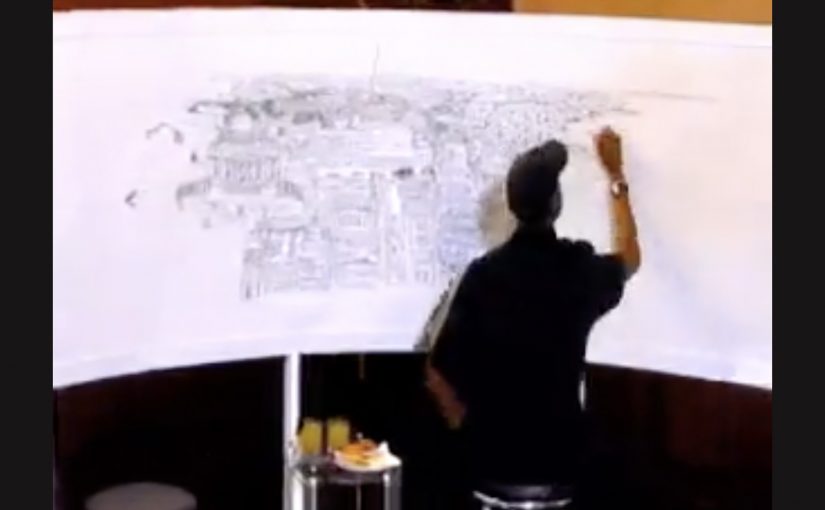
Stephen Wiltshire from London has been called the “Human Camera”. Here, “Human Camera” means the ability to retain and reconstruct a complex visual scene from memory with unusual precision. In this short excerpt, he takes a helicopter journey over Rome and then draws a panoramic view of what he saw, entirely from memory.

One flight, then a full panorama

The mechanic is simple and almost unbelievable. A brief aerial look at a city. Then a long, quiet reconstruction on paper, with landmarks, streets, and proportions held in his head rather than referenced from photos.

In global media and creativity culture, clips like this work because they show skill as proof, not as a claim.

The real question is why this setup makes the proof feel so undeniable.

Why it lands

It compresses something we usually outsource to cameras into a single human performance. The helicopter ride sets a hard constraint, and the drawing becomes the payoff. This is a stronger proof format than a simple claim of talent, because the audience can watch the capability being earned under pressure.

Extractable takeaway: When you want an audience to believe a capability, show the constraint first and the proof second. The tighter the constraint, the more convincing the proof feels.

What to steal for creative work

  • Lead with the constraint. The “how” is what makes the “wow” credible.
  • Make the process visible. Progress shots and time-lapse style excerpts turn craft into narrative.
  • Let detail do the selling. Specificity beats hype, especially in talent stories.

A few fast answers before you act

What is the core of this excerpt?

A short flight over Rome followed by a panoramic drawing created from memory, framed as a demonstration of exceptional recall and draftsmanship.

Why is the “Human Camera” label so sticky?

Because it gives people a shortcut for the ability they are seeing. It translates an abstract skill, visual memory, into a familiar metaphor.

What makes proof clips like this shareable?

The setup is instantly explainable, and the payoff is visual. Viewers can share it without adding context and the clip still lands.

How would you apply this structure to a brand story?

Show one clear constraint, then demonstrate the capability under that constraint. Keep the proof concrete and easy to verify on-screen.

What should creative teams borrow from this setup?

Borrow the sequence, not the spectacle. Put the limitation up front, make the process visible, and let the final proof resolve the tension.