When a bite turns into a “sighting”
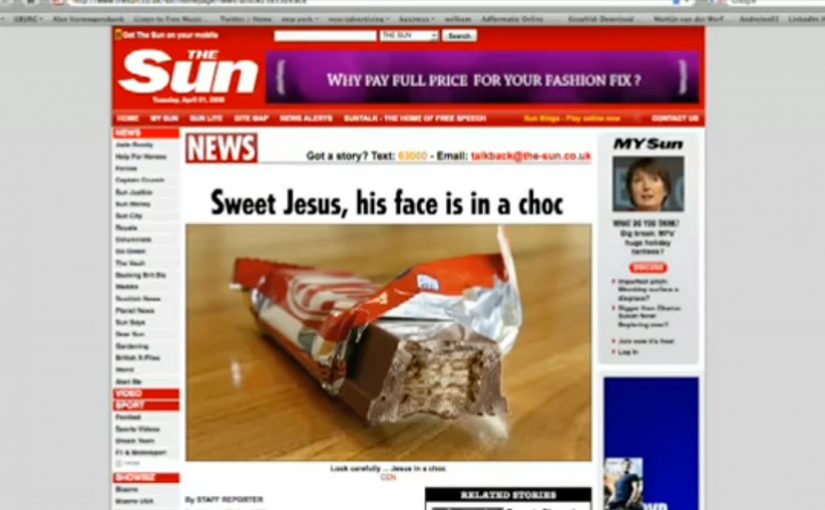
Every so often the internet latches onto a “miracle” story. This one starts with a simple, everyday moment. Someone takes a bite of a Kit Kat, and suddenly the bite pattern is framed as a face. Cue the inevitable question. Is it real, or is it just our brains doing what they always do with patterns?
Either way, the punchline lands immediately because the brand line is already waiting for it. Jesus loves Kit Kat. Have a break. Have a Kit Kat.
The stunt behind the headline
The mechanism is a simple one. Take a familiar cultural pattern. The “miraculous sighting” story. Then attach it to an everyday object and let curiosity do the distribution work.
In European FMCG marketing, low-budget PR seeding, meaning you plant the story with a few publishers to trigger pickup, can outperform paid media when the story is easy to retell and the brand cue, the unmistakable product signal inside the joke, is inescapable.
In this case, the campaign is described as being kick-started by sending a tip to major Dutch news sites about a “Jesus face” discovered in a bitten Kit Kat, complete with “proof” photos. Once the story lands, the audience spreads it for free, partly to react, partly to mock, and partly to forward the joke. That works because the audience is invited to judge the “realness” and repeat the brand line while they do it.
Why it lands: the audience writes the punchline
It works because the viewer instantly knows what to do with it. “Is it real” is the hook. “Obviously not” is the release. Then the slogan becomes the comment section fuel, because “Have a break” and “Give me a break” are ready-made responses that keep repeating the brand.
Extractable takeaway: If you use a familiar “sighting” format, design the sharing loop so people repeat the brand line as they debate whether it is “real”.
What the brand is really buying
The real question is whether the stunt forces a repeatable brand line, not whether anyone believes the “sighting”.
This is not persuasion. It is memory and talk value, meaning the worth of being talked about. The goal is to force a moment of attention in a low-involvement category, then lock the attention to a slogan people already know well enough to quote without effort.
Steal the “sighting” shape for earned reach
- Use a story shape people already recognise. Familiar formats travel faster than “new idea” explanations.
- Make the brand cue inseparable from the joke. If the gag works without the product, you are funding entertainment, not brand recall.
- Design for repeatable phrasing. The best hooks come with a built-in line people will type in their own words.
- Know the risk. Hoax-style PR, where you let people briefly wonder if it is real, can backfire if your category depends on trust, seriousness, or institutional credibility.
A few fast answers before you act
What is happening in “Jesus Loves Kit Kat”?
A playful “sighting” style story frames a bitten Kit Kat as if it reveals a face, and the curiosity and debate around it drives sharing.
What is the core mechanism?
PR seeding plus a familiar meme-like story format. People click to judge it, then share to react, mock, or pass along the joke.
Why does this kind of story travel fast?
Because it is easy to retell and invites opinion. The audience becomes the distributor by arguing about whether it is “real”.
What is the brand risk to watch?
Hoax-style hooks can backfire in categories where trust and seriousness matter. The technique needs category-fit and tone discipline.
What is the most transferable takeaway?
If you use a cultural format people already recognise, make sure the brand cue is inseparable from the punchline, otherwise the joke outlives the brand.