
Metro Trains Melbourne: Dumb Ways to Die

Metro Trains Melbourne: Dumb Ways to Die

Accident rates on the Melbourne Metro were rising due to an increase in risky behavior around trains, and a rail safety message was the last thing people wanted to hear.

So McCann Melbourne turned the message people needed to hear into a message people wanted to hear, by embedding it into a song and an accompanying music video. Dumb Ways to Die.

Entertainment-first safety communication

The mechanism is a deliberate format swap. Replace shock tactics and lecturing with an original song, a playful animated world, and a chorus that makes the safety points memorable enough to repeat.

In large urban public-transport systems, the most effective safety communication often feels like entertainment first, with the message carried by repetition and recall rather than warning language.

Why it lands

It works because it respects audience resistance instead of fighting it. The real question is how you make a safety message travel when the audience does not want to hear a safety message at all. For resistant audiences, entertainment-first is the stronger safety strategy because it earns voluntary attention before it asks for behavior change. People who tune out safety ads will still watch and share a catchy video, and the refrain makes the cautionary points stick through rhythm and humor. The legacy write-up reports that the campaign quickly moved beyond advertising into social currency, with very high sharing in its first month.

Extractable takeaway: When your audience actively avoids the topic, make the format shareable enough that people choose to spread it for the entertainment value, then let repetition do the behavior-change work.

The proof of spread

By using entertainment rather than shock tactics, the message is described as transcending advertising to become something people shared. Here is the case video.

What safety communicators can borrow

  • Start with a format people opt into. If attention is the barrier, do not begin with a PSA tone.
  • Write for recall. A chorus and simple phrasing can outperform “important information” copy.
  • Build a visual system. Distinct characters and repeatable scenes make the idea remixable and memorable.
  • Package the case story separately. A dedicated case video helps the idea travel in marketing circles without diluting the original film.

A few fast answers before you act

What is Dumb Ways to Die?

A rail-safety campaign for Metro Trains Melbourne that delivers the safety message through a catchy song and animated music video instead of traditional PSA warnings.

Why use humor for a serious safety topic?

Because the target audience resists conventional safety messaging. A humorous, musical format earns voluntary attention and repeat viewing, which increases recall.

What made it spread so widely?

A simple hook, a memorable chorus, and highly shareable animation that people could pass along as entertainment, with the safety message embedded inside.

What is the case video for?

It explains the strategy and rollout behind the campaign, and it packages results and rationale for marketers and stakeholders.

What is the main risk with “entertainment-first” safety work?

If the humor overwhelms the behavioral point, the audience remembers the joke but not the safety action you want them to change.
Virgin Atlantic: No Ordinary Park Bench

Virgin Atlantic: No Ordinary Park Bench

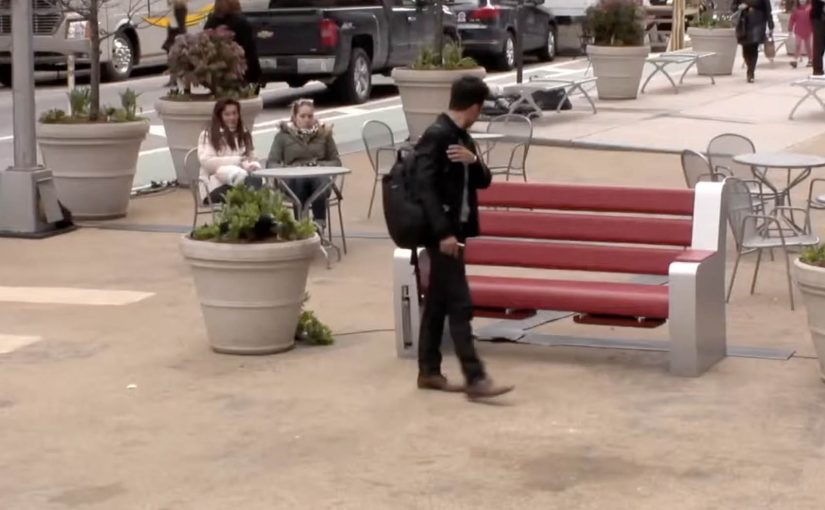
Virgin Atlantic wanted to give the people of New York a taste of their onboard services. So with the help of Y&R New York they took over an ordinary bench and gave unsuspecting park-goers an unforgettable Virgin Atlantic experience.

How an “ordinary” bench becomes an airline product demo

The mechanism is a simple swap. Take a familiar public object. Upgrade it with unmistakable “premium” cues. Then add a layer of surprise service so the bench behaves less like street furniture and more like a seat with hospitality. The passersby reaction becomes the content, and the content carries the brand promise further than a static poster ever could.

In premium service brands, the fastest route to belief is letting people experience the service promise before they ever buy.

Why it lands

This works because it compresses a complex claim, “we make flying feel special”, into a single, legible moment in the real world. You do not need a fare sale, a cabin diagram, or a spec sheet. You just need the contrast of ordinary versus treated-like-a-guest.

Extractable takeaway: When your differentiation is a feeling, stage a public, bite-sized version of that feeling. Make it easy to understand in one glance and easy to retell in one sentence.

What the stunt is really doing for the brand

It turns an intangible benefit, service, into something tangible and shareable. The real question is how you make an intangible service promise feel credible before purchase. The bench is not the point. The point is credibility by demonstration. It is a live proof point that “Virgin Atlantic service” is a thing you can recognize, even on the ground.

What premium service brands can borrow

  • Choose a familiar object: the more ordinary the baseline, the stronger the contrast when you upgrade it.
  • Make the promise physical: show the service, do not describe it.
  • Design for bystanders: build a moment that attracts a crowd without requiring explanation.
  • Keep the story clean: one setup, one surprise, one payoff.
  • Capture reactions: human responses are the most efficient proof of “this is different”.

A few fast answers before you act

What is the “No Ordinary Park Bench” idea?

It is a Virgin Atlantic street activation where an ordinary park bench is transformed into a branded service moment, giving park-goers a taste of the airline’s onboard experience.

Why use a bench instead of a pop-up booth?

A bench is instantly understood and frictionless. People sit without committing to “an activation”, which makes the surprise feel more genuine and the reactions more watchable.

What makes this effective for premium brands?

Premium is hard to prove with claims alone. A live demonstration makes the promise tangible, and it gives people a story to repeat.

What is the core pattern to reuse?

Pick one everyday touchpoint, upgrade it dramatically, and deliver the brand benefit in a way people can feel immediately.

What is the biggest risk with this format?

If the experience feels staged, intrusive, or confusing, the audience will not lean in. The best versions are simple, respectful, and clearly additive to the public space.

Sky Go: The Talking Window

Sky Go: The Talking Window

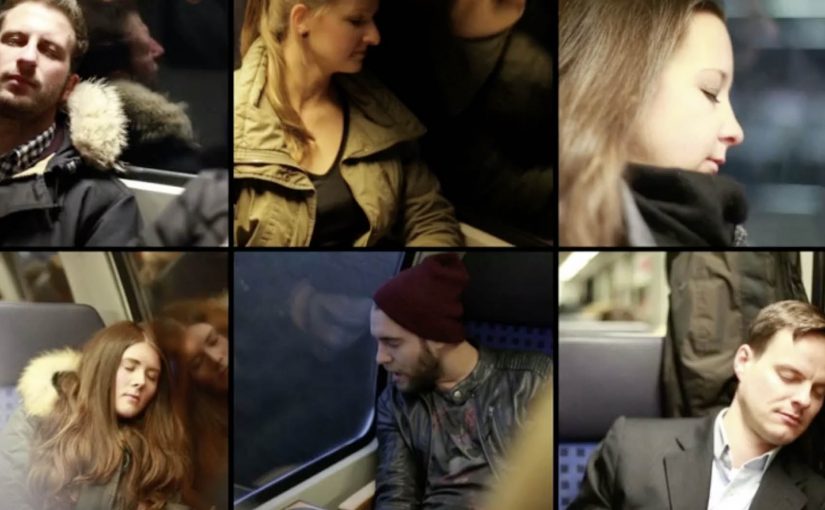
Train passengers who get bored during travel often lean their head against the window. Sky Go uses that exact micro-moment as an attention trigger, without asking anyone to look up from their seat.

BBDO Germany, together with Audiva, a bone conduction specialist, developed a small transmitter that attaches to the train window and delivers an audio message in a way that feels oddly personal. Bone conduction means transmitting sound to the inner ear through skull vibrations rather than through the air into the ear canal.

How the window “talks”

The transmitter emits an inaudible, high-frequency vibration through the glass. When a passenger rests their head against the window, those vibrations travel through the bones of the skull to the inner ear. The brain interprets the vibration as sound, so the person leaning on the window hears the message while nearby passengers hear nothing.

Bone conduction is the conduction of sound to the inner ear through skull vibrations, rather than through the air into the ear canal.

In public transport advertising, tying a message to a predictable body posture can create “only I can hear this” intimacy without turning the whole carriage into noise.

Why this lands

This works because it is activated by a natural behavior, not by a request. There is no screen to seek, no QR code to scan, no app to open in the moment. The novelty is also self-explaining. The passenger experiences the medium first, then understands the message.

Extractable takeaway: If you want attention in a distraction-heavy environment, design an opt-in trigger that happens through normal movement, and deliver the payload as a private experience rather than a public interruption.

What the campaign is really testing

The real question is where clever intimacy stops and intrusion starts in ambient media.

This format is strongest when the trigger feels voluntary and the message stays restrained. It is not audio quality being tested as much as tolerance. This kind of “whisper only to you” media explores how far ambient advertising can go before it feels intrusive, and where the line sits between clever targeting and unwanted interruption.

What ambient media can borrow from this

  • Exploit a reliable posture. Build around something people already do on autopilot.
  • Make the medium the headline. A new delivery mechanism earns attention before the message even lands.
  • Keep it private. Personal sound beats shared noise in confined public spaces.
  • Design for instant comprehension. If someone needs an explainer to “get it,” the ambient magic collapses.

A few fast answers before you act

What is the Sky Go “Talking Window”?

It is a train-window activation that delivers an audio message only to people who lean their head against the glass, using bone conduction vibration.

Why can only one person hear it?

The sound is carried through the glass and into the listener’s skull when they make contact. People not touching the window do not receive the vibration path.

Is this facial recognition or tracking?

No. The described trigger is physical contact with the window, not identity detection.

What is bone conduction in plain terms?

It is hearing sound through skull vibrations, where the vibration reaches the inner ear without traveling through the air into the ear canal.

What is the main risk of this format?

If it startles people or feels unavoidable, it can be perceived as invasive. The creative and frequency need restraint.