
Time Out Shanghai: The Stolen Phone Tour

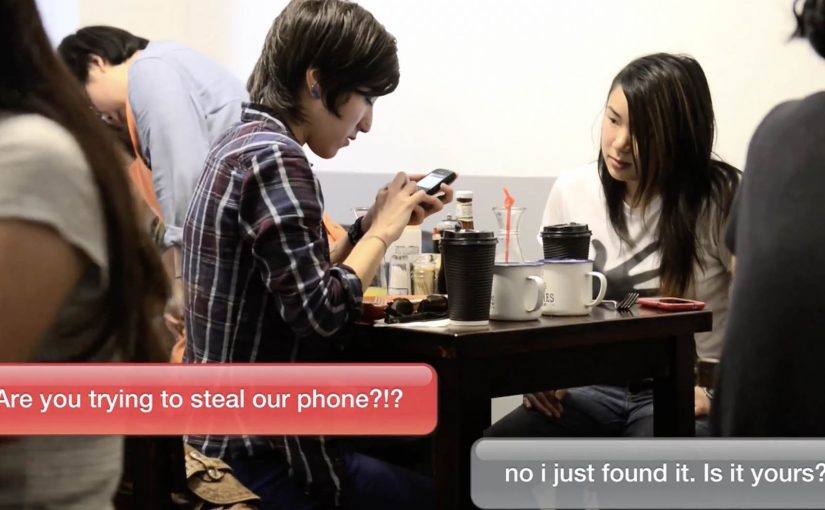
A phone lies abandoned on a Shanghai street. Someone eventually picks it up. Seconds later, the device starts talking back through text messages.

Time Out Shanghai uses that setup to promote its city guide with a stunt built with Energy BBDO Shanghai. The magazine purposely “loses” a phone at random. The moment a passerby takes it, the phone instructs them to “return” it by getting into a London taxi that pulls up right where they are. From there, the finder is driven across the city to a sequence of unexpected stops, guided only by messages on the phone, and captured through hidden cameras.

A guide that proves itself, one pickup at a time

The mechanic mirrors the product promise. Time Out Shanghai claims it digs deeper than obvious tourist checklists. So the campaign turns “discover hidden gems” into a lived tour, with the London cab acting as a moving stage and the phone acting as the guide. Reported write-ups describe stops that range from small local joints to high-concept dining and landmark nightlife, all chosen to signal insider curation rather than generic attraction lists. Here, insider curation means places that feel locally known rather than obviously tourist-facing. Because the participant experiences the recommendations in sequence instead of reading about them, the guide’s editorial promise feels proven rather than claimed.

In global city marketing and publishing, the fastest way to make “insider knowledge” believable is to demonstrate it as a guided experience, not explain it as editorial positioning.

Why the taxi twist works

The stunt manufactures a story that people want to finish. First curiosity, why is the phone messaging me. Then escalation, why is a London taxi here in Shanghai. Then payoff, the city reveals itself through a sequence of places the participant did not plan. The London cab is not just a visual gag. It is a nod to Time Out’s roots and a clear brand signature that makes the footage instantly recognizable.

Extractable takeaway: If your product claim is “we help you discover what you would miss,” build a live proof where the user stumbles into the benefit, then structure the journey so each step reinforces the claim without additional explanation.

What Time Out is really selling

This is less about a single guide edition and more about trust in curation. The real question is whether a city guide can make its curation feel trustworthy before anyone opens an issue. The campaign frames Time Out as an honest, street-level editor. Someone who can take you from random street corner to a surprising itinerary, and do it with confidence. That trust is what makes a city guide worth paying attention to in a market flooded with lists.

What brand-led city guides can copy

  • Turn your promise into a route. A sequence of experiences is more persuasive than a headline claim.
  • Use one unmistakable brand asset. The London cab functions as a moving logo without feeling like a logo.
  • Let the audience be the protagonist. The finder’s reactions do the selling more credibly than narration.
  • Design for retellability. “They lost a phone, then a cab picked you up” is a one-sentence hook that travels.

A few fast answers before you act

What is “The Stolen Phone Tour”?

A Time Out Shanghai stunt where a purposely “lost” phone guides the person who picks it up into a London taxi and across a curated set of city stops, filmed via hidden cameras.

Why use a phone as the guide mechanic?

Because it matches real behavior. People already rely on phones to navigate cities. The campaign turns that habit into a story engine that delivers location-by-location discovery.

What does the London taxi add beyond novelty?

It provides a distinctive brand signature and a clear narrative device. A taxi arriving to “retrieve” the phone is an immediate escalation that keeps the participant moving.

What is the biggest risk with a stunt like this?

Participant trust and safety. The experience must feel surprising but not threatening, and the instructions must keep the participant in control at every step.

When is this approach a good fit?

When your value is curation, expertise, or access. If you can demonstrate the benefit as a guided sequence, you can replace skepticism with lived proof.

Metro Trains Melbourne: Dumb Ways to Die

Accident rates on the Melbourne Metro were rising due to an increase in risky behavior around trains, and a rail safety message was the last thing people wanted to hear.

So McCann Melbourne turned the message people needed to hear into a message people wanted to hear, by embedding it into a song and an accompanying music video. Dumb Ways to Die.

Entertainment-first safety communication

The mechanism is a deliberate format swap. Replace shock tactics and lecturing with an original song, a playful animated world, and a chorus that makes the safety points memorable enough to repeat.

In large urban public-transport systems, the most effective safety communication often feels like entertainment first, with the message carried by repetition and recall rather than warning language.

Why it lands

It works because it respects audience resistance instead of fighting it. The real question is how you make a safety message travel when the audience does not want to hear a safety message at all. For resistant audiences, entertainment-first is the stronger safety strategy because it earns voluntary attention before it asks for behavior change. People who tune out safety ads will still watch and share a catchy video, and the refrain makes the cautionary points stick through rhythm and humor. The legacy write-up reports that the campaign quickly moved beyond advertising into social currency, with very high sharing in its first month.

Extractable takeaway: When your audience actively avoids the topic, make the format shareable enough that people choose to spread it for the entertainment value, then let repetition do the behavior-change work.

The proof of spread

By using entertainment rather than shock tactics, the message is described as transcending advertising to become something people shared. Here is the case video.

What safety communicators can borrow

  • Start with a format people opt into. If attention is the barrier, do not begin with a PSA tone.
  • Write for recall. A chorus and simple phrasing can outperform “important information” copy.
  • Build a visual system. Distinct characters and repeatable scenes make the idea remixable and memorable.
  • Package the case story separately. A dedicated case video helps the idea travel in marketing circles without diluting the original film.

A few fast answers before you act

What is Dumb Ways to Die?

A rail-safety campaign for Metro Trains Melbourne that delivers the safety message through a catchy song and animated music video instead of traditional PSA warnings.

Why use humor for a serious safety topic?

Because the target audience resists conventional safety messaging. A humorous, musical format earns voluntary attention and repeat viewing, which increases recall.

What made it spread so widely?

A simple hook, a memorable chorus, and highly shareable animation that people could pass along as entertainment, with the safety message embedded inside.

What is the case video for?

It explains the strategy and rollout behind the campaign, and it packages results and rationale for marketers and stakeholders.

What is the main risk with “entertainment-first” safety work?

If the humor overwhelms the behavioral point, the audience remembers the joke but not the safety action you want them to change.

Virgin Atlantic: No Ordinary Park Bench

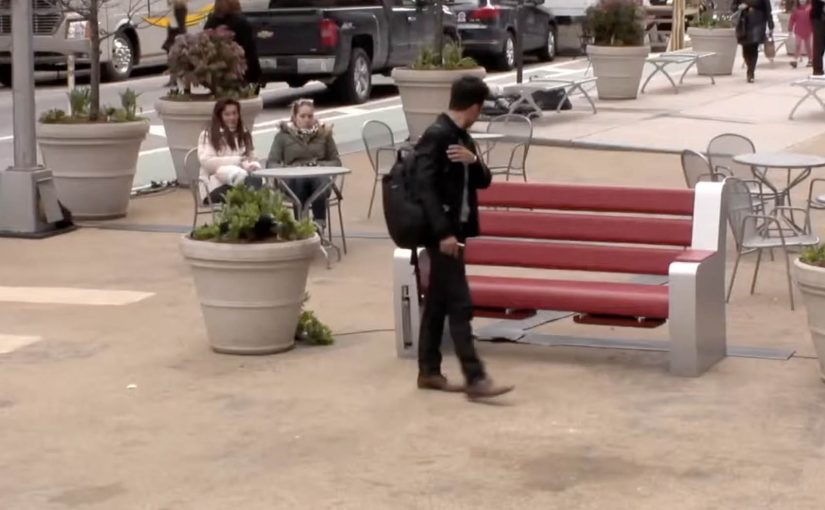
Virgin Atlantic wanted to give the people of New York a taste of their onboard services. So with the help of Y&R New York they took over an ordinary bench and gave unsuspecting park-goers an unforgettable Virgin Atlantic experience.

How an “ordinary” bench becomes an airline product demo

The mechanism is a simple swap. Take a familiar public object. Upgrade it with unmistakable “premium” cues. Then add a layer of surprise service so the bench behaves less like street furniture and more like a seat with hospitality. The passersby reaction becomes the content, and the content carries the brand promise further than a static poster ever could.

In premium service brands, the fastest route to belief is letting people experience the service promise before they ever buy.

Why it lands

This works because it compresses a complex claim, “we make flying feel special”, into a single, legible moment in the real world. You do not need a fare sale, a cabin diagram, or a spec sheet. You just need the contrast of ordinary versus treated-like-a-guest.

Extractable takeaway: When your differentiation is a feeling, stage a public, bite-sized version of that feeling. Make it easy to understand in one glance and easy to retell in one sentence.

What the stunt is really doing for the brand

It turns an intangible benefit, service, into something tangible and shareable. The real question is how you make an intangible service promise feel credible before purchase. The bench is not the point. The point is credibility by demonstration. It is a live proof point that “Virgin Atlantic service” is a thing you can recognize, even on the ground.

What premium service brands can borrow

  • Choose a familiar object: the more ordinary the baseline, the stronger the contrast when you upgrade it.
  • Make the promise physical: show the service, do not describe it.
  • Design for bystanders: build a moment that attracts a crowd without requiring explanation.
  • Keep the story clean: one setup, one surprise, one payoff.
  • Capture reactions: human responses are the most efficient proof of “this is different”.

A few fast answers before you act

What is the “No Ordinary Park Bench” idea?

It is a Virgin Atlantic street activation where an ordinary park bench is transformed into a branded service moment, giving park-goers a taste of the airline’s onboard experience.

Why use a bench instead of a pop-up booth?

A bench is instantly understood and frictionless. People sit without committing to “an activation”, which makes the surprise feel more genuine and the reactions more watchable.

What makes this effective for premium brands?

Premium is hard to prove with claims alone. A live demonstration makes the promise tangible, and it gives people a story to repeat.

What is the core pattern to reuse?

Pick one everyday touchpoint, upgrade it dramatically, and deliver the brand benefit in a way people can feel immediately.

What is the biggest risk with this format?

If the experience feels staged, intrusive, or confusing, the audience will not lean in. The best versions are simple, respectful, and clearly additive to the public space.