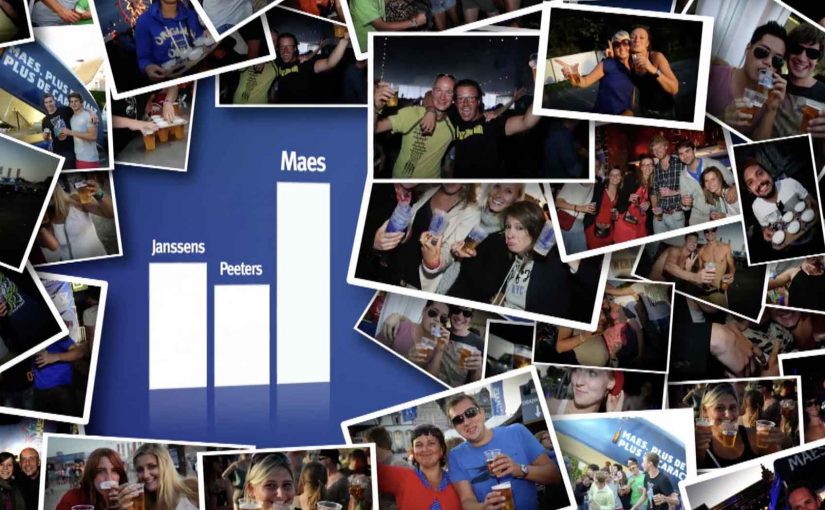
Maes is described as Belgium’s second most popular beer, and “Maes” is also described as the country’s third most common surname. With the market leader said to be outselling Maes by roughly 4 to 1, the brand looks for leverage where it can actually own something. The name.
So Maes decides to rally the Maes families of Belgium by giving them a free barrel of beer, and turning that offer into a reason to gather, invite, and celebrate publicly.
The mechanism: a surname offer with a social booking loop
Eligible families sign up through a custom Facebook app to claim the barrel. The same flow lets them book a pub for a chosen date and invite friends, so the reward is designed to be shared rather than quietly consumed.
In Belgian FMCG marketing, turning a broad brand problem into a narrow community identity can create disproportionate participation and talk value.
Why this lands
This works because it converts a discount into status. You are not “getting a deal.” You are being singled out because of who you are, and the campaign immediately pushes you into a social moment where other people experience the brand alongside you. The pub booking is the smart part, because it transforms redemption into an event.
Extractable takeaway: If you need advocacy, attach the reward to an identity trigger and force the payoff into a shared setting, so the benefit becomes a gathering people naturally document and retell.
What the brand is really doing
The real question is how a challenger beer brand turns a shared surname into a social growth loop that scales beyond the free barrel itself.
Maes is using a surname as a distribution engine. The name creates a defined audience, the free barrel creates urgency, and the “book a pub and invite friends” flow turns each participant into a micro-host who does recruitment for you.
What to steal from the Maes mechanic
- Exploit a unique ownership angle. If you can credibly “own” a name, place, ritual, or identifier, build the campaign around that.
- Design the share into the redemption. Booking a pub and inviting friends is a built-in amplification mechanic.
- Reward the group, not just the individual. Group rewards create social proof and higher perceived value.
- Keep eligibility simple. One clear rule beats a complicated promo code maze.
A few fast answers before you act
What is “A barrel for every Maes”?
It’s a promotion that offers a free barrel of Maes beer to people with the surname “Maes,” turning surname identity into a social recruitment mechanic.
How do people redeem the offer?
By signing up through a custom Facebook app that also lets them book a pub date and invite friends.
Why is the pub booking part important?
It converts redemption into an event, which increases sharing, attendance, and the number of people who experience the brand in a social setting.
What problem is this trying to solve?
It’s designed to build advocacy and attention for a challenger brand by mobilising a defined community rather than competing only on mass advertising.
What is the key risk with identity-based offers?
If eligibility or verification feels unfair or confusing, it can backfire. The rule has to be clear, and the experience needs to feel welcoming rather than exclusionary.