
Google: Project Re:Brief

Google: Project Re:Brief

In 2011, Google partnered with four global brands in an advertising experiment. Their goal was simple. How can the ideas that defined the advertising industry in its infancy inspire a whole new generation of creatives and marketers?

So Google set out to re-imagine and remake some of the most iconic ad campaigns from the 1960s and 1970s with today’s technology, led by the same creative legends who made these campaigns.

Re-briefing classics with modern tools

The premise is a clean creative constraint. Here, a re-brief means keeping the original strategic promise while rewriting the assignment for today’s interfaces, devices, and distribution. Take an idea that became culturally famous in its original medium, then re-brief it as if you were building it for a digitally connected world. Not by “updating the look”, but by asking what the original strategy would do if it had today’s interfaces, devices, and distribution.

In global brand advertising, revisiting iconic work is a practical way to test which storytelling principles survive a major technology shift.

The four remakes

With that said, here are the results of the best of the old with the best of the new.

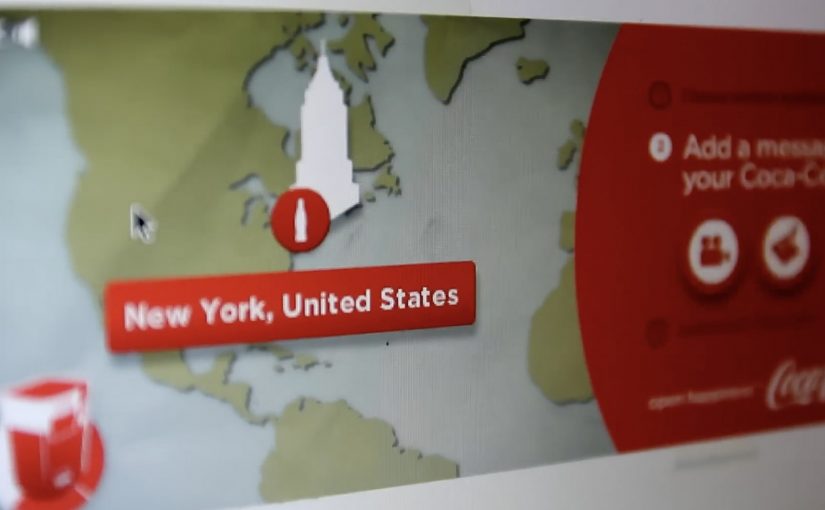
Re-imagining Coca-Cola’s “Hilltop”

Re-imagining Volvo’s “Drive it Like You Hate it”

Re-imagining Alka-Seltzer “I Can’t Believe I Ate That Whole Thing”

Re-imagining Avis “We Try Harder”

Why this format works for marketers

The real question is not whether old campaigns deserve a digital remake, but whether the original strategic idea still produces useful behavior in a connected medium. It forces discipline. You cannot hide behind novelty because the original idea is already known and already strong. That pushes the work to earn its keep through mechanics, not decoration. That works because a proven idea gives the technology a clear job to do, so the audience experiences the promise through behavior rather than explanation. When the core idea is clear, technology becomes an amplifier, not a replacement for strategy.

Extractable takeaway: If you want to explore new tech without producing gimmicks, start with an idea that already proved its emotional truth, then design one modern interaction that makes that truth more immediate.

How to borrow the approach without copying it

  • Pick one timeless promise. Strip it down until it fits in a single sentence.
  • Define one modern behavior. Sharing, scanning, tapping, responding, connecting. Build around one.
  • Make the mechanic do the explaining. The best remakes do not need a voiceover to justify the tech.
  • Keep a clear before and after. What stays from the original idea, and what changes because of the medium.

A few fast answers before you act

What is Project Re:Brief?

A Google-led experiment that re-imagines classic campaigns from the 1960s and 1970s using modern technology, guided by the original creative legends behind those ads.

Why remake old ads instead of creating new ones?

Because the originals provide a proven strategic baseline. You can see whether technology strengthens the core idea, or distracts from it.

What does “re-brief” actually mean in practice?

It means taking the original strategy and re-writing the assignment for a new media reality, then building a modern mechanic that expresses the same core promise.

What should a team learn from this kind of exercise?

That strong ideas travel across formats, and that the role of technology is to make the benefit more immediate, more personal, or more connected, not merely more complex.

How do you judge whether a modern remake is successful?

Look for clarity of the core idea, the usefulness of the interaction, and whether the mechanic creates behavior people would repeat or share, not just view.
Parrot AR.Drone: The Flying Banner

Parrot AR.Drone: The Flying Banner

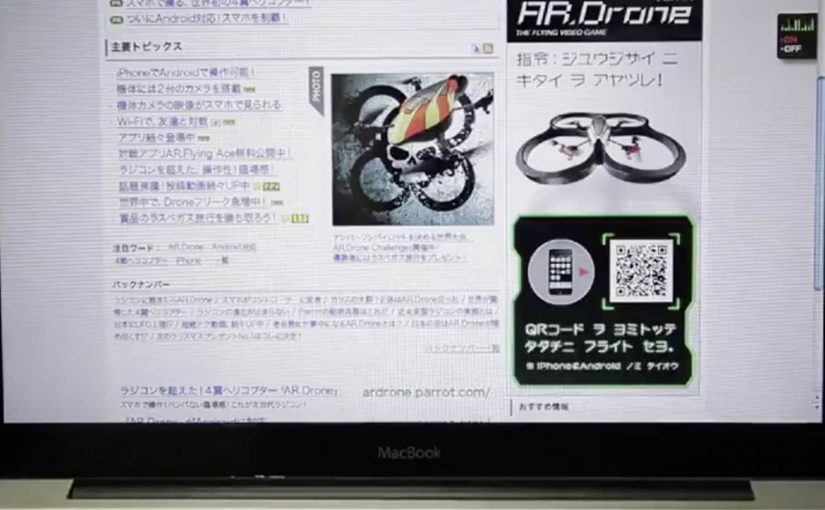
The Parrot AR.Drone is a quadrotor you can control with an iPhone or iPad. Instead of explaining that in copy, Beacon Communications Tokyo built an interactive web banner that lets people experience the idea.

The banner displays a QR code. Scan it and your phone becomes the controller for a virtual AR.Drone that appears inside the banner. You pilot it around the screen using your smartphone, effectively turning the ad into a small playable product demo.

Why this banner stands out

Most banners talk about what a product can do. This one makes the product behaviour the message. If the AR.Drone is “controlled by your phone,” the ad is controlled by your phone. That direct mapping makes the idea instantly believable. For interface-led products, this is the right pattern: let people try the interface, not read about it.

Extractable takeaway: If your product is an interface, let the audience use that interface inside the ad unit, even in a simplified form.

The mechanic: QR to second screen control

The QR code is not decoration. It is the bridge that turns a passive placement into a two-device experience. Here, “second-screen control” means the desktop shows the scene while the phone acts as the controller. The banner stays on the desktop screen. Control moves to the phone. That split makes the interaction feel closer to the real product, and it also creates a small sense of “this is special” because the ad is no longer self-contained.

In consumer electronics launches, the most persuasive interactive advertising is a playable demo that mirrors the product experience in seconds.

The real question is whether the viewer can feel the core control loop before they decide to care.

How it creates attention without shouting

As described in industry coverage, users could fly the drone around the page and even “blast” parts of the site to reveal the full-screen message. That gives the interaction a purpose and a payoff. It is not just movement. It is progression.

Beacon also reported unusually strong click-through performance compared to typical expectations for the placement. In this case, that makes sense. People do not click because they were interrupted. They click because they were already playing.

Second-screen demo moves to copy

  • Replicate the product, do not describe it. A short, real interaction beats a long explanation.
  • Use one clear bridge between devices. QR works here because it is immediate and simple.
  • Design an obvious payoff. A reveal, a score, a result. Give the interaction a reason.
  • Keep the controls teachable. If people cannot learn it in seconds, the banner loses them.
  • Make it readable for spectators. Movement on the main screen helps others understand what is happening fast.

A few fast answers before you act

What is “The Flying Banner” for Parrot AR.Drone?

It is an interactive web banner where scanning a QR code turns your smartphone into a controller for a virtual AR.Drone that you can pilot inside the banner.

Why is this a stronger demo than a normal video ad?

Because it lets people feel the core promise. Phone-controlled flight, through direct interaction, not description.

What role does the QR code play in the experience?

It is the handoff mechanism from desktop to phone. The desktop shows the “world.” The phone becomes the controller, matching how the real product is used.

What is the biggest risk with multi-device banner ideas?

Drop-off. If the connection step is slow, confusing, or unreliable, most users abandon before they experience the payoff.

How would you modernize this mechanic today?

Keep the principle of second-screen control, but reduce friction. Use a fast connect flow and ensure the experience is still satisfying even if someone chooses not to connect a phone.

EA Sports SSX: SSX Shakes

EA Sports SSX: SSX Shakes

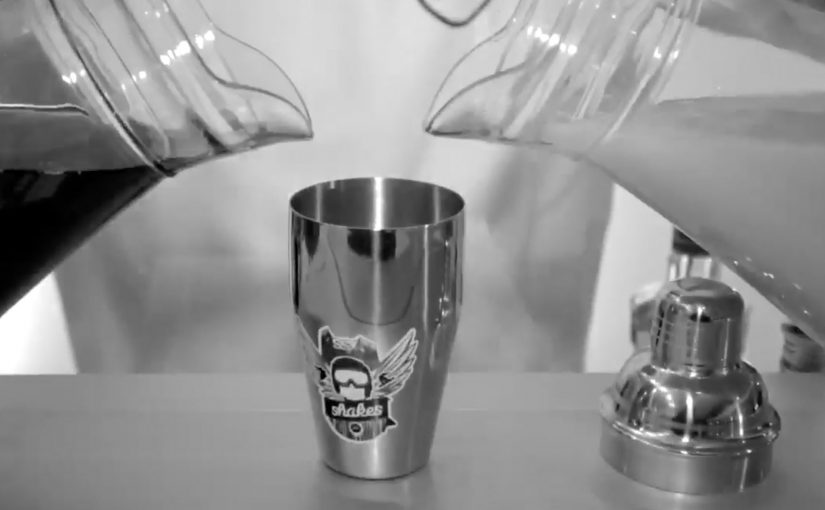
A cocktail order comes in, and a bartender does not reach for the shaker. A pro rider does. The drink gets “shaken” by performing the very snowboard trick it is named after, then handed over fresh to the guest who ordered it.

That is the core of SSX Shakes. A small, invitation-only pre-launch event in Belgium created to generate extra buzz and free press for EA’s SSX extreme snowboarding release on PlayStation and Xbox 360. Duval Guillaume Modem (Antwerp) stages the night around mood and shareability: music, a slope setup, a cocktail bar, riders, and hands-on game play.

How the mechanic turns into media

The mechanism is deliberately tight. Cocktails are named after specific snowboard tricks. Guests choose one. Riders perform the corresponding trick while holding the shaker, then deliver the finished drink. After the event, every blogger and journalist receives a personalised video showing the making of their own SSX shake, packaged for easy sharing with friends, fans, and followers.

In European games marketing where launches depend on earned coverage, the best activations create a photogenic proof point and a ready-to-publish asset for every attendee.

The real question is whether you can hand every attendee a personalised, ready-to-post asset that still feels native to the product story.

Why it lands

It collapses three jobs into one moment. It entertains in the room. It proves the SSX fantasy of trick-driven adrenaline in a physical way. Because the trick is also the “shaker”, the camera captures that fantasy in a single, explainable shot. Then it hands each guest a personalised piece of content that makes sharing feel like showing off a story, not doing a brand a favour.

Extractable takeaway: If your goal is buzz, do not just invite press to watch something. Give them a personalised, category-native moment that can be posted as a complete narrative, without extra editing or explanation. By “category-native”, I mean it uses the category’s own cues and rituals so the story makes sense without context.

What to steal for your next press and influencer activation

  • Build one iconic “single frame”. A rider mid-trick with a cocktail shaker is instantly legible. Your activation needs a moment people can recognise in a second.
  • Make participation the content generator. The guest’s choice determines the trick and the drink. That turns attendees into co-authors of the footage.
  • Personalise the output, not the invitation. The personalised video is the real multiplier. It gives each person a reason to share that is about them, not the brand.
  • Keep the mechanic on-brand. Tricks are not decoration here. They are the core of SSX, translated into a bar ritual.

A few fast answers before you act

What is SSX Shakes in one sentence?

A pre-launch event where SSX-themed cocktails are “shaken” by pro riders performing the matching snowboard trick, followed by personalised recap videos for attendees to share.

Why does the personalised video matter so much?

Because it turns attendance into distribution. Each guest leaves with a finished asset that is already framed for social sharing and blogging.

What is the brand objective behind a concept like this?

To generate earned media and social reach before release by creating a highly visual, retellable moment tied directly to the game’s core fantasy.

How do you adapt this if you cannot produce personalised videos?

Keep the “one guest, one ready-to-share asset” rule, but simplify the output. Capture a short, branded clip or photo that features the guest’s choice and the hero moment, and deliver it to them in a format they can post immediately.

What is the main failure mode if someone copies this format?

If the “hero moment” is not instantly understandable on camera, the event can be fun in-person but produce weak content, and the earned media engine stalls.