
Volkswagen Twitter Zoom

Volkswagen Twitter Zoom

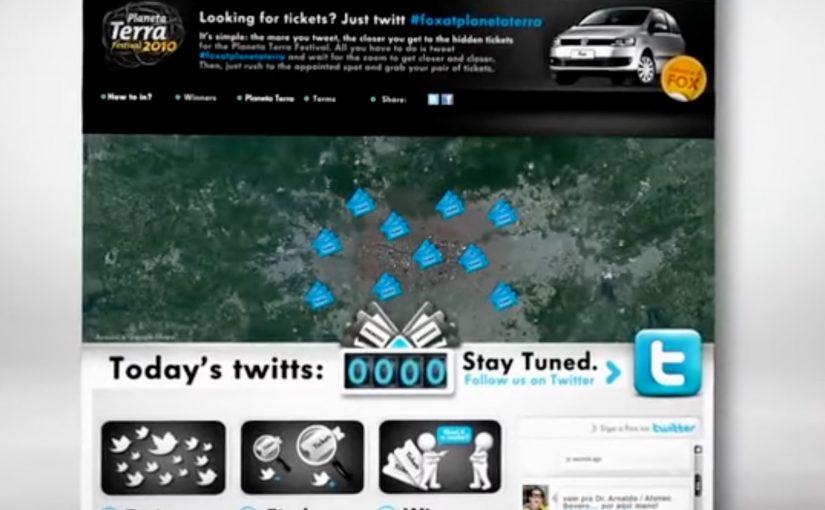
Tickets are scattered across São Paulo. A live city map sits online. Every tweet pulls the zoom closer. Volkswagen sponsors the Planeta Terra Festival, a major music event in São Paulo, as a way to bring its trendy car, the Fox, closer to the city’s youth.

The challenge for AlmapBBDO is clear. Spread the Fox message beyond the festival walls, and reach youngsters across the entire city. The answer is Twitter Zoom. Twitter Zoom is a tweet-to-zoom scavenger hunt where hashtag volume progressively narrows a live map view toward a hidden target.

The real question is how you turn social participation into shared, visible progress that makes people act.

This kind of campaign only earns attention when the audience can see their action change the system.

First, a series of tickets is placed in different locations across São Paulo. Then a simple online platform launches with a Google Maps view of the entire city. The mechanic is straightforward. The more people tweet #foxatplanetaterra, the closer the zoom gets on the map. As the view tightens, the hunt becomes more precise. The first person to reach the ticket wins it. This runs for four days straight.

In large-city youth marketing, a shared, real-time progress indicator can turn social chatter into coordinated action.

Within less than two hours, #foxatplanetaterra hits Trending Topics in São Paulo, and it stays there for the full length of the competition.

Why this works

The loop is simple. Public participation produces visible progress, and visible progress invites more participation because everyone can watch the goal getting closer.

Extractable takeaway: When every audience action creates shared, visible progress, people keep participating and recruit others to accelerate the loop.

It turns social volume into visible progress

Most hashtags create noise with no payoff. Here, every tweet has a clear purpose. It moves the map. People can see the impact building in real time, and that visibility keeps the loop going.

It creates a city-wide scavenger hunt without complex rules

The instruction is easy to understand. Tweet the hashtag. Watch the zoom. Run. The simplicity makes it easy to join, explain, and share.

It makes the audience do the distribution

To win, participants need more tweets. That requirement naturally drives peer-to-peer sharing. The community scales the campaign because the community benefits from scale.

What to measure beyond impressions

  • Speed to momentum. How quickly the hashtag reaches a meaningful participation rate.
  • Unique contributors. How many distinct people tweet, not just total tweet volume.
  • Progress milestones. How many zoom stages are reached, and how long each stage holds attention.
  • Winner validation. Whether the “first to the ticket” outcome is trusted and replayed as a story.

Risks and guardrails that matter

  • Spam incentives. Volume mechanics invite low-quality tweeting. Add constraints or validation to protect credibility.
  • Platform dependency. If Twitter or the map experience glitches, the game breaks instantly.
  • Perceived fairness. If people doubt the winner selection, the campaign turns from fun to frustration.
  • Accessibility. Ensure the mechanic does not exclude people who cannot physically sprint across the city.

Steal the tweet-to-zoom pattern

  1. Pick a “canvas” people instantly understand. A city map, a countdown, a reveal grid, or any visual that can tighten, unlock, or progress.
  2. Convert participation into a tangible system response. Every action must visibly change something, immediately.
  3. Timebox the game. A short window keeps urgency high and reduces fatigue.
  4. Design fairness upfront. Clarify how wins are validated, and prevent obvious spam or gaming.
  5. Make the reward match the audience. Here, tickets fit the festival context and the youth target.

A few fast answers before you act

What is Volkswagen Twitter Zoom?

A city-wide campaign where tweets with #foxatplanetaterra trigger a Google Maps zoom. As the map zooms in, participants race to find hidden tickets across São Paulo.

Why does the mechanic spread so fast?

Because every new tweet visibly improves everyone’s chances. Participation behaves like progress, not just conversation.

What is the core design principle?

Make the audience action directly move a shared system, and make that movement visible in real time.

What is the simplest way to recreate it in another category?

Use a progressive reveal that unlocks with verified participation, then reward the first verified completion, not raw volume.

What is the biggest failure mode?

When the campaign can be gamed, or when the platform experience fails. Trust and momentum collapse immediately.
Levi’s: Soundwash

Levi’s: Soundwash

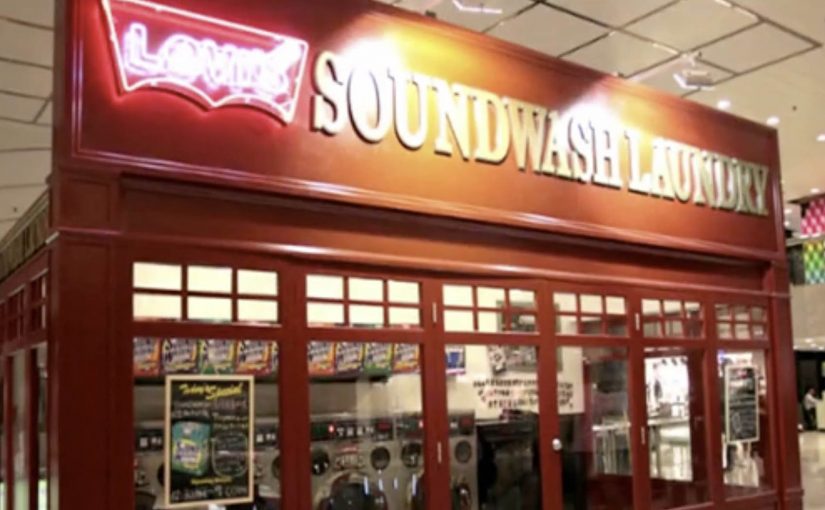
You pick a Levi’s Square Cut style, choose a music genre, then “Soundwash” the jeans, meaning you pair the selected cut with a music mix through a washing-machine-style interface. The idea gives young audiences a new way to express themselves by turning denim selection into a brand and music experience, not just a purchase.

TBWA\TEQUILA Hong Kong and Levi’s Hong Kong developed Soundwash for the Square Cut collection featuring five new styles of jeans. Soundwash runs as a multi-dimensional interactive experience that lets the audience choose their favourite jeans style and then “Soundwash” the jeans to their favourite style of music, including rock, hip hop and Cantopop, across multiple platforms.

Creatively, Soundwash rediscovers the authenticity of the classic American laundry and collides it with cutting-edge music styles to create a distinct brand experience using a Soundwash “machine”. The concept is supported by limited edition packaging and gift accessories, a Soundwash Laundry pop-up store in high traffic Tsim Sha Tsui, a branded iPhone game app, a website, and an online viral video featuring local music band Mr.

A laundromat you can control with music

The mechanism is a tight participation loop. Start with a product choice, then translate that choice into sound. Shoppers select a Square Cut style, then pick a music mix to “Soundwash” it, using the Soundwash “machine” as the interface that makes the metaphor feel physical and real.

In youth fashion markets where denim is a social signal and music is identity language, interactivity works best when it lets people express taste choices in public, not just consume a message in private.

Why it lands

This works because it turns a collection launch into something you can play with. The laundry metaphor makes the experience instantly legible, and the music layer makes it personal. You are not only choosing jeans, you are choosing a vibe, then “performing” that choice through the machine, the pop-up, and the shareable formats.

Extractable takeaway: If you want a product line to feel like culture, build one repeatable interaction that lets people express taste, then extend it across retail, packaging and mobile so the same idea shows up wherever the audience moves.

How the app makes it competitive

The Soundwash iPhone app includes a game where friends can compete to see who can Soundwash the most jeans in 30 seconds. The top scorer of each week receives a pair of Levi’s Square Cut jeans, which turns the app from a novelty into a reason to return and to challenge others.

The real question is whether the campaign can turn one moment of playful customization into a repeatable social behavior that keeps the collection in circulation.

Levi’s makes the right call by using the app to extend the same interaction rather than treating mobile as a separate stunt.

Steal the denim-and-music playbook

  • Turn selection into performance. Make the act of choosing feel like self-expression, not decision fatigue.
  • Use one clear metaphor. “Laundry” is a simple frame that supports multiple touchpoints without explanation.
  • Build a retail anchor. A pop-up makes the digital idea feel tangible and photogenic.
  • Add a competitive loop. Time-boxed play plus weekly rewards creates repeat usage and social pull.

A few fast answers before you act

What is Levi’s Soundwash?

A Levi’s Hong Kong Square Cut activation that combines denim and music. People choose a style, then “Soundwash” it to a music mix via an interactive machine and supporting digital experiences.

What is the core mechanism?

Product choice plus music choice, expressed through a “Soundwash machine” interaction, then extended into a pop-up, packaging, app, website, and a viral video featuring local music band Mr.

Why use a laundromat metaphor?

Because it is instantly understood and visually rich. It makes the experience feel physical, and it gives the campaign a consistent world across touchpoints.

What role does the iPhone app play?

It adds competition and repeat engagement through a 30-second game format, plus weekly rewards that encourage people to come back and challenge friends.

What is the most reusable lesson here?

When you are selling self-expression, design one simple interaction that makes taste visible, then let that interaction travel across retail, digital, and social formats.

XS4ALL: Tonga Time

XS4ALL: Tonga Time

Switching internet providers in the Netherlands is often a time-consuming business, which is exactly why many people prefer not to switch at all.

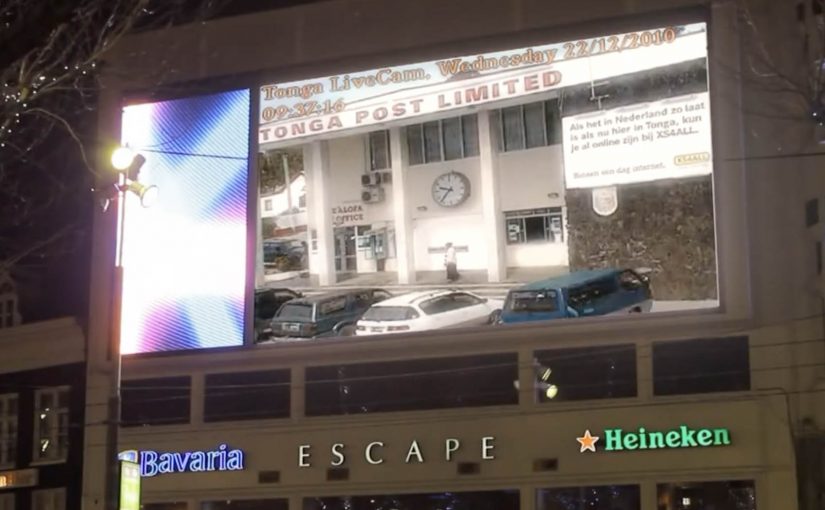
XS4ALL sets out to change that with a promise that sounds almost like a hack. A connection in one day. The campaign idea is framed as “Tonga: Where Time Begins”. Order your connection at 11am Tonga time, and you can have it installed before it is 11am Netherlands time on the same day.

Putting “one day” on a clock

To make the promise tangible, Ogilvy Amsterdam erects a billboard on the Tonga post office. Alongside the billboard, a clock shows the local time in Tonga, described as being about 11 hours ahead of the Netherlands. The clock turns the claim into a visible countdown. Tonga is already “tomorrow”, so the installation can happen “today”.

The real question is not whether XS4ALL can claim speed, but whether it can make that claim feel believable before people experience the service. The strongest move here is turning service logistics into something viewers can verify in one glance.

In telecom markets where switching friction creates inertia, the fastest way to sell speed is to make the time advantage physically visible, not just verbally promised.

Why it lands

The idea works because it uses a real-world fact as the proof mechanism. Time zones are non-negotiable, so the promise borrows credibility from geography, not copywriting. The billboard and the clock also do something important. They take a service promise that feels abstract and make it photographable, retellable, and easy to understand in one glance.

Extractable takeaway: When your differentiator is speed, anchor it to a constraint the audience already trusts, then build a single physical artifact that turns the claim into a visible demonstration.

How to turn speed into visible proof

  • Make the promise measurable. A clock beats a tagline when the benefit is time.
  • Borrow credibility from a fixed reality. Geography, physics, rules, and infrastructure can outperform persuasion.
  • Create a shareable proof object. A single photo should communicate the idea without explanation.
  • Translate operations into a story. “Installed in one day” becomes a narrative people can repeat.

A few fast answers before you act

What is the core idea of “Tonga Time”?

Use Tonga’s head-start time zone to demonstrate that XS4ALL can deliver a new connection within a day, and make that promise tangible with a public clock and billboard.

Why choose Tonga for this message?

Because it is positioned as “where time begins”, so it provides a simple, memorable way to explain how the installation can happen before the Netherlands reaches the same clock time.

What does the clock add that a normal billboard cannot?

It turns a claim into a live reference. People can see the time difference and understand the “within one day” logic immediately.

What is the main risk of using time zones as proof?

If the exact time difference changes seasonally or is reported inconsistently, the concept still holds, but the numeric detail can be challenged.

When is this pattern most useful?

When you are selling speed or responsiveness, and you can tie the benefit to a trusted external constraint that makes the claim feel undeniable.