
Toronto Silent Film Fest: Instagram trailers

Toronto Silent Film Fest: Instagram trailers

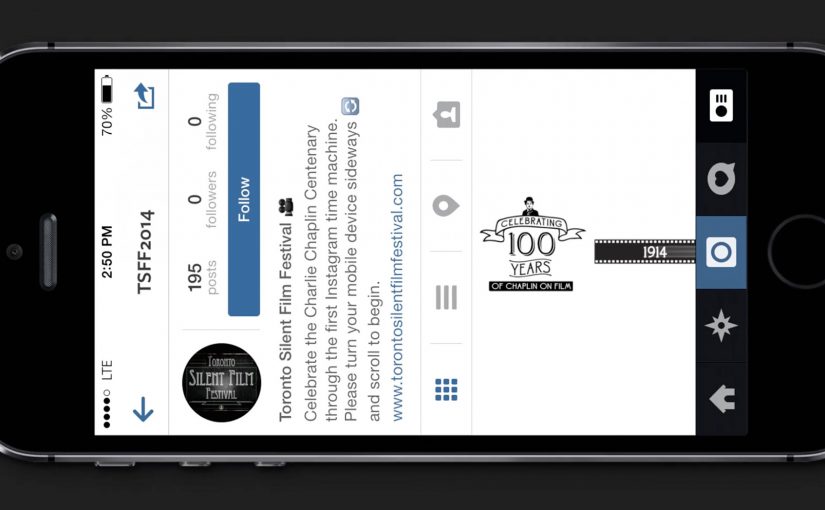
You open Instagram, land on a feed of black-and-white stills, and start scrolling fast. Suddenly the images “move” like a flipbook. It feels like a tiny silent-movie trailer hiding inside a platform that is supposed to be static photos.

The month before, Fox used Vine to mash up a Wolverine trailer and stir hype. Now the Toronto Silent Film Festival borrows the same instinct, then applies it to Instagram. It promotes the event with what it bills as a first-of-its-kind set of Instagram trailers that only really work on a smartphone.

An Instagram trailer, in this format, is a sequence of consecutive still frames posted as individual images. When you scroll rapidly, your thumb becomes the playback control and the feed becomes the projector.

In niche cultural events marketing, the fastest way to earn attention on a small budget is to turn a platform’s native behaviour into the medium.

The trick lands because the mechanic matches the subject. Silent films are built on frame-by-frame illusion. Instagram is built on frame-by-frame browsing. Put the two together and the experience feels clever, not forced.

Why this works better than a normal trailer drop

A standard trailer asks for time and attention up front. This asks for curiosity first. You discover the motion by accident, then you replay it because you want to confirm what you just saw. That discovery loop is the real distribution engine. For a social-first launch, this is a better opener than dropping a normal trailer because it earns replays before it asks for commitment. By “discovery loop” I mean the accidental motion, the immediate replay to confirm it, and the urge to show someone else.

Extractable takeaway: If you can turn a native gesture into a repeatable “did you see that?” moment, you can earn attention and sharing without asking for a click.

What the campaign is really doing

It is less about explaining the festival and more about attracting the right kind of audience. If you enjoy the hack, you are probably the kind of person who will enjoy the program. The format acts like a filter for taste.

The real question is whether your launch gives people a simple action that doubles as playback and sharing.

This work is credited to Cossette, and it later picked up industry recognition for using mobile behaviour as the creative device, which fits the strategy. Make the idea itself feel like a silent-film magic trick.

What to steal for your own social-first launch

  • Exploit a native gesture. Scrolling is a universal habit. Build around it.
  • Make discovery the hook. The best “first play” happens when people think they found something.
  • Match mechanic to meaning. Frame-by-frame browsing is a perfect metaphor for silent-film motion.
  • Keep the explanation optional. If the concept needs a paragraph to understand, it will not spread.

A few fast answers before you act

How do Instagram trailers work in this campaign?

The trailer is split into many still frames and posted as consecutive images. On a phone, you scroll quickly through the feed to simulate motion like a flipbook.

Why does this feel “right” for a silent film festival?

Silent cinema is fundamentally frame-based illusion. This mechanic recreates that feeling using modern thumb-scrolling, so the medium reinforces the message.

What is the main advantage over posting a normal video?

Discovery. People do not just watch. They figure it out, replay it, and show someone else how it works.

What kind of brands or events can use this pattern?

Anything with a strong visual identity and a story that benefits from “reveal”. Especially cultural events, launches, and limited-time programs where curiosity drives consideration.

What is the biggest risk with platform hacks?

If the experience only works in a narrow usage mode, many people will miss it. The mechanic needs to be obvious enough that first-time viewers understand what to do within seconds.
Maes: A Barrel for Every Maes

Maes: A Barrel for Every Maes

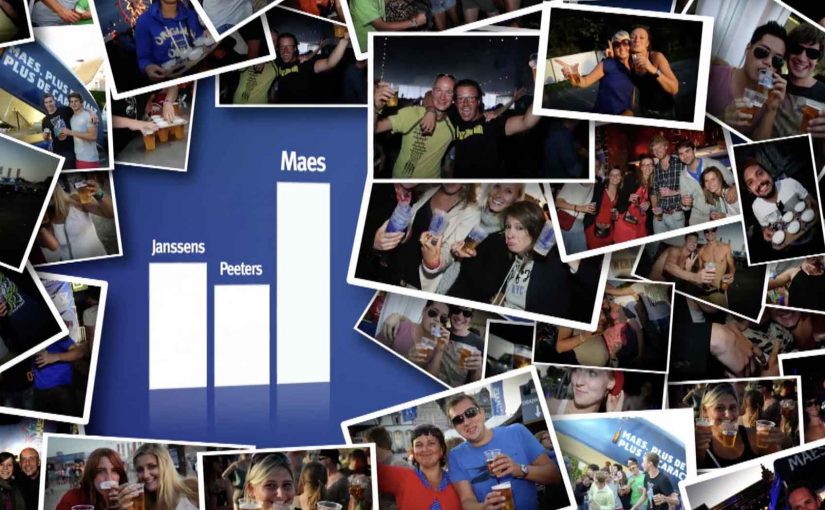
Maes is described as Belgium’s second most popular beer, and “Maes” is also described as the country’s third most common surname. With the market leader said to be outselling Maes by roughly 4 to 1, the brand looks for leverage where it can actually own something. The name.

So Maes decides to rally the Maes families of Belgium by giving them a free barrel of beer, and turning that offer into a reason to gather, invite, and celebrate publicly.

The mechanism: a surname offer with a social booking loop

Eligible families sign up through a custom Facebook app to claim the barrel. The same flow lets them book a pub for a chosen date and invite friends, so the reward is designed to be shared rather than quietly consumed.

In Belgian FMCG marketing, turning a broad brand problem into a narrow community identity can create disproportionate participation and talk value.

Why this lands

This works because it converts a discount into status. You are not “getting a deal.” You are being singled out because of who you are, and the campaign immediately pushes you into a social moment where other people experience the brand alongside you. The pub booking is the smart part, because it transforms redemption into an event.

Extractable takeaway: If you need advocacy, attach the reward to an identity trigger and force the payoff into a shared setting, so the benefit becomes a gathering people naturally document and retell.

What the brand is really doing

The real question is how a challenger beer brand turns a shared surname into a social growth loop that scales beyond the free barrel itself.

Maes is using a surname as a distribution engine. The name creates a defined audience, the free barrel creates urgency, and the “book a pub and invite friends” flow turns each participant into a micro-host who does recruitment for you.

What to steal from the Maes mechanic

  • Exploit a unique ownership angle. If you can credibly “own” a name, place, ritual, or identifier, build the campaign around that.
  • Design the share into the redemption. Booking a pub and inviting friends is a built-in amplification mechanic.
  • Reward the group, not just the individual. Group rewards create social proof and higher perceived value.
  • Keep eligibility simple. One clear rule beats a complicated promo code maze.

A few fast answers before you act

What is “A barrel for every Maes”?

It’s a promotion that offers a free barrel of Maes beer to people with the surname “Maes,” turning surname identity into a social recruitment mechanic.

How do people redeem the offer?

By signing up through a custom Facebook app that also lets them book a pub date and invite friends.

Why is the pub booking part important?

It converts redemption into an event, which increases sharing, attendance, and the number of people who experience the brand in a social setting.

What problem is this trying to solve?

It’s designed to build advocacy and attention for a challenger brand by mobilising a defined community rather than competing only on mass advertising.

What is the key risk with identity-based offers?

If eligibility or verification feels unfair or confusing, it can backfire. The rule has to be clear, and the experience needs to feel welcoming rather than exclusionary.

Doctors Without Borders: Like Hunting

Doctors Without Borders: Like Hunting

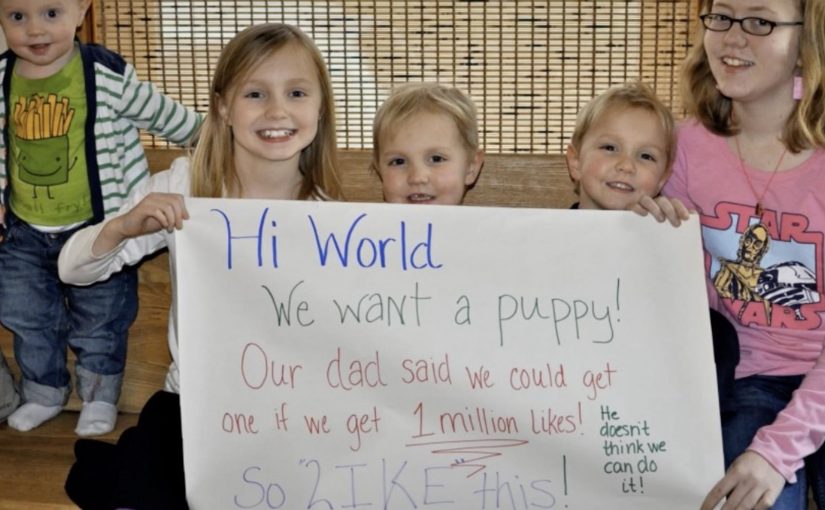
In the last months there have been cases of people uploading photos on Facebook and successfully asking for 1 million likes. So keeping that in mind, Doctors Without Borders decided to turn their campaign idea “good intentions don’t save lives” on its head and actually make people’s intentions count.

Through a special Facebook app people could create a post and ask their friends for likes while donating 1 Danish Krone to Doctors without Borders for each like they got. Each collection was run for 48 hours and only likes from your own Facebook friends counted. By setting a maximum amount you could also make sure you don’t go bankrupt. If your friends were too slow, you could also simply decide to donate more.

At the end of each donation drive people could post a picture saying thank you to all their friends who helped them donate. The campaign’s success is described as having made it a permanent solution and can still be found running for people who want to turn their friends likes into donation.

Turning “like hunting” into a donation engine

The mechanic is deliberately simple. Here, “like hunting” means asking friends to turn their likes into a capped donation total. You post, you ask for likes, and the counter becomes money. The 48-hour window adds urgency, and the “friends only” rule keeps it personal instead of turning it into a popularity contest across strangers.

In European nonprofit fundraising, micro-donations work best when the unit action is already a habit and the rules stay frictionless.

Why this lands on Facebook

It does not fight the attention behavior. It repurposes it. People already know how to like and how to help a friend. The campaign bundles those instincts and makes the cost feel manageable by letting the donor set a cap, then top up if momentum is slow. The real question is whether a low-value social signal can become a credible donation act, and this campaign proves it can when the cost is capped and the ask stays social.

Extractable takeaway: If you want participation at scale, do not ask people to learn a new behavior. Convert an existing social reflex into a counted contribution, and make the risk feel controllable.

What the “cap” is really doing

The maximum amount is more than budgeting. It is permission. When people know they cannot accidentally overspend, they are more willing to start, and starting is the hardest step in any donation flow.

What to steal for your next donation mechanic

  • Make the unit obvious. “One like equals one krone” is instantly understandable.
  • Time-box the drive. A short window creates a reason to ask now, not later.
  • Keep it inside the social graph. Friends-only engagement protects trust and reduces spam dynamics.
  • Build in safety rails. Caps remove fear, and optional top-ups preserve ambition.

A few fast answers before you act

What is Like Hunting?

It is a Doctors Without Borders fundraising mechanic that converts Facebook likes into donations, using a short, time-boxed “drive” created by an individual supporter.

Why does “friends-only likes” matter?

It keeps the action personal and credible, and it stops the drive from turning into mass like-begging from strangers. That helps the campaign feel like helping a person, not feeding an algorithm.

What makes the cap important?

The cap reduces perceived risk. People participate more readily when they know the maximum cost upfront, and the option to add more later keeps the mechanism flexible.

Why does the 48-hour window matter?

It gives the ask a deadline, which makes supporters more likely to post now and friends more likely to respond quickly. Without that time-box, the mechanic risks becoming passive background noise.

When should brands or NGOs use this pattern?

When there is a simple, repeatable action that people already perform socially, and when turning that action into a counted contribution can happen without heavy explanation or new habits.