
Skip to content
Ramble Logo

SunMatrix Ramble

What Matters in Marketing and Digital Innovation

  • ABOUT
  • CONCEPT INDEX
  • CONTACT

Categories

Category: Social Media

Sveriges Radio: Swedish Radio Plus

Sveriges Radio: Swedish Radio Plus

Second screen usually broadcasts at you. This one lets you write back.

Right now, most second screen experiences push content to the user but do very little by way of two-way interactivity. That however is slowly changing and can already be seen in the TV based second screen experiences from Heineken and Chevy.

Now in one of the first examples of second screen experiences that I have seen with radio, Swedish ad agency Forsman & Bodenfors attempts to make the whole radio experience more visual, interactive, and shareable.

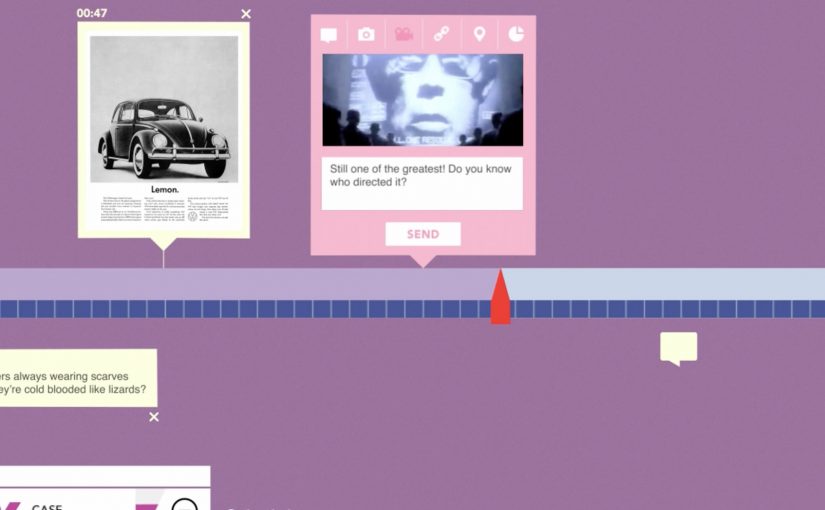
The mechanic: a radio timeline you can enrich in real time

With a new player called “Swedish Radio Plus”, listeners on computers and mobile devices can follow a program and simultaneously add videos, pictures, comments, maps, and polls to the radio timeline. Posts made on this custom timeline are also shared to the user’s Facebook profile, linking back to that exact moment in the program.

The player itself was reported as an HTML5-first build, designed to treat radio like a stream with attachable context instead of a one-way feed.

In public service media, second-screen design only earns attention when it adds context without breaking the core listening habit.

Why it lands

This shifts the second screen from “companion content” to “companion conversation”. By companion conversation, I mean a shared layer where listeners can attach their own context to a live moment instead of only consuming publisher-supplied extras. The timeline makes the program feel like a living object. Something you can annotate, react to, and re-enter at a precise point later. It also turns sharing into a utility rather than a vanity action, because the shared link is anchored to a specific timestamp, not a generic show page. That works because a timestamped timeline gives every contribution a precise place, which makes interaction feel useful instead of noisy.

The real question is whether added context deepens listening or simply competes with it.

Extractable takeaway: If you want genuine interactivity, give listeners one shared artifact. A timeline. Then let them attach context to it in the moment, and make every contribution deep-link back to the exact point that triggered it.

What broadcasters can borrow

  • Make interaction additive, not distracting. Users should enrich the experience without being forced to stop listening.
  • Anchor everything to time. Timestamped posts are what make the experience replayable and shareable.
  • Let the audience do the contextual work. Photos, links, and comments often explain a moment faster than official companion content.
  • Design sharing as navigation. A shared post that jumps to the exact moment is more useful than “here’s the show”.

A few fast answers before you act

What is Swedish Radio Plus?

It is an interactive radio player concept that lets listeners add media and comments to a program timeline while listening, then share those timeline moments socially with deep links.

What makes it different from typical second screen experiences?

It supports two-way contribution. Listeners do not just receive extras. They can publish context into the timeline as the show plays.

Why is the timeline format important?

Because it creates a shared structure. Every comment, image, or poll has a precise home in time, which makes the experience navigable and re-usable.

What is the main benefit for broadcasters?

It increases engagement without needing more programming. The audience generates context and distribution around the existing show.

What is the main risk if you copy this model?

If the interaction flow is heavy or noisy, it competes with listening. The best version feels lightweight and optional, not mandatory.
Posted on May 13, 2013March 6, 2026Categories Emerging Trends, Marketing Strategies, Mobile, Power of Online, Social MediaTags Forsman & Bodenfors, interactive radio, public service media, radio innovation, second screen, Second Screen Campaigns, second screen experiences, social sharing, Society 46, Sveriges Radio, Sveriges Radio Plus, sweden, Swedish Radio, Swedish Radio Plus, timeline UX
Sky Company: Air Check-in

Sky Company: Air Check-in

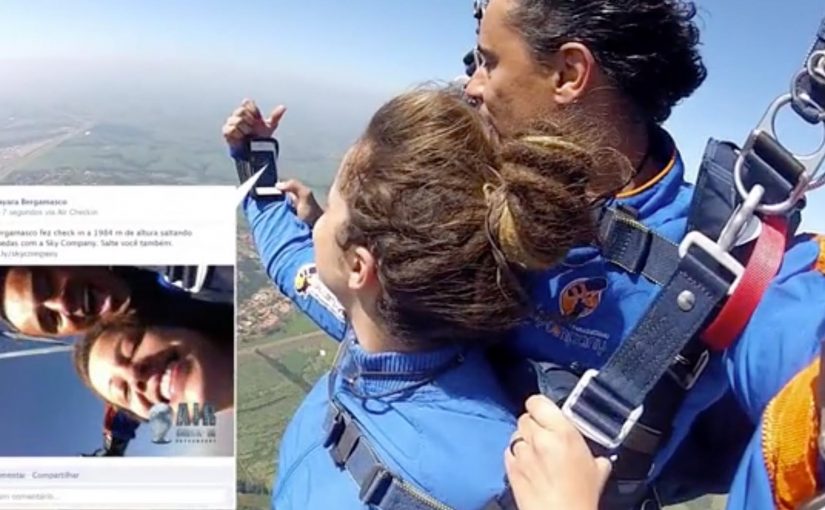
Free fall is not the moment you expect a social check-in. But that is exactly the hook behind Air Check-in, an app that lets parachutists post to Facebook while they are still in the air.

Parachuting specialists Sky Company wanted to promote their Facebook fan page. With ageisobar Brazil they developed the Air Check-in app. It lets users take pictures during the jump while recording their height, then attempts to post the details to the user’s Facebook timeline via 3G. If reception drops at altitude, it stores the check-in and publishes later.

How the mechanic earns attention

The mechanism is a simple risk-reward loop. Capture proof while falling. Attach altitude data. Post immediately if the network allows, or queue it for later so the story still lands. The social post itself carries a built-in path back to Sky Company’s Facebook presence, turning each jump into a shareable referral moment.

In consumer-facing mobile activations, the strongest ideas turn a real-world constraint (connectivity, timing, attention) into part of the narrative rather than a limitation to hide.

Why it lands

This works because it makes the experience legible to spectators. “I checked in while skydiving” is an instantly repeatable line, and the altitude detail adds credibility. It is also practical marketing. The product being sold is not the app, it is the jump itself, with the social artifact functioning as both proof and invitation. This is the kind of activation worth copying because it designs for the primary failure mode instead of pretending it will not happen. The real question is whether your sharing mechanic still produces a clean proof moment when the environment misbehaves.

Extractable takeaway: If you want social sharing to feel earned, tie it to a moment the audience already considers extreme, then package the proof in a format that posts cleanly even when the network is unreliable.

How to build a shareable proof moment

  • Make the “impossible” part measurable. Altitude data turns a claim into a receipt.
  • Design for network failure. Queue-and-post-later, meaning capture now and publish when signal returns, keeps the promise even when connectivity drops.
  • Build referral into the artifact. If the post points back to the brand destination, every participant becomes distribution.
  • Let the participant be the headline. The story is “what I did,” not “what the brand says.”

The same “on the fly” logic shows up in an earlier parachuting campaign for Hotels.com. The focus there is the brand’s high-speed mobile booking app, positioned as easy enough to use while airborne. To prove it, they team up with extreme athlete and stuntman JT Holmes for a stunt demonstration that dramatizes booking a room mid-jump.


A few fast answers before you act

What is Air Check-in in one sentence?

A skydiving app that captures photos and altitude during a jump and posts a Facebook check-in immediately if possible, or saves it to publish later if reception drops.

Why is “store it for later” a key part of the idea?

Because it protects the core promise. The story still posts even when the most likely failure mode, weak connectivity at altitude, happens.

What is the marketing value of adding altitude to the post?

It makes the claim credible and more shareable. The audience can immediately see this was not staged on the ground.

Why include the Hotels.com example in the same post?

It reinforces the same creative pattern. Use an extreme context to prove a mobile behavior is fast and simple, then let the spectacle carry the message.

What is the transferable pattern behind Air Check-in?

Turn a real constraint into the mechanic, make the proof measurable, and design the sharing flow so it still publishes cleanly when conditions are imperfect.

Posted on May 7, 2013March 5, 2026Categories Marketing Strategies, Mobile, Social MediaTags Ageisobar, ageisobar Brazil, Air Check-in, Air Check-in app, android, Android app, booking app, booking hotels in free fall, brasil, Brazil, check-in, Experiential Marketing, facebook, Facebook checkin, Facebook Fan Page, free fall, hotel reservation, hotels.com, iOS apps, iPhone, iPhone app, JT Holmes, mobile app marketing, Parachuting, parachutists, Sao Paolo, Sky Company, skydiver, skydiving, social sharing, viral campaign, Viral Videos, Xtreme Booking, Xtreme Hotel Booking
Adam Tensta: One Copy Song

Adam Tensta: One Copy Song

Adam Tensta, a hip hop artist from Sweden, remembers when you had to wait for a song to release, then stand in line to get the new single fresh off the presses. So for his new single “Pass It On”, he and R/GA New York bring some of that exclusivity back with a Facebook app that allows only one person to listen to the track at a time, before it is passed to someone else.

To spread the song by word of mouth, the experience plays on people’s need to get first in line. Registered users are prompted to watch, listen or tweet in order to pass people in the line.

Exclusivity as a distribution mechanic

The twist is not the content. It is the rule. The song behaves like a single physical copy. You do not stream it whenever you want. You wait. You get a turn. You listen. Then it moves on.

How the one-copy system works

Fans sign up inside a Facebook app and enter a digital queue. When it is your turn, you get a limited listening window, and the track is effectively “yours” only for that moment. Once your session ends, the song is passed to the next person in line. Actions like tweeting or engaging with related content are used as line-jumps, so people can compete to reach the front faster.

In digital entertainment launches, artificial scarcity can be a legitimate strategy when it is built into the experience, not bolted on as a marketing claim.

By artificial scarcity here, the campaign means using access rules to create limited availability around a digital file that could otherwise be available to everyone at once.

Why it lands

It recreates anticipation in a world where music is normally instant. Because the queue makes access visible and sequential, the wait itself becomes proof of exclusivity and gives people a reason to talk about their turn. Waiting invests you. Being “the only listener” adds status. Passing the song on turns consumption into a social obligation. Those three forces, anticipation, status, and obligation, are what convert a normal release into a story people retell.

Extractable takeaway: If your product is endlessly available, you can still create demand by constraining access in a way that feels native to the idea. Make scarcity the mechanic, and word of mouth becomes the path to access.

What the campaign is really optimizing for

This is less about mass reach on day one and more about concentrated attention. The app trades convenience for conversation. Every “I finally got my turn” moment becomes a prompt to invite someone else, which is a cleaner referral trigger than asking people to share a link.

The real question is how to turn a digital release into a social event people feel compelled to pass along.

What to borrow from scarcity-led launches

  • Turn the benefit into a rule. Here, “exclusive” is not copy. It is enforced by the system.
  • Use a queue to visualize demand. A visible line makes interest feel real and urgent.
  • Make sharing instrumental. Sharing should change your outcome, not just promote the brand.
  • Keep the hand-off clear. “Your turn, then next” is simple enough to explain in one sentence.
  • Design for bragging rights. People share when it signals status or insider access.

A few fast answers before you act

What is One Copy Song?

A Facebook app release where only one person can listen to Adam Tensta’s “Pass It On” at a time, before the song is passed to the next person in a queue.

Why does the queue matter?

It creates anticipation and visible scarcity. Both increase perceived value and make progress through the experience feel like an achievement.

How does word of mouth get built into the mechanic?

People are encouraged to share and engage to move up the line, so talking about it is not optional. It is part of getting access.

What is the biggest risk with scarcity-led launches?

If the constraint feels unfair or frustrating without payoff, people drop off. The experience has to reward waiting with a clear “exclusive moment”.

How can a brand apply this without locking content to one person?

Borrow the structure: limited access windows, visible progression, and share actions that change your outcome, without making the restriction so extreme that it blocks adoption.

Posted on May 2, 2013March 6, 2026Categories Marketing Strategies, Power of Online, Social MediaTags Adam Tensta, digital launch, exclusivity, Facebook App, Facebook application, facebook campaign, hip hop artist, music marketing, new single, new york, One Copy Song, Pass It On, queue mechanic, R/GA, R/GA New York, social sharing, sweden, USA

Posts pagination

Previous page Page 1 … Page 19 Page 20 Page 21 … Page 68 Next page
SunMatrix Ramble: Independent perspectives on marketing and digital innovation since 2009