
Miami Ad School: Three Student Concepts

Miami Ad School: Three Student Concepts

Three student concepts that show their thinking in one move

This year Miami Ad School has produced a run of strong conceptual projects from current students. Here are three that stand out because each one has a clear mechanic and a crisp “why this brand” fit. Here, the mechanic means the one user action and system response that make the concept work.

What makes these concepts travel

Each idea takes a familiar behavior. Choosing food, correcting spelling, inviting friends. Then it adds a single interaction rule that turns the behavior into a branded moment. It is not “advertising about a thing”. It is an experience that demonstrates the thing.

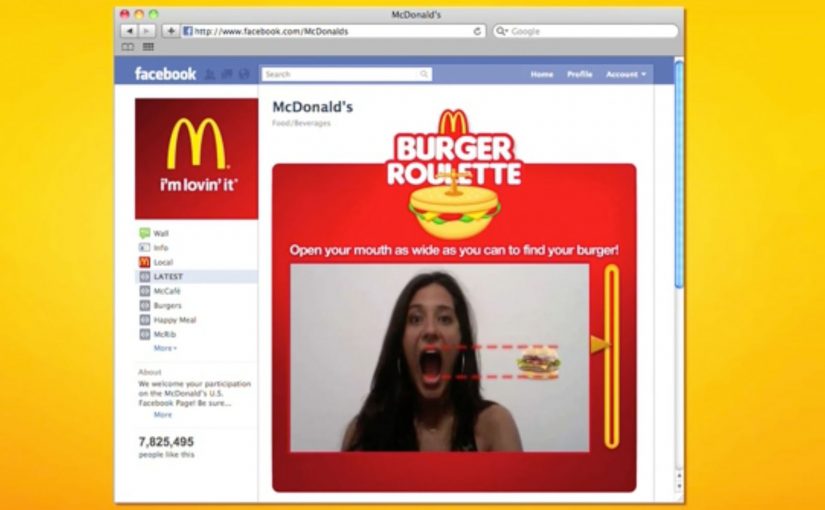
McDonald’s Burger Roulette App

This student concept is designed as a Facebook app that helps you find the “perfect” McDonald’s burger for your mouth. The premise is playful decision support. You answer a few prompts, the system narrows your choice, and the brand becomes the helpful guide instead of a menu you skim and forget.

UNICEF Donate A Word

This student concept proposes a new way to donate for child education by using the spelling feature inside Google Chrome. When a misspelled word is flagged, the prompt becomes a donation trigger, turning a small everyday friction into a small everyday contribution.

In portfolio-driven creative education, concepts like these matter because they show whether a student can turn brand strategy into a usable interaction, not just a line of copy.

Heineken Invite

This student concept uses a social-media-connected bottle opener that invites friends over for a beer. The social mechanic is competitive. Whoever has the most friends attending earns a free case of Heineken, turning “opening a beer” into an invitation ritual and a reason to gather.

Why it lands

All three ideas share the same advantage. They make the brand useful inside a moment people already have, rather than interrupting people to talk about the brand. The mechanic is the message, and the interaction is simple enough that you can explain it in one sentence without killing the effect. That works because a visible rule lets people grasp the idea instantly and connect the payoff to the brand.

Extractable takeaway: Build concepts around one native behavior and one immediate response. If the “rule” is explainable in a sentence and demonstrable in a clip, the idea will be remembered, and repeated.

The real question is whether the interaction makes the brand promise visible without extra explanation. The strongest student concepts are the ones where the interaction itself carries the branding work.

What brand builders can take from these student concepts

  • One behavior, one rule. Keep the mechanic tight. Complexity kills concept believability.
  • Make the brand the enabler. The best student concepts position the brand as the thing that makes the moment better, not the logo that arrives at the end.
  • Design for quick demonstration. If you cannot show it in 10 seconds, it will not spread beyond the pitch.
  • Payoff matters. Personal recommendation, effortless giving, or a social reward. The user needs a reason to do the action.

A few fast answers before you act

What is the common pattern across these three concepts?

Each turns a familiar action into a branded interaction rule with an immediate payoff, making the experience feel like proof rather than promotion.

Why are student concepts often framed around apps or gadgets?

Because interfaces make mechanics visible. You can show input, response, and reward quickly, which makes the idea easy to understand and easy to share.

What makes a concept like “Donate a Word” compelling?

It piggybacks on an existing habit and converts a tiny, repeated behavior into a tiny, repeated donation moment, which feels effortless and scalable.

What is the main risk when brands try to build ideas like this for real?

Friction. If the mechanic is not instant and obvious, people will not complete it in the real world, even if it looks great in a concept film.

What’s the single best takeaway for marketers reviewing student work?

Look for concepts where the mechanic expresses the brand promise without extra explanation. If the interaction itself makes the point, the idea is strong.
Turkcell: #Turkcelltweet Live Unboxing

Turkcell: #Turkcelltweet Live Unboxing

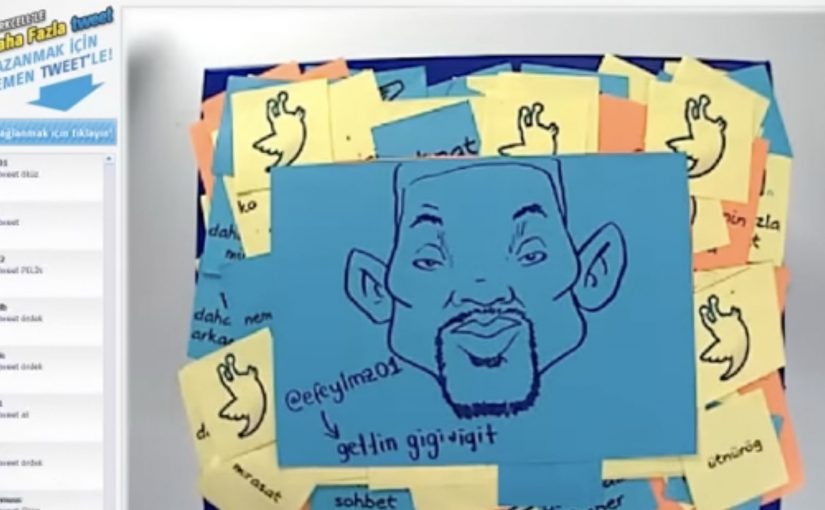
Turkcell was launching new smartphones bundled with mobile internet and wanted to build awareness among heavy internet users. So Turkcell’s agency, Rabarba from Istanbul, created a live Twitter competition designed to pull exactly those people in.

A Twitter game that literally unwraps the prize

The smartphone was packed in gift boxes and covered with Post-it notes. Players had to tweet what was written on the Post-its to “unwrap” the boxes, using the hashtag #Turkcelltweet. Along the way, contestants joined quick games that won them free minutes and mobile data. The final challenge was to get a celebrity to retweet the message, which won the successful Twitter user a smartphone.

In mobile-first consumer markets, live social mechanics can turn a product launch into a participatory event that spreads through existing networks.

Why it lands

This works because it converts passive watching into a simple, fast action. Read. Tweet. Progress. It also creates a public scoreboard effect. Everyone can see the stream, feel the speed pressure, and understand why a specific player is moving closer to the prize.

Extractable takeaway: When you need attention from people who tune out advertising, design a live loop where participation creates visible progress and the reward feels plausibly “earned” in public. By “live loop” I mean a repeatable action-reward cycle that updates in real time.

What the brand is really buying

The real question is whether you are buying a one-off spike or a repeatable participation habit you can trigger again.

On the surface, it is a giveaway. Underneath, it is audience training. The campaign teaches people to watch Turkcell’s channel closely, to act quickly, and to associate the bundle with active internet culture rather than with standard telecom promotion.

If you cannot guarantee fair rules and real-time moderation, do not run a live social competition like this.

Steal this live unboxing loop

  • Build a single clear verb. “Tweet this to unwrap” is easier than any multi-step entry mechanic.
  • Make progress visible. The crowd should be able to understand what is happening in seconds.
  • Use micro-rewards. Minutes and data keep non-winners engaged, not just the front-runner.
  • Reserve one high-status finish. A celebrity retweet creates a final boss moment that feels bigger than “random draw”.
  • Design for throughput. Live contests die if the pace slows or the rules feel inconsistent.

A few fast answers before you act

What is #Turkcelltweet in one sentence?

It is a live Twitter competition where people tweet Post-it clues to unwrap a boxed smartphone, win small rewards on the way, and compete for a phone as the final prize.

Why does “unwrapping in public” work as a mechanic?

Because it creates visible progress that spectators can follow, and it turns every participant action into content the network can see.

What role do the small prizes play?

They keep the wider crowd engaged. Even if you do not win the phone, you can still gain minutes or data and feel the game is worth playing.

What is the biggest risk with live social competitions?

Fairness and reliability. If timing, moderation, or rule enforcement looks inconsistent, sentiment can flip fast.

What should you measure beyond hashtag volume?

Unique participants, repeat participation, completion rates across stages, sentiment, and whether the campaign lifts bundle consideration and store inquiries in the launch window.

Mercedes-Benz: Tweet-Fueled Road Trip Race

Mercedes-Benz: Tweet-Fueled Road Trip Race

In February this year four two-person teams left four cities, Chicago, Los Angeles, New York City, and Tampa Bay, to goto Dallas, Texas in a custom-designed Mercedes-Benz car that was fuelled by Twitter.

Of course the cars were not physically running on tweets, but virtually they were. The reason for Mercedes-Benz saying that the race was “Tweet-Fueled” was because each of the four teams had to get the support of their home cities to drum up enough support on Twitter to get them to the finish line in Dallas.

In the end the campaign had almost 30,000 active participants with over 72,000 Facebook Fans and 77,000 Twitter Followers who generated over 150,000+ tweets to power the cars. The campaign videos generated about 2 million views, while the twitter reach pushed over the 25 million mark.

Why “tweet-fueled” is more than a gimmick

The smart move is that social support is not commentary. It is the engine of progress. That turns spectators into participants, because every tweet has a clear meaning. It helps your team move. In large consumer brands, this kind of real-time mechanic works best when the audience action maps to a visible outcome.

Extractable takeaway: When the audience can see their social action move a scoreboard, participation scales beyond one-off commenting.

  • Clear cause and effect. Tweets translate into distance and momentum.
  • City pride as a driver. Chicago vs LA vs NYC vs Tampa gives the story a natural rivalry.
  • Built-in recruiting. Teams need their cities, so they recruit friends to contribute.

How the campaign design created scale

The structure is simple. Four teams. One destination. A visible race. But it is the social mechanics that create the volume.

The real question is whether your campaign turns audience action into trackable progress that people can influence in real time.

  1. Teams need advocates. Supporters feel like they are part of the outcome.
  2. Progress is trackable. People return when they can see movement and standings.
  3. Video extends the narrative. Moments from the road give the audience something to share beyond the scoreboard.

In real-time social entertainment, participation scales when the audience can visibly change the outcome, not just comment on it.

What to take from this if you build real-time social campaigns

  1. Make participation meaningful. If the social action changes the outcome, people care more.
  2. Create teams and identity. Groups recruit. Individuals browse.
  3. Design a visible progress loop. Standings and milestones keep engagement alive.
  4. Use content to refresh attention. Videos give people new reasons to re-share and re-engage.

A few fast answers before you act

What was the Mercedes-Benz Tweet-Fueled race?

It was a social-powered race where four teams drove from Chicago, Los Angeles, New York City, and Tampa Bay to Dallas, and their progress was powered virtually by Twitter support from their home cities.

Why were the cars called “tweet-fueled”?

Not because tweets powered engines physically, but because tweets served as the mechanism that enabled teams to accumulate the support needed to reach the finish line.

What were the reported results?

Almost 30,000 active participants, over 72,000 Facebook fans, 77,000 Twitter followers, more than 150,000 tweets, about 2 million video views, and Twitter reach exceeding 25 million.

Why does the city-based structure matter?

It creates rivalry and pride, which motivates supporters to participate and recruit others to help their team advance.

What is the transferable lesson?

If you can turn social activity into measurable progress toward a clear goal, you can convert audience attention into sustained participation.