
Smart Apps: Audi Start-Stop and Reborn Apps

Smart Apps: Audi Start-Stop and Reborn Apps

Here are two mobile apps that recently caught my eye…

Audi Start-Stop App

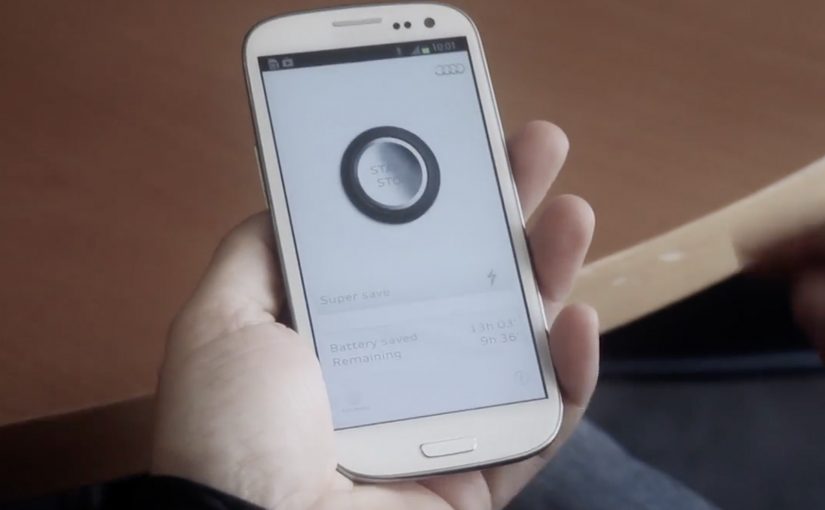
The Audi start-stop system turns off the engine when the car stops at a traffic light and turns it on again when the car starts. Using the same principle, Audi along with DDB Spain creates an Android app that detects which applications have been open longest without being used and sends an alert to the user to close them. Thus saving battery and making the phone a more efficient tool.

Reborn Apps

Many events create their own smartphone apps. But when the event is over, the apps lose their usefulness and are then hardly used. To give these apps a second life, Duval Guillaume gets various Belgium organisations to push out an update which turns their event apps into a registration medium for organ donation.

In European mobile marketing, the strongest brand apps behave like practical utilities first and brand messages second.

The real question is whether your app earns its place by doing one useful thing so well that people choose it again tomorrow.

Brand apps should be judged on repeat usefulness, not on campaign polish.

Why these app ideas work

Both concepts start with a familiar trigger and then make the next best action nearly frictionless, which is why the prompt feels helpful instead of noisy.

Extractable takeaway: Both apps translate a familiar real-world idea into a simple mobile behavior change. One nudges you to close what you are not using. The other repurposes what you already have installed.

  • They solve a real friction. Battery drain and app clutter are everyday pains. Low donor registration is a societal pain.
  • They use a clear trigger. “Unused for long” becomes the reason to act. “Event is over” becomes the reason to update.
  • They keep the action lightweight. A close action or a signup action can happen in seconds.

Two different intents, one shared pattern

The Audi app is a utility story. It borrows a car feature metaphor to make an Android housekeeping task feel purposeful. The Reborn idea is a “mobile for good” story. By “mobile for good,” I mean using everyday mobile touchpoints to drive a public-interest action, not just brand engagement. It turns leftover event attention into a meaningful registration moment, without asking people to download something new.

Patterns to borrow for brand apps

  • Start from a known behavior. People already ignore background apps. People already keep old event apps installed.
  • Make the trigger obvious. If users cannot explain why the app pinged them, they ignore it next time.
  • Design for the next best action. One tap to close. One short flow to register.
  • Let the brand sit behind the benefit. If the utility feels real, the brand halo follows naturally.

A few fast answers before you act

What is the Audi Start-Stop App?

It is an Android utility idea that identifies apps left open for a long time without being used and alerts you to close them, borrowing the metaphor of Audi’s start-stop engine system.

What problem does it try to solve?

It targets battery and resource drain caused by apps that stay running in the background after you stop actively using them.

What are Reborn Apps?

It is an idea that asks event app publishers to push an update after the event ends, transforming those unused apps into a simple organ donation registration tool.

Why is the “update instead of download” approach smart?

It removes acquisition friction. The app is already on the phone, so the campaign can focus on conversion rather than installs.

What is the common lesson across both examples?

Make the desired behavior the easiest behavior. Use a clear trigger, keep the action simple, and let usefulness do the persuasion.

Obra do Berço: The SOS SMS

Obra do Berço: The SOS SMS

Street children begging for food and money near busy traffic stops are a common sight in metropolitan cities like Rio de Janeiro. Accustomed and tired of this routine, drivers often shut their car windows to ignore the children and avoid any contact.

To raise awareness and trigger more donations, “Obra do Berço”, a day care for underprivileged children in Brazil, found a way to make the children’s voices heard through those closed windows.

Bluetooth antennas were hidden near traffic signals where large groups of children tended to gather. When drivers stopped at the lights, the antennas sent an SOS SMS to nearby phones.

A message that slips past the closed window

The mechanism is a proximity-triggered interruption. Drivers can shut out the street by rolling the glass up, but they still carry one open channel with them. Their phone. The campaign uses that channel to deliver a short, unavoidable nudge at the exact moment the social problem is physically present.

In dense urban commuter settings, the hardest part of fundraising is breaking habitual avoidance without escalating the intrusion.

The real question is how you interrupt a learned act of avoidance without making the intervention feel more invasive than the problem itself.

Why this lands

This works because it reframes the “ignore” reflex. The driver’s default action is to reduce discomfort by closing the window. The SMS reopens the reality in a different place, and it does it at a moment when the person has time. Waiting at the red light. That works because the channel change breaks the driver’s avoidance pattern without forcing face-to-face contact. The intervention is also personal. It arrives one-to-one, not as a public shaming message blasted at everyone.

Extractable takeaway: If your audience has learned to tune out a problem in a specific physical context, move the prompt to a channel they still keep open in that context, and time it to a pause moment where action is possible.

What the campaign is really doing

It is converting location into relevance. Instead of asking for empathy “in general,” it triggers the ask at the exact place where indifference usually happens. That makes the message harder to dismiss as abstract, and it gives the NGO a fighting chance to turn a routine stop into a micro-decision to help.

This is smart low-budget fundraising because it uses context and timing to create relevance instead of relying on guilt alone.

What to steal from this roadside trigger

  • Target a repeatable micro-moment. Red lights create predictable dwell time.
  • Use a channel people already carry. You do not need new hardware in the user’s hands.
  • Keep the prompt short. The first goal is attention, not a long explanation.
  • Link the ask to immediate context. Relevance beats persuasion when budgets are small.

A few fast answers before you act

What is “The SOS SMS”?

It is a charity activation where hidden Bluetooth antennas near traffic lights sent an SOS SMS to drivers’ phones to raise awareness and prompt donations.

Why use traffic lights as the media placement?

Because drivers are stopped, attention is idle, and the social issue is physically present in the same moment, making the message feel relevant.

What problem does this solve versus traditional street fundraising?

It bypasses the closed-window barrier and reduces the face-to-face avoidance loop by moving the first contact into a private phone message.

Is this more effective than posters or billboards?

It can be, because it is timely and personal. The message arrives when the audience is already in the situation, not hours later.

What’s the main risk with proximity-triggered messaging?

If it feels spammy or unclear why the message arrived, people may react negatively. The copy and consent expectations need to feel respectful and transparent.

Doctors Without Borders: Like Hunting

Doctors Without Borders: Like Hunting

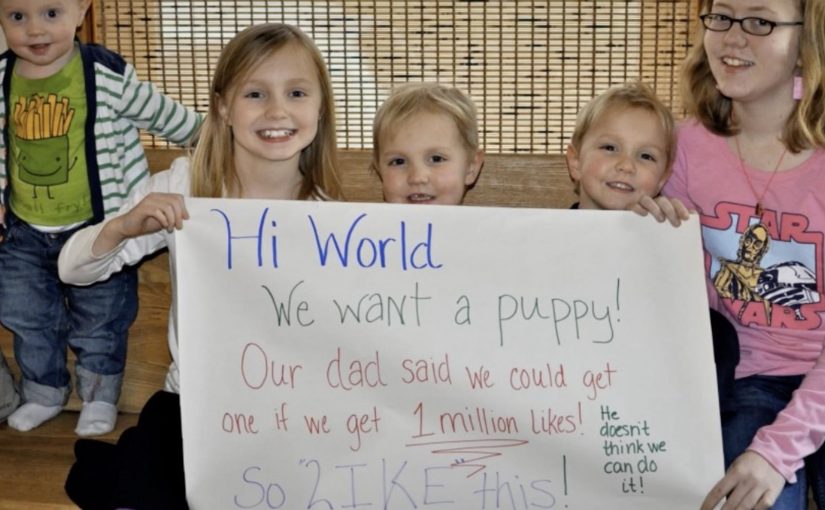
In the last months there have been cases of people uploading photos on Facebook and successfully asking for 1 million likes. So keeping that in mind, Doctors Without Borders decided to turn their campaign idea “good intentions don’t save lives” on its head and actually make people’s intentions count.

Through a special Facebook app people could create a post and ask their friends for likes while donating 1 Danish Krone to Doctors without Borders for each like they got. Each collection was run for 48 hours and only likes from your own Facebook friends counted. By setting a maximum amount you could also make sure you don’t go bankrupt. If your friends were too slow, you could also simply decide to donate more.

At the end of each donation drive people could post a picture saying thank you to all their friends who helped them donate. The campaign’s success is described as having made it a permanent solution and can still be found running for people who want to turn their friends likes into donation.

Turning “like hunting” into a donation engine

The mechanic is deliberately simple. Here, “like hunting” means asking friends to turn their likes into a capped donation total. You post, you ask for likes, and the counter becomes money. The 48-hour window adds urgency, and the “friends only” rule keeps it personal instead of turning it into a popularity contest across strangers.

In European nonprofit fundraising, micro-donations work best when the unit action is already a habit and the rules stay frictionless.

Why this lands on Facebook

It does not fight the attention behavior. It repurposes it. People already know how to like and how to help a friend. The campaign bundles those instincts and makes the cost feel manageable by letting the donor set a cap, then top up if momentum is slow. The real question is whether a low-value social signal can become a credible donation act, and this campaign proves it can when the cost is capped and the ask stays social.

Extractable takeaway: If you want participation at scale, do not ask people to learn a new behavior. Convert an existing social reflex into a counted contribution, and make the risk feel controllable.

What the “cap” is really doing

The maximum amount is more than budgeting. It is permission. When people know they cannot accidentally overspend, they are more willing to start, and starting is the hardest step in any donation flow.

What to steal for your next donation mechanic

  • Make the unit obvious. “One like equals one krone” is instantly understandable.
  • Time-box the drive. A short window creates a reason to ask now, not later.
  • Keep it inside the social graph. Friends-only engagement protects trust and reduces spam dynamics.
  • Build in safety rails. Caps remove fear, and optional top-ups preserve ambition.

A few fast answers before you act

What is Like Hunting?

It is a Doctors Without Borders fundraising mechanic that converts Facebook likes into donations, using a short, time-boxed “drive” created by an individual supporter.

Why does “friends-only likes” matter?

It keeps the action personal and credible, and it stops the drive from turning into mass like-begging from strangers. That helps the campaign feel like helping a person, not feeding an algorithm.

What makes the cap important?

The cap reduces perceived risk. People participate more readily when they know the maximum cost upfront, and the option to add more later keeps the mechanism flexible.

Why does the 48-hour window matter?

It gives the ask a deadline, which makes supporters more likely to post now and friends more likely to respond quickly. Without that time-box, the mechanic risks becoming passive background noise.

When should brands or NGOs use this pattern?

When there is a simple, repeatable action that people already perform socially, and when turning that action into a counted contribution can happen without heavy explanation or new habits.