
Magnum Pleasure Hunt 2: bigger, bolder sequel

Last year, to launch the all new Magnum Temptation Hazelnut ice-cream, Swedish agencies Lowe Brindfors and B-Reel created an advergame, a branded game built to promote a product, called “Magnum Pleasure Hunt Across The Internet”. In the game, players are taken across 20 well known websites as they collect Bon Bons, the special ingredient of the Magnum Temptation Hazelnut ice-cream.

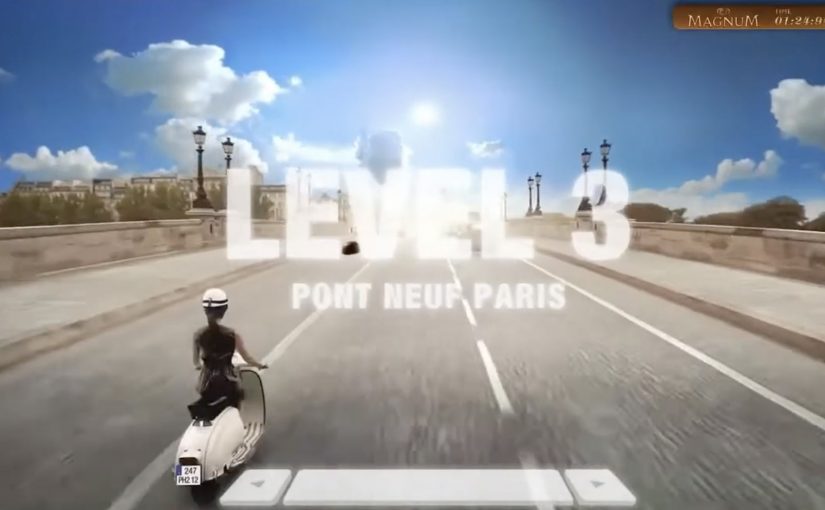
Since the game did exceedingly well, Magnum and team came up with round 2, enhanced with 3D graphics. This time players were taken on a run in New York, made to fly over Paris, and surf the waves in Rio De Janeiro, using a map and street-view style interface as the playground.

What changes from round 1 to round 2

The first game is a browser-bending sprint that treats the wider internet as a set of levels. The sequel shifts the same chase mechanic into city environments, with more depth, more spectacle, and clearer “set pieces” you can remember after one play.

In global FMCG brand launches, advergames like this work when they turn “a product promise” into a simple, replayable challenge people can explain in one sentence.

The real question is whether your sequel escalates the world without changing the one rule people already learned.

  • Round 1: web-hopping levels and Bon Bons as the core collectible.
  • Round 2: city-based runs plus a stronger 3D feel for movement, obstacles, and momentum.

Why it lands: it feels like discovery, not advertising

This is not a microsite you click once and forget. It is designed as a time-and-score loop. You play again to improve your route, your timing, and your collection count, and that repeat play is where the brand association gets built. It also matches Magnum’s “pleasure seeking” positioning with a mechanic that is literally a hunt. Because the loop rewards replay with visible improvement, the hunt association gets reinforced without asking the player to read a product pitch.

Extractable takeaway: When the brand promise is an action verb, make that verb the gameplay loop, and make replay the fastest way to feel the promise again.

The smart brand logic behind the Bon Bons

Bon Bons are a neat choice because they let the product story travel inside the gameplay. You are not only collecting points. You are collecting the “ingredient” that makes the new variant feel specific, even if you never read a product description.

I think it is a great follow up to the first version. Magnum Pleasure Hunt 2 could be experienced at www.pleasurehunt2.mymagnum.com.

Sequel campaign rules worth copying

  • Keep the core rule the same. Sequel energy comes from familiarity, then escalation.
  • Upgrade the world, not the instructions. New environments create novelty without re-teaching the game.
  • Build signature moments. New York, Paris, and Rio act like memorable chapters, not just backgrounds.
  • Make it easy to share a result. If the outcome is a score or time, people instantly understand what “good” looks like.

A few fast answers before you act

What is Magnum Pleasure Hunt?

It is a branded advergame where players chase and collect Magnum Bon Bons, originally by racing across well known websites as game levels.

What is different about Magnum Pleasure Hunt 2?

The sequel moves the action into city environments, adds a more cinematic 3D feel, and turns New York, Paris, and Rio into distinct stages of the chase.

Why does the “hunt” mechanic fit the Magnum brand?

Because it translates the idea of “pleasure seeking” into a simple action loop. Keep moving, keep collecting, keep chasing the next reward.

What makes an advergame replayable enough to matter?

Clear scoring, short rounds, and visible improvement. If players can beat their own time or score, they come back.

What is one practical takeaway for marketers?

If you plan a sequel, keep the rules familiar and escalate the world. That is how you get “new” without losing the audience you already earned.

Frijj: You LOL You Lose

Frijj, a UK-based milkshake brand, and Iris Worldwide developed a campaign to help people build their tolerance to the unexpected. The aim was to make Frijj’s new flavours, Honeycomb Choc Swirl, Jam Doughnut, and Sticky Toffee Pudding, feel like a challenge worth trying.

So they created an advergame, a branded game designed to promote a product through play. It pits you against friends from your social networks in a challenge of who can keep a straight face for the longest period of time while the web app serves up funny and weird YouTube videos.

A “don’t laugh” game that sells flavour confidence

The mechanic is straightforward. You start a session, the site throws escalating clips at you, and you try not to crack. The moment you smile, you lose. The format turns passive viewing into competitive viewing, which is exactly what makes it sticky. Here, “flavour confidence” means making unusual flavours feel safe and fun to try rather than risky or strange.

In FMCG launches, simple competitive mechanics are a reliable way to turn a product message into repeatable social behavior.

Why it lands

This works because it reframes product novelty as a playful test. Instead of saying “these flavours are bold”, it says “prove you can handle bold”. Social comparison does the rest. You want a better score than your friends, so you replay, you share, and you bring others into the same loop. The use of face tracking is also a smart constraint. If the system can “catch” a smile, the challenge feels fair and measurable rather than self-reported.

Extractable takeaway: If your product promise is “unexpected”, build a mechanic where the audience has to demonstrate composure or control. The brand benefit becomes the rule of the game, not the line of copy.

What Frijj is really buying with this advergame

This is a strong launch mechanic because it turns trial curiosity into repeatable social play at scale. The real question is whether the product promise can become a rule people want to test with friends. The game creates time spent, repeat visits, and a socially distributed invitation mechanic, all while keeping the brand message consistent. New flavours that might feel risky in a supermarket become a badge of fun online.

Design rules worth borrowing from Frijj

  • Make the rule binary. Smile equals lose. Simple rules travel.
  • Use content people already understand. YouTube “weird and funny” clips need no explanation.
  • Turn replay into the product benefit. Each retry reinforces “unexpected” as the brand’s territory.
  • Design social competition as the default. Friends, scores, and bragging rights beat generic “share this”.
  • If you use webcam detection, be explicit. Clear consent and clear on-screen feedback keep trust intact.

A few fast answers before you act

What is the core idea of “You LOL You Lose”?

A straight-face challenge where the “payment” is composure. You watch funny clips and try not to smile longer than your friends.

What is an advergame?

An advergame is a branded game designed to promote a product by turning the message into gameplay rather than traditional advertising.

How does the game know you “lost”?

It is described as using face tracking through your webcam to detect a smile. When you smile, the session ends.

Why is this a good fit for launching unusual flavours?

Because it converts “new and unexpected” into a playful challenge, which makes novelty feel fun instead of risky.

What should you measure if you run something similar?

Repeat plays per user, share and invite rate, average session duration, and any lift in branded search or retail trial during the launch window.

Google Maps Racing Advergame

Mini France has managed to successfully offer a virtual Mini experience with the help of a Social/Google Maps mash-up advergame called “Mini Maps”. Here, advergame means a branded game that turns the marketing idea into the experience itself.

With DDB Paris and Unit9 they created a Facebook app that lets you customize a virtual Mini and then challenge Facebook friends to time trials around the world through Google Maps. In the challenge you are racing your friends over satellite images of your favorite locations around the world!

Why this works

  • The idea is instantly graspable. Customize your Mini. Pick a place. Race the clock. Challenge friends.
  • Google Maps is not a backdrop. The satellite layer becomes the playable surface, which makes every track feel personal.
  • Social competition is built in. Time trials make it easy to compare performance without complex multiplayer setup.

In interactive brand marketing, the scalable advantage comes when a familiar platform becomes part of the mechanic, not just part of the media plan.

What this signals for interactive brand experiences

The real question is not whether a brand can borrow a popular platform, but whether the platform becomes the mechanic that makes the brand memorable. The strongest move here is that Google Maps is not a skin around the idea. It is the idea in use. That matters because location becomes the hook, customization becomes the commitment step, and friendly competition becomes the retention loop, meaning the simple reason people come back and play again. This gives the brand repeat interaction instead of one-time exposure.

Extractable takeaway: When the platform supplies the play mechanic, the brand experience feels more native, more personal, and easier to revisit with friends.

What to steal for map-based social games

  • Use real places as the content. When the track is a familiar location, the hook is instant and personal.
  • Make competition the retention loop. Time trials against friends give players a reason to come back and improve.
  • Keep customization lightweight but expressive. A few visible choices are enough for ownership without slowing play.
  • Build the platform into the mechanic. If Google Maps is the story, the experience should demonstrate it, not just reference it.

A few fast answers before you act

What is “Mini Maps”?

“Mini Maps” is a Facebook advergame for Mini France that combines social sharing with Google Maps to create location-based time trial races.

What does the viewer actually do?

You customize a virtual Mini and then challenge Facebook friends to time trials across Google Maps locations, racing over satellite imagery.

Why is Google Maps central to the experience?

Because it provides the world itself. The satellite view turns real places into tracks, which makes the challenge feel more personal and replayable.

What is the reusable pattern here?

Start with a concrete action, move to a simple challenge mechanic, then let social competition drive repeated return visits.

What should brands copy from this model?

Use a platform feature as the core mechanic, keep the player action simple, and add a lightweight social challenge that gives people a reason to come back.