
smart Argentina: The Tweet Commercial

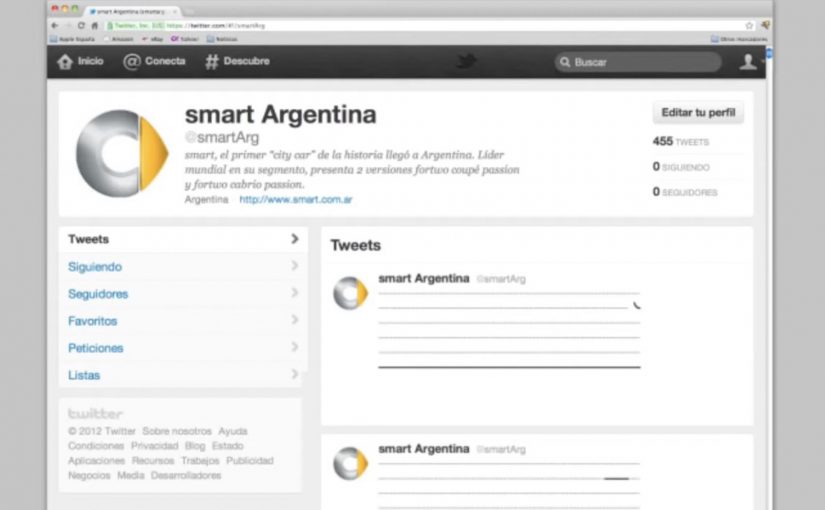
Argentina continues to set the standard in creative Twitter campaigns. In this latest execution, when you visit smart’s official account for Argentina, you might think some kid got in there and had his way with the keyboard. In reality, the feed is built from carefully crafted ASCII art tweets (images built from text characters) that stack into an animated sequence.

A Twitter timeline that behaves like a commercial

The mechanic is simple and slightly mischievous. The smart Argentina team publishes hundreds of ASCII frames as consecutive tweets, then relies on Twitter’s keyboard navigation to “play” them quickly. The result is billed as a Twitter-based animated commercial built from the timeline itself.

In consumer brand social media marketing, repurposing native interface behavior into a brand experience is one of the fastest ways to earn attention without buying more media.

How to watch it the intended way

Visit the smart Argentina twitter account and hold down the “J” key to move rapidly through the tweets and see the flipbook effect. Alternatively, the video below captures the idea as it was meant to be experienced.

Why this works, even though it is “just tweets”

It treats a constraint as a canvas. The 140-character format becomes the production rule, and the feed becomes the screen. That restraint is also the brand fit. A small car brand using a small-message platform to create a big-format effect is a neat piece of coherence. Because the viewer has to actively scroll to make it move, the act of watching feels like participation, which makes the trick easier to remember and repeat. The real question is whether you can make a platform’s native navigation feel like a viewing ritual, not a gimmick.

Extractable takeaway: If the interface can become the playback engine, you can turn a feed into a format, and a format into shareable proof of craft.

Steal the timeline-as-commercial pattern

  • Build the ad out of the platform. If the medium is the message, people are more likely to show others how it works.
  • Exploit one native behavior. Here, a single shortcut becomes the playback engine.
  • Make the payoff legible in seconds. The moment the animation “clicks”, the story tells itself.
  • Let craft signal effort. Hundreds of frames reads as obsession, and obsession reads as share-worthy.

A few fast answers before you act

What is “The Tweet Commercial” in one line?

A flipbook-style animation made from hundreds of ASCII tweets, designed to “play” as you move through smart Argentina’s Twitter timeline.

What role does the “J” key play?

It uses Twitter’s keyboard navigation to advance quickly through tweets, effectively turning the timeline into a fast-scrolling animation reel.

Why is the “world’s first” claim risky to repeat as fact?

Because “first ever” is hard to prove across a platform’s full history. It is safer to treat it as how the work was billed at the time.

What is the transferable lesson for brand teams?

If your platform is saturated with conventional posts, build a sequence that only makes sense in the native interface. The novelty becomes the distribution.

What is the main execution risk if platform behavior changes?

If keyboard shortcuts or timeline behavior change, the “playback” may break. Treat the navigation trick as a bonus, and make sure the idea still holds up when captured as video.
Coca-Cola: Cheer-O-Meter

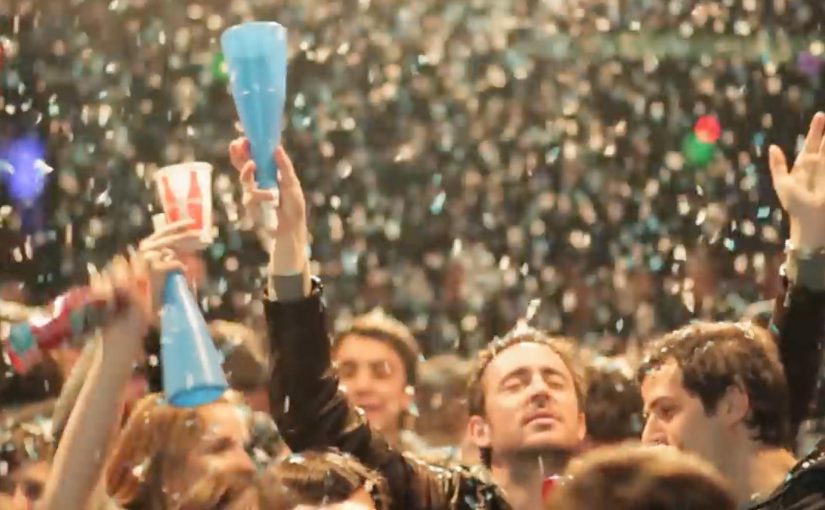
To promote the excitement around Copa America 2011, OgilvyAction worked with Coca-Cola to set up a giant screen in downtown Buenos Aires for fans to watch their favorite teams and provide unconditional cheer to the Argentinean National Team. But there was a catch. Sound sensors were installed to keep the screen on and if the fans stopped cheering, the screen would go blank.

The real question is whether you can make the crowd’s participation the switch that powers the experience.

Why this activation hits

The mechanic is brutally simple. Your cheering is not just encouraged. It is required. Here, an activation is a live brand experience that changes what the crowd can see based on what they do. Because the screen can die, the crowd self-organizes to keep the volume up, which makes “support” feel like a shared responsibility. In sports sponsorship and live-event marketing, conditional access is one of the fastest ways to turn spectators into participants.

Extractable takeaway: If you want participation, make it the required input for a real reward, and show the consequence instantly.

  • Clear rule. Cheer to keep the screen alive.
  • Immediate feedback loop. The crowd sees the consequence in real time.
  • Social amplification built in. People around you become part of the control system.

What marketers can reuse from the idea

This is a strong example of “participation as the power source”. Instead of adding a gimmick on top of the match, the match itself becomes the reward for participation. It also turns a brand message into a behavior, which tends to travel further than a tagline.

  • Make participation the power source. Tie the experience to an audience action instead of adding a side-gimmick.
  • Keep the reward “core”. Use the thing people already want as the payoff, not a separate prize.
  • Show consequences instantly. A visible feedback loop lets the crowd adjust behavior without instructions.

If participation does not change anything in the moment, it will read as decoration, not interactivity.


A few fast answers before you act

What is the Coca-Cola “Cheer-O-Meter”?

It is a live fan-screen activation in Buenos Aires for Copa America 2011 where sound sensors kept the match on screen only while fans kept cheering.

How did the sound-sensor mechanic work?

The cheering volume acted as the trigger. If it dropped too low, the screen went blank, pushing the crowd to keep the energy up.

Why is this effective as a brand experience?

Because it converts brand participation into a simple, memorable rule with instant consequences, and it makes the crowd feel responsible for the outcome.

What is the transferable pattern?

Create one clear rule, attach it to a real reward, then deliver immediate feedback so the audience understands their impact in the moment.

Navarro Correas: Wine Art Project

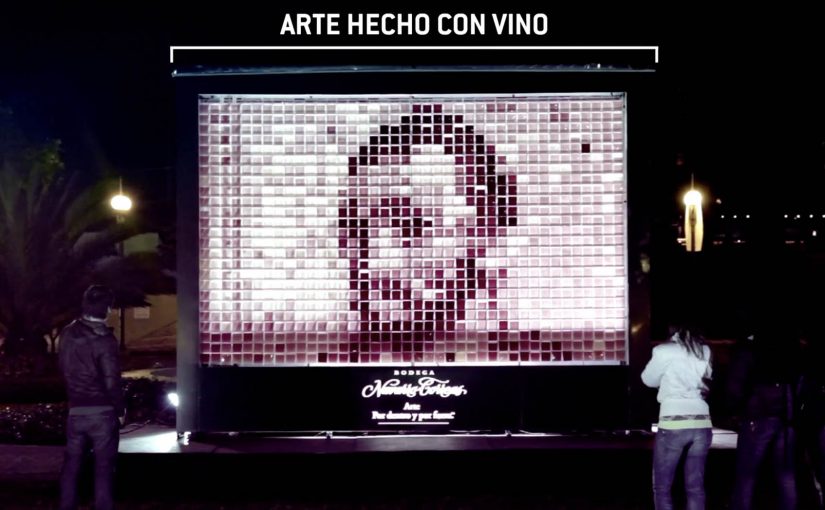
Navarro Correas creates a 13 x 8.2 meter structure in Bogotá, Colombia. It consists of 1,000 acrylic cells and an automated robotic mechanism that fills each cell with six different shades of wine.

How the installation works

People activate the robotic mechanism by sending a text message with the acrylic cell number they want filled. Over time, 1,000 text messages build the full image, described as recreating Van Gogh’s self-portrait. A masterpiece made with Navarro Correas’ own wines.

An SMS-controlled installation is a public artwork where participants trigger physical changes by texting simple commands, turning the audience into the “interface”.

In large-scale city activations, participation gets dramatically stronger when the crowd can see their input change a shared object in real time.

The real question is not whether people will send one text, but whether each text feels like a visible personal contribution to something bigger.

Why it lands: it turns contribution into ownership

This works because it makes participation concrete. You are not “liking” or “voting”. You are choosing a specific cell and watching a physical outcome appear. The growing picture becomes a public scoreboard of collective effort.

Extractable takeaway: If you want mass participation, design a mechanic where each small action is visible, additive, and irrevocably part of the final outcome. People engage longer when they can point to “their piece” of the whole.

The stronger idea here is the visible build, not the SMS channel by itself.

The wine-as-paint choice also earns attention twice: first as a spectacle (liquid filling the grid), and then as a reveal (the final portrait). The mechanism creates suspense, and suspense keeps people texting.

What the brand is really doing here

The installation positions the wine as a maker’s material, not just a drink. It borrows the credibility of craft and art, then backs it with a participatory system that feels modern and social without needing a social network.

What to steal for your next interactive public piece

  • Make the input trivial: one action, one identifier, no learning curve.
  • Make the effect observable: people should immediately see change after they act.
  • Use “additive progress”: partial completion should still look interesting, so the build phase has its own payoff.
  • Design for attribution: let participants feel “I contributed”, even if the contribution is small.
  • Pick a reveal that rewards patience: the final image should be worth waiting for.

A few fast answers before you act

What is the Navarro Correas Wine Art Project?

It is a public installation made of 1,000 acrylic cells that are filled by a robotic mechanism with different shades of wine. People participate by texting a cell number to trigger a fill, gradually revealing a final portrait image.

Why use SMS for interactivity?

SMS is frictionless and universal. It requires no app download, works on basic phones, and is fast enough for impulse participation in a public space.

What makes this different from a normal billboard stunt?

The audience directly controls the build. Each message produces a visible change, so the piece becomes a collective construction rather than a one-way display.

What is the key behavioral driver?

Ownership through contribution. People engage more when they can claim a specific part of the outcome and see the shared progress accumulate.

What should you measure for a campaign like this?

Participation volume, unique participants, repeat participation, time-to-completion of the full artwork, dwell time around the installation, and any earned media or social mentions driven by the live build.