
BGH: Big Nose Discount

BGH Air Conditioners in Argentina wanted to promote their new line of silent air conditioners. So agency Del Campo Nazca Saatchi & Saatchi came up with a whacky integrated campaign called “Big Nose”.

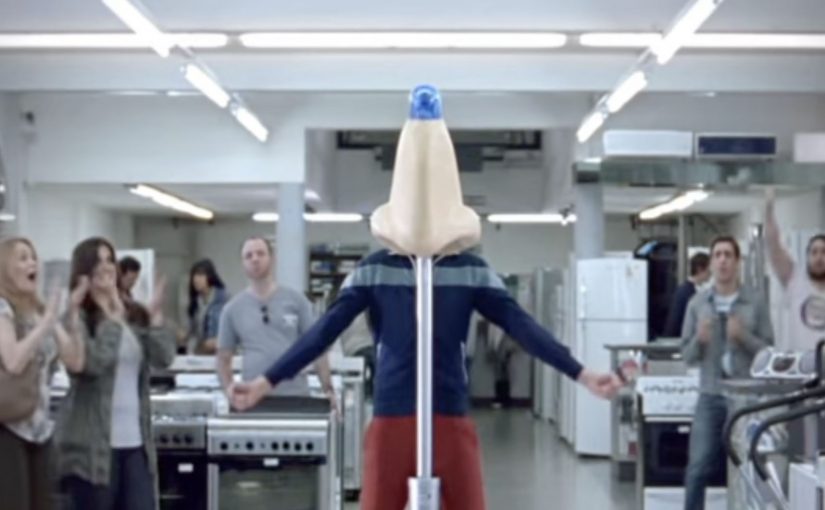
Together they created the Nose-O-Meter, an in-store device capable of measuring noses. If your nose was big enough to touch the sensor, an alarm would go off and you could win a 25 percent discount.

How the Nose-O-Meter mechanic works

The mechanism is a simple, physical test that turns a product message into a game. Try your luck in-store. Hit the sensor with your nose. Trigger the alarm. Unlock the discount. Online, visitors could upload a profile picture to see if their nose might qualify, and the site pointed shoppers to the nearest Nose-O-Meter location.

That works because a visible pass-or-fail moment makes the product story easy to grasp, repeat, and film in seconds.

In Latin American appliance retail, in-store stunts that turn a functional claim into a public, repeatable challenge can generate attention without needing heavy media spend.

Why it lands

It uses an instantly readable visual proxy. A “silent” product is hard to demonstrate in a store, but a loud alarm creates a memorable contrast that people talk about. The absurdity lowers the barrier to participation, and the discount gives a clear reason to play rather than just watch.

Extractable takeaway: When your benefit is hard to demo, build a playful proxy people can physically perform. Then attach a real reward so the joke converts into action.

What the campaign is really trying to do

The real question is whether a silly retail mechanic can make a hard-to-demonstrate product benefit talkable enough to drive store traffic and sales.

This is awareness plus retail movement. The Nose-O-Meter creates footfall and talk value. The online upload tool extends reach, adds a low-friction entry point, and helps direct people into stores where the discount can close the sale.

Retail activation cues worth borrowing

  • Turn the claim into a test. A measurable moment is easier to film, share, and repeat.
  • Design for spectators as well as players. Public stunts work when watching is entertaining and playing is simple.
  • Use a two-step funnel. Lightweight online interaction that drives to a physical conversion point.
  • Make the reward meaningful. A real discount keeps the activation from feeling like a pure gimmick.

A few fast answers before you act

What is Big Nose in one sentence?

An integrated BGH campaign where a Nose-O-Meter measures your nose in-store, and if it hits the sensor you win a 25 percent discount.

Why include an online photo upload tool?

It lets people self-check and engage remotely, then nudges them toward the nearest in-store device where the discount is actually won.

How does this connect to “silent” air conditioners?

It avoids a technical demo and instead creates a talkable stunt that carries the brand name and offer into conversation, then relies on the discount to drive purchase consideration.

What makes this more than a pure gimmick?

The mechanic ties the joke to a concrete retail reward, so participation has a practical payoff rather than ending as a laugh with no next step.

What is the main risk with humor-led retail activations?

If the mechanic is unclear or the reward feels small, people will watch and laugh but not convert. Clarity and payoff have to be immediate.
Norte: The Best Excuse Ever

A night out with the boys usually needs an excuse, at least as the joke goes. Norte, a beer brand associated with northern Argentina, decides to turn that familiar line into a socially useful premise.

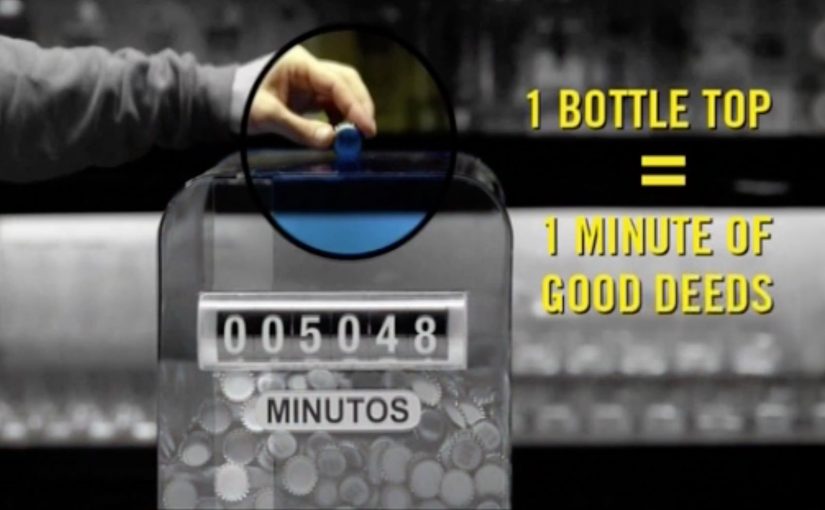
The idea is deliberately simple. For every Norte beer consumed at a bar, the brand donates one minute of time to practical community work, including fixing houses, maintaining parks, and repairing schools. Followers can monitor the donated minutes and the progress made through a dedicated website, which turns “we went for a beer” into a measurable counter of good deeds.

How the “minutes” mechanic works

The mechanic converts consumption into a visible unit of contribution. One beer equals one minute, then the brand performs the work and publishes progress so the audience can see the tally move. The counter is the proof, and the proof is the story people repeat.

In FMCG marketing, especially in categories tied to social rituals, converting a purchase into a transparent, trackable unit of public benefit can reframe indulgence as participation.

Why it lands

It removes the defensiveness from the behavior by giving it a credible upside. The campaign is not asking people to stop going out. It is redirecting the narrative from “pointless drinking” to “we contributed minutes.” The tracking layer matters because it reduces cynicism, since the audience can follow a concrete output rather than a vague promise.

Extractable takeaway: If your category has a guilt narrative, turn the core behavior into a quantifiable unit of visible impact, then publish progress often enough that people can use it as social proof.

What the brand is really trying to win

This is reputation as much as reach. Norte is positioning itself as the beer you can choose without needing to defend the choice later. The community work is the legitimacy, and the “best excuse” line is the social wrapper that helps the story travel.

The real question is whether a beer brand can turn a familiar excuse into a credible, repeatable proof of usefulness.

What to borrow from Norte’s minute logic

  • Make the unit understandable. A minute is easier to grasp than a donation percentage.
  • Design the proof before the film. A public counter and visible work outputs keep the idea credible.
  • Let the audience retell it in one sentence. “Every beer adds a minute” is built for word-of-mouth.
  • Guard the integrity. Transparency and follow-through matter more here than polish.

A few fast answers before you act

What is “The Best Excuse Ever” in one line?

A beer campaign where each Norte beer consumed converts into one minute of real community work, tracked publicly so people can see progress.

Why does the minute-based unit help?

It is concrete and easy to visualize. It also makes progress feel additive, so participation scales naturally with social occasions.

What makes this more credible than typical cause marketing?

The proof mechanism. A visible counter plus documented work outputs reduces the “donation fog” that often makes audiences skeptical.

What is the biggest risk with this approach?

If the brand cannot consistently deliver the promised work, the counter becomes a liability and the campaign reads as opportunism.

When does this model work best?

When consumption is already social and habitual, and the brand can operationally execute real-world outputs at the pace the campaign generates demand.

Coca Cola Friendship Machine

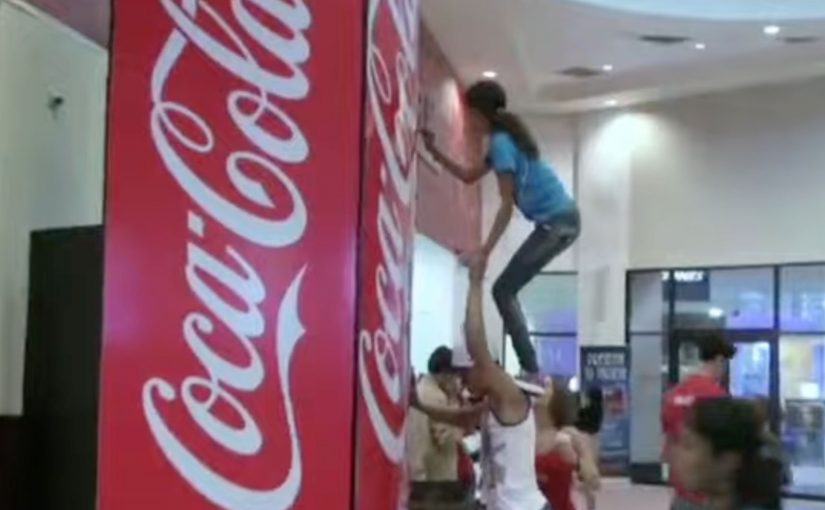
You walk up to a Coke machine that is about 12 feet tall. You cannot reach it alone. You ask a buddy for a boost. When you finally press the button, the machine rewards the teamwork by dispensing two Cokes instead of one.

What Coca-Cola is doing with the “Friendship Machine”

The game of vending machine one-upsmanship between Coca-Cola and PepsiCo continues with Coke’s “Friendship Machine”. To celebrate International Friendship Day, Coca-Cola in Argentina plants machines that appear to be about 12 feet tall and require that you ask a buddy for a boost to use it. As a reward, the Coke machine dispenses two Cokes instead of one.

In consumer brands running physical activations in public spaces, engineered constraints can be the simplest way to force a real-world social moment.

Why the Friendship Machine lands

Because the machine is too tall to use alone, it makes asking for help the trigger, which is why the second Coke feels like earned, shared generosity rather than a giveaway. Here, “friction” means a deliberate extra step that creates a specific behavior before the reward.

Extractable takeaway: If you want sharing to happen, design the mechanic so cooperation is required to unlock the value, not merely suggested after the fact.

The real question is whether your activation can make cooperation the trigger for the reward, instead of bolting “share” onto the end.

This is a stronger pattern than generic “share to win” mechanics because the social interaction is visible, immediate, and hard to skip.

The idea builds on Coke’s “Happiness Machine” viral video, where a machine keeps surprising students with free extras like soda and pizza. Coke also updates that generosity pattern with a “Happiness Truck” video, where a truck gives out Cokes alongside summer gear like surfboards, beach toys, and sunglasses.

PepsiCo responds with its own “Social Vending Machine” that lets you gift free Pepsi’s to friends and strangers via a text message.

How to steal this mechanic without copying it

  • Make teamwork the unlock. Ensure the reward only happens after a small, observable act of cooperation.
  • Design “fair friction”. The obstacle should feel purposeful, not annoying, and it should clearly connect to the reward.
  • Pay out in shared value. Give a two-person reward so the help feels reciprocated, not exploited.
  • Anchor to a moment people recognize. A simple calendar hook (like Friendship Day) makes the story easier to retell.

A few fast answers before you act

What is the Coca-Cola Friendship Machine?

It is a Coke machine designed to be too tall to use alone, so you need a friend’s help. When you do it together, it dispenses two Cokes as the reward.

Why make the machine intentionally difficult to use?

Because the friction creates the point. It forces a social interaction first, then makes the reward feel earned and shared, not just handed out.

How do the Happiness Machine and Happiness Truck relate?

They establish the “unexpected generosity” pattern. The Friendship Machine applies the same idea, but makes cooperation the trigger instead of surprise alone.

What makes this different from a typical “share to win” campaign?

The social action happens before the reward and in public. The mechanic makes cooperation unavoidable, instead of asking people to share after they already got the value.

How does this compare to PepsiCo’s Social Vending Machine?

Pepsi’s approach makes gifting the feature via text. Coke’s approach makes in-person collaboration the feature by requiring help at the machine itself.