
Jeep Wrangler: Drive Your Track

Jeep Wrangler: Drive Your Track

A road trip, chosen by your favorite song

Tell Jeep your favorite song and their app will tell you where to drive. Jeep Spain and Leo Burnett Iberia come up with an online campaign called “Drive Your Track”.

At www.driveyourtrack.com users are asked to upload their favorite song to discover where their music could take them.

How Drive Your Track works

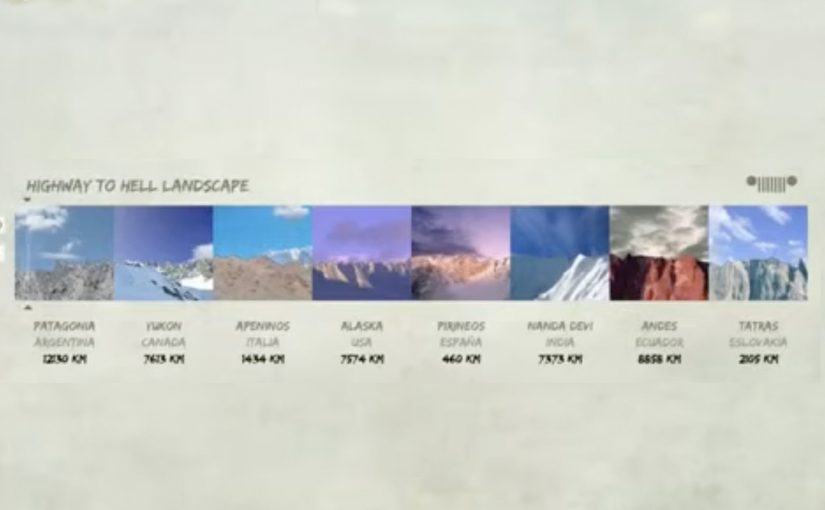
The mechanic is simple and slightly magical. The site reads the shapes of the uploaded track’s sound waves, then matches those shapes to landscape imagery that “looks like” the waveform. With an extra click, users can also discover the route to reach the destination.

In automotive brand building, turning an abstract promise like “freedom” into a playful self-portrait tool helps make exploration feel personally earned. Here, that means the user’s own taste shapes the result, so the experience feels like a reflection rather than a recommendation.

Why it lands

It replaces the usual car-site decision tree with a personal input that people already care about. Their music taste. That shifts the interaction from “find a feature” to “discover a place”, and it gives people a reason to share because the output feels like a quirky reflection of them, not an ad.

Extractable takeaway: If you want people to explore a brand experience, start from an input they feel ownership over, then return an output that looks unique enough to share without needing an incentive.

What Jeep is really buying

This is a soft test-drive nudge disguised as entertainment. The real question is how to make a brand promise about freedom feel personal before anyone even thinks about a vehicle spec sheet. The campaign gets people to imagine themselves on a specific drive with a specific soundtrack, then offers a route so the fantasy can become a plan. Even if the destination is symbolic, the journey cue is real, and that is the brand territory Jeep wants to occupy.

What to steal from Drive Your Track

  • Make the first step emotional, not technical. “Upload a song” beats “choose terrain type”.
  • Turn data into a story artifact. Waveforms become landscapes, so the output is visual and memorable.
  • Give a clear next action. A route option converts discovery into intent.
  • Design for identity sharing. If the result feels personal, distribution comes naturally.

A few fast answers before you act

What is Jeep’s “Drive Your Track”?

It is an interactive campaign where users upload a favorite song and the experience matches the track’s waveform shapes to landscapes, then offers a route to reach the suggested destination.

What is the core mechanic?

Waveform visualization and pattern matching. Your song’s sound-wave shapes are used to generate a landscape-style destination suggestion.

Why does music work as the input?

Music is identity. When the input feels personal, people stay longer, care more about the output, and are more likely to share it.

What makes this more than a novelty?

The route step. It turns a playful recommendation into a concrete next action that can lead toward an actual drive.

What is the transferable lesson for other brands?

Start with a user-owned input, return a shareable artifact, then offer one clear step that turns curiosity into intent.
Peugeot 408: Print ad with a real airbag

Peugeot 408: Print ad with a real airbag

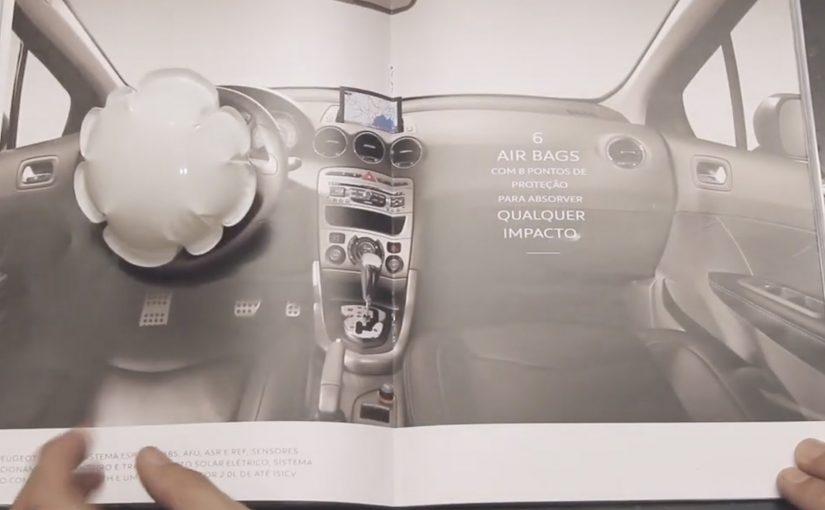
To advertise the safety benefits of the Peugeot 408, Brazilian agency Loducca put a mini airbag inside a print ad. Readers were invited to hit a marked spot on the page and see what happened. On impact, the tiny bag inflated, demonstrating in miniature what an airbag would do.

The ad appeared in Brazil’s business magazine Exame and was reportedly distributed with protective packaging so the airbag would not trigger by accident.

A magazine page you have to hit

The mechanism is brilliantly blunt. You do not watch a crash test. You perform a micro impact, a small, deliberate tap that simulates impact, with your hand, and the medium responds. That action turns a passive read into an experience, and it makes the “airbag” benefit impossible to ignore. Brands should treat safety claims as proof problems and design demonstrations the viewer can personally trigger.

In automotive safety marketing, the highest-performing proof is the kind you can physically trigger yourself.

The real question is whether your proof of safety can be triggered by the audience, not merely asserted by the brand.

Why print becomes more credible when it behaves like a product

Print normally communicates through trust in words and images. This ad adds a different kind of credibility, mechanical proof. Because it inflates on cue, the viewer’s brain files the message as something closer to engineering than persuasion. That matters because “safety” is a hard attribute to sell with rhetoric alone. People want reassurance, not adjectives.

Extractable takeaway: When a product claim is about protection, the strongest creative move is to make the audience feel a cause-and-effect demonstration, not just read about it.

The packaging is part of the idea

The special packaging is not just logistics. It signals intent. This is a controlled, designed interaction. It is also a reminder that experiential print has operational realities. Here, “experiential print” means print that behaves like a product interaction, with a designed trigger and response. If you build an ad that can go off in someone’s bag, you must engineer the distribution like you would engineer a product.

How to design triggerable safety proof

  • Make the claim triggerable. If the benefit is physical, design a physical proof moment.
  • Keep the interaction single-step. One obvious action, one immediate response, no instructions needed.
  • Let the medium do the explaining. The inflation is the headline. Copy becomes supporting detail.
  • Design the supply chain, not just the concept. Packaging, safety, and consistency are part of creative effectiveness.
  • Use spectacle sparingly. The wow moment is strongest when it directly maps to the product truth.

A few fast answers before you act

What is the Peugeot 408 “airbag in a print ad” idea?

A magazine ad with a real mini airbag insert that inflates when the reader hits a marked spot, mimicking an airbag deploying during impact.

Why does this work better than a normal safety print ad?

Because it converts a claim into a physical demonstration. The reader triggers the proof, which feels more credible than copy alone.

What makes interactive print feel premium instead of gimmicky?

When the interaction is directly tied to the product benefit and works reliably. The mechanism should be the message, not a disconnected trick.

What’s the biggest risk with mechanical inserts in magazines?

Execution risk. Misfires, non-fires, and distribution issues can overwhelm the idea. The production and packaging have to be engineered as carefully as the concept.

How can a brand replicate this approach on a smaller budget?

Design a tactile proof moment using simple materials and one clear action. The key is immediate cause-and-effect that maps cleanly to the claim.

Mercedes-Benz: Tweet-Fueled Road Trip Race

Mercedes-Benz: Tweet-Fueled Road Trip Race

In February this year four two-person teams left four cities, Chicago, Los Angeles, New York City, and Tampa Bay, to goto Dallas, Texas in a custom-designed Mercedes-Benz car that was fuelled by Twitter.

Of course the cars were not physically running on tweets, but virtually they were. The reason for Mercedes-Benz saying that the race was “Tweet-Fueled” was because each of the four teams had to get the support of their home cities to drum up enough support on Twitter to get them to the finish line in Dallas.

In the end the campaign had almost 30,000 active participants with over 72,000 Facebook Fans and 77,000 Twitter Followers who generated over 150,000+ tweets to power the cars. The campaign videos generated about 2 million views, while the twitter reach pushed over the 25 million mark.

Why “tweet-fueled” is more than a gimmick

The smart move is that social support is not commentary. It is the engine of progress. That turns spectators into participants, because every tweet has a clear meaning. It helps your team move. In large consumer brands, this kind of real-time mechanic works best when the audience action maps to a visible outcome.

Extractable takeaway: When the audience can see their social action move a scoreboard, participation scales beyond one-off commenting.

  • Clear cause and effect. Tweets translate into distance and momentum.
  • City pride as a driver. Chicago vs LA vs NYC vs Tampa gives the story a natural rivalry.
  • Built-in recruiting. Teams need their cities, so they recruit friends to contribute.

How the campaign design created scale

The structure is simple. Four teams. One destination. A visible race. But it is the social mechanics that create the volume.

The real question is whether your campaign turns audience action into trackable progress that people can influence in real time.

  1. Teams need advocates. Supporters feel like they are part of the outcome.
  2. Progress is trackable. People return when they can see movement and standings.
  3. Video extends the narrative. Moments from the road give the audience something to share beyond the scoreboard.

In real-time social entertainment, participation scales when the audience can visibly change the outcome, not just comment on it.

What to take from this if you build real-time social campaigns

  1. Make participation meaningful. If the social action changes the outcome, people care more.
  2. Create teams and identity. Groups recruit. Individuals browse.
  3. Design a visible progress loop. Standings and milestones keep engagement alive.
  4. Use content to refresh attention. Videos give people new reasons to re-share and re-engage.

A few fast answers before you act

What was the Mercedes-Benz Tweet-Fueled race?

It was a social-powered race where four teams drove from Chicago, Los Angeles, New York City, and Tampa Bay to Dallas, and their progress was powered virtually by Twitter support from their home cities.

Why were the cars called “tweet-fueled”?

Not because tweets powered engines physically, but because tweets served as the mechanism that enabled teams to accumulate the support needed to reach the finish line.

What were the reported results?

Almost 30,000 active participants, over 72,000 Facebook fans, 77,000 Twitter followers, more than 150,000 tweets, about 2 million video views, and Twitter reach exceeding 25 million.

Why does the city-based structure matter?

It creates rivalry and pride, which motivates supporters to participate and recruit others to help their team advance.

What is the transferable lesson?

If you can turn social activity into measurable progress toward a clear goal, you can convert audience attention into sustained participation.