
SNCF: Take a look at Brussels

SNCF: Take a look at Brussels

France’s national state-owned railway SNCF is back with another live event. This time, with ad agency TBWA\Paris, they set out to promote the launch of their new direct Lyon (FR) to Brussels (BE) train route.

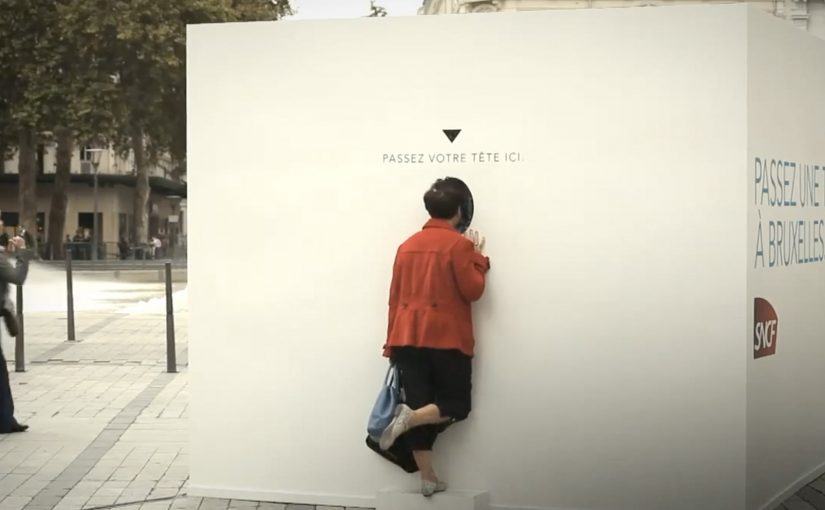
A 3 meter high cube is placed in Place de la République, Lyon with the message “Take a look at Brussels”. Passers-by who peek into the hole are transported to Brussels and greeted live by a Belgian music band.

A cube that makes “direct” feel real

The idea does not try to explain the route. It stages it. The cube behaves like a physical portal that turns “Lyon to Brussels is direct” into something you can experience in a few seconds, without a brochure, timetable, or sales pitch. For route launches, staging the benefit beats explaining it.

How the peephole reveal is engineered

The public-facing mechanic is simple. Here, “mechanic” means the visible action a passer-by is asked to take. Look inside, see Brussels. Underneath, it is a live link that creates the feeling of distance collapsing, with the band providing a human welcome that reads as hospitality rather than tech demo. Because the link is live and the welcome is human, the portal feels credible, which is why the message sticks.

In European transport marketing, live street experiences work best when they compress a service promise into one instantly understood moment.

Why this feels like travel, not advertising

Most transport marketing shows trains and destinations. This one gives you a destination moment first, then lets your brain do the rest. Curiosity pulls people in. The live greeting rewards them immediately. And the “I just saw Brussels from Lyon” story is easy to retell.

Extractable takeaway: If your promise is immediacy, make it visible as a live reveal, so people feel it before you explain it.

The real question is whether your launch makes the benefit felt before it is explained.

What SNCF is really buying with the activation

  • Instant comprehension. “Direct link” becomes experiential, not informational.
  • Earned attention. The cube is a public object that draws a crowd and creates spectators.
  • Shareable proof. The experience is built to be filmed, reported, and repeated as a simple narrative.

Steal this for your next route or service launch

  • Turn the benefit into a moment. Do not describe “direct”. Demonstrate it.
  • Make the invitation frictionless. A peephole beats an app download when you need street volume.
  • Add a human layer. A live welcome lands faster than a purely technical reveal.
  • Design for bystanders. If the crowd understands it instantly, the activation markets itself.

A few fast answers before you act

What is “Take a look at Brussels” by SNCF?

It is a street activation in Lyon where a large cube invites people to look into a peephole and see a live scene from Brussels, promoting a new direct train route.

Why use a cube and a peephole instead of posters?

Because the action is self-explanatory and physical. People understand what to do in seconds, and the reveal delivers the message more memorably than a static claim.

What is the key idea being communicated?

Directness. The campaign makes the Lyon to Brussels link feel immediate by turning it into a live “window” experience.

What makes this effective as live communication?

Curiosity drives participation, the live greeting rewards it, and the outcome becomes a simple story people share: “I saw Brussels from Lyon.”

What should a transport brand measure for activations like this?

Footfall, participation rate, dwell time, earned media pickup, and any measurable lift in route awareness or intent in the regions reached.
Flashmob Marketing Hits: April 2012

Flashmob Marketing Hits: April 2012

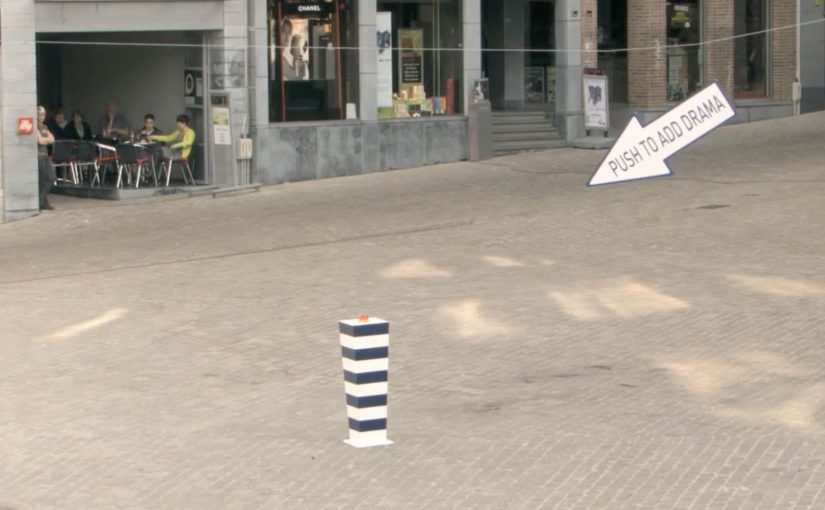
A big red push button sits in a quiet Flemish square. A sign says “Push to add drama”. Someone presses it, and the street turns into a live TV scene.

Flashmob marketing has been quite a fad in the last weeks. If you are unfamiliar with the concept, a flashmob is a large group of people who assemble suddenly in a public place, perform an unusual and pointless act for a brief time and then disperse. The whole act is normally recorded on video and then put on the web to generate more buzz.

Flash mobs can convert physical spectacle into shareable media without buying every impression. Here, “earned attention” means reach generated by people choosing to watch and share, rather than by paid placement.

Three street moments worth watching again

Daily dose of drama

To launch their new digital channel in Belgium, TNT placed a big red push button in a quiet Flemish square. A sign with the text “Push to add drama” invited people to use the button. And then the “ordinary day” collapses into staged chaos.

Why it lands: the invitation is frictionless, the payoff is immediate, and the viewer at home gets the same shock that the passer-by gets on the street.

The worst breath in the world

Tic Tac turns a simple “can you help me with directions” moment into social dread. A lost tourist asks for help in a busy square. Then, one person after another reacts as if the breath is so bad it triggers an apocalyptic chain reaction.

Why it lands: it weaponizes a universal fear, then exaggerates it so far that embarrassment becomes comedy. The crowd reaction becomes the story.

The Wouaaah Effect

For its Q10 Plus product, NIVEA in France creates a playful attention ambush on the streets of Paris. An unsuspecting woman tries a cream sample, walks on, and is suddenly met by a sequence of people lavishing her with attention.

Why it lands: it makes a product promise feel physical. The benefit is not “told”. It is acted out as a mini social fantasy.

Why the pattern behind the fad travels

The mechanism is simple. Create a one-line invitation, trigger a public spectacle, and film genuine reactions from the “mark” (the unsuspecting participant who triggers the stunt) and the bystanders. The distribution is the video, not the street corner. The street corner is the credibility engine because the live setting makes the reactions feel real, which makes the clip easier to share.

Extractable takeaway: If the trigger is simple and the payoff is instantly legible, real human reactions carry the persuasion when the video leaves the street.

In European consumer marketing teams trying to earn reach through social sharing, the street is only the proof point, not the media plan.

The real question is whether your spectacle earns a story people want to retell, or just a clip they scroll past.

What the brands are buying

These are not careful, message-heavy campaigns. They are attention accelerators. Flash mob-style stunts are worth doing only when the payoff embodies a brand promise you can show through human reactions. The business intent is to earn reach through surprise and shareability, then let the brand borrow the emotional afterglow of the moment.

How to steal the good parts without copying the gimmick

  • Start with a legible trigger. One button. One question. One sampling moment.
  • Design the escalation curve. The first five seconds decide if people stay for the next thirty.
  • Make reactions the hero. The crowd is your proof and your punchline.
  • Give the video a clean “retell”. If the concept cannot be explained in one sentence, it will not travel fast.

A few fast answers before you act

What qualifies as a flash mob in marketing terms?

A staged public action that appears spontaneous to bystanders, is filmed for real reactions, and is distributed primarily as a video asset to generate buzz.

Why do flash mob videos spread more than many traditional ads?

They feel like captured reality. The viewer gets surprise, spectacle, and social proof in the same clip, which makes sharing feel like passing on entertainment, not advertising.

What is the biggest creative risk with flash mob marketing?

People can read it as forced or manipulative. If the trigger feels like a trick, the audience turns on it and the brand takes the hit.

How do you keep a flash mob idea brand-relevant?

Make the payoff embody the brand promise. Drama for a drama channel, breath anxiety for mints, and attention for a beauty benefit are all direct translations.

What is the practical “steal” for marketers who cannot stage a street stunt?

Borrow the structure. A simple trigger, a clear escalation, and authentic human reactions, then build it for a format that you can execute safely and repeatedly.

EA Sports SSX: SSX Shakes

EA Sports SSX: SSX Shakes

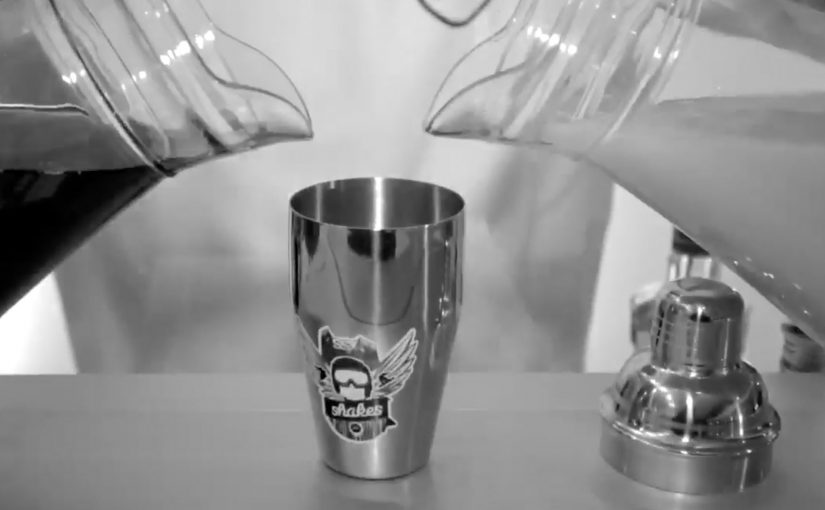
A cocktail order comes in, and a bartender does not reach for the shaker. A pro rider does. The drink gets “shaken” by performing the very snowboard trick it is named after, then handed over fresh to the guest who ordered it.

That is the core of SSX Shakes. A small, invitation-only pre-launch event in Belgium created to generate extra buzz and free press for EA’s SSX extreme snowboarding release on PlayStation and Xbox 360. Duval Guillaume Modem (Antwerp) stages the night around mood and shareability: music, a slope setup, a cocktail bar, riders, and hands-on game play.

How the mechanic turns into media

The mechanism is deliberately tight. Cocktails are named after specific snowboard tricks. Guests choose one. Riders perform the corresponding trick while holding the shaker, then deliver the finished drink. After the event, every blogger and journalist receives a personalised video showing the making of their own SSX shake, packaged for easy sharing with friends, fans, and followers.

In European games marketing where launches depend on earned coverage, the best activations create a photogenic proof point and a ready-to-publish asset for every attendee.

The real question is whether you can hand every attendee a personalised, ready-to-post asset that still feels native to the product story.

Why it lands

It collapses three jobs into one moment. It entertains in the room. It proves the SSX fantasy of trick-driven adrenaline in a physical way. Because the trick is also the “shaker”, the camera captures that fantasy in a single, explainable shot. Then it hands each guest a personalised piece of content that makes sharing feel like showing off a story, not doing a brand a favour.

Extractable takeaway: If your goal is buzz, do not just invite press to watch something. Give them a personalised, category-native moment that can be posted as a complete narrative, without extra editing or explanation. By “category-native”, I mean it uses the category’s own cues and rituals so the story makes sense without context.

What to steal for your next press and influencer activation

  • Build one iconic “single frame”. A rider mid-trick with a cocktail shaker is instantly legible. Your activation needs a moment people can recognise in a second.
  • Make participation the content generator. The guest’s choice determines the trick and the drink. That turns attendees into co-authors of the footage.
  • Personalise the output, not the invitation. The personalised video is the real multiplier. It gives each person a reason to share that is about them, not the brand.
  • Keep the mechanic on-brand. Tricks are not decoration here. They are the core of SSX, translated into a bar ritual.

A few fast answers before you act

What is SSX Shakes in one sentence?

A pre-launch event where SSX-themed cocktails are “shaken” by pro riders performing the matching snowboard trick, followed by personalised recap videos for attendees to share.

Why does the personalised video matter so much?

Because it turns attendance into distribution. Each guest leaves with a finished asset that is already framed for social sharing and blogging.

What is the brand objective behind a concept like this?

To generate earned media and social reach before release by creating a highly visual, retellable moment tied directly to the game’s core fantasy.

How do you adapt this if you cannot produce personalised videos?

Keep the “one guest, one ready-to-share asset” rule, but simplify the output. Capture a short, branded clip or photo that features the guest’s choice and the hero moment, and deliver it to them in a format they can post immediately.

What is the main failure mode if someone copies this format?

If the “hero moment” is not instantly understandable on camera, the event can be fun in-person but produce weak content, and the earned media engine stalls.